

Published Aug 01, 2026 | 9:00 AM ⚊ Updated Aug 01, 2026 | 1:08 PM

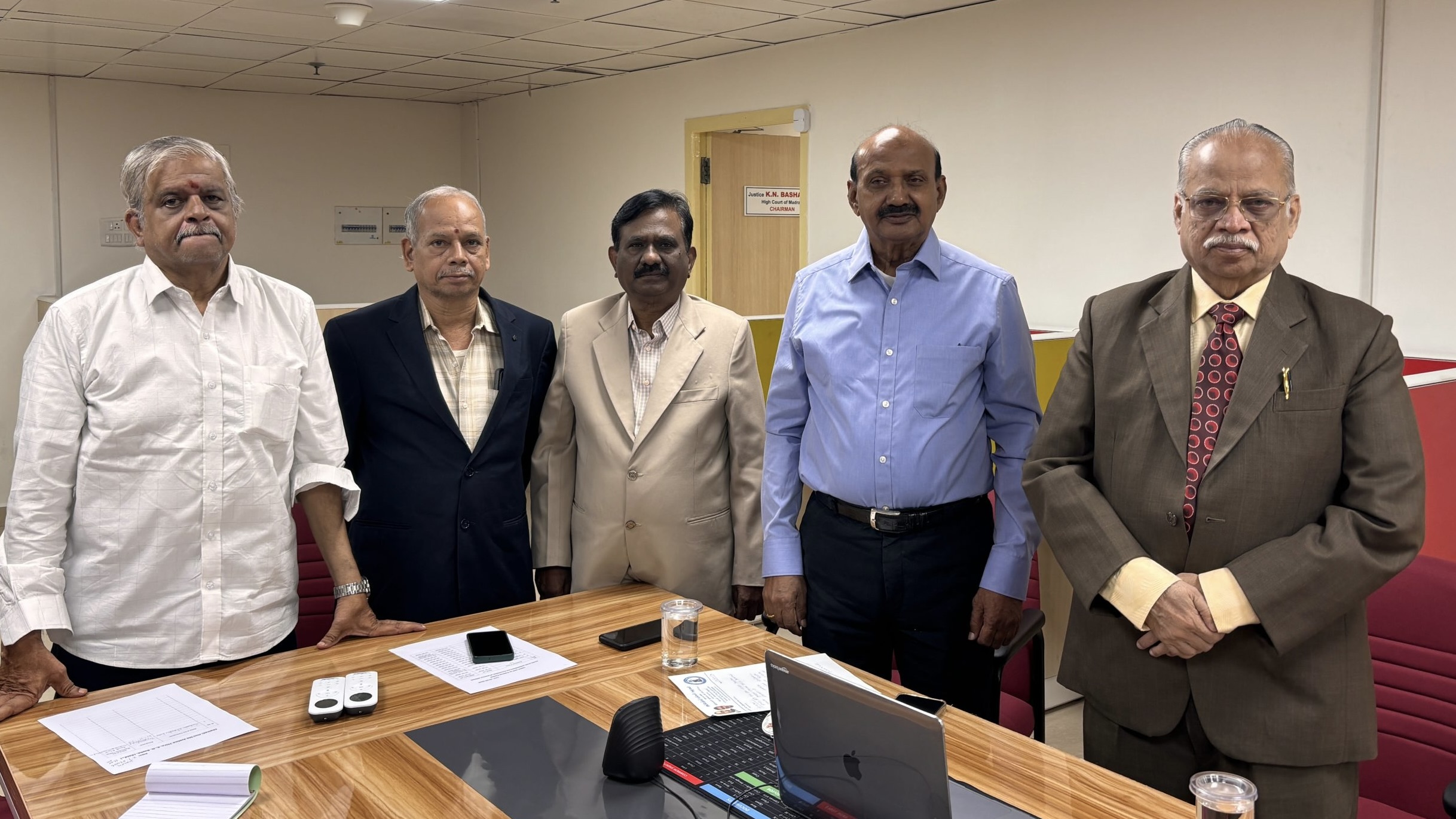
Justice KN Basha Commisson.

Synopsis: The Tamil Nadu government’s commission on honour killings is consulting victims, activists, legal experts and political parties to recommend measures to prevent the crime. In this interview with South First, commission Chair Justice KN Basha and member S Ramanathan (Retd IPS) discuss the panel’s work, patterns emerging from testimonies, legal reforms under consideration, and the challenges faced by inter-caste couples.
Caste-based “honour” killings continue to expose the violent intersection of caste, family honour and social prejudice in Tamil Nadu. While courts have repeatedly called for stronger measures to prevent such crimes, the state government-appointed commission, tasked with recommending legal and policy interventions, has been consulting victims, survivors, activists, legal experts and political parties to understand the gaps in the existing system.
In an interview with South First, Justice KN Basha, a former Madras High Court judge and Chairperson of the commission, along with commission members, former IAS and IPS officers V Palanikumar and S Ramanathan, discusses the panel’s findings so far, the recurring themes emerging from testimonies, the need to protect couples before violence occurs, and the legal and administrative reforms being considered to prevent honour-based crimes.
Edited excerpts follow.
Also Read: Interview | ‘I have doubts whether the TVK will oppose NEET like the DMK did’: Anitha Manirathinam
Q: Could you explain the purpose of the commission and the work it has undertaken so far?
Justice Basha: The Tamil Nadu government constituted this commission, officially the commission to make recommendations to the state government on how to prevent one of the most heinous crimes: honour-based crimes.
Among all forms of crime, honour-based crimes are particularly grave because they often culminate in murder. Our responsibility is to identify the ways and means to prevent such crimes. That is the first and foremost objective of this commission.
The commission was constituted under Government Order (GO) No. 567, dated 7 November 2025.
Initially, after the commission was formed, we neither had office space nor infrastructure nor staff. Despite these constraints, the three of us, myself, retired IPS officer Mr Ramanathan, and retired IAS officer Mr Pazhanikumar, decided not to waste time. We immediately began functioning from my office.
The commission’s task is to gather the views and suggestions of various stakeholders before making recommendations to prevent honour-based crimes.
We are consulting political parties, legal experts, social activists and organisations. Most importantly, survivors.
We have to hear all of them and invite their views. That process has been underway.
Our office was eventually established only in April, after a prolonged search for suitable premises.
Finding office space itself was difficult because many government buildings were already occupied by other commissions. We specifically wanted an office in the heart of the city so that people from anywhere could easily access us.
Initially, around 20 to 30 members from women’s social organisations met us. We conducted proceedings and interacted with them extensively.
Advocate and social activist Nirmala Rani came all the way from Tiruchirappalli along with her team. She met the commission twice. Her team submitted a printed booklet containing their suggestions, demands and views on the root causes of honour-based crimes, along with recommendations on how such crimes could be prevented.
Later, P Shanmugam, state leader of the Communist Party of India (Marxist), appeared before the commission with his team. They also submitted a booklet along with signed representations from both men and women in their organisation.
Mr Alur Shanavas appeared with members representing the Viduthalai Chiruthaigal Katchi (VCK) and other political parties. Members of the Untouchability Eradication Movement also met the commission. Representatives of the Communist Party of India (CPI) and several other organisations have also shared their views.
Q: Have the DMK, AIADMK and TVK made representations before the commission?
Justice Basha: No, they have not yet made their representations before the commission. We have invited all recognised political parties to participate in the consultation process. In total, invitations have been sent to more than 25 recognised political parties.
Many people have been coming before the commission. However, because of the elections, consultations with political party leaders were temporarily affected, as most of them were busy with election-related work. They have now resumed meeting us.
In the last week of June, particularly on 25 and 26 June, we held two days of extensive interactions with victims and survivors.
Leading social activist Evidence Kathir coordinated these meetings by reaching out to affected families and bringing them before the commission.
Over those two days alone, we interviewed nearly 30 survivors. Some were from the woman’s family, others from the man’s family. Parents, brothers, sisters and even young children accompanied them.
These interactions helped us understand the immense mental trauma, physical suffering and emotional agony they had undergone, as well as the long-term impact these crimes had on their lives.
Some victims had received government compensation and employment.
However, such benefits were largely available only to members of the Scheduled Castes under the provisions of the Scheduled Castes and Scheduled Tribes (Prevention of Atrocities) Act.
Victims belonging to other communities do not receive similar statutory benefits. In some instances, they may receive only a nominal amount from the government, but not under any specific legal provision.
Therefore, we must consider how to protect the interests of all victims.
As far as this commission is concerned, with the concurrence of my two honourable colleagues, both senior and dynamic officers, we are concerned about every affected individual, irrespective of caste or community.
Whether a person belongs to the Dalit community, the Devar community, the Chettiar community, the Nadar community or any other community, every victim deserves protection.
Also Read: Horse trading or strategy? Inside the TVK’s play for AIADMK leaders
At this stage, however, we have not taken any final decision. I cannot say, during this interview, what recommendations the commission will ultimately make.
We have not yet decided whether to recommend a separate law dealing specifically with honour killings or suggest amendments to the existing legal framework under the Bharatiya Nyaya Sanhita (BNS) and other applicable laws.
What I can say is that our objective is to protect everyone affected by these crimes.
We have to protect not only the victims but also their families, their children and relatives from both sides.
Most importantly, we must protect young couples at the initial stage. They are often the worst affected because they simply do not know where to go or how to secure their safety.
Opposition may come from either family, or even both families. Young couples often find themselves without any safe place to stay.
Many seek temporary shelter with friends because even relatives may hesitate to help them.
Therefore, we are examining what measures can be introduced to protect them. For instance, we are considering whether shelter homes should be established in every district.
These are issues that we are still thinking through. We are hearing people for the first time and continuing our consultations.
We have also sought official data on honour killing cases from the police.
According to information received from the police, only 13 cases were officially registered between 2014 and 2026.
However, the number of affected people who have appeared before this commission is far higher than the official figures suggest.
Moreover, the Madurai Bench of the Madras High Court, in one of its observations, referred to 59 such cases.
Q: After interacting with political parties, victims, survivors and their families, do you think honour killings are isolated incidents, or are they part of a broader pattern of caste-based violence?
Justice Basha: It can be both.
From what we have heard from victims, these incidents generally begin within the family. Initially, it is one family opposing another, the boy’s family or the girl’s family.
Parents often refuse to support their own children if their daughter falls in love with a boy from another caste or if their son chooses to marry a girl from another caste.
The first threats usually come from their own family members.
Take the case of Gowsalya Shankar, for example. Her parents were involved in the conspiracy that led to the attack in which her husband was murdered. She herself was also attacked.
Despite everything, Gowsalya showed extraordinary courage. She survived, later secured a government job, worked there for some time and is now running her own business.
She is a very courageous woman.
In that case, one of the accused, her father, was acquitted. She has challenged that acquittal before the Supreme Court, and the appeal is still pending.
Cases like these demonstrate how deeply caste-based sentiments can influence families and lead to honour-based crimes.
Q: So, technically, what begins as a dispute between two families later becomes an issue involving an entire caste community after the marriage?
Justice Basha: Not in every case. In many instances, it initially remains confined to the two families involved. However, in some cases, the issue later takes on a caste dimension, with members of the community rallying behind one side or the other.
That does happen. I cannot rule it out. It may occur in certain cases, though not in all of them.
Q: Did you observe any common pattern across the cases that came before the commission?
Justice KN Basha: The motive is common in almost all the cases. Rather than looking for a pattern, we must look at the motive.
The primary motive is caste.
But caste is not the only factor. Another important factor is social status.
For example, even when both individuals belong to the same caste, whether Dalit, Devar, Nadar or any other community, families sometimes oppose the marriage because of differences in social or economic status.
They ask questions such as: “How can our daughter marry into that family?” or “How can our son marry into that family?”
So status also becomes an important reason for opposition.
That is why we are discussing all these aspects. We have to identify ways and means to control and prevent such crimes.
One of the most important measures is creating awareness.
Awareness must be created among every section of society: parents, young people and particularly school and college students.
The government must consider what steps should be taken, how they should be implemented, and through which channels awareness can effectively be spread.
Schools, for example, can play an important role.
When we were students, we had moral science classes. Those classes taught values such as equality, communal harmony, and the idea that everyone belongs to one human family, irrespective of caste or community.
There used to be a dedicated half-hour moral science class where such values were taught.
I am not sure whether those classes still exist today. Even if they do, I believe they should be made compulsory once again.
Discipline and value-based education are essential.
Also Read: Keeladi excavation unearths rare furnace, reinforcing evidence of early Tamil iron production
Q: This commission has been constituted to recommend measures to prevent honour killings. But there are also structural issues that place couples at risk. For instance, while interacting with an inter-caste couple from Tirunelveli, they told me that after getting married and moving to Chennai, they were required to return to their native place to register their marriage because of jurisdiction. Travelling back exposed them to threats to their lives. Is this something the commission is examining?
S Ramanathan (Retd IPS): I would first like to clarify that point.
Marriage registration need not necessarily be done only in the couple’s native place. If they are residing elsewhere, they can register the marriage there as well.
Justice KN Basha: Marriage registration is subject to jurisdiction, but couples can explain their circumstances and establish the necessary cause of action for registration where they are residing.
Today we live in a digital society.
Complaints can now be filed online or even over the phone.
We also have the Zero FIR system.
Earlier, if a complaint was filed at a police station that did not have territorial jurisdiction, the police would register it and forward it to the appropriate police station.
That system already existed.
Under the Bharatiya Nyaya Sanhita (BNS), the provisions relating to Zero FIR have now been strengthened and formally incorporated.
Q: Even though these legal provisions already exist, implementation is often inconsistent. Will the commission recommend strengthening their enforcement?
Justice KN Basha: We are examining all such suggestions carefully.
Several legal experts have submitted detailed recommendations.
Senior Advocate Abdul Kumar Rajarathinam, for example, has given us comprehensive suggestions.
Similarly, representatives from the Communist movement have submitted a model draft law, prepared after extensive consultations with legal experts.
Many lawyers have proposed specific legal provisions that could be incorporated.
They have suggested ways to strengthen the law and make punishment for such offences more stringent.
As far as murder is concerned, the existing law already provides for severe punishment.
The maximum punishment for murder is the death penalty, although it is awarded only in the “rarest of rare” cases after considering the brutality and gravity of the offence.
The minimum punishment for murder is life imprisonment.
Once a court concludes that the offence amounts to murder under the relevant provisions, life imprisonment is the minimum sentence and the death penalty is the maximum.
The law also distinguishes murder from culpable homicide in certain situations, for instance, where a death results from a sudden quarrel or provocation, rather than a premeditated act.
These legal distinctions already exist.
Apart from murder itself, we are also examining whether other acts connected with honour-based crimes should attract specific legal consequences.
These include speeches or actions that promote hatred, incite violence, create communal disharmony, inflame caste tensions, or deliberately foster hostility between communities.
We are studying the legal framework to determine whether additional provisions are required to address such conduct.
S Ramanathan (Retd IPS): Coming back to your earlier question about couples returning to their hometowns for marriage registration, if they genuinely fear for their safety, they can seek police protection.
They can approach the police, explain the threat they face, and request protection.
That is not difficult.
Therefore, issues relating to jurisdiction should not become an obstacle in such situations.
Also Read: CM Vijay’s Jana Nayagan: A blockbuster for the black market
Q: In some cases, there are allegations that even the police do not support couples facing threats. How do you respond to that?
S Ramanathan (Retd IPS): It would not be correct to generalise. Not every police officer behaves in that manner. Every case is different, and each case is extremely important.
If any police officer fails to act properly, that is certainly wrong. In such situations, the affected person should approach the higher authorities.
Justice KN Basha: If a Sub-Inspector fails to discharge his duty, approach the higher authorities.
You can go to the Superintendent of Police (SP). If you do not receive a satisfactory response there, approach the Commissioner of Police. If necessary, you can even approach the Director General of Police (DGP).
S Ramanathan (Retd IPS): The mandate of this commission is to recommend measures to prevent honour-based offences. Our role is not to examine whether individual police officers have performed their duties properly or not. That falls within the administrative framework, for which there are already legal mechanisms in place.
Justice KN Basha: The general legal framework already exists.
What this commission is examining is how honour-based offences can be specifically identified in law, what legal provisions are required, and what punishments should be prescribed to prevent such crimes.
As Mr Ramanathan mentioned, the Indian legal system already contains provisions under criminal law, criminal procedure and the law of evidence.
The legal framework governing investigation, prosecution and admissibility of evidence is already in place.
Our focus is on whether honour-based crimes require specific legal recognition and additional preventive measures.
Q: As you mentioned, murder already carries the maximum punishment of death. Yet honour killings continue to occur. Whether or not the commission recommends a separate law, what kind of change do you think your recommendations can bring?
S Ramanathan (Retd IPS): I would make one point.
The very existence of the death penalty acts as a deterrent. It is because such punishments exist that many offences do not occur. So it is not correct to say that people commit these crimes without any fear of the law.
There is fear.
However, despite that fear, some crimes still occur. That is often because of intense caste prejudice, religious hatred, or sudden emotional provocation.
Justice KN Basha: There are situations where people knowingly do something wrong, but in an emotional moment they act without thinking.
The same applies to murder.
Some murders are carefully planned and premeditated. Others occur suddenly in the heat of emotion.
S Ramanathan (Retd IPS): It is incorrect to say that people have no fear of the law. The existence of legal punishment is one of the reasons why law and order is maintained in the country.
As Justice Basha pointed out, the law already prescribes punishment for murder.
The objective of this commission is different.
Our task is to identify effective ways to prevent honour-based crimes before they occur.
We are also examining what legal provisions can be introduced against those who instigate, encourage, or operate behind the scenes in such crimes.
We are studying how the law can be strengthened to hold such persons accountable.
That is why we are seeking suggestions from everyone who appears before the commission, and many stakeholders have already submitted valuable recommendations.
Also Read: Tuticorin youth dies after hospitalisation; family alleges custodial torture, refuses to accept body
Q: According to the government’s Government Order (GO), the commission was originally expected to submit its report before February. What is the current timeline?
Justice KN Basha: That deadline has already been extended through another Government Order.
The commission has been granted an additional nine months.
Our tenure now extends until May 2027.
That is why we are working at a faster pace.
We are scheduling consultations continuously.
Even after sending invitations through official letters, email, speed post and courier, we are also personally contacting political parties and stakeholders through acquaintances to ensure they participate in the consultation process.
We intend to complete all consultations and submit our recommendations within the extended time granted by the government.
The commission appeals to the public, political parties, social organisations, legal experts, kin of victims, survivors and all other stakeholders to meet the commission and share their suggestions on preventing honour killings. The commission office is located at CMDA Tower-II, 2nd Floor, Gandhi Irwin Road, Egmore, Chennai 600008 (adjacent to Hotel Ramada).



