

Published Jul 25, 2026 | 5:21 PM ⚊ Updated Jul 25, 2026 | 5:21 PM

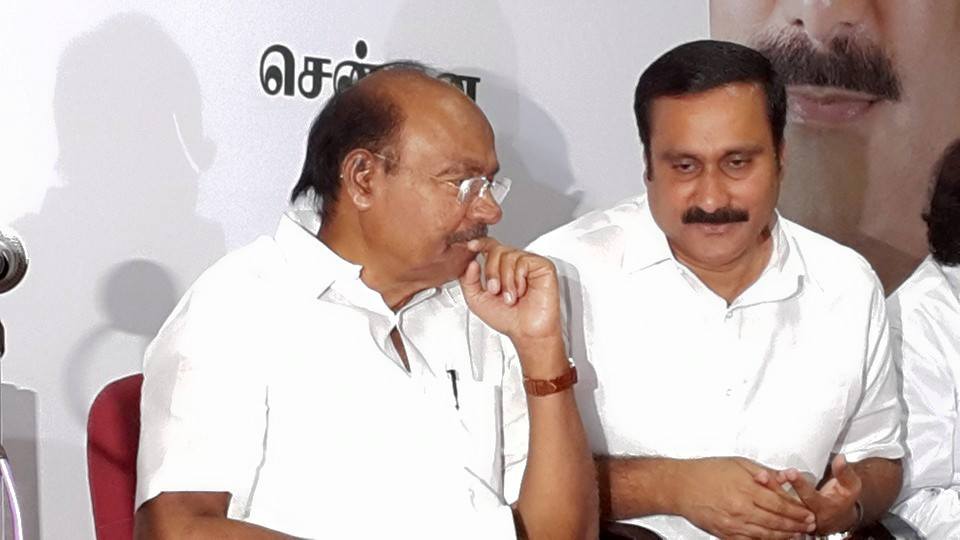
Dr S Ramadoss, and his son, Dr Anbumani Ramadoss.

Synopsis: PMK founder Dr S Ramadoss announced his retirement from active politics on his 88th birthday, formally handing over the party’s political responsibilities to Anbumani Ramadoss. The announcement comes after months of internal leadership disputes and signals a new phase in the party’s evolution.
After nearly five decades in public life, Pattali Makkal Katchi (PMK) founder Dr S Ramadoss announced his retirement from active politics on Saturday, 25 July, and entrusted the party’s political affairs to his son, PMK president Dr Anbumani Ramadoss, marking the end of an era in Tamil Nadu politics.
Ramadoss announced his retirement from active politics on the occasion of his 88th birthday, stating that he would no longer comment on political developments or intervene in the affairs of the PMK.
Addressing party workers at Saraswathi College in Konerikuppam near Tindivanam, Dr Ramadoss said, “I turn 88 today. From today, I am embracing political retirement. I will no longer speak about politics or interfere in political matters. Anbumani and his wife will take care of those responsibilities. Those who come to meet me need not discuss politics. Please don’t trouble me with political discussions. I have been suffering from vertigo, but I came here eagerly to see all of you. The bond between you and me will never change.”
His announcement effectively handed over the party’s political responsibilities to PMK president Dr Anbumani Ramadoss and Sowmiya Anbumani.
Also Read: Anbumani wins EC nod, father Ramadoss’ camp loses ground
The retirement announcement was preceded by a significant political and personal moment.
Earlier in the day, Anbumani Ramadoss visited his father at the family’s Thailapuram residence to seek his blessings. The father and son then rode the same car together to Saraswathi College for the birthday celebrations.
As part of the event, 88 saplings were planted to mark Dr Ramadoss’s 88th birthday. Dr Ramadoss symbolically handed over a sapling to Anbumani Ramadoss. The junior leader, along with his wife Sowmiya Anbumani and other family members, planted the sapling.
The joint appearance assumes significance against the backdrop of an unprecedented leadership tussle within the PMK over the past year. Differences between Dr Ramadoss and Anbumani Ramadoss over the party’s functioning spilt into the public domain, with both camps issuing rival statements on organisational appointments and disciplinary actions.
The dispute deepened after Dr Ramadoss reconstituted the party’s leadership structure and removed several office-bearers seen as close to Anbumani, prompting counter-announcements from the PMK president’s camp.
The rift also reached the courts. Litigation was initiated over the validity of rival organisational decisions. At the same time, the Madras High Court was approached in connection with disputes concerning the party’s administration and the use of the PMK name and symbol. The legal proceedings reflected the extent of the internal divide, raising questions over who exercised legitimate authority within the party.
Against this backdrop, Saturday’s meeting at Thailapuram, the father and son’s joint journey to the venue, and Dr Ramadoss’ announcement that Anbumani and Sowmiya would henceforth handle the party’s political affairs are being viewed as signalling the end of the prolonged leadership dispute and the beginning of a formal leadership transition within the PMK.
Also Read: PMK rift split wide open, Ramadoss expels son Anbumani from party
Dr Ramadoss entered public life through the Vanniyar Sangam, which spearheaded the Vanniyar reservation movement in the 1980s.
The agitation demanding greater educational and employment opportunities for the Vanniyar community transformed him into one of the most influential leaders of the Most Backward Classes (MBCs) in Tamil Nadu.
Following the reservation movement, he launched the PMK in 1989 to provide political representation to the Vanniyar community while advocating social justice, rural development, education and prohibition.
Over the next three decades, PMK evolved into one of Tamil Nadu’s most influential regional parties, particularly across the northern districts of the state.
Although the party has never formed a government on its own, it emerged as a decisive alliance partner whose support often proved crucial in parliamentary and Assembly elections.
Also Read: PMK general body under Anbumani Ramadoss passes several resolutions
Under Dr Ramadoss’s leadership, PMK built a reputation for political pragmatism.
The party has, at different points, aligned with the DMK, AIADMK and the BJP-led National Democratic Alliance, depending on the political circumstances.
The PMK was part of the DMK-led alliance in the 2004 Lok Sabha elections, during which Anbumani Ramadoss entered the Union Cabinet as Health Minister. Later, the party shifted alliances multiple times, contesting elections alongside both the Dravidian majors and the BJP.
These shifts often attracted criticism from political opponents, but Dr Ramadoss consistently defended them as decisions taken in the party’s interests.
Building Anbumani as the party’s next-generation leader
For nearly two decades, Dr Ramadoss gradually projected his son, Anbumani Ramadoss, as the PMK’s next-generation leader.
Anbumani first gained national prominence after becoming the Union Minister for Health and Family Welfare between 2004 and 2009. During his tenure, he was associated with several public health initiatives, including the nationwide ban on smoking in public places. He has also claimed credit for introducing the 108 emergency ambulance service.
Back in Tamil Nadu, Anbumani Ramadoss was projected as the PMK’s chief ministerial candidate in the 2016 Assembly election and was later elected as the party president, taking on a larger organisational role.
However, the succession process was not without setbacks. During the public rift between the father and son over the party’s leadership earlier this year, Dr Ramadoss said he regretted recommending Anbumani for the Union ministerial post, remarks that reflected the depth of their differences at the time.
Dr Ramadoss retires as one of the longest-serving regional political leaders in Tamil Nadu.
For nearly four decades, he shaped PMK from a caste-based social movement into a recognised regional political force capable of influencing government formation and alliance politics in the state.
His politics revolved around reservation, social justice, education, prohibition, healthcare, environmental protection and farmers’ welfare. Beyond electoral politics, he remained an outspoken campaigner against liquor consumption, tobacco use and environmental degradation.
With his retirement, PMK formally entered a new phase under the leadership of Anbumani Ramadoss.
(Edited by Majnu Babu).



