

Published Jul 30, 2026 | 9:00 AM ⚊ Updated Aug 10, 2026 | 11:22 AM

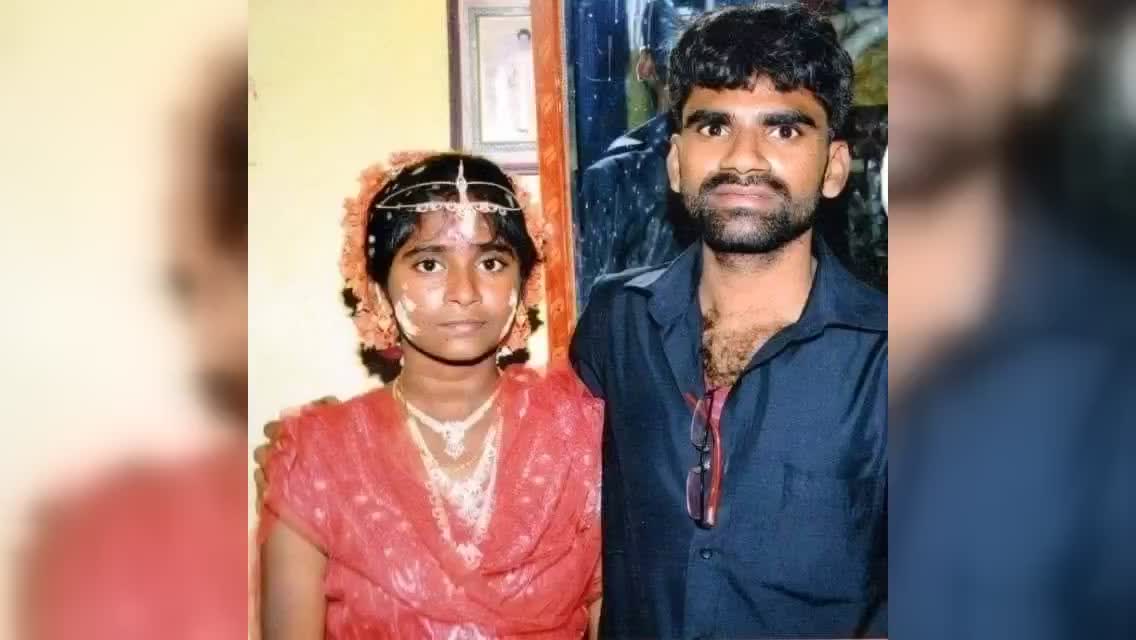
Anitha Manirathinam with his late sister, S Anitha. (Supplied)

Synopsis: Nearly a decade after his sister S Anitha’s death, Anitha Manirathinam says the fight against NEET is far from over. In a conversation with South First, he reflects on the CJP protests, credits the DMK’s legal efforts against NEET, questions whether the TVK government will confront the Union government with the same resolve, and outlines the next phase of the anti-NEET movement.
Nearly a decade after the death of his sister, S Anitha, whose suicide in 2017 became the defining symbol of Tamil Nadu’s opposition to the National Eligibility-cum-Entrance Test (NEET), Anitha Manirathinam remains at the forefront of the campaign against the exam.
Recently, he participated in the Cockroach Janata Party (CJP) protests against alleged irregularities in NEET, joining demonstrations in both Delhi and Chennai.
While CJP has called for a “Fair NEET”, Anitha Manirathinam, like many in Tamil Nadu continues to demand a complete ban on NEET in Tamil Nadu.
He recently sat down with South First to reflect on his experience at the Delhi protest, explain why he believes Tamil Nadu’s position differs from that of other states, discuss whether political parties have failed to secure an exemption from NEET, share his expectations of a Tamilaga Vettri Kazhagam government, and outline the next phase of the anti-NEET movement.
Edited excerpts follow.
Q: You participated in the CJP-organised protest in Delhi. Did you decide to join on your own, or were you invited by the organisers?
Anitha Manirathinam: From the very first day that the CJP protest began in Delhi, I was closely following it. Since Sonam Wangchuk was on a hunger strike as part of the protest, I knew that a movement against NEET was taking shape, and I kept a close watch on it.
I wanted to participate in the protest myself. Friends from the All India Students’ Federation (AISF), who had been continuously involved in the movement, were already there. I was in touch with them and expressed my interest in joining. They then spoke to the CJP organisers, and after receiving their approval, I travelled to Delhi.
In Delhi, I met Abhijit Dipke and also actor Prakash Raj, who was participating in the hunger strike. I went there mainly to convey that Tamil Nadu has consistently and strongly opposed NEET, and that the people of Tamil Nadu would certainly stand in solidarity with this anti-NEET movement.
Just before I reached Delhi, Sonam Wangchuk had been arrested. After that, the movement gained tremendous momentum, with students joining in large numbers. Despite police baton charges, the protest rapidly spread across the country.
Also Read: Uproar in Parliament after Rahul Gandhi accuses Amit Shah of ordering firing on student protestors
Q: Could you share your experience of participating in the Delhi protest?
Anitha Manirathinam: This protest was emotionally very close to me because it opposed NEET.
For years, we in Tamil Nadu have argued that the NEET examination itself is fundamentally flawed. Now, people across the country have begun to recognise the irregularities and malpractice associated with NEET.
While we have long maintained that the exam itself is unjust, others are only now beginning to realise the extent of the problems within it.
I felt I had to be present at that protest.
What truly stood out was that thousands of people participated voluntarily. Many student organisations extended their support and remained at the protest site.
Ordinary citizens came along with their families, including women and children. Persons with disabilities also joined the demonstrations. It clearly reflected the anger people felt towards the government.
The protest almost became a celebration of resistance. There were slogans against the government and tributes to leaders such as Dr BR Ambedkar, Bhagat Singh, Jyotirao Phule and Birsa Munda.
In many ways, it reminded me of the Jallikattu protests in Tamil Nadu, a massive spontaneous people’s movement.
From the very first day, the protest gave me hope. Even when the authorities attempted to suppress it through police violence, baton charges and tear gas, the students repeatedly returned to the same place and resumed their protest. That determination became the driving force behind the movement spreading across India.
The protest organisers eventually succeeded in achieving their immediate demands. For Tamil Nadu’s anti-NEET movement, this has become a major source of hope. It has reinforced my belief that if students unite, they can compel governments to listen to their demands.
With that confidence, we have begun our own renewed movement in Tamil Nadu, and I firmly believe we will succeed.
Q: You are demanding a complete ban on NEET, while CJP is calling for a “Fair NEET.” Do you agree with their position?
Anitha Manirathinam: I can only take responsibility for the demand that I raise. CJP has every right to put forward its own demand.
I do not know the situation in every state. In Tamil Nadu, medical admissions were conducted without any entrance examination before NEET. However, in many other states, students were already writing state-level entrance examinations or entrance tests conducted by private universities, private colleges and national institutions. Because of that, people there may see NEET as a single common entrance examination.
However, I believe they too will eventually understand that NEET itself is deeply flawed. Even today, some leaders have begun speaking about this.
For example, Prakash Ambedkar, the grandson of Babasaheb Dr BR Ambedkar, has said that resignations alone are not enough, that NEET must be banned, and that education should be decentralised.
Voices like these are increasingly emerging from different parts of North India. Likewise, some states in South India are also developing the view that NEET is unnecessary.
If all these voices come together and NEET is eventually banned across India, it would certainly be welcome. At the same time, every state should have the right to decide what is best for its own students.
Just because Tamil Nadu does not want NEET does not mean we can dictate what other states should do. Our struggle is for Tamil Nadu’s right to determine its own admission system, and that is the direction in which our movement will continue.
Also Read: Supreme Court accepts CBI reports, closes coal allocation case against Dr Manmohan Singh
Q: Even after all these years since Anitha’s death, NEET has not been abolished. Do you see this as a failure of political parties?
Anitha Manirathinam: Even before Anitha’s death in 2017, political parties and social movements in Tamil Nadu had been consistently opposing NEET.
When the proposal for a nationwide common medical entrance examination was first introduced during Kalaignar M Karunanidhi’s tenure, he argued that states which did not wish to adopt it should be exempted. That demand formed the basis of the legislation at the time. However, NEET was never implemented as long as the Congress government remained in power.
It was only after my sister Anitha’s death that the movement gained enormous momentum among students and the people of Tamil Nadu. Students boycotted colleges, and protests continued across the State for nearly a month.
At that time, the AIADMK government in Tamil Nadu and the BJP-led Union government worked together to suppress the protests. They even approached the Supreme Court seeking to prevent demonstrations.
But the spark ignited by Anitha has never died. The voice against NEET has continued ever since.
When the DMK came to power, it constituted the AK Rajan Committee. As a government, it did what it was expected to do. Based on the committee’s recommendations, the Tamil Nadu Assembly passed the NEET exemption Bill and sent it to the Governor.
The Governor did not act on it. The DMK government then approached the Supreme Court, obtained directions seeking an early decision, and resubmitted the Bill without making any changes. Since the Governor could no longer hold it indefinitely, it was forwarded to the President and is currently awaiting Presidential assent.
The government has taken the necessary legal and constitutional steps. Cases challenging NEET are also pending before the Supreme Court.
Former Deputy Chief Minister Udhayanidhi Stalin also observed a one-day hunger strike against NEET. During that protest, he had declared that, if necessary, they would lay siege to Parliament and the offices of the Prime Minister and the President in Delhi.
Therefore, I do not consider this a failure of political parties alone.
People’s movements are equally important. Governments have fulfilled their institutional responsibilities, but people too must continue the struggle. Almost every political party in Tamil Nadu supports exemption from NEET.
The problem is that the BJP-led Union government has ignored the unanimous resolution passed by the Tamil Nadu Assembly. By refusing to respect it, they are effectively disregarding the aspirations of eight crore Tamils.
The Tamil Nadu government and political parties continue to fight against a powerful Union government. I do not see this as a failure. Rather, I believe the movement has gradually progressed, one step at a time.
Also Read: CJP urges Centre to honour promise to withdraw FIRs against protestors, warns of fresh agitation
Q: Do you believe the new Tamilaga Vettri Kazhagam government can make NEET exemption a reality?
Anitha Manirathinam: Education falls under the Concurrent List, so the Tamil Nadu government alone does not have complete authority to decide this issue.
However, the State government must continue to fight. It should pursue every available legislative and legal avenue and continue to raise its voice against the Union government.
The Union government has remained firm in its position. If we are to make it change course, we need large-scale public mobilisation. Whether the government itself leads protests or supports those organising them, it must stand with the movement rather than suppress it.
Looking at some recent developments, I do have certain concerns.
For instance, Tamil is an extremely sensitive issue in Tamil Nadu. Recently, at Manonmaniam Sundaranar University, Tamil was pushed to the third position in an official event. Only two or three hours later did Chief Minister Vijay respond with a statement.
Such delays should not happen.
Whenever Tamil Nadu gives up its rights, reclaiming them later becomes extremely difficult. We have already experienced that with NEET. The AIADMK government created the circumstances that allowed NEET to be accepted in Tamil Nadu, and we continue to face the consequences today.
The same concern applies to what happened at Manonmaniam Sundaranar University.
So, I still have some doubts. Will the Tamilaga Vettri Kazhagam oppose the BJP-led Union government with the same intensity that the DMK did on issues concerning Tamil Nadu’s rights? I am not saying they should oppose everything. But on issues relating to state rights, language rights and students’ rights, I believe they must firmly stand up to the Union government.
I do not believe that obtaining exemption from NEET is impossible.
If the Tamilaga Vettri Kazhagam government convenes an all-party meeting, discusses every legal and constitutional option available to secure NEET exemption, and acts collectively, Tamil Nadu’s struggle can certainly succeed. I believe exemption is achievable.
Q: What are your plans for the next phase of the anti-NEET movement?
Anitha Manirathinam: The Tamil Nadu government has said that it will permit peaceful democratic protests. I also believe that, today, students across Tamil Nadu, irrespective of political party or organisation, share a broad consensus against NEET.
The recent CJP protest has reignited that sentiment.
I have already sought permission from the government to organise protests, and I believe permission will be granted.
After that, my struggle will continue until Tamil Nadu secures exemption from NEET.
Students across Tamil Nadu will unite, and together we will continue this movement until we achieve that goal.



