

Published Oct 16, 2026 | 7:00 AM ⚊ Updated Oct 16, 2026 | 7:00 AM

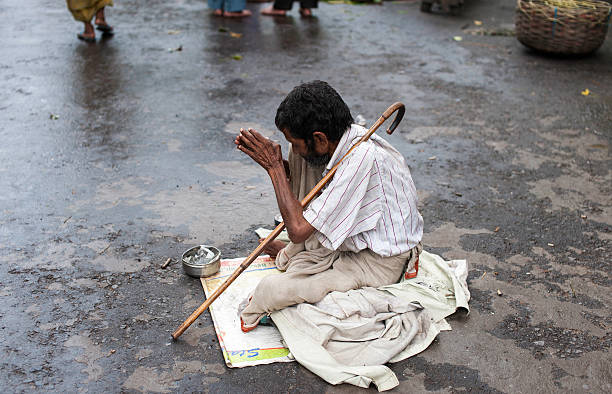
An ISEC study identified 4,676 individuals who live by begging in Bengaluru's hotspots and shelter homes. (Representational pic: iStock)

Synopsis: Karnataka must create a Bengaluru Beggary Rehabilitation Task Force comprising officials from social welfare, BBMP, police, health, labour, education, and child protection, along with NGOs and employers. Citizens can also participate. Rather than the usual admonition not to give alms, Bengaluru could set up a simple “call for rehabilitation” system where people could point out vulnerable persons at traffic signals, transport hubs, etc., to the right agencies. The goal should be to move from street-level visibility to institutional support.
Bengaluru is preparing for a major push to make the city “beggar-free” by 2027, with the campaign’s first phase kicking off in November. The Karnataka government said the exercise will include identification, rescue, and rehabilitation, with NGOs joining government agencies.
Bengaluru is already one of six cities in the country targeted for specific actions under the Union government’s national beggar rehabilitation plan. The Centre’s work goes beyond removing people from the streets, including shelter, counselling, healthcare, skill building, livelihood support, and reintegration. The question for Bengaluru is not just how to eradicate begging from its streets; it is how to create a system where people are not forced to live off begging.
Also Read: Here’s how South India can make its next leap
A study by the Institute for Social and Economic Change (ISEC) is a useful starting point. It identified 3,863 individuals as beggars in 435 hotspots across the Bengaluru Metropolitan area. Researchers surveyed 40 shelter homes and identified another 813 individuals, bringing the total to 4,676. This profile makes the problem much more complicated than its street-level representation suggests.
The economically productive age group (19-59 years) accounted for approximately 56.2% of them. Of those, 61% had disabilities, and 25% had chronic diseases. Fifty-three per cent reported psychological distress, and approximately 36 per cent were homeless. Employment is also a key factor. The study found that 84 per cent of respondents worked before starting to beg, mainly in the informal sector.
Their daily earnings ranged between ₹162 and ₹412. These figures indicate that police and removal alone cannot solve begging. For some, it is related to disability; for others, it is related to being homeless, to poor health, to insecure informal employment or to the lack of social protection.
The proposed November campaign will provide an opportunity to establish a complete database of the population involved in begging throughout the city. However, that shouldn’t be just a number. The characteristics to be considered for each person identified should include age, disability, health, housing, family circumstances, skills, employment history and access to government schemes.
The ISEC study found that 83 per cent of those identified had some identity documents, including Aadhaar for 81 per cent. However, disability certificates were obtained by only 4.7 per cent, given the high prevalence of disability. This points to a significant governance deficit. Sometimes the problem isn’t that schemes don’t exist, but that vulnerable citizens aren’t connected to the schemes created for them. Bengaluru needs to build that bridge. Rehabilitation must have an exit strategy. A shelter is a first step, not the last.
The Union government’s SMILE-Beggary programme helps with identification and rescue, along with counselling, shelter, healthcare, education, skill development, financial inclusion, and livelihood opportunities. As of July 2026, the number of rehabilitated people in the country had reached over 10,200; the target was to rehabilitate 35,000 by 2030-31.
Bengaluru should emulate this in its own labour market. A skill assessment for an employable adult, followed by short-term training, placement and financial inclusion, is necessary. Elderly persons without family support need social assistance and supported housing. A person with a disability might need certification, health care, assistive support, and an appropriate livelihood. The rehab path should be individualised, not a one-size-fits-all programme.
Also Read: How India’s digital payment revolution can reinvent itself
A general rehabilitation programme for children found begging cannot be considered beneficial. Nationally, the SMILE programme had identified, rescued and rehabilitated 2824 children by June 2026. Over half were reunited with families, and others were connected to schools, Anganwadi centres or referred to Child Welfare Committees. Bengaluru should ensure that the child protection system thoroughly evaluates all children found begging. The response should be based on the individual’s education, family situation, trafficking or exploitation, nutrition and safety.
Also Read: The next test for governments and institutions
The number of people rescued from the roads or removed in the Bengaluru campaign is not the only factor to consider for success. A better approach would be to create an anonymised ‘Beggary Rehabilitation Dashboard’ that shows where people go after they leave public spaces. The dashboard could track the number of people identified and assessed, link to key identity, disability, and welfare documents, refer them for healthcare and counselling, and place them in shelter and support through skill-development programmes.
Importantly, it could measure how many people go to work or start a business, join their families (where relevant), and do not beg again after six months and a year. The outcome-based approach would shift the Bengaluru campaign’s focus from simply getting people off the streets to truly rehabilitating them, with success measured by how many people have the opportunity to lead stable, dignified lives. Monitoring would make rehabilitation measurable, and a periodic campaign would not be a mere exercise in clearing public spaces.
Also Read: “Unseen University” of Bengaluru
The city’s large service economy presents an opportunity that the programme should intentionally include. Groups of different employers, such as hotels, hospitals, facility-management companies, security firms, retail outlets, kitchens, logistics companies, and others, could create a second-chance employment network for eligible rehabilitated adults. Training should align with jobs, not general certificates. When formal employment isn’t an option, small-scale self-employment may be promoted through appropriate credit, mentoring, and market linkages.
ISEC’s study also highlights issues related to shelter homes, such as underutilisation and perceptions among potential beneficiaries. This requires changes to shelter design and operations. They should offer health care, counselling, recreation, skills training, legal counsel, and support for independent living. The updated national guidelines for shelters focus on requirements for infrastructure, sanitation, nutrition, care, work training, legal support, and monitoring. The State of Karnataka should introduce these standards and require shelters to undergo regular social and third-party audits.
Also Read: Reclaiming Bengaluru’s footpaths
Begging is a cross-cutting issue across several policy areas such as homelessness, disability, health, migration, employment, ageing, child protection and financial inclusion. No single department can solve it alone.
Karnataka must create a Bengaluru Beggary Rehabilitation Task Force comprising officials from social welfare, BBMP, police, health, labour, education, and child protection, along with NGOs and employers. Citizens can also participate. Rather than the usual admonition not to give alms, Bengaluru could set up a simple “call for rehabilitation” system, where people could point out vulnerable persons at traffic signals, transport hubs, etc., to the right agencies. The goal should be to move from street-level visibility to institutional support.
Effective policy should not just address the symptom, begging, because people will return to it if the policy lets them keep doing what they are doing. A more meaningful goal is a ‘livelihood-secure Bengaluru ’, a city where vulnerable people can access housing, healthcare, education, social protection, and employment, rather than relying on begging for a livelihood. So the proposed 2027 target can become an opportunity to develop a coordinated urban social-protection model.
(Views expressed are personal. Edited by Majnu Babu).



