

Published Jul 07, 2026 | 12:00 PM ⚊ Updated Jul 07, 2026 | 12:00 PM

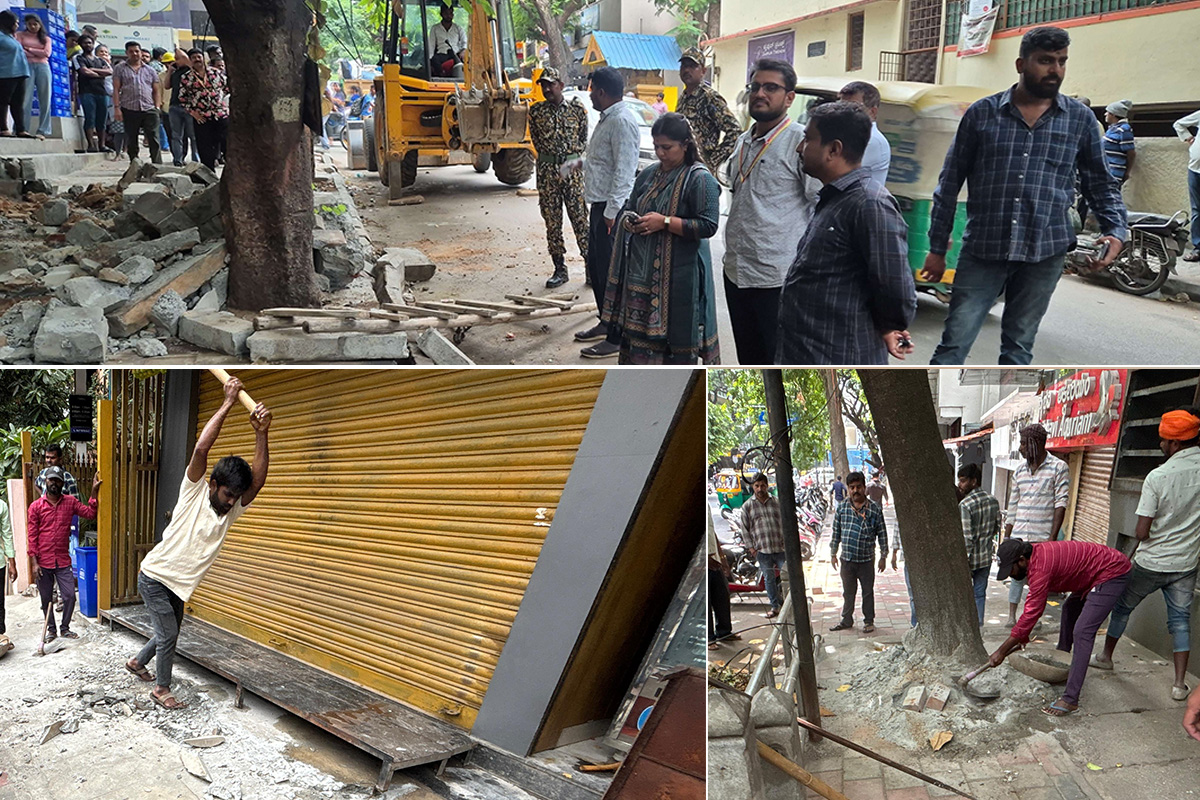
A footpath encroachment removal operation was carried out in Bengaluru.

Synopsis: The ongoing drive in Bengaluru is more than a cleanliness exercise. But it needs to be done with compassion for all. There is also a wider vision that the city must pursue so that it can turn into a model for others.
The skyline, infrastructure and economic development of a city are often used to gauge its progress. However, one of the most accurate measures of urbanisation is nearer the earth—the state of its footpaths.
Sidewalks are civic services; they are also the building blocks of an inclusive, people-focused city, where they are safe, clean, and accessible. The recent initiatives undertaken by the city of Bengaluru to reclaim and clean up the footpath pavements provide an opportunity to reflect on the possibility of redefining a balance between urban order and social responsibility in Indian cities.
For years, people in Bengaluru have walked the city’s uneven, concrete-packed streets, where waste bins are full and vehicles get parked in the middle of roads, and encroachments block the walkways. In a city that takes pride in branding itself as innovative and technological, the activity of walking is one of the most challenging urban issues. The places for schoolchildren, senior citizens, persons with disabilities and office-goers have all been lost and every day these groups are left with no choice but to walk on busy roads.
The ongoing drive in Bengaluru to restore footpaths is therefore more than a cleanliness exercise; it’s also a restoration process. It’s a statement that public spaces are for the public, and must be used by the public. Walkable streets enhance road safety, promote good health, increase public transport accessibility, decrease reliance on private vehicles, and help create a cleaner urban environment. The benefits of investing in pedestrians are proven in cities around the world.
But there is a question that needs to be raised here: What about the thousands of small vendors and informal businesses that rely on footpaths for their livelihood?
They are part and parcel of Bengaluru’s urban economy. These vendors offer affordable products, services and inject energy into neighborhoods. A small pavement stall is all these families have to live off. Any effort that will clear boundaries without taking these factors into account is likely to create another social issue.
Also Read: ‘Where do I go?’ GBA’s ‘unbalanced’ Safe Footpath Campaign raises livelihood questions
Cleaner footpaths will thus be only one of the indicators of the strength of Bengaluru’s initiative; the other is the compassion with which it seeks to address the concerns of the vulnerable. When the vendors are displaced, the authorities must at the same time ensure that they have the opportunity to make the street market or designated vending zones or other commercial spaces suitable for their work without hindering pedestrian traffic. This is in keeping with the spirit of the Street Vendors (Protection of Livelihood and Regulation of Street Vending) Act, 2014 and inclusive governance principles.
Fortunately, many vendor associations are willing to cooperate, if rehabilitation is based on a fair, transparent system. The vast majority of street vendors are not looking for trouble with the civic authorities—they are looking for certainty, dignity and a way to make a living. The planning process should not, therefore, consider pedestrians and vendors as adversaries, but as partners. With a bit of planning, both can share the space.
The other half of the equation is maintaining momentum of the effort. The city of Bengaluru has seen a number of civic campaigns start with fanfare and then flag. Cleaning up footpaths is an ongoing process. It takes cooperation among the various civic agencies, needs enforcers to stop new encroachments, and people to participate. Governments and communities need to take responsibility for maintaining public spaces or they will not be able to function.
The city’s wider vision shouldn’t just be about cleanliness. Future planning should serve as an example to all urban development by providing continuous footpaths, accessibility for everyone, proper drainage, adequate lighting, shaded walkways, safe pedestrian crossings and seamless integration with bus and metro networks. These are investments that enhance life experiences for all, irrespective of age or income.
With consistency and sensitivity, Bengaluru’s experience can help in shaping other cities in India. The issues of pedestrians’ rights and informal livelihood are also faced by the metropolitan centres like Chennai, Hyderabad, Pune and Kolkata. A governance model of cleanness, vending zones, citizen involvement and sustainability could be a model to follow across the country for urban renewal.
The success of Bengaluru’s footpath initiative would not be judged on the number of footpaths that get cleaned in one go. It will be assessed in terms of being able to walk to school without any danger, walk the city with confidence, be disabled-friendly and allow vendors to continue to earn a dignified living in an organised public space.
Efficient and empathetic developments are the keys to the success of cities. Bengaluru has now the opportunity to show that urban transformation does not have to cost jobs. If this equilibrium is supported, the city’s actions will be recalled not only as a cleanup campaign but as a new form of participatory city governance which others can be sure to follow.
Also Read: Can AI fix Bengaluru’s governance?
(Edited by R Rajesh Kumar.)



