

Published Aug 11, 2026 | 7:00 AM ⚊ Updated Aug 11, 2026 | 7:00 AM

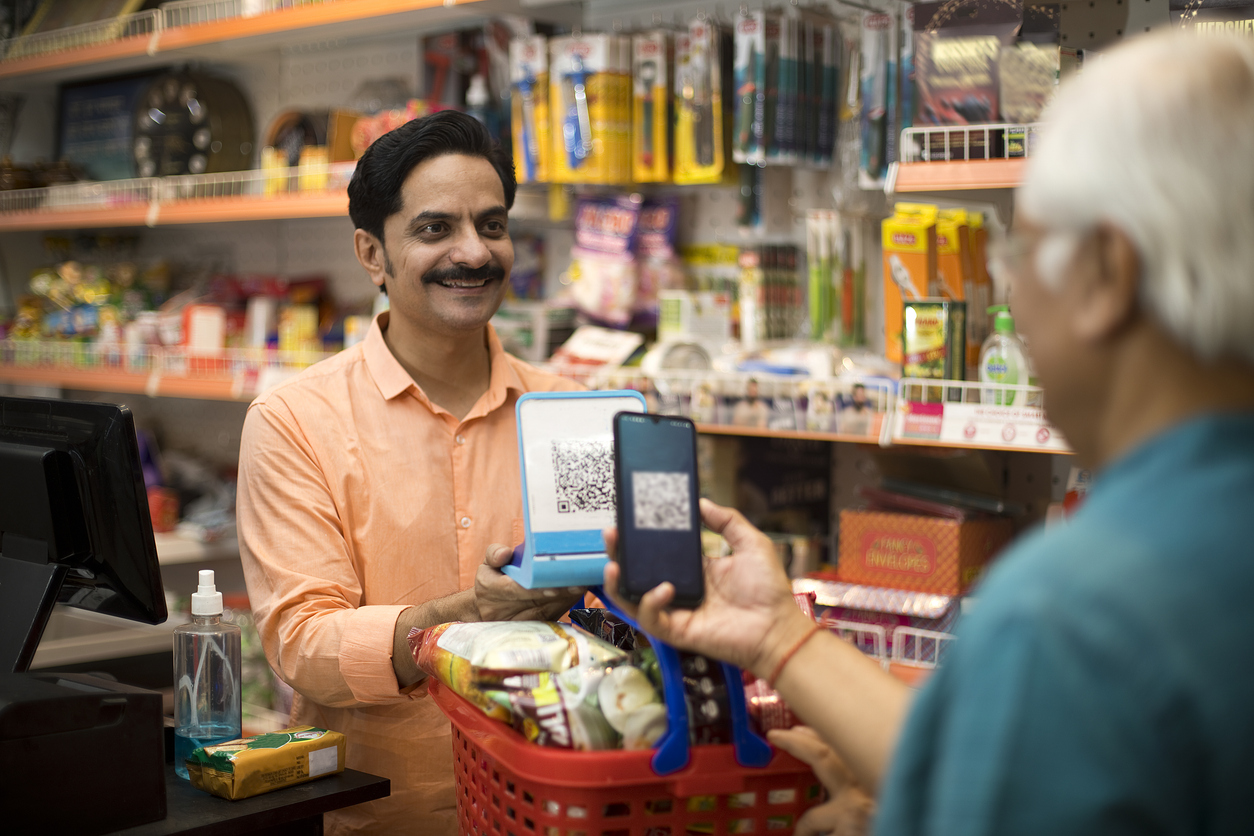
Customer scanning QR code with smartphone at store

Synopsis: UPI has been a big success story. But it doesn’t have to be 100% free to continue to remain popular. A carefully designed merchant fee can sustain the payments infrastructure while protecting small merchants and preserving India’s digital sovereignty.
UPI was built on a simple proposition: make digital payments fast, convenient and free. That promise revolutionised the way transactions were carried out and propelled UPI to become the largest digital-payment system in the world by transaction volume.
But has it become too big to remain free?
The question arises after the Lok Sabha passed the Taxation and Other Laws (Amendment) Bill, 2026. The new bill enables the Centre to impose charges on the Unified Payments Interface (UPI) and other notified electronic payment systems operated by banks and payment service providers.
This marks a new chapter in India’s UPI journey. Now, the real challenge will be in sustaining the ecosystem as it expands and becomes more strategic.
The change comes at a time when the United States has been raising questions about India’s digital-payment architecture, such as the role of domestic payment networks and UPI. The US Trade Representative has pointed out that American electronic-payment service providers are not widely popular in India’s UPI ecosystem.
But it would be simplistic to think of the legislative change as a reaction to American pressure. The economics of UPI itself have changed dramatically. The bigger issue now is whether India can respond to outside pressure without compromising on the policy choices that have led to the UPI’s success as a global digital-payment solution.
The new law does not set a percentage or levy a fee on all UPI transactions. Instead, the legal hurdle on a Merchant Discount Rate (MDR) being imposed for notified payment modes like UPI and RuPay debit card has been removed. This raises the potential for a regulated MDR to be imposed on certain merchant transactions.
If MDR is subsequently imposed, it will mark the end of one of the key drivers of UPI’s early adoption: zero MDR.
Till now, digital payments could be accepted without merchants having to pay the transaction fees that are normally charged by the card networks. The government covered part of the costs in incentive schemes, and banks, Payment Service Providers and fintech companies covered the rest, either directly or indirectly.
This model proved to be very successful at driving adoption. As of June 2026, 55.49 crore users had been onboarded on the UPI platform and during the period 2025-26, the platform facilitated transactions valued at ₹314 lakh crore and a total number of 24,162 crore transactions were made.
All UPI transactions rely on a huge infrastructure that needs constant investment. Behind every UPI transaction are layers of authentication, banking infrastructure, network capacity, cybersecurity, fraud detection and technological upgrades.
The transactions processed via UPI reached nearly ₹300 lakh crore in value in 2025, up from ₹244 lakh crore in 2024, marking a 21% jump. The rise in transactions when compared to 2024 was even higher at 33%. UPI had settled 21.6 billion transactions in just one month by December 2025, translating to an average of 698 million transactions per day.
In FY25, UPI contributed nearly 83 to 85% of the digital-payment volumes in India.
For banks, third-party app providers and NPCI, processing a UPI person-to-merchant transaction is estimated to cost around 0.25% of the transaction value. However, government incentive schemes have helped cover some of the cost and kept MDR at zero for RuPay debit card transactions and BHIM-UPI transactions since 2020.
But even as transaction volumes have increased, allocations for UPI and RuPay debit-card incentives dipped sharply from ₹2,000 crore in the 2025-26 Budget to ₹437 crore in the 2026-27 Budget.
The debate can no longer be framed as “free UPI versus paid UPI.” It needs to be reframed as the “accessible UPI versus sustainable UPI” debate.
There have been recent suggestions for a more selective form of MDR, rather than a general tax. One suggested model was to charge a fee of less than 0.5% on transaction amounts of over ₹2,000 for bigger businesses, but avoid charging fees for small businesses. The government has also said that if a fee is introduced in the future, it will be a token amount that will only be applicable in certain merchant transactions and person-to-person transactions on UPI will remain free.
A helpful example is Brazil’s Pix. Pix is also a real-time and interoperable account-to-account payment system like UPI that works within the country’s central-bank framework. The use of Pix is generally free, while financial institutions can charge for specific commercial Pix transactions and services.
This separation presents an opportunity to learn for India.
Smaller transactions can continue to remain free, and small merchants can remain protected from transaction fees. A fee on high-value transactions by large commercial users could, meanwhile, generate revenue through a well-managed MDR. The goal should be to set a price for commercial value, not for access to digital payments.
The MDR discussion is not just about UPI and merchant fees. India’s approach to payments has always been based on building a domestic capability in a space that has been dominated by Visa and Mastercard.
UPI and RuPay complement each other. UPI is an interoperable A2A payments platform that runs multiple applications. The move of RuPay credit cards to UPI has been a huge success. By October 2024, RuPay credit-card-on-UPI transactions more than doubled in the first seven months of FY25, to reach 750 million transactions valued at over ₹63,800 crore.
The question is not merely how much money India can raise by monetising its digital-payment ecosystem. It is also where that revenue goes. Some of the MDR revenue can be dedicated to cybersecurity, fraud compensation, rural infrastructure, and technological development.
More strategically, it can be integral to the building of domestic payment systems and mitigate our reliance on foreign payment infrastructure. The MDR discussion is an economic strategy discussion, rather than just a cost discussion of merchants.
The UPI example shows how a country can build a payments system of enormous scale while pursuing digital strategic autonomy.
But that independence is now in question. The US Trade Representative has expressed concerns regarding market access for US electronic-payment providers in India, including NPCI’s 30% share cap on market cap in third-party UPI apps that is set to be enforced in December 2026. PhonePe, which is 80% owned by Walmart, and Google Pay handle over 80% of UPI transactions and the new cap could give them headaches.
That doesn’t imply the Indian government should block foreign payment companies. Competition is important, and companies should have the ability to conduct themselves in an open and non-discriminatory manner. However, openness shouldn’t come at the cost of relinquishing control of critical payment infrastructure architecture. Payment sovereignty is about striking that balance.
This should also make India consider a public-interest pricing policy for UPI services instead of a blanket MDR charge. This framework should be based on three principles.
One is that person-to-person payments should be free. The social value of UPI is maximised if people can send small amounts without facing high charges. A student should be able to pay ₹100 to their parents, a worker should be able to transfer money home, and two people should be able to pay for a minor expense without having to worry about the fees.
Second, small retailers need to be safeguarded. For neighbourhood stores, vendors and small businesses, a small percentage can be a big number. The zero-cost nature of UPI has been a significant factor in mainstreaming these businesses.
Third, there is the option of charging a reasonable and limited MDR for large commercial transactions. Digital payments offer huge advantages to big retail stores and businesses, from quick settlement to reduced cash handling expenses, improved payment record-keeping, and convenience. It’s not too much to ask them to contribute small amounts for the upkeep of the infrastructure they use.
The biggest condition, however, is to be open when it comes to the use of money raised in this manner. MDR should not be a black box from which to extract. There is a clear potential for a share of the revenue to be invested in cybersecurity, fraud compensation, infrastructure changes and to expand secure digital payments to underserved areas. Yes, UPI does not need to remain 100% free. But the payment revolution and its momentum must be sustained.
Also Read:
The politics of forgiveness: Prime Minister Modi and the burden of example
Hon’ble MPs, it must be ‘South First’ on delimitation
A new political mood is taking shape in India
(Edited by R Rajesh Kumar.)



