

Published Sep 06, 2026 | 3:00 PM ⚊ Updated Sep 06, 2026 | 3:00 PM

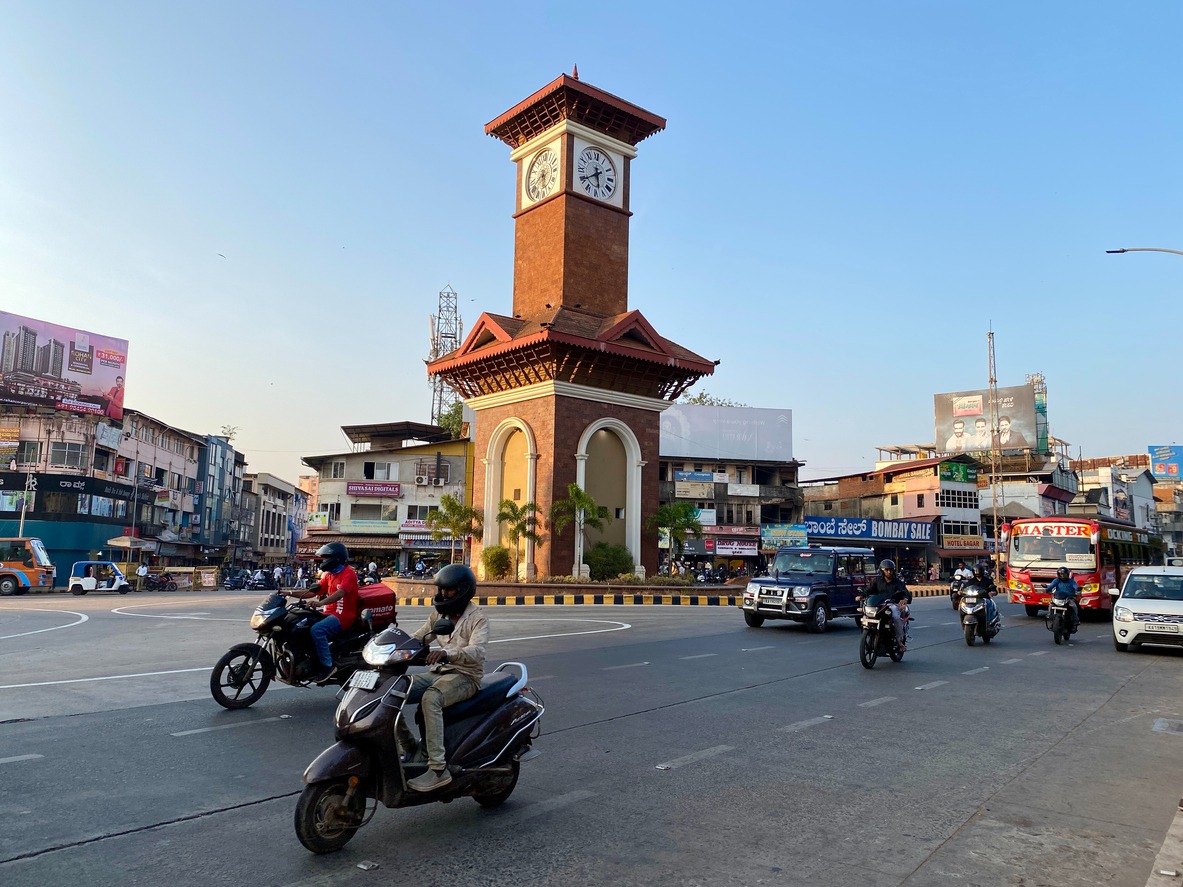
A glimpse of Mangaluru. Can it be South India's next growth engine? (iStock)

Synopsis: The success of Bengaluru and other big cities has come at a price — congestion, high costs and mounting pressure on infrastructure. Can Mangaluru and other emerging cities offer South India a different growth model, one that creates a network of economic engines rather than more mini-Bengalurus?
For decades, South India’s economic success has been powered by a handful of cities.
Bengaluru was elevated to the status of the technology capital of India, Hyderabad to the technology and pharmaceutical hub, and Chennai to a manufacturing and services powerhouse. This has led to the rise of job clusters and the concentration of talent, investment and infrastructure there. The next question is therefore not whether Bengaluru can continue to grow. It is whether South India can build enough economic engines outside its dominant metros to make growth more distributed, resilient and inclusive.
The recently published ‘LEAP Cities Index 2026’ provides an interesting starting point.
The index measures 43 variables in eight economic pillars in 233 Tier-2 and Tier-3 cities in 23 states and UTs, such as manufacturing, trade, logistics, financial services, health and education. The city of Mangaluru in Karnataka has a score of 68.4 and is the top-scoring city in the state.
LEAP is not a measure of city GDP, but rather a comparative index. Its value lies in drawing attention to the untapped potential hidden beyond the traditional metropolitan centres. Mangaluru may thus offer an alternative investment destination to the traditional metropolitan centres. It points to the possibility of a growth architecture that looks beyond the biggest cities.
The network effect has been the main reason for Bengaluru’s success.
Companies come to a cluster, people are drawn to the promise of jobs, investors follow, and infrastructure grows around the cluster. However, concentration has its price tag — high housing costs, congestion, increased commute time, strain on water and other infrastructure, and high demand for skilled labour. The answer is not to restrict Bengaluru, but to establish other cities that can absorb high-value economic activities.
Karnataka has started to take steps in this direction. The state currently has 550 Global Capability Centres, and plans to build 500 more by 2029, with an estimated potential of creating 3.5 lakh jobs and generating $50 billion in economic output.
Mysuru is also being proposed as the second IT city of the state under the 2026-27 Budget. But projects are not the same as growth. The true difficulty is in creating ecosystems.
The economic base of Mangaluru is of particular interest as it did not start with technology. The city has always focused on education and health care, finance and trade, and coastal connectivity. Technology has now been added as the cherry on top.
The industry estimates put Mangaluru as having more than 400 start-ups, over 250 technology companies and over 25,000 technology professionals. The government has announced the establishment of a 1.5-lakh-square-foot IT park at Derebail, a fintech Centre of Excellence and a data lab. The economies of successful smaller cities do not necessarily have to mimic a metro city’s economy. They can build around and complement existing strengths and capabilities, while developing new ones to create a more realistic pathway to regional growth.
What the new architecture needs
It takes much more than industrial parks and investment pledges to have a ‘Beyond Bengaluru’ strategy. There are at least four vital foundations:
First, leverage your economic identity. Cities should develop based on their existing capacities. Mangaluru can merge education, health, finance, technology and the coastal economy. The technology and knowledge services in Mysuru can be enhanced.
Coimbatore has the potential to further develop in advanced manufacturing.
Kochi can be the hub for logistics, tourism, healthcare, finance and technology.
The objective should be differentiation, not duplication.
Second, build talent. Human capital is the backbone of the knowledge economy. An interesting trend in Mangaluru’s LEAP is its education score of 89.7, which is one of the highest among the various scores that contribute to the overall ranking. Universities, skilling institutions and industry have to be part of the economic planning for any city. If a talent pipeline is not in place, there is no IT park that can work a miracle.
Third, build urban infrastructure. The ability to reliably supply electricity, water, broadband, transport, housing and healthcare is essential for workers and companies to be able to work in any city. Over the past few years, regional technology clusters in Karnataka have evaluated and identified continuing challenges due to infrastructure and ecosystem gaps.
Fourth, build connectivity. Smaller cities need to be linked not only by roads and airports, but also by the economic networks of suppliers, investors, universities, start-ups and world markets. This is what converts a collection of projects into an ecosystem.
The timing may be to the advantage of smaller cities.
AI is transforming the geography of knowledge work. With routine work increasingly becoming more automated and valuable tasks becoming more digital, businesses can be more flexible in finding specialised teams.
Technology firms in India are increasingly moving their AI initiatives from experimentation to production, according to industry estimates. This opens up an opportunity for Tier-2 cities.
They can harness their specialised talent, strengthen their digital capabilities and improve the quality of urban life. This will help them compete for more valuable functions from the beginning. However, AI is not necessarily a threat to the value of cities. It could actually increase the premium on places where talent meets institutions and quality of life.
The recent investments in Karnataka indicate a start in the direction of decentralisation of industries.
In June, the state approved 55 industrial projects worth ₹7,506 crore that can create around 28,000 jobs. Remarkably, of these projects, 41 lie outside Bengaluru Urban and Bengaluru Rural districts. But the true challenge is in making sure the investments have broader impacts on the local economy.
This will encompass creating local suppliers, redesigning courses at universities to meet the needs of the local industry, encouraging local start-ups around well-established companies, enhancing local infrastructure, and offering workers affordable housing and effective public transport.
Finally, it is important to note that the quantity and/or the value of projects announced is not the only indicator of success. What will be important is whether they establish economic ecosystems that are self-sustaining, not enclaves of investments.
There is no need for Mysuru, Mangaluru, Coimbatore, Kochi, Thiruvananthapuram and Visakhapatnam to become miniatures of Bengaluru, Chennai or Hyderabad. They may have their own potential strengths and can tap into those to create complementary economic activities and link them together with infrastructure, human resources, technology and markets that they possess.
This would mark a radical change and create a network of growth engines. This can help make the region more resilient. It will also ease migration pressures, expand opportunities for good jobs and give companies access to skilled workers outside of expensive metropolitan labour markets.
There needs to be improved and more robust urban institutions as well. Cities require improved economic data, expertise in planning, better finances, and increased capacity to manage growth. The LEAP Index also emphasises that improved information at the city level is significant in a country where there is no regular measurement of official economic output below the state level.
The notion of success for this strategy cannot be judged by the number of companies setting up their offices outside Bengaluru. It should be judged based on the widening geographic economic opportunity. Is it possible for an MBA graduate from Mangaluru to pursue his career globally without relocating? Without relocating to Bengaluru, can an entrepreneur in Mysuru get access to capital, mentors and markets? When the answer is more and more “Yes”, “Beyond Bengaluru” will be a redesign of economic geography in South India.
The LEAP ranking of Mangaluru is thus not about the city, but about the region. South India’s next growth economy should not be on the basis of making smaller Bengalurus. It should be designed as a network of capable cities – each one leveraging its own strengths, while being connected to larger markets and capable of generating prosperity locally.
Bengaluru can hold on to its status as an anchor. But South India’s next economic leap will depend on whether it can build a network of cities capable of generating prosperity beyond its traditional metropolitan centres.
Also Read:
Towards a sustainable UPI: How India’s digital payment revolution can reinvent itself
“Unseen University” of Bengaluru: Why the city’s informal classrooms are pulling ahead
Reclaiming Bengaluru’s footpaths: A model for inclusive urban transformation
(Edited by R Rajesh Kumar.)



