

Published Jul 22, 2026 | 8:00 AM ⚊ Updated Jul 22, 2026 | 8:00 AM


Synopsis: The “Unseen University” is growing in popularity but is having to encounter both real and imagined threats. As for colleges, those that change with the times and react quickly can take the informal system on.
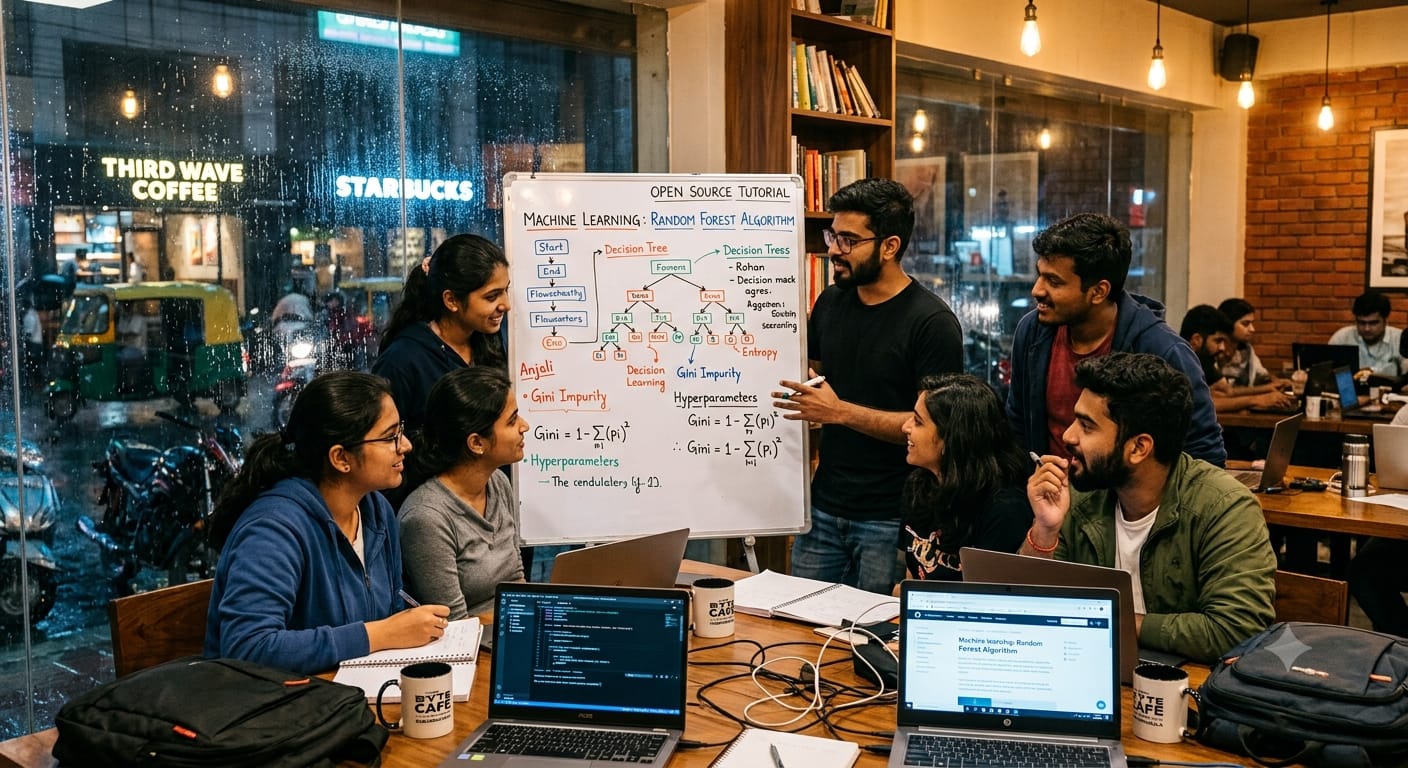
A group of youngsters are gathered around a whiteboard in a co-working café on a rainy evening in Koramangala to learn a machine learning algorithm from an open source tutorial. A home studio broadcasts a 2-hour product management workshop to students in three different time zones in a narrow lane behind a market. These are not isolated events, but trends repeating across Bengaluru, from study jams to maker meet-ups to boot camps and Discord servers, building an “Unseen University” that is now more relevant, faster and more impactful than traditional colleges.
The relocation of lectures from lecture halls to cafés is not just a simple moving around. It is an overhaul of the knowledge exchange, validation and monetisation processes in the country’s technology hub.
Several forces are driving this shift. Employers are now recruiting based on demonstrated abilities. Many startups and many of the established companies focus on projects, portfolios and GitHub histories instead of degree certificates. According to recruiters, a working prototype or a well-documented repo is more indicative of problem-solving than transcripts. But in tech, the cycle of new frameworks, libraries and tools is fast, and long curricular cycles do not appear very dynamic. Community groups can respond in weeks or months, while the universities take years to update the courses. So learners at the “Unseen University” can acquire current industry skills in months.
Affordability and flexibility are vital factors. Many are offered informally for free or at a low cost, are not running in a set time, are available in the evening or after work, and are targeted towards those with a job or a family. YouTube, Telegram and Discord platforms bring democratisation; local meet-ups bring mentorship and social accountability. The effects are multiplied by Bengaluru’s startup density. Angel-led workshops become job referral pipelines, hackathons become hiring grounds, and coffee table critique sessions become job referrals. This ecosystem is missing the accreditation but typically makes up for it with signalling. Micro-credentials, certified badges, and certifications from trusted experts overcome the lack of trust, and mentorship marketplaces shorten the learning curve of tacit knowledge into specific coaching. Informal apprenticeship—freelancing, early-stage jobs with wide roles, and open-source contributions—makes work the primary classroom.
However, colleges are beginning to feel the pinch. As mentioned earlier, university structures are slow: curricula lag industry needs, due to accreditation and multi-year course approval cycles and academic boards. Most degree courses are more oriented towards theory and concepts than towards working projects, based around tools, and so the students have a theoretical understanding of a product life cycle but not much experience in using it in real projects. There’s a good amount of industry–university collaboration, albeit not uniform, and a limited amount of deep co-creation, such as joint laboratories, co-designed syllabi, and embedded internships.
Visibly, results are apparent. “Degree is not a priority if you cannot demonstrate what you have created as the solution,” a product manager at a Bengaluru startup said. A student who dropped out of a second-tier college and went to a Coding Bootcamp said at a regional meet: “I can learn more in four months with professionals than during two years of college lectures.” Those voices are not an exception but a general phenomenon: if there is a possibility to assess the work firsthand, portfolios surpass diplomas.
The “Unseen University” is a growing power, with both real and imagined threats. The upside for colleges is that they can change: offer intensive project modules, credit for validated portfolio projects and establish continuous upskilling programs for mid-career professionals. Deeper institutionalised partnerships: grants for shared research labs, tax breaks for industry faculty, co-designed capstones—these are some of the ways that academic depth can meet market agility.
However, the informal ecosystem is also the source of a risk to further deepen inequality. Learning in networks favours people who have social capital; they are proficient in English and have flexible schedules. Not all badge programs are as tough as all boot camps. The focus on a quick return to work might foster ‘tool learning’, which may leave graduates exposed to the changes in technology.
Policy interventions can be used to extend benefits without lowering standards. There would be trust created if there were a state or national framework for micro-credentials, based on learning outcomes and assessment. It is important to consider public funding for community labs and access hubs for digital access in order to expand participation. Collaborating and co-creating curricula and shared facilities would be scaled up by incentives. Most importantly, scholarships, language support and outreach have to be part of reforms to the markets; otherwise, informal learning will be yet another means of exclusion.
Replacement is not the most promising route. Universities provide depth, research ability and recognised accreditation; informal networks provide agility, community and immediate relevance. When integrated, they can create a combined ‘lifelong learning system’ which can support learners at all stages in their career. In Bengaluru, where talent and capital are concentrated, it is important to create permanent links between the modes and not have a split system where only connected ones flourish, and strict learning is a privilege.
The “Unseen University” is already helping Bengaluru learn faster. But whether the city can keep pace with fostering inclusive and sustainable human capital development will depend on the ability of colleges, companies and policymakers to learn to work together—by recognising new credentials, building shared infrastructure, and reshaping incentives to ensure agility and equity go hand-in-hand.
Also Read | What AI can’t teach: The power of serendipity in learning
(Edited by R Rajesh Kumar.)



