

Published Jul 30, 2026 | 1:27 PM ⚊ Updated Jul 30, 2026 | 1:27 PM

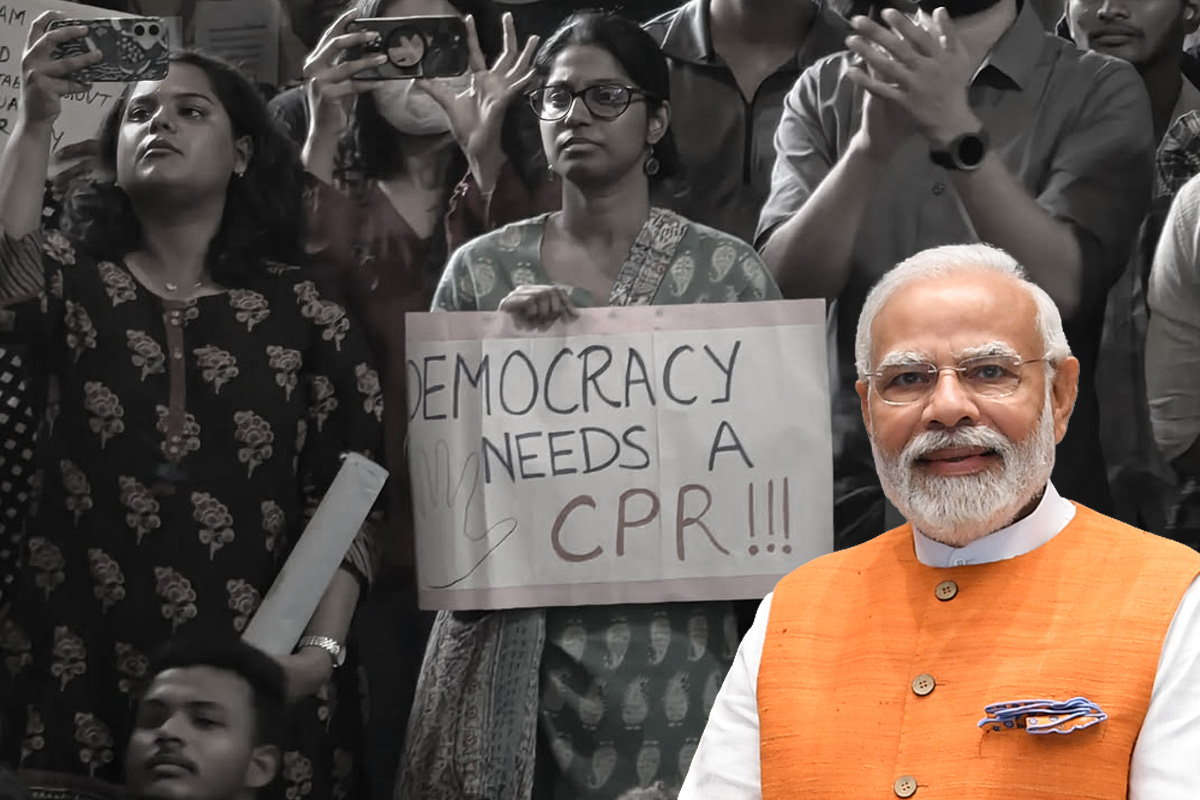
Several groups held demonstration, against the Delhi Police's brutality against agitating students.

Synopsis: The message from India’s young is clear: institutions must listen, explain and engage in a continuous dialogue with them. Otherwise, don’t be surprised if they take to the streets again.
The Cockroach Janta Party-led student agitation did not just change the language of protest; it also revealed what today’s young expect from governments. Creative and unafraid to speak their minds, they aren’t just content with voting every five years. They expect a continuous relationship, in which the government is supposed to give explanations, answer questions and listen to them before their frustrations spill onto the streets.
As RSS chief Mohan Bhagwat said during the protests: “Not dictation, but discussion. Not orders, but consensus.” That will need a significant change in the democratic vocabulary of India. Public institutions have been functioning in a strait-jacketed manner for many years. Governments drew up policies, the universities and the regulators put them into effect, and citizens expressed their approval or disapproval through elections, petitions, or organised protests. It was hierarchical, largely one-way and based on the idea that public engagement would happen at certain moments.
Today’s young have shaken up that model. They are not content with mere consultation, but desire participation. The flow of information no longer runs in one direction. Credibility has to be as much about openness as about authority, they have underlined. When communication is limited to the end of the decision-making process, the institutions seem distant, even when they meet all the requirements.
The takeaway from the CJP protests is more than just one movement, one grievance. It portrays a growing chasm between how institutions have operated and how young citizens expect them to.
Also Read | Withdrawing consent: Gene Sharp and the Cockroach uprising
South India may be better placed than most regions to adapt to these changing expectations.
It’s no surprise that Karnataka, Tamil Nadu, Telangana, Kerala and Andhra Pradesh are known for investing in higher education, technology and public service delivery. Bengaluru has come to be known as the hub of digital innovation. Telangana is scaling up the use of technology to deliver citizen services. Kerala’s participatory local governance is well known, and the huge higher education network in Tamil Nadu continues to define the dreams of millions. These strengths are enabling the region not just to improve governance, but to change it.
The challenge is to understand that the 21st century is not about efficiency in governance alone. Citizens expect accessible and responsive institutions. Trust today is more important than authority is.
A good example can be found in higher education.
Technology has made it easier than ever for universities to connect, but decision-making can still be opaque. Students typically receive administrative decisions in the form of announcements, not as products of clear decision-making. The failure to address a grievance promptly, poor communication and a lack of opportunity to have a structured conversation often exacerbate the problem even when the decision is correct from an academic or administrative point of view.
This can be seen in other public institutions too. Recruitment agencies, regulatory bodies, and government departments continue to rely on communication approaches developed for a slower information age. This is rarely because new rules do not exist; it is because those rules are not communicated or explained clearly. In an age of 24×7 public scrutiny online, a slow institutional response quickly translates to seeming uncaring.
This does not mean that the government should rule by social media or that governments must take immediate action on all online campaigns. There is a need for careful policy deliberation, legal protection and institutional stability. But never should public discussion be replaced by the doctrine of due process.
Institutions that explain, recognise competing issues, and show that they have thought about, rather than ignored, opposing views are more likely to be accepted. This transition is already underway in South India, with many of the necessary ingredients already in place. The democratic innovation is supported by strong digital infrastructure, relatively high literacy, active civil society organisations and existing academic institutions. The next transition is cultural rather than technological.
Also Read | ‘It’s the economy, stupid’: The making of India’s Gen Z discontent
Three changes are particularly noteworthy:
The first is a “change from notification to dialogue”. Institutions need to move from sending out alerts to creating opportunities for ongoing dialogue with students, citizens and stakeholders before key decisions are made.
The second is a “change in focus from information to explanation”. Publishing orders and circulars is not enough. Citizens have increasing expectations to know the “how” and “why” of public decisions, as well as the goals of such decisions.
The third is a “shift from representation to participation”. Democratic legitimacy does not depend solely on periodic elections or formal consultation. It needs to be reinforced with credible complaints procedures, institutional openness during the policy process and structured public feedback.
These changes are neither radical nor expensive. Universities can hold digital town halls, provide timely grievance reports, and include student representatives in administrative discussions, beyond academic ones. Government departments can inform people of policy changes and other important updates and timelines rather than let speculation take over. These measures do not compromise institutional power in any way.
The lasting takeaway from the CJP protests is that it doesn’t help to be antagonistic with the young and attempt to cow them down. They have proven that they are not passive actors but active participants who want to have their say when it comes to their future. The sentiment is unlikely to go away, regardless of whether the CJP movement is successful or not.
Listening must now be as crucial as deciding. Governments that grasp this can turn moments of public discontent into opportunities for democratic renewal. Better policies are not the only means of shaping the next chapter of Indian democracy: better conversations between governments and the people they serve will do the trick as well.
Also Read | Beyond Pradhan’s resignation: CJP and the unfinished struggle for educational justice in India
(Edited by R Rajesh Kumar.)



