

Published Sep 02, 2026 | 2:24 PM ⚊ Updated Sep 02, 2026 | 2:26 PM

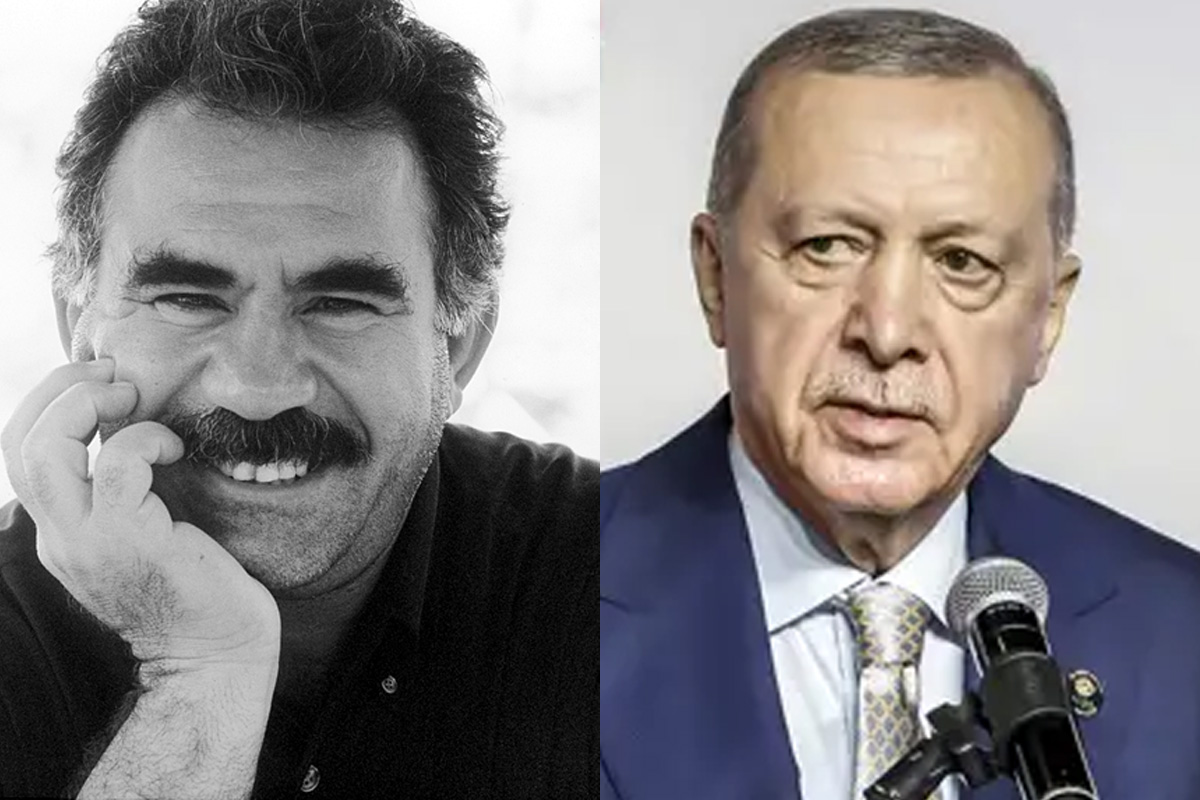
Kurdish activists describe the move to disarm and dissolve the PKK as "a positive development."

Synopsis: As Istanbul seems to be inching ever closer to settling the century-old Kurdish–Turkish conflict, the Kurds live in hope. Freedom. Equal rights. And for their legendary leader Abdullah Öcalan, a chance to walk amidst his people through the villages of Kurdistan. Will it come to be?
With the Turkish Parliament passing a law last week that disarms and dissolves the powerful political voice of the Kurdish people, the Kurdistan Workers’ Party (PKK), Istanbul seems to be inching ever closer to settling the century-old Kurdish–Turkish conflict. But will the Kurds get justice and equal rights?
The move may have the backing of most Kurds including the Nelson Mandela of the Middle East, the legendary Abdullah Öcalan. But one thing is amply clear. This is a militarily assertive Turkey that’s intent on silencing not just all internal opposition but led by the ambitious President Recep Tayyip Erdoğan, it is rapidly consolidating Turkey’s position as the new and emerging power across the Middle East and Eurasia.
Both the National Congress of Kurdistan (KNK) and the pro-Kurdish party in Turkey—the DEM Party—backed the law in parliament.
But Erdoğan is also laying down the red lines with ‘genocidal’ Israel, running protective rings around protégé Ahmed al Sharaa in Syria where Kurds have lived in sizeable numbers for hundreds of years, and has sealed a landmark mutual defence agreement with the powerful Gulf nation and former nemesis, Saudi Arabia, and its longstanding South Asian ally, the nuclear-powered Pakistan.
This is Istanbul recreating the age-old Ottoman Empire that once overran the desert Arabs who built underground citadels like Diriyah, that incidentally, still exist to this day.
And with a law in place—titled “Strengthening National Solidarity and Social Cohesion”—that reflects what the legendary Kurdish leader, Abdullah Öcalan called for and is backed by the National Congress of Kurdistan (KNK), a rising Turkey is simultaneously pushing its area of influence across the Middle East, while tying up loose ends at home.
This law, it must be said, does have Öcalan’s imprimatur. It marks a big step forward from when Öcalan, first, publicly laid out the framework for a cessation of hostilities, and an end to the strategy of armed struggle with his call for “Peace and a Democratic Society” on February 27, 2025.
And this, while he stays imprisoned in isolation at Imrali island for some 27 years!
Clearly, in backing the law, he is signaling that he hopes to bring justice to his beleaguered people. And perhaps for himself. But in allowing the dissolution of the powerful armed resistance group, Kurdistan Workers’ Party (PKK), he has made a significant concession.
The PKK, since its founding in 1978, Kurdish experts say “fostered Kurdish national self-awareness and enabled national, political and social organisation in the face of assimilation and oppression by the Turkish state.”
Kurdish activists describe the move to disarm and dissolve the PKK as “a positive development.” They say the Turkish government has finally taken note of steps by Öcalan and the Kurdish movement, and responded with this law. “There is now hope that this will pave the way for peace and a democratic solution of the Kurdish Question,” one insider said.
But there are others who question whether the Framework Law goes far enough. They say the ‘Kurdish Question’ cannot be resolved solely through the dissolution of the PKK, which is the central focus of the law.
Historically, there were over 28 uprisings since the early 19th century that predate the current Kurdish unrest. It began in Sulaimaniah in 1806 in what is today, the Kurdistan Region of Iraq (KRI). The resistance of the PKK represents the 29th uprising by the Kurds since World War I, following the founding of the Republic of Turkey when Kurds were deprived of their basic rights by the Turkish state with active international support. “The PKK was not the cause of the conflict, but rather a consequence of the denial and oppression of the Kurds by successive regimes in Turkey over the last century,” a Kurdish analyst requesting anonymity said.
Will the EU and international powers now take the same step towards peace through reconciliation?
Resolving the Kurdish issue therefore, may not just be a matter for Turkey. The conflict has lasted a century because global powers such as the US, the UK, Germany and Israel have added fuel to the fire, partly to advance their own interests, the expert added.
“Western countries have taken sides in this conflict and have stigmatized the Kurdish diaspora in their own countries by banning the PKK and designating it a ‘terrorist organisation’. Any change in Turkey regarding the resolution of the Kurdish issue also requires an international shift in attitudes toward the Kurds,” the expert said.
This should include ceasing the pressure on the PKK, formally removing its designation as a terrorist organization worldwide, and ending the criminalisation of pro-Kurdish activism, particularly in Europe.
Apart from some three million Kurds who make up the European diaspora, around two million more live in the US, Canada, Australia, and West Asian countries; their lives and work will be deeply affected by these policies, the expert pointed out.
To ensure the success of this process, Kurdish leaders are calling on the international community and particularly the European Union and the governments of Germany, the United Kingdom, France, and the United States to lay the ground for peace by changing course, the expert said.
Öcalan’s freedom is essential for the success of the process
It’s clear that Abdullah Öcalan—and his freedom—plays a central role in this process.
If the move to free the Kurds from centuries of oppression, is to have any hope of success, the Nelson Mandela of the Middle East’s contribution as a key interlocutor on the Kurdish side must be facilitated. The move must be protected with conditions that genuinely allow for communication, legal safeguards, and political effectiveness, insiders said. Of vital importance is the implementation of the 2014 ruling by the European Court of Human Rights on the so-called “right to hope”, which holds that life imprisonment without the possibility of release is a violation of the prohibition of torture and ill-treatment.
The member states represented on the Committee of Ministers of the Council of Europe can provide their support in this matter, as the Framework Law does not address either the status or the terms of Öcalan’s sentence.
As the Kurdish issue simmers in Syria and Iran, a solution to the conflict in Turkey could also have an impact on both these countries where the Kurdish people face an uncertain future. The process in Turkey, if successful, could be replicated, becoming a significant precursor towards de-escalation and stability throughout the broader Middle East.
Freedom. Equal rights. And for Abdullah Öcalan, a chance to walk amidst his people through the villages of Kurdistan. A free man.
The Kurds live in hope.
From our archives:
Beyond the Mecca Accord: A new security equation from the Gulf to South Asia
Who is a Kashmiri? The contradictions in Pakistan’s Kashmir discourse
The Great Rupture: Dangers of a world obliging Trump, Putin, and Xi
Trump-ite world or not, there was never any West—only arguments about it
(Neena Gopal is a geopolitical analyst and author. Views are personal.)



