

Published Jul 01, 2026 | 3:00 PM ⚊ Updated Jul 01, 2026 | 3:00 PM

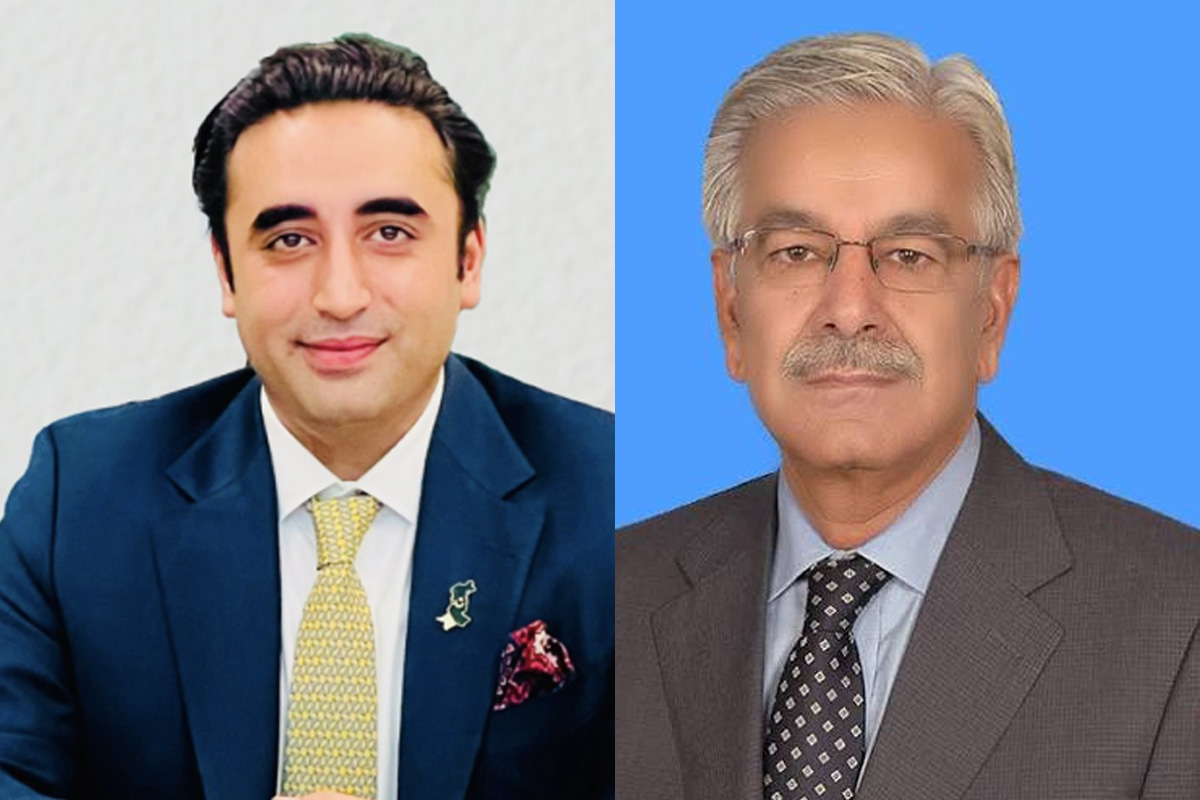
Bilawal Bhutto and Khawaja Muhammad Asif

Synopsis: By asking whether the people of PAJK are “Kashmiris”, Pakistan’s Defence Minister has inadvertently reopened a debate his country has long sought to avoid. Khwaja Muhammad Asif’s remarks lay bare the contradictions at the heart of Pakistan’s Kashmir discourse.
Pakistani Defence Minister Khwaja Muhammad Asif recently stirred a hornet’s nest when he questioned the identity of people living in Pakistan-administered Jammu and Kashmir (PAJK), commonly referred to as “Azad Kashmir” in Pakistan. That one question challenges Pakistan’s entire Kashmir policy.
In an interview, while condemning the ongoing protests in the region, Asif challenged the claim that people living in Rawalakot, Dhirkot, Mirpur and other parts of PAJK could identify themselves as “Kashmiris”. His remarks triggered a sharp reaction from Pakistani opposition benches in the National Assembly, as well as from residents of PAJK and the diaspora. The chairman of the Pakistan People’s Party, Bilawal Bhutto, strongly objected to the Defence Minister’s statement, underscoring the political sensitivity surrounding questions of identity and representation in the region.
The controversy unfolds against the backdrop of ongoing protests in Pakistan-administered Jammu and Kashmir, arguably the most visible mobilisation in the region in recent history. In the context of these protests, the Pakistani Defence Minister’s remarks touched a particularly raw nerve and reopened questions about the very basis of Pakistan’s official position on Jammu and Kashmir, especially since the Pakistani state itself describes the region as “Azad Jammu and Kashmir” and distinct from the rest of Pakistan.
The controversy is about far more than one minister’s remarks. It exposes a paradox that has existed for decades: Pakistan’s official Kashmir narrative treats the entire former princely state as a single political and religious entity, whereas the region itself has always consisted of multiple linguistic, ethnic and cultural communities.
The uproar over the defence minister’s comment raises questions about the decades-long Pakistani state and its society’s understanding and internationalisation of J&K. The debate assumes greater importance considering how the unidimensional narrative around Kashmir has proved a major source of radicalisation within Pakistani society, particularly in Punjab province.
Many Pakistan-based terrorist outfits trace their origins, mobilisation and fund-raising to this narrative. Their effects and the actions of these groups have been felt across the subcontinent, leaving thousands dead and injured. Arguably, this has been one of the most significant transnational security challenges of the past several decades, with consequences extending far beyond South Asia. More or less, the militarisation of the Pakistani polity is a direct consequence of the Pakistani state’s version of the “Kashmir” cause.
For those exposed to the people and state narratives on either side of the Radcliffe Line or the international border, the terms “Kashmir” and “Kashmiri” are often understood differently on either side.
On the Indian side, particularly in the context of the post-independence six-decade-long consistent and sustained efforts of public intellectuals such as the late Balraj Puri through his books, writings and wider engagements, there has—broadly speaking—been greater understanding, information, knowledge and reconciliation with the idea that Jammu and Kashmir encompasses multiple cultural, ethnic and linguistic identities. The present-day politics and the requirement for the governing elite to address the political aspirations of various identities and communities are a mere continuation and derivative of this process.
Now there is also an acknowledgement that while J&K has historically been a Muslim-majority unit, ethnic and linguistic identities remain strong even within the Muslim community of the region. Essentially, a Kashmiri is understood to be a Kashmiri-speaking person, while other equally significant identities, such as Dogra, Gujjar and Pahari, coexist within J&K.
Thus, a Kashmiri may be either Muslim or Hindu, just as a Dogra or a Pahari may also be either Muslim or Hindu. All Gujjars in J&K are Muslims, unlike in the rest of India, where the overwhelming majority of Gujjars are Hindus, with large populations in Rajasthan, Haryana, Uttar Pradesh and the National Capital Region.
In the pre-Independence era, the two broad linguistic distinctions in J&K were Kashmiri and a second group of akin languages, namely Dogri, Gojri, Pahari and Punjabi. For a long time, this second group was stated to be different dialects of Punjabi. It is a lesser-known fact that while the princely state of J&K was popularly known as ‘Kashmir’, the non-Kashmiri-speaking segment comprised more than 60 per cent of J&K’s population.
The bifurcation of J&K in 1947 kept the Kashmir Valley more or less intact while dividing the more populous and religiously diverse Jammu. The population of Jammu, as per the 1941 census, was 1.9 million, whereas that of Kashmir was 1.7 million. After Partition, virtually the entire Kashmiri-speaking population remained on the Indian side, residing largely in what is today known as the Kashmir Valley.
Also Read | The Great Rupture: Dangers of a world obliging Trump, Putin, and Xi
Post-1947-48, there has been a hyper-emphasis on the term “Kashmir” and the “Kashmir cause” in Pakistan and PAJK. The label has come to be appropriated by virtually everyone living in PAJK, even though almost the entire population, estimated at over four million, speaks variants of Pothwari or Pahari rather than the Kashmiri language.
When the Pakistani state or the wider public refers either to PAJK or to the Indian side of the former princely state, it simply uses the term “Kashmir” and describes all its inhabitants as “Kashmiris”. In reality, however, this creates its own contradictions.
The people of PAJK share close familial, ethnic, linguistic and religious ties with neighbouring northern Punjab, commonly referred to as the Pothwar region. Communities such as Jats, Rajputs and Gujjars are found on both sides. Yet the ethnic and linguistic diversity of the erstwhile princely state has largely disappeared from Pakistan’s public discourse for several reasons.
First, the Pakistani state’s claim over J&K is primarily based on the territory’s Muslim-majority status, as they call it the “unfinished agenda of partition”. In doing so, they tend to erase J&K’s ethnic and linguistic diversity, with each diverse group having their own aspirations. This is despite the fact that non-recognition of ethnic and linguistic identity was seen as the primary reason for the dismemberment of Pakistan in 1970-71, as the Bengali-speaking East Pakistan became Bangladesh.
Second, among the people of PAJK, there is a reluctance to acknowledge their ethnic and linguistic identity.
In contrast, on the Indian side, Pahari and Gujjar identities have become important markers of political and cultural identity. In J&K, a Pahari or a Gujjar will immediately correct someone who calls them Kashmiri. Of course, this process has happened gradually in the post-independence era, but this process has been further consolidated by the present incentive structure as both communities are now declared as Scheduled Tribes. In PAJK, the incentive structure is the opposite, where to describe themselves as “Kashmiri” makes them stand distinct from communities living in nearby Punjab.
Third, there is an additional factor working in PAJK for continuing the label “Kashmiri”. The diaspora from there, present in the UK, is always keen to emphasise their “Kashmiri identity” as they distinguish themselves from the other expatriate Pakistani communities. Because of its economic prosperity and transnational exposure, as is often the case with South Asian immigrant communities, the diaspora exerts considerable influence on society in PAJK.
The grievance over the loss of their land to the Mangla dam in the 1960s became a source of political mobilisation for the Mirpuri diaspora. The local grievances, such as forced displacement due to the dam, the remittances-driven affluence of the people living in the Mirpur area of PAJK and Kashmir militancy are the primary factors that drove the politicisation of Mirpuris.
The early exposure to democratic structures of the West and material wealth facilitated the process, and due to their huge numbers, they influence the electoral process of many British parliamentary constituencies. This diaspora is a cohesive group as compared to other sections of Pakistani or South Asian ethnic diasporas.
One of the possible explanations is the homogeneity in the caste origins of the diaspora population, which provides scope for the continuation of social bonding. Intra-caste and family marriages are quite common among the Mirpuri diaspora and this further cements the bonds.
This makes the political mobilisation of the Mirpuri diaspora easier. Their collective, political and social power can be determined by the fact that they decide the electoral results of many British Parliamentary constituencies. This gives them influence in the framing of British foreign policy on South Asia.
Fourth, decades of restricted access across the border or Line of Control have fostered myths and misconceptions on both sides. In Pakistan and PAJK, there is limited knowledge about the social and political realities of Jammu and Kashmir. The older generation, which had first-hand knowledge of the undivided princely state and cross-LoC interactions, is gradually passing away.
There is, however, empirical evidence that the brief period of cross-LoC travel and people-to-people exchanges between the two countries after the opening of crossing points in the mid-2000s began to alter these perceptions. Many long-held assumptions were challenged as direct contact replaced inherited narratives.
Ultimately, Khwaja Asif’s remarks have exposed an inconsistency that has long existed beneath the Pakistani official Kashmir narrative. By questioning whether the people of PAJK are “Kashmiris,” he inadvertently reopened a debate that Pakistan has historically sought to avoid. It is the distinction between territorial claims and the region’s complex ethnic and linguistic identities. Ironically, a statement intended as a casual observation has highlighted the very paradoxes that continue to shape Pakistani discourse on Jammu and Kashmir, reinforcing the need to understand the region not through a single religious lens but through its far more diverse historical and social realities.
(Luv Puri has authored two books on Jammu and Kashmir, namely Uncovered Face of Militancy and Across the Line of Control, the latter published by Columbia University Press.)
Also Read:
‘Resistance works’: What Rahul Gandhi needs to do to keep his tryst with destiny
Trump-ite world or not, there was never any West—only arguments about it
The timeless satire of C Northcote Parkinson and what it teaches about our work life today
(Edited by R Rajesh Kumar.)



