

Published May 25, 2026 | 7:00 AM ⚊ Updated May 25, 2026 | 7:00 AM

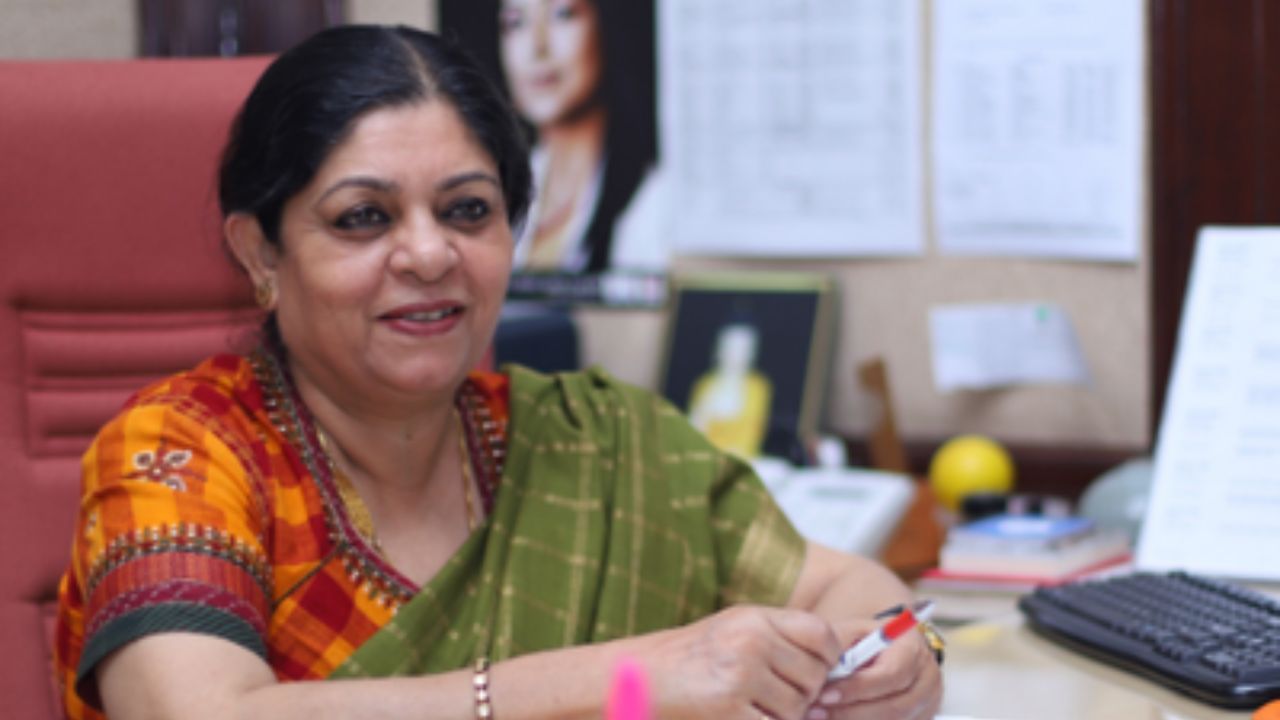
Poonam Muttreja, Executive Director of the Population Foundation of India.

Synopsis: Andhra Pradesh Chief Minister N Chandrababu Naidu’s proposal to pay families for having a third and fourth child does not adequately consider its consequences for women’s health and wellbeing. Poonam Muttreja, Executive Director of the Population Foundation of India, argues that the policy increases pressure on women, ignores consent, overlooks the first two children, and treats women as instruments of demographic policy rather than autonomous individuals.
Earlier this month, Andhra Pradesh Chief Minister N Chandrababu Naidu stood before a crowd of thousands at a public rally in Srikakulam and made a striking announcement: the state would now incentivise larger families. Parents would receive ₹30,000 for the birth of a third child and ₹40,000 for a fourth.
It is a U-turn from a 30-year policy favouring smaller families, originally championed by Naidu himself during his first stint in power. The stated goal is to arrest and reverse the state’s falling birth rate, which has dipped well below replacement level.
“I have thought about this many times. In the past, I worked towards family planning. But today, once again, children are our wealth, and a need has arisen for all of us to work for their sake,” Naidu declared.
“That is why I have made another decision. For the third child, we will give ₹30,000 immediately upon birth. For the fourth child, we will give ₹40,000.”
What the latest announcement does not appear to consider, however, is its impact on women: what it asks of their bodies, and whether a cash incentive at birth is truly a population policy, or something else entirely.
South First spoke to Poonam Muttreja, Executive Director of the Population Foundation of India, to understand the assumptions and consequences underlying the policy.
Also Read: Jwala Gutta donated 60 litres of breast milk. Here’s what India’s NICUs actually need
Cash incentives, rather than being a benign policy measure, could have drastic consequences for women’s health and well-being, according to Muttreja.
“That is not even an opinion poll. It is a powerful man standing in front of a crowd and saying, essentially, ‘Haan, bolo.’ When financial pressure begins shaping reproductive decisions, we must ask whether those decisions are truly free. A woman may begin thinking, ‘I need the money, so should I have another child?’ That is the danger such announcements create,” she said.
“A man may be in debt. A man may be drinking excessively and therefore be in debt. There may be pressures related to dowry, drugs, overspending, or other household burdens. In such situations, families may begin viewing pregnancy as a way to access Rs 30,000.”
It is therefore not unreasonable to imagine coercive pregnancies becoming more common, Muttreja said.
“This is exactly why the global consensus at the 1994 International Conference on Population and Development rejected both incentives and disincentives linked to fertility. Such policies undermine women’s autonomy and reproductive rights.”
Muttreja also pointed to existing evidence of the harmful effects of cash incentives tied to sterilisation.
“We have seen how incentives distort family planning. We provide Rs 1,400 as an incentive for sterilisation, and even that gets misused. Most women undergo sterilisation only after multiple pregnancies because they are not offered adequate access to temporary contraceptive methods,” she said.
“Nearly 77 percent of women who undergo sterilisation in India have never used a temporary contraceptive method before. That reflects how poorly our policies are designed and how incentives can distort reproductive healthcare. As a result, women go through repeated pregnancies, multiple abortions, and long-term health complications.”
The policy, in effect, places the burden of reversing the state’s declining fertility rates on women’s bodies, often without meaningful consent, according to Muttreja.
Also Read: Can a pandemic make healthcare stronger? Tamil Nadu’s maternity data says yes
While Andhra Pradesh has acknowledged falling birth rates, Muttreja said the state does not appear to be grappling with why they are declining.
“This is not a disaster, and there is no reason to panic. Low fertility is not simply a question of people refusing to have children,” she said.
“It is shaped by women’s education, delayed marriage, the rising cost of raising children, job insecurity, lack of childcare, infertility, and the unequal burden of domestic work that women disproportionately bear.”
A cash incentive addresses none of these issues and may instead worsen the social burden already placed on women.
“Such a policy may increase pressure on women to conceive, prove their fertility, and marry early,” she said. “Any pronatalist policy must be explicitly anchored in consent, reproductive autonomy, informed choice, and women’s voices. Women cannot and should not be treated as instruments of demographic policy, which is exactly what the government is doing.”
Moreover, the announced scheme applies only to the third and fourth child, while the first two receive no support. Muttreja said this makes the policy not only anti-women, but also anti-child.
“Can you imagine growing up in a family where the government supports the third and fourth child but not the first two? What kind of message are we sending to children?” she asked.
“Rarely do we stop to ask whether this money is truly for the wellbeing of the woman or the child beyond the first few months after birth,” she said. “What happens in the second year? What happens in the third year?”
Also Read: Should Indians worry about Ebola? Experts say no, but stay informed
One of the factors behind Andhra Pradesh’s falling birth rates has been sustained investment in women’s education. Yet, the state has not done enough to create employment opportunities for educated women, Muttreja said.
“Because the state is not focusing enough on women’s employment, despite high levels of education, it becomes very easy to tell women: have more children, stay at home, and do not demand jobs that are not available – not just for women, but for many men as well,” she said.
“What Chandrababu Naidu and his government are essentially saying is that the economy will suffer because there will not be enough young people in the future. But we must hold up a mirror to them. Recent research from Azim Premji University sends a strong signal that Andhra Pradesh’s population management approach is not aligned with the state’s social and economic realities.”
According to State of Working India 2026, published by Azim Premji University, female graduate unemployment in Andhra Pradesh exceeds 60 percent. Nearly 50 percent of young women in the state are NEET – not in education, employment, or training.
Moreover, the policy appears to view Andhra Pradesh in isolation, without considering its place within the Union of India.
“If the state is worried about labour shortages and future economic security, India already has regions with large pools of migrant labour. Andhra Pradesh should not hesitate to welcome migrant workers from states such as Bihar, Uttar Pradesh, and Madhya Pradesh, where younger populations and higher fertility rates still exist.
“After all, Andhra Pradesh itself has sent skilled professionals across the world, especially to the United States. If Andhra Pradesh can send its skilled workforce abroad in search of opportunities, it should also be willing to accept migrant workers from other Indian states who are looking for employment.”
Also Read: Indians pay more for pink salt social media influencers promote, ignores cheaper, healthier products
Muttreja believes the policy appears to be more a result of panic than of any serious socio-economic assessment.
“It is not as though Andhra Pradesh is facing negative population growth. That is why I believe the current response is driven more by panic than by sound diagnosis. I do not think either the diagnosis or the treatment is correct,” she added.
Instead, she urged greater investment in enabling women to participate fully in the workforce.
“There is so much more that Chandrababu Naidu and Andhra Pradesh can do if they genuinely want to achieve some balance in fertility. But first, they need to create balance for women. I would begin with childcare, which is one of the biggest challenges women face. We need men to participate more in household work and share equal responsibility. We need parental leave for both fathers and mothers, not just maternity leave,” she said.
“Someone from NITI Aayog shared a very good idea. Give women maternity leave immediately after childbirth and then, when the baby is around six months old, provide three months of paternity leave to the father. That is the stage when complementary feeding begins and mothers need the most support.”
Workplace flexibility matters too, but only if it is extended equally.
“If such flexibility is given only to women, they will lose out further in the workplace. Both men and women should receive workplace flexibility if they are participating in childcare and household responsibilities,” she said.
“Women’s aspirations have changed. Young women today do not want to go through the same drudgery our grandmothers experienced. Parents understand that they cannot adequately invest in their children’s education, nutrition, healthcare, and overall wellbeing if they have too many children. They simply cannot afford it.”



