

Published May 24, 2026 | 7:00 AM ⚊ Updated May 24, 2026 | 7:00 AM

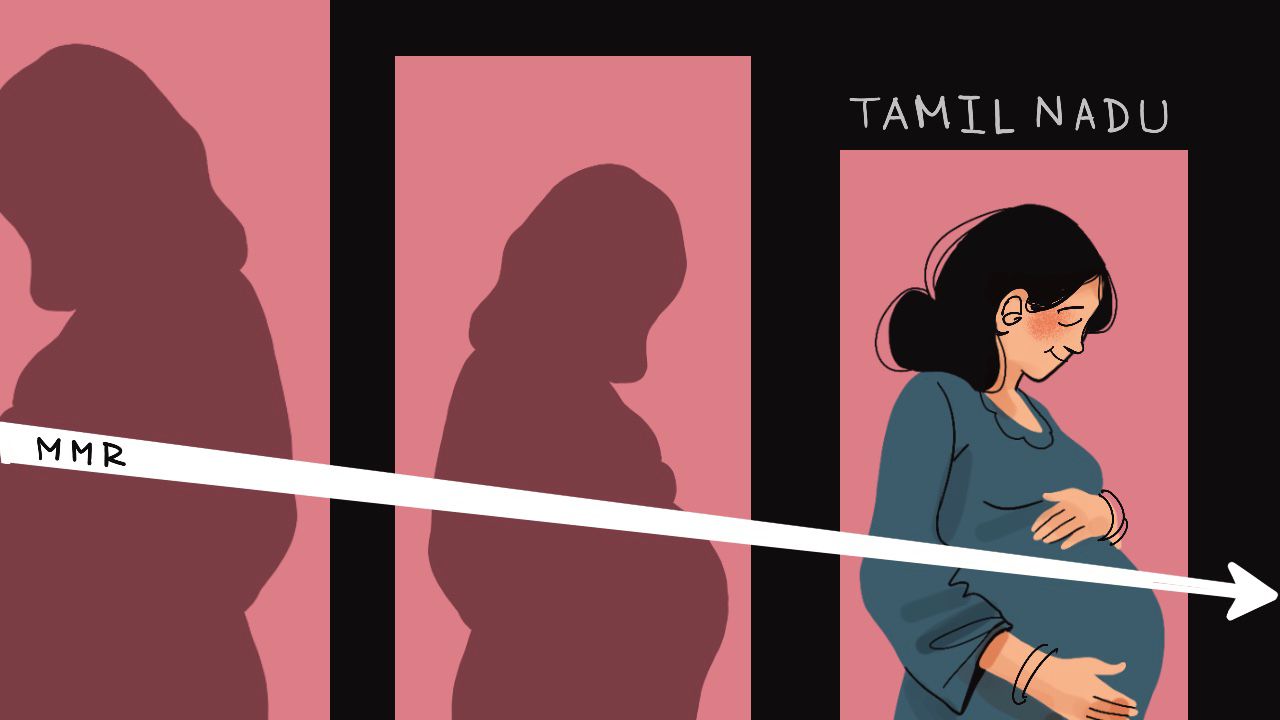
India's national maternal mortality average sits at 97 deaths per 100,000 live births.

Synopsis: Tamil Nadu’s maternal health system defied global pandemic trends, according to an IIT Madras study. While the second COVID-19 wave saw maternal mortality rise nearly 98.5% and home deliveries surge, the state’s 108 ambulance network improved response times under pressure. By 2023–24, maternal mortality fell to 37 per 100,000 live births—far below India’s average—showcasing resilient public health investments.
When COVID-19 arrived, it did what pandemics do. It overwhelmed hospitals, grounded ambulances under impossible caseloads, and pushed pregnant women away from the care they needed. Maternal deaths climbed. Home deliveries surged. The global narrative wrote itself: the pandemic broke healthcare.
Tamil Nadu did not read that script.
A study by researchers at the Indian Institute of Technology Madras, published in the peer-reviewed journal BMC Pregnancy and Childbirth, tracked eight years of real-world ambulance data from Tamil Nadu’s 108 emergency response system, covering 42 districts and a population of 84 million people.
It examined how the state’s health system performed across every phase of the pandemic and into the recovery period of 2023 and 2024.
What it found challenges a settled assumption.
The pandemic did not spare Tamil Nadu. The second wave hit harder and spread faster than what came before. Maternal mortality climbed 98.5 percent compared to pre-pandemic levels. Home deliveries surged as women avoided hospitals. The system absorbed a blow that would have permanently scarred healthcare systems elsewhere.
Prof. P Kandaswamy, a retired IPS officer and Professor of Practice in the Departments of Management Studies and Data Science and AI at IIT Madras, who led the research, describes the scale of what unfolded.
“During the pandemic, particularly in second wave, Tamil Nadu witnessed severe disruptions in maternal healthcare access. Pregnant women faced challenges in reaching hospitals, home deliveries surged, and maternal mortality rose sharply by 98.5 percent compared to pre-pandemic levels,” he said in a statement.
The study’s own literature review reinforces this picture. Researchers who examined the pandemic’s reach across comparable settings found that “serious apprehensions and alarming news of the contagion forced people not to seek medical help, and overcrowding of hospitals induced hospital-avoiding behaviour.” Stay-at-home orders “severely restricted people’s mobility, including for reaching out to hospitals.”
But Kandaswamy points to what happened next. “The findings present a strong and encouraging counter-narrative.”
Also Read: Madras High Court clears maternity leave for third pregnancy in Tamil Nadu
The 108 ambulance network sits at the centre of this story. When a pregnant woman calls 108, a dispatcher routes the nearest equipped ambulance to her location. The paramedics transfer her to the right facility within a tiered hospital system that runs from primary health centres up to medical college hospitals.
During the pandemic, pregnancy-related emergency call volumes rose. More calls, more pressure, more strain on a system already stretched by COVID-19 caseloads. The expected outcome was slower response times and longer waits at hospital handoff.
The opposite happened.
The study records that “nearly all time-based metrics, including response time, transfer time and hospital handover time, saw a significant reduction during the pandemic period, from post-Wave-1 to the resilience period.”
The researchers note that this improvement “may likely have been the effect of improved hospital infrastructure, recruitment of different categories of health care professionals including doctors and augmented fleet strength of ambulance.”
The system moved faster under pressure than it had before the pandemic began.
By 2023 and 2024, the data had shifted in ways that demand attention.
Co-author Ashwin Prakash of Moody’s Analytics lays out what the resilient period produced compared to pre-pandemic baselines.
“Maternal mortality declined by 19 percent to 37 deaths per 100,000 live births, which is far below India’s national average. Home deliveries reduced by over 36 percent, miscarriages dropped by 28 percent and complicated vaginal births declined by over 19 percent. Neonatal and infant mortality also saw reductions of 17 percent and 19 percent, respectively,” he said in a statement.
India’s national maternal mortality average sits at 97 deaths per 100,000 live births. Tamil Nadu reached 37. By June 2024, state-level data placed the figure at 24, a number that outperforms many countries with far greater resources.
The study frames the scale of this shift directly: “Marking a key phase of the resilient period, the Maternal Mortality Ratio fell to 37 deaths per 100,000 live births, a substantial 19 percent decrease from the pre-pandemic baseline.”
The study points to a set of decisions that drove the recovery.
During the antenatal period, pregnant women receive risk-stratified care under schemes including the Pradhan Mantri Surakshit Matritva Abhiyan and Tamil Nadu’s Dr Muthulakshmi Reddy Maternity Benefit Scheme. The system designates delivery locations in advance, routing normal cases to primary health centres and complex cases to facilities with full obstetric and neonatal care capacity.
The researchers describe how the referral architecture functions when emergencies arise: “The referral system activates when specialist availability or diagnostic equipment and therapeutic infrastructure is absent at the current facility, ensuring timely upward transport via 108 ambulances to higher-tier hospitals like medical colleges.”
When a wave hit, the government did not wait. “On the EMS front, the ambulance fleet was augmented, and a large number of doctors and paramedical staff were hired for EMS and regular hospitals.” This expansion, layered onto an already structured referral system, kept care moving even as COVID-19 consumed hospital resources.
The study concludes that these investments “not only neutralised the pandemic’s adverse effects but resulted in outcomes that surpassed pre-pandemic levels.”
Also Read: Heat during pregnancy may influence if baby is boy or girl: Study
Most pandemic-era research documents collapse. Studies from Brazil recorded a rise in maternal deaths and a 4.8 percent increase in stillbirths. Data from Ethiopia showed facility-based antenatal care and institutional deliveries fell significantly. Research from Maharashtra tracked higher preterm births and low birth-weight babies during the Delta wave.
The IIT Madras study occupies a different position. Rather than treating the pandemic as a single event, the research breaks it into eight distinct phases. The researchers describe this as one of the study’s distinguishing contributions: “This research inquiry is thorough, examining the pandemic wave and its phase-wise disaggregation concerning both system performance and population health.”
The central finding sits in direct tension with the dominant global narrative. As the authors note, “these results showed an unanticipated improvement in operations, particularly regarding shorter response, travel, and hospital handoff times during periods of severe pandemic wave intensity, when COVID-related mortality was at its peak and healthcare facilities were overwhelmed.”
The researchers are careful about causation. The study “establishes strong associations but not direct causation between EMS improvements and health outcomes.” Other variables, including improvements in antenatal care and reporting practices, may have contributed. But the co-occurrence across a population of 84 million carries weight that aggregate data alone cannot dismiss.
Tamil Nadu’s outcomes reflect years of sustained investment in public health infrastructure, but the components that produced them travel.
The researchers identify a replicable architecture: expand ambulance fleets, strengthen referral systems, stratify antenatal risk early, and designate delivery facilities in advance. For Indian states where maternal mortality still runs close to or above the national average, the Tamil Nadu data functions as a working blueprint.
The authors frame the policy case directly: “Strategic public investment including expansion of ambulance fleets, strengthening of referral systems, and targeted maternal health schemes can significantly improve health outcomes, even during large-scale crises.”
They call for future qualitative research, including structured interviews with EMS staff, obstetricians, and paramedics, to isolate exactly which interventions drove the improvements, and for patient-level data to trace the link between response time and specific maternal outcomes.
As the authors conclude: “The reproductive health of women in Tamil Nadu does not seem to have been undermined by the pandemic.”



