

Published May 19, 2026 | 6:00 AM ⚊ Updated May 19, 2026 | 6:00 AM

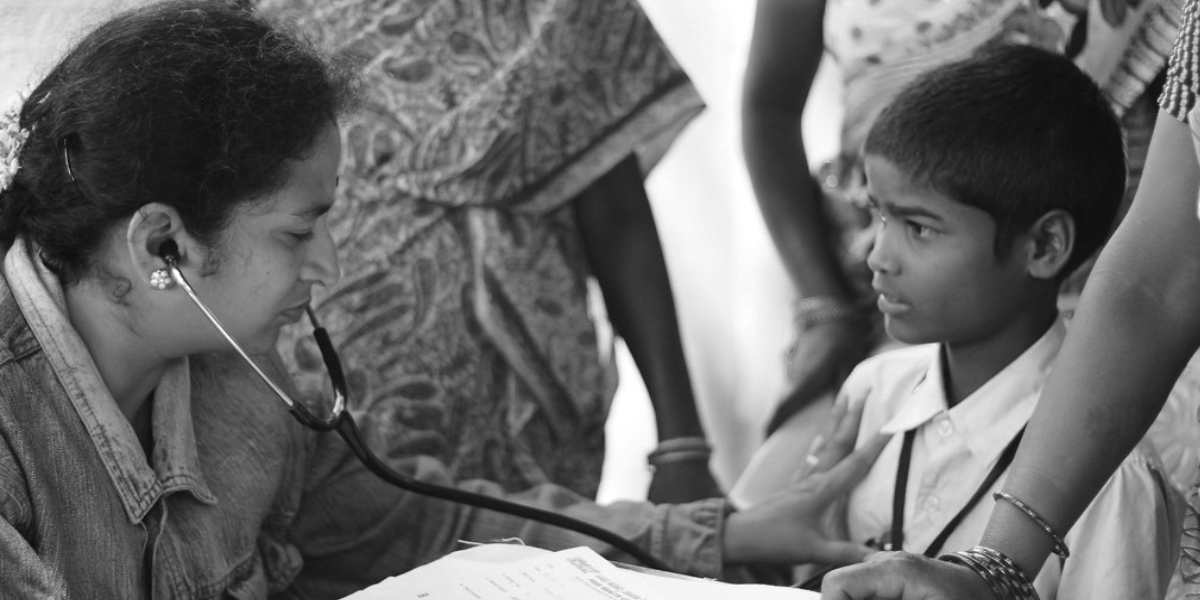
The incentive arrives once, at birth. The child arrives for a lifetime.

Synopsis: The Andhra Pradesh government’s decision to provide cash incentives for child births has left doctors worried. They feel the government has not considered the health implications of repeated pregnancies and childbirth, and how families would provide for each child after the one-time incentive is exhausted.
Andhra Pradesh Chief Minister N Chandrababu Naidu has announced cash incentives of ₹30,000 at the birth of a third child and ₹40,000 at the birth of a fourth.
The stated aim is to reverse a decade of falling birth rates in a state where fertility has dropped steadily and sits well below the national replacement level.
What the announcement does not address is the impact of repeated pregnancies on women. Two doctors, a paediatrician and an obstetrician-gynaecologist, spoke about what that decision means for the health of women.
Also Read: Chandrababu Naidu announces population incentive scheme
Andhra Pradesh recorded a Total Fertility Rate of 1.5 in 2023, against the national average of 1.9. The state’s Crude Birth Rate runs at 15 per 1,000 people, one of the lowest in India.
The birth order data tells a sharper story. In 2023, Andhra Pradesh recorded the lowest proportion of fourth-order births among all larger states, just 0.4%, against a national average of 3.6%. Third-order births stood at 3.8%. The state’s fertility decline is not accidental. It reflects decisions that families, and women in particular, have already made.
The government’s incentive is an attempt to reverse those decisions with cash.
Also Read: Naidu proposes incentives for bigger families
Dr Anusha Rao P, Consultant Obstetrics and Gynaecology at Yashoda Hospitals, described what the body accumulates across multiple pregnancies. She did not speak in abstractions. She described specific mechanisms of failure.
Every pregnancy places metabolic demands on the body. Two things happen simultaneously as pregnancies multiply: the number of pregnancies increases, and so does the age of the woman carrying them. Neither variable moves in a direction that reduces risk.
“As long as she is carrying more and more pregnancies without proper recovery, it becomes a concern,” Dr Rao said. “Recovery between pregnancies is very important,” she told South First.
With each caesarean section, scarring builds on the uterine wall. That scar tissue is precisely where the placenta attaches in the next pregnancy. When the placenta attaches to a scarred surface, it can grow abnormally, invading deep into the uterine muscle, a condition called placenta accreta. After delivery, a placenta that has grown into the muscle does not separate cleanly. The bleeding that follows can be catastrophic.
“When such an abnormal placenta does not separate properly, the woman can develop severe bleeding after delivery, known as postpartum haemorrhage,” Dr Rao said. “The bleeding can sometimes be so severe that it may even require removal of the uterus to save the woman’s life.”
Placenta previa, where the placenta sits across the cervix, carries similar dangers. Both conditions become more likely as the number of pregnancies and prior caesarean sections increases.
Even without a caesarean history, the uterus changes with repeated use. “As the number of pregnancies increases, the uterus gradually loses some of its ability to contract effectively after delivery,” Dr Rao said. A uterus that cannot contract after birth bleeds. “In severe cases, it can become disastrous.”
Repeated vaginal deliveries carry their own accumulating consequences: pelvic floor weakness, urinary incontinence, and bowel dysfunction. These are not rare complications. They are predictable outcomes of repeated mechanical stress on the same structures.
The risks also compound with age. Gestational diabetes and hypertension during pregnancy both increase as a woman gets older. The chance of miscarriage increases. When age and the number of pregnancies climb together, as they do by design when a government incentivises a third and fourth child, the risk profile of each pregnancy shifts upward.
Also Read: South India’s fertility decline is sharper than earlier estimates
Dr Rao described that family expectations, rather than medical readiness, drive the decision to conceive again. The pattern runs across all economic backgrounds, she said.
“Many women start feeling guilt and shame within themselves,” she said. Families push for a male child after one or two daughters. The pressure arrives from older members of the household. It does not announce itself as pressure. It arrives as an expectation.
“Usually, as the number of pregnancies increases, especially after the second or third pregnancy, many of these pregnancies become gender-specific in terms of family expectations,” Dr Rao said. “So yes, that form of mental pressure is definitely there for women.”
A government cash incentive, she suggested, does not remove that pressure. It adds to it.
“When governments start paying money for childbirth, it can eventually become just a money-making scheme for some people,” she said. “You never know how much pressure a woman may feel to earn that money simply by giving birth to a baby.”
She drew a distinction that the policy announcement did not make. There is a difference between a woman who chooses to have a third child after recovery, with nutrition, with medical supervision, and with genuine capacity, and a woman who conceives again because someone in her household has done a calculation on the promised ₹40,000.
“It is also important to ensure that the pregnancy itself is by consent and not because of pressure from family or society,” Dr Rao said.
Dr Sivranajani Santosh, a paediatrician, rejected the political framing of the incentive and redirected the question toward the child who would arrive.
“Please, don’t put a political angle to what I am saying. I am saying this as a pediatric doctor, as someone who thinks about children,” she said.
She listed the questions a family should answer before the decision to conceive again. Will they provide the child with food? Healthcare? Enough space at home to move around? Education? These are not abstract questions. They are the conditions under which a child survives and develops.
“This ₹30,000 will get exhausted in a few days,” she said. “After that, will I be able to raise them properly? Do I have the patience and capacity to bring them up?”
Her concern was not political. It was clinical and economic in equal measure. The incentive arrives once, at birth. The child arrives for a lifetime.
“Please, do not have children just because of the temptation of ₹30,000 or ₹40,000,” she said.
Dr Rao said no fixed number of pregnancies applies universally to every woman. What she will state clearly is the minimum gap the body requires between them.
“Ideally, a woman should maintain at least an 18 to 24-month gap between pregnancies, along with proper recovery and nutrition, so that her body is adequately prepared before the next pregnancy,” she said.
The announcement from the chief minister’s rally set no such condition. It attached the payment to the birth, not to the interval before it, not to the recovery after it, and not to the health of the woman in between.
Dr Rao said governments that introduce such incentives carry a corresponding responsibility.
“I would also suggest that governments should focus on supporting women’s recovery between two pregnancies, provide proper nutrition, ensure they attend pregnancy clinics regularly, and make sure they are healthy not just during delivery but throughout the pregnancy and recovery period,” she said.
The incentive, as announced, does none of that. It pays at birth. What happens to the woman before, during, and after remains her own problem to carry.
(Edited by Majnu Babu).



