

Published May 22, 2026 | 7:00 AM ⚊ Updated May 22, 2026 | 7:00 AM

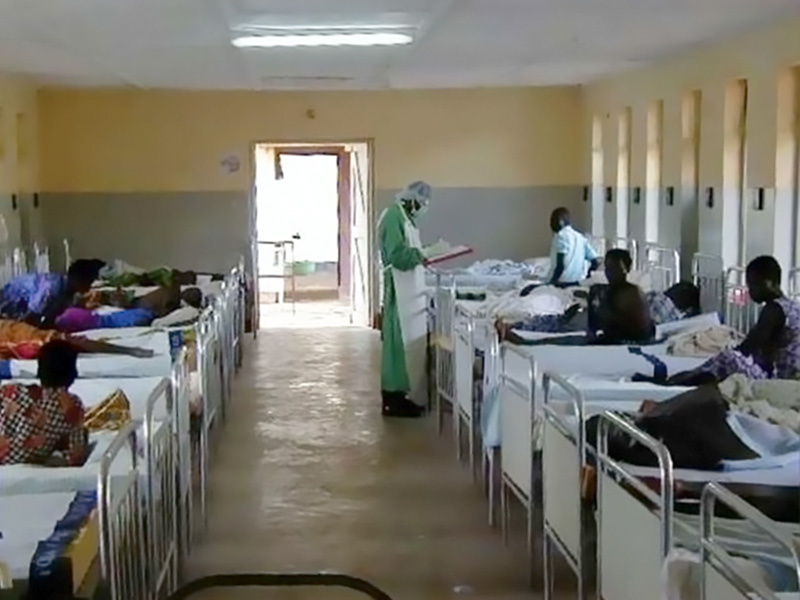
As of 18 May, 528 suspected Ebola cases and 132 deaths have been reported across Congo and Uganda. (Wikimedia Commons)

Synopsis: Despite the World Health Organisation declaring the outbreak of Ebola in Congo and Uganda a Public Health Emergency of International Concern, doctors in India dispelled fears of an imminent pandemic. However, they advised caution.
Doctors in India advised caution after the World Health Organisation (WHO) declared the outbreak of Ebola in the Democratic Republic of Congo and Uganda a Public Health Emergency of International Concern (PHEIC).
Their advice came after airports in India displayed travel advisories and social media posts spreading fear. The doctors said there was nothing to fear at the moment and added that the possibility of the virus spreading in India was low.
“The Ebola outbreak is currently mostly confined to Africa, not even the whole of Africa. Most cases are being reported from the Democratic Republic of Congo, with a few cases in the neighbouring country of Uganda. The chances of cases emerging outside Africa are currently minimal,” Dr Monalisa Sahu, Consultant for Infectious Diseases at Yashoda Hospitals, Hyderabad, told South First.
Dr Divya KS, Infectious Disease Specialist at Apollo Hospitals, Seshadripuram, Bengaluru, agreed.
“The chances of Ebola turning into a pandemic are relatively low. It is not a virus that spreads easily. Unless it is brought into India through international travel, we are still far from a situation that warrants panic,” she told South First.
Also Read: India issues Ebola advisory
The current outbreak is not caused by the Ebola strain the world battled in West Africa a decade ago.
It is the Bundibugyo virus, a rarer species of Orthoebolavirus first identified in 2007, for which no approved vaccine or specific antiviral exists. The vaccines used effectively in past outbreaks cover only the Zaire strain and offer no protection against Bundibugyo.
As of 18 May, 528 suspected cases and 132 deaths have been reported across Congo and Uganda. The confirmed cases in Congo stand at 51, concentrated in the conflict-torn northern provinces of Ituri and North Kivu.
Uganda has confirmed two cases in Kampala, including one death, among individuals who had travelled from Congo.
“Although this is a rare virus, a newer strain of Ebola has emerged, which was not seen during the last outbreak. Currently, there are no vaccines or specific antivirals available for it,” Dr Sahu said.
Also Read: Why Kerala is first to detect and report exotic viral strains
The critical distinction between Ebola and a virus like Covid-19 is how it moves from person to person. Ebola is not airborne. It does not spread through casual contact or proximity.
“In case of Ebola, a person has to be exposed to infected body fluids. It cannot enter through intact skin,” said Dr Divya.
“The risk is mainly for people who are in close contact with patients, such as caregivers, healthcare workers handling contaminated material, or people involved in handling the bodies of patients who have died from Ebola,” she further stated.
Dr Sahu added that transmission routes are specific and well understood.
“The virus is mainly transmitted through direct contact with an infected person or through bodily fluids such as blood or vomit. Transmission can also occur during funeral practices involving a person who has died from the disease, or through the consumption of infected animal meat, especially raw or undercooked meat,” she explained.
In an extraordinary move, WHO Director General Dr Tedros Adhanom Ghebreyesus declared the PHEIC before even convening the Emergency Committee, a first in WHO history.
“I took this step in accordance with Article 12 of the International Health Regulations, after consulting the Ministers of Health of DRC and Uganda, and in view of the need for urgent action,” he said.
The Emergency Committee subsequently confirmed the classification but stopped short of declaring a pandemic emergency. WHO assesses the risk as high at the national and regional levels in Africa, and low at the global level.
Following the WHO declaration, the Indian government activated preparedness across all entry points.
The Directorate General of Health Services issued a formal advisory flagging Congo, Uganda, and South Sudan as high-risk countries, directing passengers arriving from those nations to report to the Airport Health Officer before immigration clearance if they have symptoms or recent exposure history.
Union Health Secretary Punya Salila Srivastava chaired a high-level review with health secretaries of all states and Union Territories. Detailed Standard Operating Procedures covering screening, quarantine, case management, and laboratory testing have been shared with all states. No case of Ebola has been detected in India so far.
Delhi’s international airport has the advisory displayed prominently by the Airport Health Organisation, asking travellers to watch for fever, fatigue, headache, muscle pain, vomiting, diarrhoea, sore throat, and unexplained bleeding.
Rajiv Gandhi International Airport in Hyderabad has similarly activated screening, with passengers from high-risk countries directed to health desks before proceeding to immigration.
Any traveller developing these symptoms within 21 days of arrival has been advised to seek immediate medical care and inform doctors of their travel history, the 21-day window corresponding to the maximum known incubation period for the virus.
Both doctors offered the same measured advice. Avoid non-essential travel to the affected regions, rely on credible sources of information, and do not panic.
“People should rely on the right sources of information, stay aware of developments, and avoid non-essential travel to affected African countries, and more specifically to Congo and Uganda,” Dr Sahu said.
For the vast majority of Indians with no travel links to central Africa, the risk remains extremely low. The virus is serious, the outbreak is real, and the global response is underway. But India need not panic.
(Edited by Majnu Babu).



