

Published May 21, 2026 | 7:00 AM ⚊ Updated May 21, 2026 | 7:00 AM

It is possible to improve the uptake of low-sodium salt in communities through education and subsidy.

Synopsis: Besides spreading awareness about its benefits, healthy salt should be made available at an affordable price so that more people will be inspired to buy it.
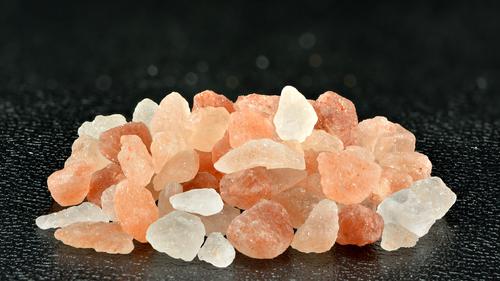
Swayed by social media influencers, people in Hyderabad are buying costlier pink salt, ignoring the cheaper — and often healthier — salt, a survey has found.
“People are buying the costlier version because they feel it is healthy,” said Dr CS Surya Goud, a scientist at Hyderabad-based ICMR-National Institute of Nutrition, who conducted a market survey across all 150 wards of Hyderabad.
“Somehow, Instagram influencers have influenced people’s dietary choices so much that every household displays the packet of pink salt,” he added.
The salt Dr Goud referred to is a potassium-enriched low-sodium salt substitute, in which a portion of sodium chloride is replaced with potassium chloride. In India, big brands are marketing it, a niche product with limited reach beyond major cities.
The survey covered 150 supermarkets and 450 kirana stores. Every supermarket stocked or had previously stocked low-sodium salt substitutes. Only 10% of kirana stores carried it, and even then, shopkeepers knew their customers by face. They ordered one or two packets for specific people. Not for general sale.
Pink salt, rock salt, and Himalayan salt contain similar sodium levels as the regular iodised salt sitting next to them. None of them carries the cardiovascular benefit that potassium-enriched low-sodium salt substitutes provides.
Researchers, clinicians, and public health experts gathered online to address the issue on Monday, 18 May, at the fifth edition of the Nutrition Literacy and Improvement of Food Environments (NULIFE) Dialogue Series, convened by ICMR-NIN) alongside Resolve to Save Lives, the Global Health Advocacy Incubator, and UNICEF.
Also Read: What you can use instead of regular salt
The evidence base for low-sodium salt substitutes, in which a portion of sodium chloride is replaced with potassium chloride, has accumulated over decades. The landmark Salt Substitute and Stroke Study conducted in China randomised 21,000 people across 600 villages to either continue with regular salt or switch to a potassium-enriched substitute.
“At five years, 92% of the people assigned to use the salt substitute were still using it,” said Prof Bruce Neal, Executive Director of The George Institute for Global Health Australia, who led the trial. “If we had 92% adherence at five years in a drug trial, we would be astounded. We would be lucky in most studies to get 50%.”
The trial recorded a 14% reduction in stroke, 13% reduction in major cardiovascular events, and 12% reduction in overall mortality.
For India, the numbers carry particular weight. Indians consume 8-11 grams of salt a day, nearly double the WHO’s recommended limit of five grams. Over one in four Indian adults lives with hypertension. Unlike high-income countries, where processed foods drive sodium intake, 70-80% of sodium consumed in India comes from discretionary sources, salt added during cooking and at the table.
“Reducing sodium intake through informed and equitable strategies could become one of India’s most impactful cardiovascular disease prevention interventions,” said Prof Vivekanand Jha, Executive Director of The George Institute for Global Health India.
Prof Jha drew a comparison. The blood pressure reduction achieved by switching to a low-sodium salt substitute matched what a single antihypertensive pill delivers.
“If we are somehow able to implement this, people who require just one pill a day may even end up avoiding that,” he said.
The substitute he referred to replaces roughly 25-30% of sodium chloride with potassium chloride, simultaneously cutting sodium intake and raising potassium levels, both of which lower blood pressure through different physiological pathways.
Also Read: Like too much salt in your diet?
The single-most persistent barrier to switching has been taste. Potassium chloride carries a faint bitter or metallic note at higher concentrations. Researchers at ICMR-NIN decided to test whether that barrier actually existed in Indian foods.
In a study posted as a preprint in April 2026, they asked 25 trained assessors…to evaluate three formulations of potassium-enriched low-sodium salt substitute across three foods: buttermilk, dal with roti, and French fries.
The formulations ranged from 100% sodium chloride to a 30% potassium chloride substitution.
The finding: no statistically significant difference in perceived saltiness across any food and any formulation. Even at 30% substitution, trained tasters could not reliably detect a difference.
The researchers attributed this partly to what sensory science calls “matrix masking”. The complex spice profiles, fat content, and temperatures of Indian food likely absorbed the subtle shift in mineral composition.
The PLURAL study, led by Prof Sailesh Mohan of the Centre for Chronic Disease Control, tested what it actually takes to get households to switch.
Conducted across North and South India, the study found awareness of low-sodium salt substitutes was close to zero at baseline.
“No, this is the first time I am hearing about it,” a participant told the researchers.
When education and a subsidy of ₹20.5 per packet were combined, uptake in the intervention arm rose from zero to 41%. When the subsidy was removed, 15-16% of participants said they would still pay the higher price.
“It is possible to improve the uptake of low-sodium salt in communities through education and subsidy,” said Prof Mohan. “But we need to be consistent in ensuring seamless supply so that we can observe population-level changes.”
Supply remained the stubborn problem. Manufacturers could not maintain consistent stock at study sites. Without a reliable supply, even motivated households could not sustain the switch.
Dr Murali Sharan, a scientist at ICMR-National Institute of Epidemiology, made the case personally.
“I changed to low-sodium salt, my wife and I, and we both are very happy. Nowadays, when I travel and eat out, I feel the food is very salty because my taste buds have already adapted to low salt,” he said.
The panellists converged on a set of entry points where switching salt requires no individual shift in behaviour. Hospital kitchens, railway canteens, midday meal programmes, the public distribution system, and Ayushman Arogya Mandirs.
“Whether it is a cardiac diet or a diet for a person with diabetes, or even a regular diet, we can conveniently replace the regular iodised salt with a low-sodium salt substitute,” said Dr Meenakshi Bajaj, dietician at Tamil Nadu Government Multi Super Speciality Hospital. “I don’t think it is a problem at all, whether it is the PDS or the hospital meal.”
Dr Goud added a supply-side finding that reframed the cost argument entirely. For his own trial, he ordered 6,000 kilograms of low-sodium salt. The market price stood at ₹85 per kilogram. The manufacturer in Gujarat offered it at ₹54. “Imagine a government supplier ordering two metric tonnes,” he said. “The cost will definitely come down drastically if there is demand.”
Dr SubbaRao M Gavaravarapu, who convened the dialogue, closed with a challenge that cut to the heart of the problem. Four barriers have long defined the low-sodium salt conversation: availability, affordability, acceptability, and awareness. He proposed a fifth. “It is not only important to make it available, accessible, affordable, and acceptable, but also to make it aspirational.”
(Edited by Majnu Babu).



