

Published Jul 17, 2026 | 12:08 PM ⚊ Updated Jul 17, 2026 | 12:08 PM

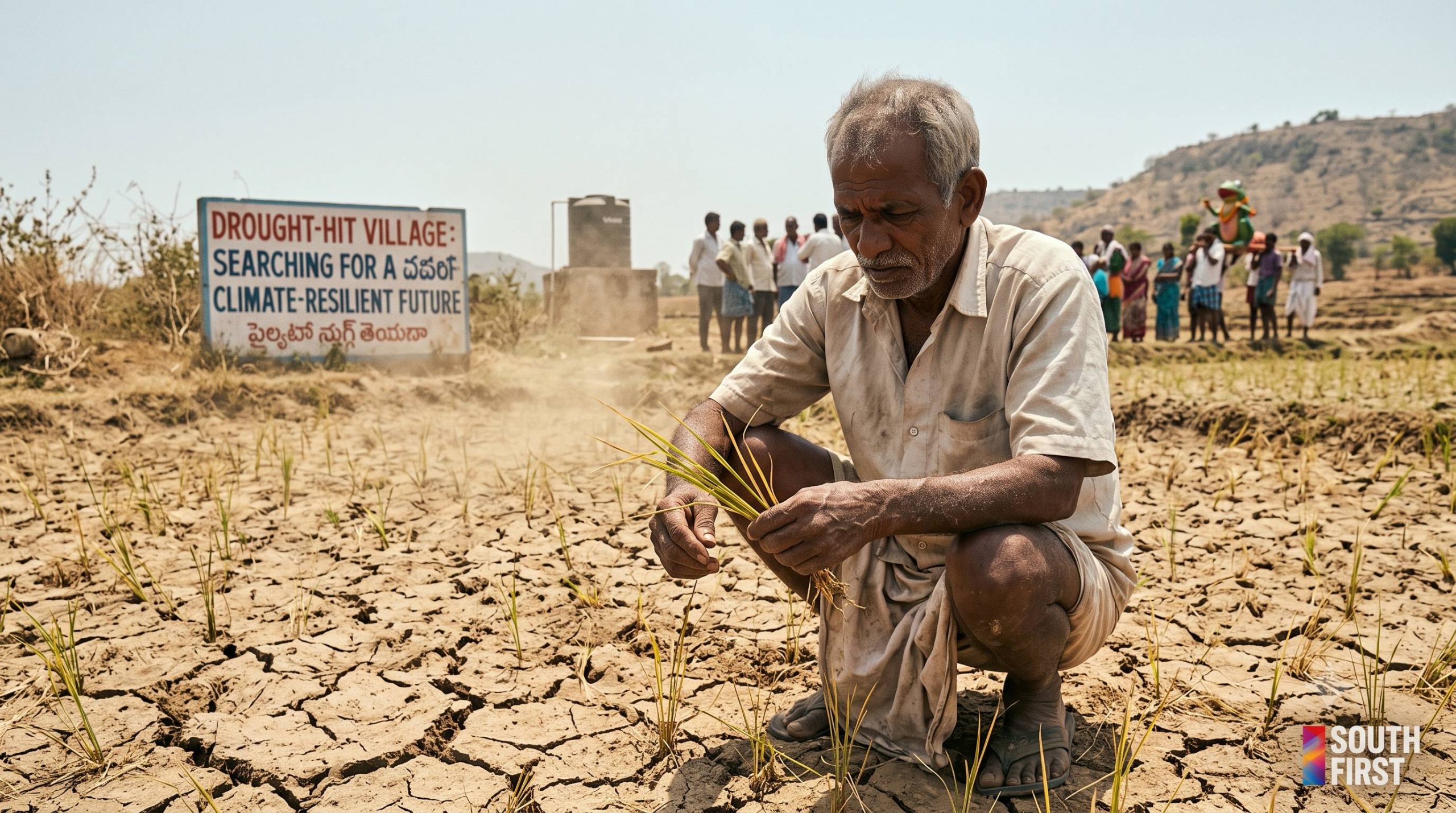
AI-generated image.

Synopsis: As the unforgiving drought of 2026 blights the hopes of Telangana’s farmers, it’s time to prepare for a future where climate change will be the new normal. A look at the solutions that are being suggested and the preparation that needs to be done.
As the southwest monsoon falters over Telangana, the crisis unfolding across the state’s villages is no longer merely one of deficient rainfall; it is a test of the resilience of its agricultural economy, water resources and rural society. As many as 892 villages in the state have been classified as vulnerable, while another 7939 villages face a moderate impact from the El Niño-induced monsoon deficit.
Cracked paddy fields, drying reservoirs, falling groundwater tables and anxious farmers have become defining images of the 2026 kharif season. Equally striking is the revival of traditional rain-invoking rituals—from kappa aata (frog processions) to Vanavasam and Varadapasam—that had almost disappeared during years of relatively dependable monsoons. Together, these developments reflect not only the immediate impact of the El Niño phenomenon but also the deeper structural vulnerabilities that climate variability has exposed in Telangana’s agrarian landscape.
The state government’s Vanakalam-2026 Contingency Plan offers perhaps the clearest acknowledgement yet of the severity of the unfolding crisis. Unlike routine seasonal advisories, the plan is effectively a blueprint for managing drought under El Niño conditions. It warns that rainfall during the remaining southwest monsoon is likely to remain substantially below normal, with July expected to record nearly a 25 per cent deficit, August around 10-15 per cent, September close to 42 per cent and October nearly 55 per cent below normal. Such projections imply that even if intermittent showers occur, they may neither be spatially uniform nor sufficient to replenish reservoirs, recharge groundwater or sustain water-intensive crops.
The early monsoon has already validated these concerns. Against a normal rainfall of nearly 228 mm during the initial phase of the season, Telangana has received only about 158 mm, leaving an overall deficit of around 31 per cent. More alarming than the aggregate deficit is its uneven distribution. While a handful of districts have received near-normal rainfall, most districts continue to face moderate or severe shortages.
The Agriculture Department has classified districts according to varying degrees of moisture stress, with several already entering categories that warrant contingency interventions. Village-level vulnerability mapping has further identified thousands of habitations likely to face moderate or severe impacts if rainfall continues to decline.
This uncertainty has fundamentally altered farmers’ decisions. The kharif season traditionally begins with widespread paddy transplantation soon after the arrival of monsoon rains. This year, however, nurseries have been raised in many places, but transplantation has been postponed as farmers wait for sustained rainfall. Large extents of cultivable land remain unsown, while many who sowed early have witnessed poor germination due to inadequate soil moisture. In several districts, farmers are reluctant to invest further in seeds, fertilisers and labour without confidence that rains will continue.
The most immediate casualty of the delayed monsoon is paddy, a crop that is cultivated across 24.64 lakh hectares and has increasingly dominated Telangana’s agricultural landscape over the past decade. Encouraged by irrigation expansion, free power, assured procurement and minimum support prices, paddy cultivation expanded rapidly even into regions traditionally suited for dryland agriculture. The current El Niño episode has exposed the risks inherent in that transition. Water-intensive cultivation has become increasingly difficult as reservoirs struggle to retain even drinking water reserves.
Also Read: Lord Rama wouldn’t mind drowning himself for Telangana’s farmers, dear Chief Minister
Indeed, the state’s water situation has become exceptionally precarious. Reservoirs across the Godavari basin presently hold only about 27.69 thousand million cubic feet (tmcft) of usable storage, while reservoirs in the Krishna basin have barely 14.81 tmcft. Officials have acknowledged that most reservoirs are either approaching or already near their Minimum Draw Down Levels, forcing authorities to prioritise drinking water over irrigation. The situation is further complicated by poor inflows from upstream catchments, where reservoirs in neighbouring states are also experiencing deficient rainfall. Unless substantial rainfall materialises during the remaining monsoon months, irrigation releases may remain severely restricted throughout the season.
Groundwater, which has long acted as Telangana’s insurance against monsoon failure, is also showing signs of acute stress. Based on observations from thousands of monitoring wells across all 33 districts, the average groundwater level, recorded at around 9.46 metres below ground level in June, is projected to decline to over 10.35 metres in July and nearly 11 metres in August. Several districts are expected to witness groundwater declines exceeding one metre within weeks. As borewells deepen and recharge weakens, dependence on groundwater becomes increasingly unsustainable, particularly for small and marginal farmers who cannot afford repeated drilling.
Recognising these realities, agricultural scientists and policymakers have recommended a significant reorientation of cropping patterns. Red gram, which is expected to be cultivated across 3.96 lakh hectares this year, has emerged as the preferred alternative under El Niño conditions because of its deep root system, lower water requirement and ability to withstand prolonged dry spells. Alongside red gram, farmers are being encouraged to cultivate maize, which is expected to cover 1.79 lakh hectares, millets, castor, cowpea, bajra, jowar, oilseeds and other relatively drought-tolerant crops. The contingency plan also recommends short-duration crop varieties, promotion of drip and sprinkler irrigation, mulching, farm ponds, groundwater recharge structures, rainwater harvesting and soil moisture conservation practices.
Yet the transition is easier on paper than in practice. Farmers cannot simply abandon paddy without assured markets for alternative crops. Telangana’s procurement system, milling infrastructure and agricultural economy remain heavily oriented towards rice. Diversification, therefore, requires not merely advisories but institutional support through assured procurement, remunerative prices, processing facilities and extension services. Without such economic incentives, farmers understandably remain hesitant to alter long-established cultivation practices.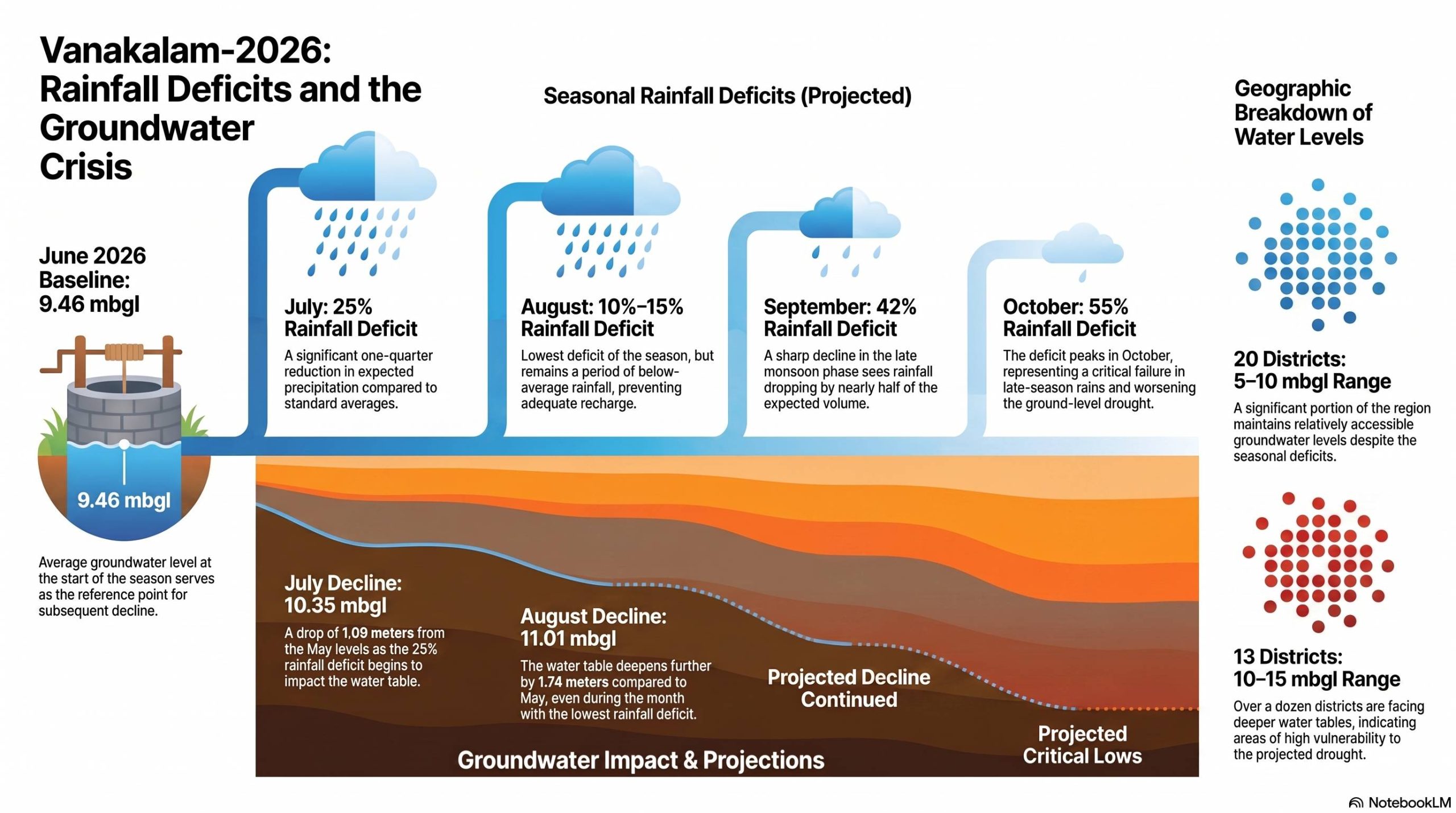
The crisis extends beyond economics into the social and psychological fabric of rural Telangana. Across villages in Rangareddy, Mahabubnagar and several other districts, communities have revived frog processions and traditional prayers seeking divine intervention for rainfall. These rituals should not be dismissed as superstition. Rather, they represent expressions of collective anxiety, hope and social solidarity in the face of a phenomenon beyond human control. At a time when meteorological forecasts remain uncertain and scientific advisories speak of deficits and drought, such cultural practices provide emotional resilience to communities confronting an increasingly unpredictable climate.
While El Niño has triggered the immediate crisis, it is only one part of a larger challenge. Scientific evidence increasingly suggests that climate change is amplifying weather extremes, making dry years hotter, increasing evaporation losses and intensifying pressure on groundwater and reservoirs. Telangana’s dependence on water-intensive cropping patterns, declining tank systems, excessive groundwater extraction and changing rainfall distribution together create conditions in which every El Niño episode becomes progressively more damaging.
The lessons of the 2026 kharif season then extend well beyond one failed monsoon. They call for a fundamental reassessment of agricultural policy in a semi-arid state. Greater investment in watershed development, rejuvenation of tanks under Mission Kakatiya, groundwater recharge, precision irrigation, climate-resilient seed varieties, weather-based crop insurance and diversified farming systems is no longer optional. Equally important is building market ecosystems for pulses, oilseeds and millets so that crop diversification becomes economically viable rather than merely environmentally desirable.
For the moment, Telangana waits for clouds that may or may not arrive. But the deeper question confronting the state is not whether this year’s rains will eventually revive the kharif crop. It is whether agriculture can continue to depend on assumptions of a normal monsoon in an era of increasing climatic uncertainty. The drought of 2026 is more than a seasonal setback; it is a warning that the future of farming in Telangana will depend less on praying for rain and more on preparing for a climate where uncertainty itself becomes the new normal.
Also Read | Telangana’s Kharif paradox: Arid fields, scarce pulses, yet cotton expands
(Edited by R Rajesh Kumar.)



