

Published Jul 13, 2026 | 2:49 PM ⚊ Updated Jul 13, 2026 | 2:49 PM

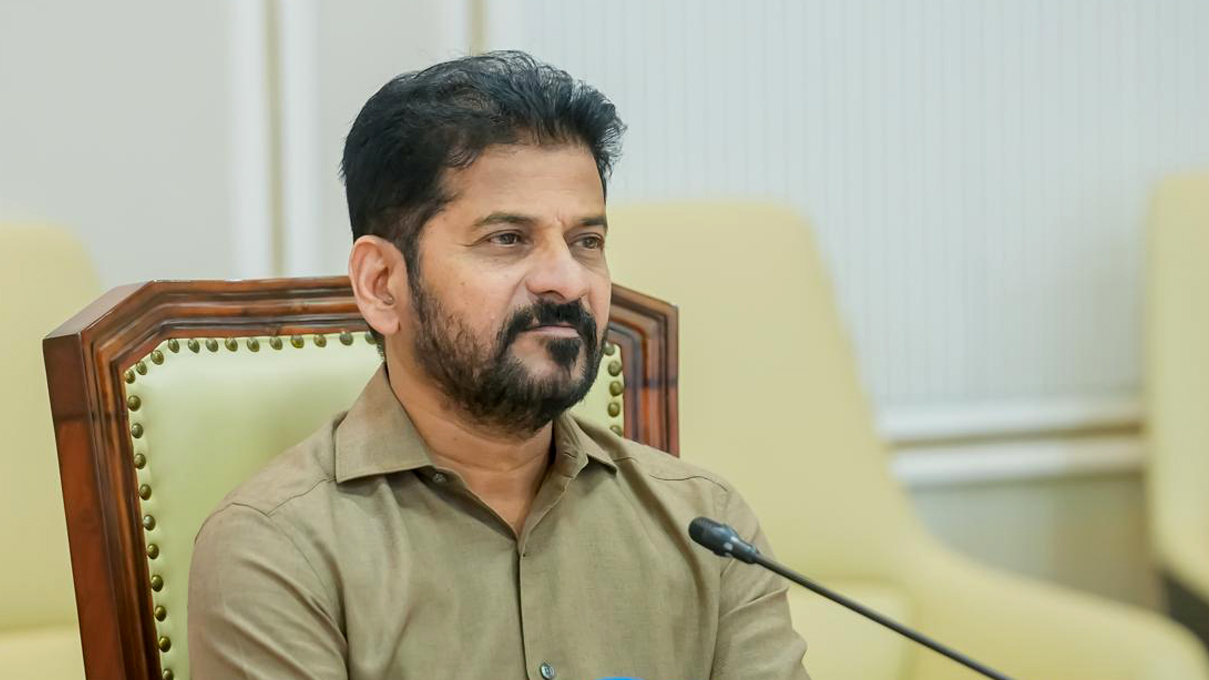
CM Revanth, not Lord Rama, could drown if Telangana's farmers continue to be starved of water.

Synopsis: Revanth Reddy and the Telangana government are needlessly worrying about Lord Rama when it’s Telangana’s farmers who desperately need a solution. The engineers whom South First spoke to confirmed that the fears the ruling establishment was touting were unfounded. The CM’s gamble could turn out to be a grave miscalculation if the distress of the farmers continues.
Lord Rama, the presiding deity at the famed Bhadrachalam temple town in Telangana, is facing an existential crisis.
Reason: The Lord is being told by Chief Minister Revanth Reddy that he would drown in the swirling waters of the river Godavari if the lakhs of distressed farmers in Telangana, facing the worst drought in recent memory, are to be given water through the now-dried-up canals.
At the centre of the controversy is the Kaleshwaram lift irrigation scheme (KLIS), the only place witnessing the highest flood in Pranahita, but without a drop being lifted. Instead, lakhs of cusecs of water are flowing into the sea downstream.
The Kaleswaram project, touted as the biggest in the world, designed and executed during the previous BRS government led by K Chandrasekhara Rao, suffered an unexpected setback when some piers in one of the three barrages—Medigadda—sunk due to the formation of cavities in mid 2023. Subsequently, damages were also noticed in the project’s other two barrages—Annaram and Sundilla. Since then, the project has remained inoperational.
The National Dam Safety Authority (NDSA) gave an interim report in 2024, followed by a comprehensive 370-page document detailing the repairs to be taken up to make the project operational. That was in December 2024 but to this day there is no evidence on record on whether the recommended measures were implemented or not.
In its report, the NDSA suggested that hydraulic pressure (by storing water) should not be put on the barrages until and unless repairs are completed.
The question now is whether water can be lifted while keeping the barrage gates open so as not to put pressure on the structures. In an open letter, a group of retired engineers, who form part of the Telangana Retired Engineers Association, came out with a proposition that the reservoir level needed to supply water to Kannepally Pumping Station is 93.5 metres whereas the present flood level under open gate condition is 97.5 metres. Under this condition, the pumping station can lift about 3 tmc per day without the Medigadda barrage gates being closed.
The argument was pushed forward by the Opposition BRS too, as it stepped up pressure on the government, with its working president KT Rama Rao making a visit to the Kannepally pumping station, demanding it be made operational.
Given that the barrages exist in a chain, the water moves from Kannepally to Annaram, followed by Sundilla, where the engineers argue that water can be stored to the extent of one-third of the capacity (8 tmc out of the total capacity of 27 tmc) to prevent any damage. This is because structural issues were noticed at Annaram and Sundilla too, besides Medigadda.
But in the worst-case scenario, the flood could reach only 8 lakh cusecs in three hours, while Lord Rama survived a flood which was several times more in the years when there was an extreme flow. So, Lord Rama is safe, they argue. But the Chief Minister is refusing to budge.
Also Read: Alarming decline in groundwater levels in Telangana; situation in Hyderabad ‘critical’
What is the government saying and what is the plan to provide water to farmers in a situation when every other reservoir in the state is near dry owing to El Niño conditions.
“We should have jailed the engineers who came up with this solution,” Chief Minister A Revanth Reddy thundered the other day, accusing them of minting money in the construction of KLIS.
Just a few days before, he praised the same group of engineers for coming up with alternative proposals during the BRS rule and accused Chandrasekhara Rao of not heeding their advice.
Irrigation Minister Uttam Kumar Reddy personally telephoned the Association president Shyamprasad Reddy and questioned him for making their letter public without meeting him. Shyamprasad had to remind the minister that the association office bearers tried in vain to meet him half a dozen times in the last one year and that they have no “personal or political interests” in making the suggestion for the consideration of the government.
Ironical as it might be, almost all engineers who serve as office bearers of the association retired even before the formation of Telangana state in 2014. The KLIS itself was taken up in 2016. How could they have made illegal money after having retired several years before the project’s execution is a question which none of the media persons posed to the Chief Minister.
However, one of them did ask the pertinent question. Since the government is of the view that water cannot be lifted from KLIS, what is the alternative to overcome the distress being faced by farmers? “Hack the BRS leaders, spill their blood on the fields and the crop shall grow,” came the answer. That is from someone holding the high office of Chief Minister.
As the political discourse reached gutter level, enquiries by South First revealed that the State government has so far not approached the NDSA seeking solutions.
A pragmatic and realistic approach from the government should have been to request the NDSA to deploy a team on an emergency basis, involve Telangana engineers, serving and retired, to examine if there are ways by which the massive flood in Pranahita could be utilised to save the crops. Sadly, that was not to be.
Three members of the NDSA committee that submitted the voluminous report on KLIS were spoken to by South First. Their unanimous view was that the panel only examined the barrages, assessed the extent of damage and came up with recommendations. They never studied or visited the pumping stations at any of the three places—Medigadda, Annaram and Sundilla—and therefore cannot comment on whether they could be operationalised or not.
“We did not state anywhere in the report that pumping can or cannot be done. All that we said was that hydraulic pressure on the barrages should be minimised. There is nothing we can do if our report is being cited as the reason for not lifting water,” one of the members said.
Another member revealed that none of the committee members has been approached or consulted by the State government after the submission of the report to discuss the way forward.
That the ruling Congress has been caught on the wrong foot on the issue is now clear, even as the BRS has succeeded in positioning itself as championing the cause of farmers.
Going by internal accounts, Revanth Reddy believes that a defunct KLIS, on which more than Rs one lakh crore was spent, will serve as a testimony of the BRS “misrule” and is, therefore, reluctant to make it functional to keep the negative branding alive.
What, however, seems to miss Revanth’s attention was that KCR and his party have already been punished once in the 2023 elections, with the damage to the barrages, just months before the polls, emerging as a major political issue.
Belatedly realising that the State Government shifting the blame on NDSA for not operating the project could affect it politically, the BJP state unit too stepped in. In an open letter, the party accused the state government of doing little to restore the barrages, though it is more than 1½ years since the NDSA gave its report.
The same nature’s fury that swept KCR out of power could now turn against the Congress. And, for all that we know, Lord Rama, given his virtues, would not mind drowning himself if it helps lakhs of farmers. After all, the Lord can protect himself in any situation while the farmers cannot.
Also Read | Telangana’s Kharif paradox: Arid fields, scarce pulses, yet cotton expands
(Edited by R Rajesh Kumar.)



