

Published Aug 18, 2026 | 4:42 PM ⚊ Updated Aug 18, 2026 | 4:42 PM

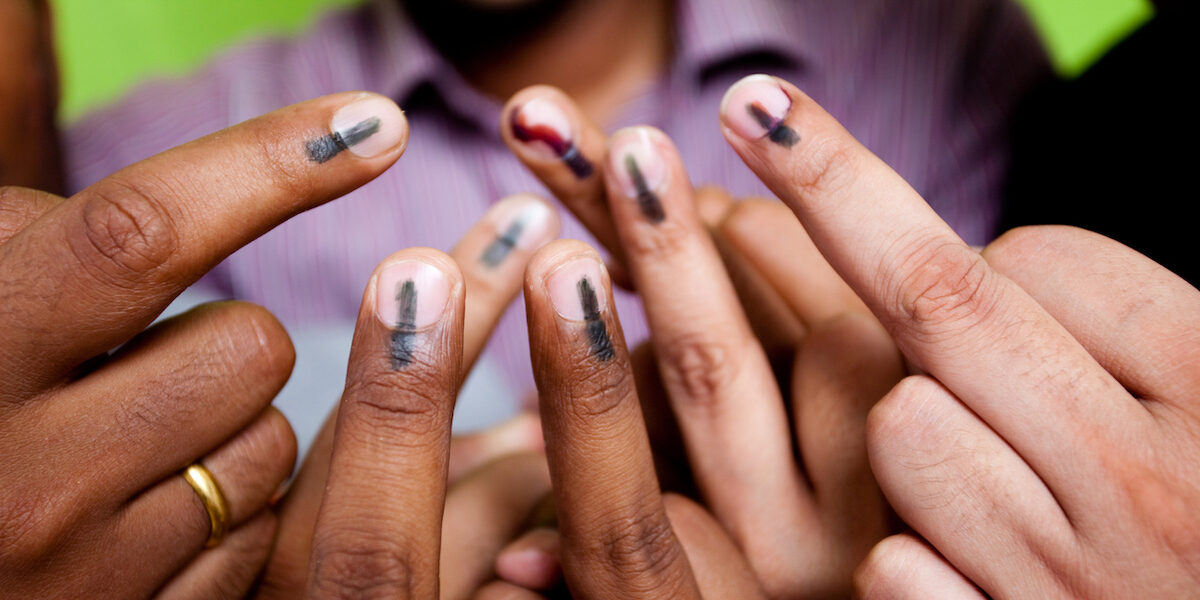
Survey found that 39% of graduate voters consider the candidate the most important factor while deciding their vote,

Synopsis: A notable characteristic emerging from the survey is the degree of independence with which graduate voters appear to approach their electoral decisions. As many as 79% of respondents say they will not seek anyone’s advice before voting, while only 21% say they are likely to consult others.
The Graduate MLC elections scheduled to be held in Telangana in February/March 2027 are likely to witness a contest in which the individual candidate could emerge as a crucial factor, according to a survey by the People’s Pulse Research Organisation.
The study indicated that 39% of graduate voters consider the candidate the most important factor while deciding their vote, while 36% attach primary importance to the political party. Caste is the principal consideration for 12%, money for 5%, and religion for 2%, while 6% say they may consider all these factors.
The three-percentage-point lead for the candidate over the political party is significant, suggesting that personal credibility, reputation, accessibility, track record, understanding of graduate concerns, employment-related positions, communication skills, and voter connect could influence the outcome. Candidate selection may therefore become one of the most important strategic decisions for political parties.
The survey also highlights a substantial gap in awareness regarding voter registration. As many as 58% of respondents are unaware that they need to register afresh for every Graduate MLC election. While 52% say they intend to register for the forthcoming election, 27% remain undecided, and 21% say they will not register. Voter registration and awareness could become important factors in determining the eventual size and composition of the electorate.
The survey indicates that 52% of respondents currently intend to vote in the forthcoming Graduate MLC election, while 33% say they will not vote and 15% remain undecided. Although a majority currently expresses an intention to participate, a substantial section remains disengaged or uncertain. Participation is likely to depend on voter registration, campaign mobilisation, candidate visibility and political engagement closer to the election.
The historic turnout in the two constituencies demonstrates that Graduate MLC elections can generate significant voter participation. However, the findings suggest that voter mobilisation and registration awareness will remain important challenges in the run up to the election.
Also Read: Telangana’s map is already shifting, even before the delimitation law is written
Employment dominates the issue landscape among graduate voters. Unemployment is identified as the principal issue by 31% of respondents, making it the single largest concern. Delays in job notifications and recruitment follow closely at 24%. Together, these two issues account for 55% of the responses. Rising prices are identified by 13%, lack of private employment opportunities by 12%, problems in the education sector by 8%, skill development and employment opportunities by 7%, and corruption by 5%.
The findings indicate that graduate concerns extend beyond government employment to the broader question of career security and economic opportunity, including recruitment timelines, private sector employment, education and skill development. The 2027 Graduate MLC campaign is therefore likely to be evaluated substantially through the lens of employment and career prospects. Candidates and political parties that address these concerns with specific and credible proposals may find greater resonance among graduate voters.
Also Read: Promises kept, promises broken: How the Congress government in Telangana has fared
A notable characteristic emerging from the survey is the degree of independence with which graduate voters appear to approach their electoral decisions. As many as 79% of respondents say they will not seek anyone’s advice before voting, while only 21% say they are likely to consult others.
Among those who seek advice, family members are the most important source, accounting for 34%, followed by friends at 31% and colleagues at 15%. Political leaders account for only 9% and caste association leaders for 6%. Another 5% say that although they may seek advice, they will ultimately take the final decision themselves.
The findings suggest that the Graduate MLC electorate may be less dependent on traditional political intermediaries and more inclined towards individual decision making. Personal credibility, direct communication and the ability of candidates to establish a connection with voters could therefore become particularly important.
The survey also reveals significant dissatisfaction with the performance of the existing Graduate MLC. Only 31% of respondents describe the performance of their current representative as good. In contrast, 53% say the performance is not good. Nine percent consider it average, while 7% are unable to offer an assessment.
Also Read: Could Kaleshwaram have blunted the El Niño Shock?
This indicates that a majority of respondents are currently dissatisfied with their representative, creating an environment in which performance, accountability, accessibility and the ability to raise and resolve graduate related issues could become important campaign themes.
However, dissatisfaction with the current representative should not automatically be interpreted as support for any particular challenger. The eventual electoral impact will depend on the candidates who enter the contest and the political environment after nominations.
Direct engagement and digital communication are both likely to be important in the forthcoming election. Direct campaign activities and meetings with candidates are the single largest source of information, cited by 25% of respondents. WhatsApp follows closely at 24%, while Instagram accounts for 18%. Facebook is used by 9%, friends and colleagues by 8%, and news channels and newspapers by 7%. X accounts for 4%, while political party workers account for only 2%.
The findings point to a changing campaign environment in which candidates will need to combine personal engagement with digital communication. WhatsApp and Instagram could play a major role in reaching graduate voters, while the importance of direct meetings demonstrates that digital campaigning is unlikely to replace personal interaction completely. The limited role attributed to political party workers further reinforces the preference for direct access to candidates and information through personal and digital networks.
Also Read: The silent test of Telangana’s democracy
The survey also examined the possible impact of the recent Cockroach Janta Party (CJP) movement on the political thinking of youth and graduates. The movement has brought issues such as unemployment, examination irregularities, employment security, problems faced by graduates and dissatisfaction with the existing system into public discussion. These concerns overlap closely with the issues independently identified by respondents as important to the forthcoming Graduate MLC election.
The survey’s indicative assessment suggests that 18% of respondents may have experienced a significant change in their political thinking because of the movement, while another 36% may have experienced some change. Thirty four percent indicate that it has not changed their political thinking and 12% are unable to say. Taken together, the first two categories indicate that approximately 54% may have experienced at least some change in their political thinking.
This should not be interpreted as direct support for the CJP. Instead, the finding indicates that the issues associated with the movement may have contributed to a broader discussion around unemployment, examinations, employment security and youth dissatisfaction.
The survey also assessed whether issues raised by the movement could influence the eventual voting decision. The indicative assessment suggests that 24% may be significantly influenced by these issues and another 38% may be influenced to some extent. Twenty-five percent say the issues are unlikely to influence them significantly, while 13% say they will have no influence.
Thus, approximately 62% may see the issues raised by the movement as having at least some influence on their voting decision. These figures are indicative estimates for analytical assessment and should not be treated as final measured electoral findings or as a measure of support for the movement. Their actual electoral relevance will become clearer as the campaign develops and subsequent tracker surveys are conducted.
The People’s Pulse Research Organisation survey findings provide several early signals for political parties and prospective candidates.
The Graduate MLC elections occupy a distinct position in Telangana’s electoral landscape because the electorate consists specifically of registered graduates. Issues relating to employment, government job notifications, recruitment, competitive examinations, education, private sector opportunities, skill development and career security are therefore likely to receive greater attention than in a conventional general election.
The previous electoral cycle provides important context for understanding the forthcoming contest. In the 2021 Graduate MLC elections, the Hyderabad Rangareddy Mahabubnagar constituency recorded 67.26% polling, while the Nalgonda Warangal Khammam constituency recorded 72.44% polling. The Nalgonda Warangal Khammam constituency subsequently went to a by election in 2024, when the polling percentage stood at 72.44%.
In the 2021 elections, Surabhi Vani Devi of the BRS won the Hyderabad Rangareddy Mahabubnagar Graduate MLC constituency, while Palla Rajeshwar Reddy of the BRS won the Nalgonda Warangal Khammam constituency. Following the subsequent vacancy in the Nalgonda Warangal Khammam seat, Teenmar Mallanna, whose real name is Chintapandu Naveen Kumar, won the 2024 by election as the official Congress candidate.
The change in representation between the 2021 election and the subsequent by election demonstrates the competitive and evolving nature of the Graduate MLC electorate. It also indicates that candidate identity, political positioning, contemporary issues and voter sentiment can influence electoral outcomes.
As the 2027 elections approach, political parties have begun preliminary preparations, although the formal process of finalising candidates is yet to be completed. Prospective candidates have started increasing their visibility through social media, direct interaction with graduates and other forms of early political outreach. Candidates who contested the 2021 and 2024 elections are also understood to be making efforts to return to the electoral contest.
People’s Pulse Research Organisation conducted the survey from 10 August to 15 August 2026 to assess the emerging mood among graduate voters ahead of the forthcoming Graduate MLC elections.
The study covered the Hyderabad Rangareddy Mahabubnagar and Nalgonda Warangal Khammam Graduate MLC constituencies. A total of 10,000 samples were covered, with 5,000 respondents from each constituency.
The survey was conducted through Computer Assisted Telephone Interviews (CATI). Respondents were identified from the previous Graduate MLC electoral rolls. The principal reason for relying on the previous electoral rolls was that the fresh voter registration process for the forthcoming Graduate MLC elections had not yet commenced at the time of the survey.
The sample included men and women and respondents from different age groups in broadly equal proportions, enabling the study to capture views from a diverse section of the existing graduate electorate.
Since candidate selection and nomination had not been completed and political parties had not publicly disclosed all the candidates they intended to support, the survey did not include a question asking respondents which party supported candidate they would vote for. The objective at this stage was to understand broader electoral priorities, voting behaviour, registration awareness, perceptions of representation, information sources and emerging youth and graduate issues.
The present survey is an early baseline assessment conducted before the completion of voter registration, candidate selection and the nomination process. The composition of the electorate could change once fresh registration is completed, while the political environment could also change considerably after political parties announce their candidates and the campaign becomes more active.
The final candidate field is particularly important because the survey has focused on broader voter priorities rather than candidate specific voting preferences. Since political parties had not finalised and publicly announced all their candidates at the time of the study, candidate preference was not included in the questionnaire.
Political developments, campaign narratives, candidate performance, emerging movements and changing voter priorities could influence the final electoral outcome. The findings should therefore be regarded as an early assessment of the graduate electorate and not as a forecast of the final election result.



