
Published Aug 18, 2026 | 3:41 PM ⚊ Updated Aug 18, 2026 | 3:41 PM

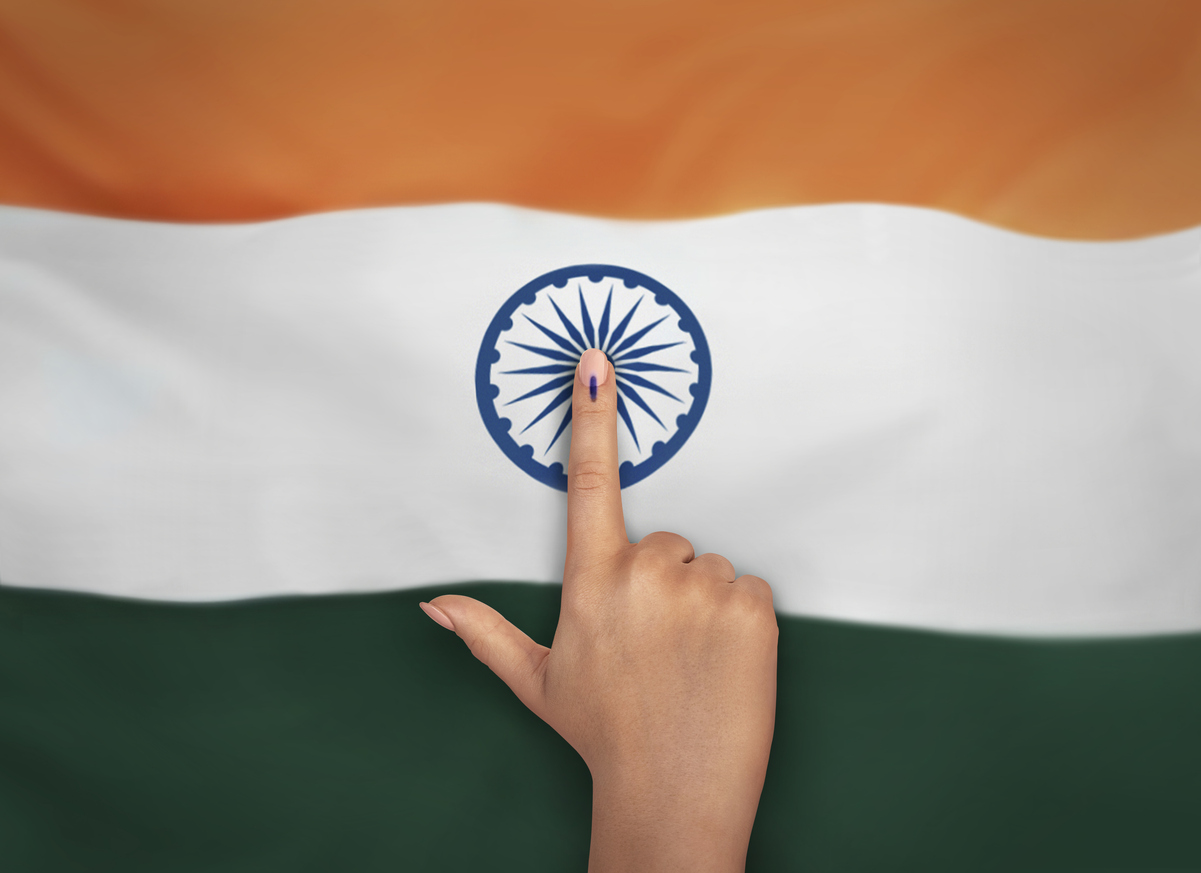
Critics argue that delimitation based on current population would affect the representation of Southern states. (iStock)

Synopsis: The proposed delimitation and simultaneous elections could significantly reshape Telangana’s political landscape by 2029. Hyderabad, Medchal-Malkajgiri, and Rangareddy are expected to gain substantial representation, while existing strongholds are expected to face fragmentation. Parties must prepare early for new constituencies, women’s reservation, leadership shifts and intensified contests amid a compressed electoral timeline.
Although the constitutional amendment required for delimitation remains uncleared and the One Nation One Election bill has only been introduced in Parliament, the political consequences for Telangana are already taking definite shape.
Parties that treat these measures as distant legislative possibilities will discover too late that the electoral ground has moved beneath them. The projected expansion of Lok Sabha seats from 17 to 26 and Assembly seats from 119 to between 179 and 182 is no longer a technical footnote; it has become the central strategic variable that will determine the contours of power in the state for the next decade.
The two national processes are tightly interlinked. Delimitation cannot proceed without a constitutional amendment lifting the freeze imposed by the 84th Amendment, which locked both parliamentary and Assembly constituencies to the 1971 Census until after the first Census conducted after 2026.
At the same time, the One Nation One Election proposal seeks to synchronise Lok Sabha and state assembly elections. If both measures advance, Telangana could face a combined electoral test around 2029 under an entirely new map. The compressed timeline leaves little room for gradual adjustment.
What appears today as legislative uncertainty is, in political terms, a rapidly narrowing window of preparation.
Also Read: Promises kept, promises broken: How the Congress government in Telangana has fared
Within this framework, the geographical impact is already foreseeable with reasonable clarity. The Hyderabad metropolitan region will absorb the largest share of new seats. Hyderabad, Medchal-Malkajgiri and Rangareddy districts are expected to account for more than one-third of the additional Assembly constituencies. Hyderabad’s Assembly strength may rise from 15 to around 20, Medchal-Malkajgiri from 5 to 13, and Rangareddy from 8 to 13.
On the parliamentary side, Hyderabad and Secunderabad have been specifically flagged for three-way splits. Malkajgiri — currently the largest constituency in India by number of electors — and Chevella face substantial redrawing. New seats in the Kukatpally–Serilingampally belt or suburban Rangareddy are widely anticipated and will emerge as open contests with fluid demographics and relatively thin organisational roots.
Northern Telangana is likely to gain at least one or two additional parliamentary seats, possibly through the creation of a Mancherial-type constituency carved from the Adilabad–Peddapalli corridor.
Southern and eastern districts — Mahbubnagar, Nagarkurnool, Warangal, Khammam and Nalgonda — will experience more limited change, typically the addition of one seat or the incorporation of two or three extra Assembly segments into existing parliamentary constituencies. Warangal, for instance, is frequently assessed as retaining most of its present boundaries with only modest expansion. Continuity of geography, however, does not guarantee continuity of political advantage.
Also Read: Telangana’s irrigation crisis: Could Kaleshwaram have blunted the El Niño Shock?
These shifts will disrupt existing strongholds in different ways.
The AIMIM’s concentrated hold over Hyderabad faces the clear prospect of dilution. A three-way split would preserve one core seat while opening the newly created urban and suburban segments to multi-cornered contests involving Congress, BJP and others.
The BJP’s present advantages in Malkajgiri, Secunderabad and Chevella will be tested by smaller, demographically mixed constituencies that may no longer deliver the same comfortable margins. Congress-held rural and southern seats offer relative geographical stability, yet that stability cannot by itself neutralise local anti-incumbency or the declining personal capital of several sitting MLAs whose influence is already under strain at the ground level.
Reserved seats will also change. Scheduled Caste parliamentary seats are projected to rise from three to four, while Scheduled Tribe seats may remain at two or edge upward depending on final population shares.
Approximately eight or nine of the 26 Lok Sabha seats are expected to be reserved for women under the 33 per cent quota. Every party will therefore need to identify winnable women candidates across both old and new constituencies, adding another layer of complexity to ticket distribution and organisational planning.
Also Read: The silent test of Telangana’s democracy: How villages and cities are handling SIR
The inter-connectivity of the two national processes amplifies the stakes. If delimitation and simultaneous elections both materialise, every party will contest a new map under a compressed calendar.
Sitting MPs whose seats are split must decide whether to contest one of the new smaller constituencies, migrate elsewhere, or shift to the Assembly. Party high commands must reassign leaders, rebuild cadre networks and prepare for women’s reservation — all within a two-to-three-year window. Those who treat the present legislative uncertainty as an excuse for inaction will find themselves unprepared when the final boundaries are notified.
The mid-term moment therefore demands clarity rather than complacency. The constitutional amendment may still be pending and the One Nation One Election bill may remain only a proposal, yet the demographic and political logic of expansion is already visible.
The Hyderabad metropolitan belt will gain disproportionate weight in the state’s parliamentary representation. Established vote banks will be fragmented across multiple seats. New open contests will appear in high-growth, high-migration zones where organisational depth remains shallow. Parties that map these shifts early, test local leadership and prepare for a landscape that no longer resembles 2024 will hold the advantage. Those who continue to read the present map through the lens of recent victories risk discovering that the ground has already moved. The law may still be incomplete, but the political contest has already begun.
(Edited by Fayisa CA)



