
Published Jul 02, 2026 | 4:00 PM ⚊ Updated Jul 02, 2026 | 4:00 PM

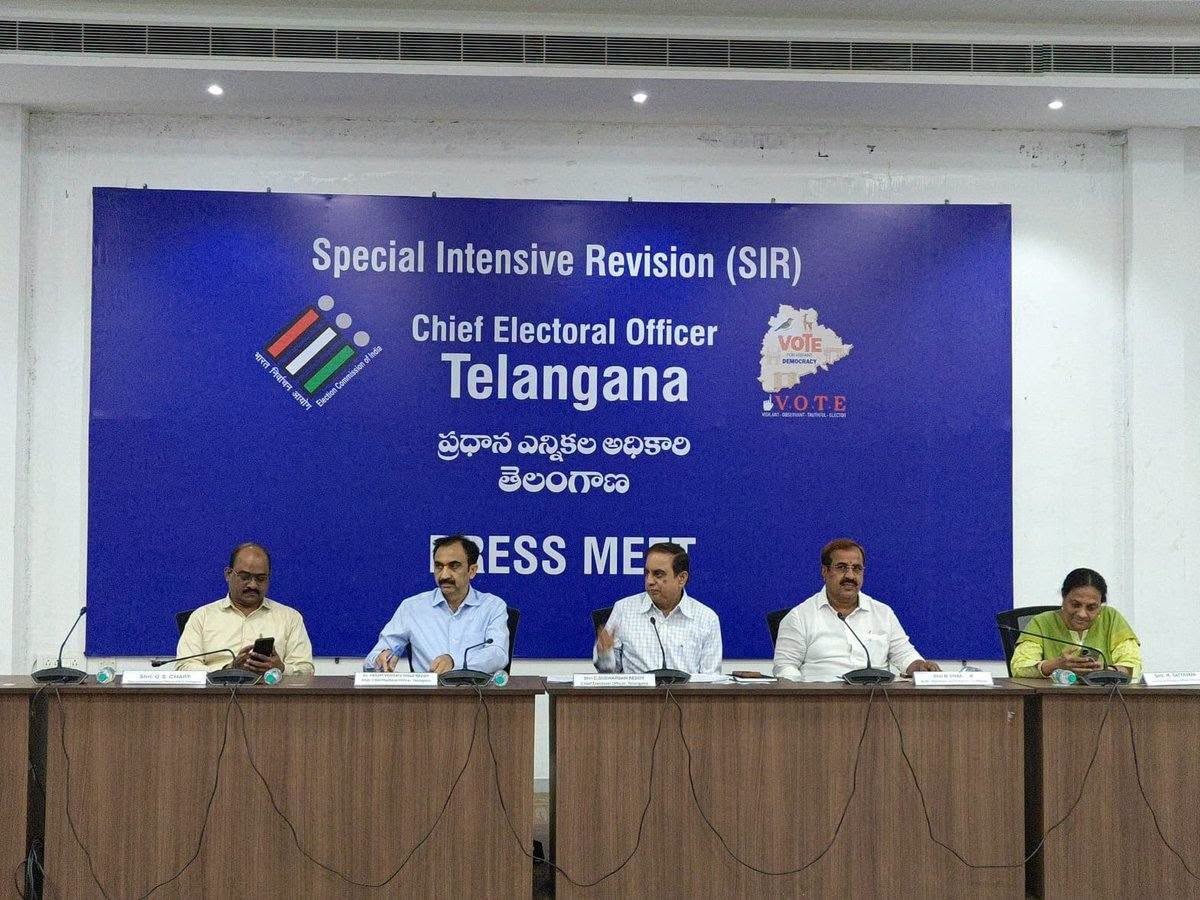
With the nation watching, how will the Telangana SIR turn out to be? (Handout)

Synopsis: In villages, “if one family receives a SIR notice, the entire street comes to know about it” as one elder said. Urban voters, in comparison, are relatively more blasé about the exercise. It’s complacency that can prove costly.
As the Special Intensive Revision (SIR) of electoral rolls gathers pace across Telangana, an interesting contrast is becoming evident on the ground. While the exercise has largely remained outside the glare of political rhetoric, it has quietly exposed a divide in civic participation between rural and urban Telangana. The revision is, after all, not merely an administrative exercise. It is the foundation upon which the legitimacy of every election rests.
Travelling through villages in districts such as Warangal, Karimnagar, Nalgonda and Mahabubabad, one repeatedly encounters a similar refrain. “Our vote is our identity. We cannot afford to lose it” is a sentiment frequently heard at village chaupals and panchayat offices. In several villages, residents say they keep track of Booth Level Officers (BLOs), remind neighbours about verification schedules and readily produce documents whenever required. Local political workers, irrespective of party affiliation, also tend to monitor the exercise closely because every voter matters in closely contested rural constituencies.
In many gram panchayats, electoral roll revision has become a collective exercise. “If one family receives a notice, the entire street comes to know about it by evening,” remarked a village elder in northern Telangana, reflecting the close-knit social fabric that characterises much of rural life. Information flows quickly through informal networks, ensuring that genuine voters rarely remain unaware of verification drives.
The situation in urban Telangana is markedly different. Apartment complexes, gated communities and rapidly expanding municipal colonies often lack the social cohesion that exists in villages. Residents frequently relocate, tenants change every few months, and neighbourhood interactions are minimal. As a result, awareness about voter verification and re-enrolment remains uneven.
Many urban voters continue to assume that once their names have appeared on the electoral roll, they require no further attention. Such complacency can prove costly. Electoral roll revision inevitably requires citizens to respond to notices, update addresses or furnish supporting documents wherever necessary. Failure to do so may result in avoidable complications, even where eligibility itself is undisputed.
Also Read: Are thirty-seven per cent of voters in Telangana suspect? Seriously!
The issue is not one of intent but of participation. The Election Commission’s objective is to prepare an accurate and inclusive electoral roll. However, no administrative exercise can succeed without corresponding public engagement. Democratic rights, while constitutionally guaranteed, also require citizens to remain attentive to procedural responsibilities.
This evolving rural-urban divide carries an important lesson for political parties. Much of their organisational machinery has traditionally been stronger in villages than in cities. Booth committees are more active, local workers maintain closer contact with electors, and Booth Level Agents (BLAs) are generally better informed about developments during electoral roll revisions.
Urban organisational structures, however, appear considerably weaker. Political parties often intensify booth-level mobilisation only after elections are announced. By then, correcting omissions from electoral rolls becomes considerably more difficult than preventing them in the first place.
The ongoing SIR therefore demands a shift in organisational priorities. BLAs must become far more proactive in urban constituencies. Their role extends beyond collecting draft electoral rolls. They are expected to verify additions and deletions, assist eligible voters in filing claims and objections, monitor doubtful entries and maintain constant coordination with Booth Level Officers.
Particular attention should be paid to colonies where large-scale deletions appear likely or where residential mobility is exceptionally high. Newly-developed layouts, apartment clusters, rental housing, migrant settlements and peri-urban municipal wards deserve sustained organisational engagement. Rather than spreading resources thinly across entire constituencies, political parties would do well to identify vulnerable localities and concentrate their efforts there.
Ground-level observations suggest that rural voters instinctively understand the political value of remaining on the electoral roll. “Governments may change, but our vote should never disappear,” is another commonly expressed sentiment heard during interactions in Telangana’s villages. Such awareness has become an informal safeguard against inadvertent exclusion.
Urban Telangana would benefit from cultivating a similar civic consciousness. Resident Welfare Associations, civil society organisations and educational institutions can complement official efforts by encouraging residents to verify their enrolment well before statutory deadlines. Technology has simplified electoral services through online verification and digital applications, but digital access alone cannot substitute for active participation, particularly among elderly citizens, migrant workers and economically vulnerable households.
Ultimately, the Special Intensive Revision is not about additions or deletions alone. It is about ensuring that electoral rolls accurately reflect the democratic community they are meant to serve. Accuracy and inclusiveness must remain complementary objectives.
The experience unfolding across Telangana offers a timely reminder. Rural voters have approached the exercise with notable vigilance, aided by strong community networks and active grassroots engagement. Urban constituencies, where electoral contests are often decided by narrow margins, cannot afford comparable complacency. Political parties must strengthen their Booth Level Agents, identify colonies where deletions appear imminent and invest organisational energy in safeguarding every eligible vote.
The quality of a democracy is determined not merely by the conduct of polling on election day but by the integrity of the electoral roll prepared long before campaigning begins. Telangana’s ongoing SIR is, therefore, more than an administrative update—it is a quiet but decisive test of democratic participation itself.
Also Read: Revanth Reddy unruffled as the Telangana Congress kettle threatens to boil over
(Edited by R Rajesh Kumar.)



