

Published Jul 10, 2026 | 3:27 PM ⚊ Updated Jul 10, 2026 | 3:27 PM

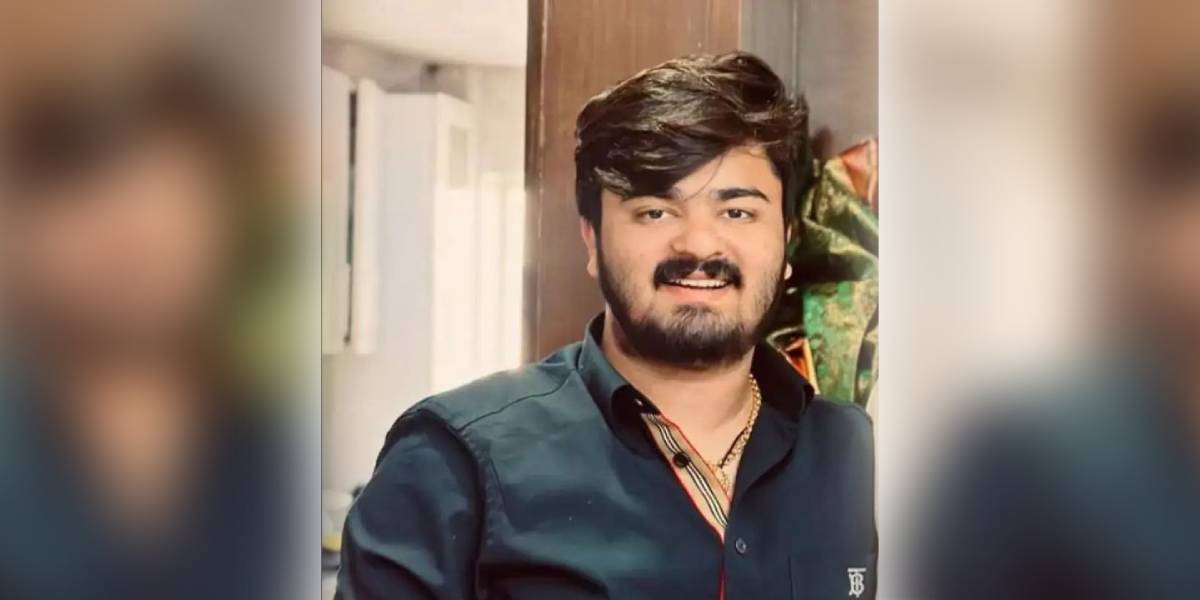
Bandi Sai Bageerath, accused of sexually assaulting a minor.

Synopsis: The Telangana High Court has granted regular bail to POCSO accused Bandi Sai Bageerath, holding that his continued custody was not necessary as the investigation was largely complete and the risks could be managed through strict bail conditions. The Court said it had to balance the accused’s right to personal liberty with the need to protect the investigation and trial.
POCSO accused Bandi Sai Bageerath, the son of Union Minister of State Bandi Sanjay, was granted regular bail by the Telangana High Court on Thursday, 9 July.
Accused of sexually exploiting a minor, Bageerath faces charges including aggravated penetrative sexual assault under the POCSO Act and various sections of the BNS.
His counsel filed a petition before the Court seeking bail on 30 June, while the investigating officers filed a counter-affidavit on 3 July.
The main argument put forward by Senior Counsel T Niranjan Reddy was that Bageerath had fully cooperated with the investigation, even while in police custody.
The counsel also pointed to an earlier instance in which he was granted short-term interim bail to appear for his BBA supplementary examinations in June. He noted that his client had complied with the conditions attached to that release and surrendered on schedule, with no complaint of misuse of liberty during that period.
Public Prosecutor Palle Nageshwar Rao opposed the plea on behalf of the State. Countering the counsel’s arguments, the prosecutor urged the rejection of the bail petition, pointing to the repeated exploitation of the relationship and describing the allegations against the accused as serious given the survivor’s age.
Despite the gravity of the charges, Bageerath’s petition for relief was accepted by the Court, with Justice K Sujana observing that it was important to “strike a balance” between the accused’s personal liberty and the State’s interest in ensuring justice.
Bageerath is now expected to secure his release once he completes the bond and surety formalities.
Also Read: Why Left student organisations in Telangana are calling for a statewide strike on 10 July
Bageerath’s counsel maintained that he had already spent 55 days in judicial custody, during which time the police examined the survivor and other key witnesses. He also pointed out that 25 witnesses had been examined while the accused was in custody.
Senior Advocate Pappu Nageshwar appeared for the complainant (the survivor’s mother) on behalf of Advocate V Mythili. He maintained that the probe could not be considered complete as long as several key witnesses named by the survivor and other circumstantial evidence remained unexamined.
In a written submission, the complainant’s counsel also argued that granting bail while these gaps remained would prejudice the prosecution’s case, citing four Supreme Court rulings: Shankar Finance and Investments v. State of Andhra Pradesh, Praveen v. Mohd. Tajuddin, AC Narayanan v. State of Maharashtra, and Vinita S. Rao v. Essen Corporate Services Private Limited.
The Court, however, highlighted Public Prosecutor Palle Nageshwar Rao’s stand that the investigation was all but finished, save for the chargesheet.
Justice K Sujana reiterated that, when granting bail, the Court must strike a balance between the fundamental right to personal liberty of the accused and the need to protect the integrity of the investigation and trial.
The Court held that once it is confident that risks such as the accused fleeing or tampering with evidence can be mitigated through “stringent conditions”, continued incarceration is generally considered “unwarranted.”
Also Read: If Raavan is UAPA accused, what about Pawan Kalyan’s own words?
The written arguments filed by the complainant’s counsel raised concerns that Bageerath would use his freedom to threaten the survivor or influence witnesses. The Public Prosecutor also argued that releasing the accused posed a risk of interference with the investigation and tampering with evidence.
The Court concluded that the apprehensions raised on behalf of the survivor could be addressed through strict bail conditions rather than continued imprisonment.
The judge also noted that if the complainant had concerns about how the investigation was being conducted, she remained free to pursue appropriate remedies before the proper forum.
One of the reasons cited by the complainant’s counsel for rejecting bail was that the Forensic Science Laboratory (FSL) report had not yet been received.
In response, the Public Prosecutor produced the FSL report before the Court in a sealed cover. The report was submitted alongside a statement recorded under Section 183 of the Bharatiya Nagarik Suraksha Sanhita (BNSS).
The availability of the report reinforced the Court’s view that the investigation had progressed sufficiently to permit the petitioner’s release on strict conditions.
Also Read: Who rules Telangana? Is it the Sangh Parivar?
Rather than denying bail over the survivor’s apprehensions, the Court sought to address them by imposing stringent conditions. Justice Sujana held that the survivor’s safety and the integrity of the trial could be protected through ten specific conditions.
To that end, the Court directed that Bageerath shall not make any public statements, give interviews, or post on social media regarding the case until the trial concludes. He is barred from contacting the survivor, her family, or any prosecution witnesses. He is also prohibited from visiting places frequented by the survivor, including her school or college, workplace, residence, and locality.
The order directs the accused to furnish a personal bond of Rs 1 lakh with two sureties of a similar amount. As per the conditions, Bageerath is required to surrender his passport and report to the local police station every Monday at 11 a.m. for eight weeks, or until the chargesheet is filed. He must continue to appear thereafter if deemed necessary, the order stated.
The accused is prohibited from coercing, threatening, or harassing the survivor or the witnesses, either personally or through third parties.
The Court also directed Bageerath to comply with the conditions prescribed under Section 480(3) of the BNSS, which governs bail in non-bailable offences.
The order also states that any breach of these conditions would allow the prosecution or the complainant to seek cancellation of bail.
Also Read: Congress infighting turns violent in Telangana’s Suryapet district
Ever since the case came to light, concerns have loomed that Bageerath’s father, Bandi Sanjay’s position as a minister in the Union Ministry of Home Affairs, might influence the probe.
The delay in the arrest triggered widespread outrage from opposition parties, rights groups, and civil society. After the arrest, the Telangana government and the police were criticised for initially filing only non-bailable charges against Bageerath. Legal experts also questioned the public prosecutor’s preparedness when the matter was first heard at the High Court in May.
The high-profile case gained further notoriety following organised online campaigns against the survivor. Screenshots, photographs, and videos purporting to show her interacting with Bageerath were widely circulated on social media, with some users framing them as proof that her account of events could not be trusted. The girl’s mother had to publicly appeal on more than one occasion for the family’s privacy to be respected.
Hyderabad police responded by registering cases against several social media users accused of disclosing the minor’s identity, invoking provisions of the Juvenile Justice Act, the BNS, and the POCSO Act that specifically bar identifying a child survivor of sexual offences.
Police said they were working to trace the individuals behind the accounts involved. There have been no further public updates on these cases.
BRS State General Secretary RS Praveen Kumar had earlier accused the government of shielding Bageerath by stalling the filing of the chargesheet and bypassing existing procedures.
He also alleged that the survivor and her family were kept completely in the dark about the proceedings, including the interim bail granted to the accused by a POCSO court.
(Edited by Dese Gowda)



