

Published Jul 09, 2026 | 12:00 PM ⚊ Updated Jul 09, 2026 | 2:40 PM

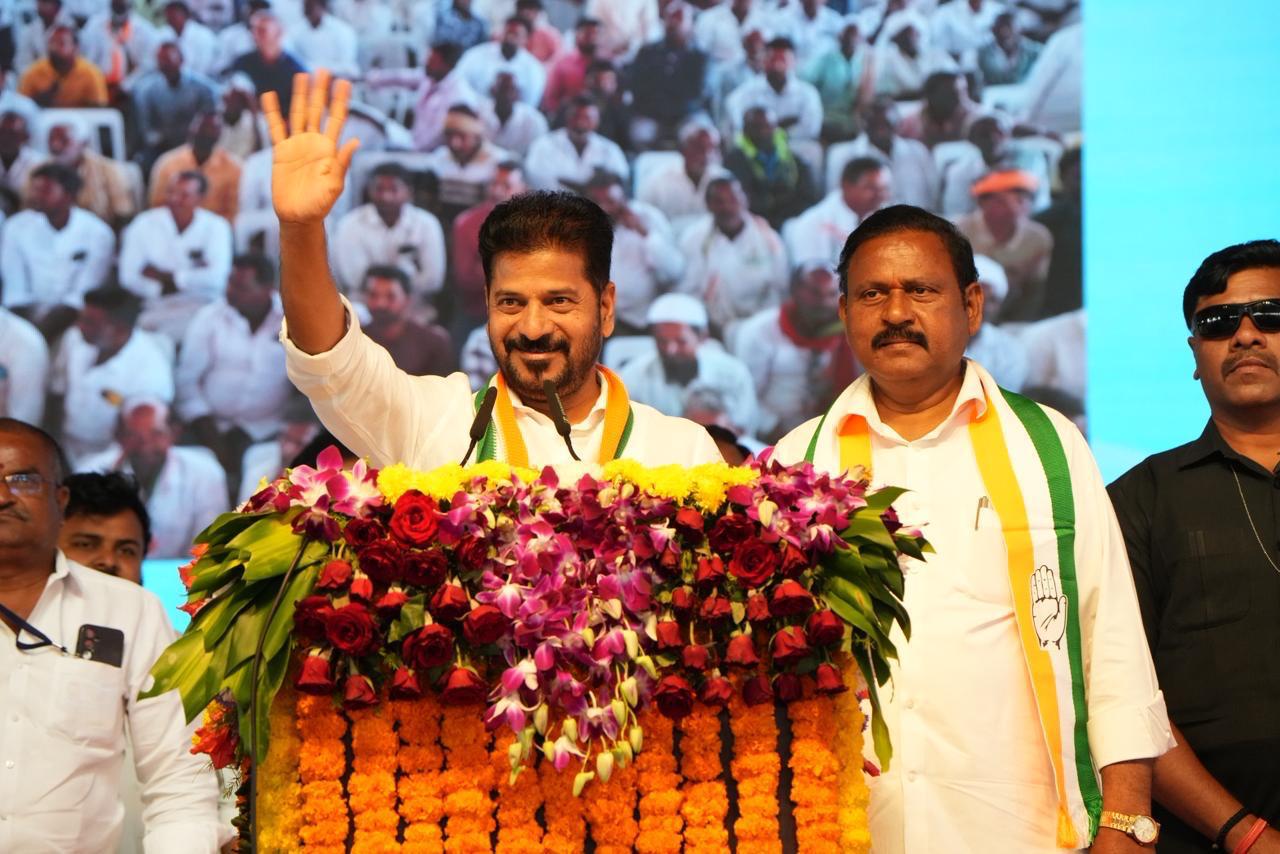
Telangana CM Revanth Reddy. (x.com/revanth_anumula)

Synopsis: The Telangana government recently denied permission to Virasam to host a seminar in Hyderabad. The decison casts doubt on whether governance in Telangana remains democratic and constitutional, and whether the Sangh Parivar has come to determine the course of governance here as well.
Why should the Telangana government object if a literary organisation founded in Hyderabad 56 years ago wants to mark its anniversary, as it has every year, with a seminar? Why should the police prevent it when the subject is as innocuous as The Specific Features of Fascism in India?
The police’s refusal to allow a seminar in Hyderabad on Sunday, 5 July, despite repeated efforts by the organisers and on the vague plea of “orders from above”, is no isolated incident. Nor is it merely about one organisation. It raises larger questions about the manner in which the state is being governed.
It casts doubt on whether governance in Telangana remains democratic and constitutional, and whether the Sangh Parivar, whose worldview is fundamentally opposed to democracy, has come to determine the course of governance here as well.
Also Read: Telangana police refuse permission for Virasam’s seminar on fascism
The Revolutionary Writers’ Association (Virasam) was founded in Hyderabad in the early hours of 4 July 1970, with Sri Sri as its president. It brought together several established writers and attracted a large number of young ones. Over the past five decades, it has made an immense contribution to literary, cultural and social life.
Writers’ organisations committed to supporting people’s struggles may have existed elsewhere in the world, but one that has survived continuously for five and a half decades is difficult to find anywhere else.
For the past 50 years, Virasam has observed the 2 July memorial of one of its founders, Cherabanda Raju, and its foundation day on 4 July, either in Hyderabad or elsewhere.
This year as well, it planned a day-long programme comprising three lectures and a stage performance. As with every public meeting, a pamphlet announcing the event was printed and circulated.
On Friday night, merely a day before the programme, the hall management informed the organisers that the police had said the meeting had no permission and that the hall could be used only if police permission was obtained.
Throughout Saturday, the organisers tried every possible channel, directly and through persons who could speak to ministers and senior police officials. They even considered approaching the court if permission was refused. Every effort failed.
Late on Saturday night, they announced that the seminar had been cancelled. Some participants, who had already begun travelling from distant places, posted on social media that they were turning back midway after seeing the announcement.
On Sunday morning, at the very time the inaugural session should have been under way, the organisers called a press conference at the Hyderabad Press Club to register their protest. Even there, they were met with a heavy police presence.
What does all this signify? It is this same government of Revanth Reddy that promised to restore democracy, return civil liberties to the people of Telangana after 10 years, and proclaimed it as his “seventh guarantee”. Were those promises no more than election rhetoric? Or is someone else exercising authority in the state?
This episode offers a revealing glimpse into the present condition of Telangana society. It also raises disturbing questions about the functioning of the present government. Several aspects of the matter deserve attention.
First, under the Constitution of India and the laws now in force, including the laws governing the police, citizens meeting inside private premises — a building, a hall or even a room — require no permission other than that of the owner. Police permission is not required at all.
Nor is prior police permission legally required for a procession, demonstration, dharna or public meeting in an open place. Since such gatherings may affect traffic, the organisers are expected to inform the police so that traffic can be regulated. If microphones or loudspeakers are used, the police are responsible for ensuring that the prescribed noise limits are observed. Their powers extend no further.
If an assembly is likely to endanger public order, the authority to impose restrictions rests with the Executive Magistrate — earlier under Section 144 of the Code of Criminal Procedure and now under Section 163 of the Bharatiya Nagarik Suraksha Sanhita (BNSS). The police are only required to enforce such orders. Granting or refusing permission for a meeting is neither their legal power nor their statutory duty.
There was, therefore, no legal requirement whatsoever for the organisers of this seminar to obtain police permission.
Yet, from the days of undivided Andhra Pradesh and even after the formation of Telangana, what has effectively prevailed is police raj. The police have arrogated to themselves powers they do not possess in law. Political leaderships that rely on the police to suppress public discontent and dissent have virtually given them a free hand.
As a result, the police routinely pressure the management of halls where meetings are held. They demand details of those hiring the premises, intimidate organisers, warn hall owners against renting their premises to particular organisations, and insist that halls be allotted only after obtaining “police permission”.
In fact, the business of a hall owner is simply to rent out premises. They are under no legal obligation to provide such information to the police. They could well ask: by what authority are you interfering in our business and preventing us from carrying it on? But most business owners believe it is safer to remain on the right side of the police than risk official harassment under one pretext or another.
The present case, however, was somewhat different. The hall was not owned by an ordinary commercial establishment; it belonged to the Communist Party of India. Its management could therefore have firmly told the police that no permission was required for a meeting held inside a private hall and, if necessary, challenged the demand on legal grounds.
For reasons best known to them, they chose not to do so. Instead, they asked the organisers to obtain police permission. Tomorrow, the same situation may confront meetings organised by their own party.
Leaving that aside, it is learnt that the police raised two specific objections. Why, they asked, did the organisation have the word “Revolutionary” in its name? And how could they permit a seminar on “fascism”?
Also Read: Telangana Congress sees row between minister and MLA
Since when has the word “revolutionary” become taboo in Telangana? Have the police deleted it from the Telugu language? On what grounds? The word simply denotes radical or fundamental change. It is used to describe every kind of far-reaching transformation, whether or not it is literally revolutionary.
Even if the Telangana police choose to attach a particular political meaning to the word, did not the Union Home Minister himself tell the Lok Sabha that, with effect from 31 March 2026, that very phenomenon had come to an end and that the country had been freed from it?
If so, why should there still be any objection to the use of the word? Why should it be treated as though it were prohibited?
Even more disturbing is the apparent objection to the word “fascism”.
Ever since Benito Mussolini founded the Fascist Party in Italy a century ago and proclaimed fascism as its ideology, and ever since Adolf Hitler in Germany and Francisco Franco in Spain established their own variants of fascist rule and led the world into the carnage of the Second World War, fascism has been the subject of extensive study.
Hundreds of books and countless articles have examined it. In universities across the world, it is a recognised subject in the social sciences. Scholars continue to debate not only 20th-century fascism but also its resurgence in the 21st century and the distinctive forms it assumes in different countries.
The seminar, which was blocked on Sunday, was intended as a contribution to precisely such a discussion. Why, then, should the Revanth Reddy government object to it?
The irony is that the Congress, which heads the government in Telangana, has itself repeatedly described the BJP’s rule as fascist. Leader of Opposition in Lok Sabha Rahul Gandhi has said so explicitly. Why then should a Congress government object to a seminar on fascism?
Nor does this begin with Rahul Gandhi. During the 1930s, Jawaharlal Nehru associated himself with international anti-fascist initiatives. In the post-colonial phase, he repeatedly warned of the fascist danger posed by the project of a Hindu Rashtra.
As early as 1947, Indira Gandhi wrote to Nehru expressing concern over the fascist threat represented by the Rashtriya Swayamsevak Sangh (RSS).
Although the Emergency imposed by her was itself criticised as fascist, she defended it on the grounds that it was necessary to protect the country from a fascist danger.
Rajiv Gandhi, too, warned against communalism and the fascist threat. Rahul Gandhi has gone further, naming both Savarkar and the RSS while describing their politics as fascist.
Is there, then, a gulf between that Congress legacy and the Congress government headed by Revanth Reddy? How has a seminar on fascism become objectionable to his government? Why is it following a course that is neither supported by law nor consistent with the Congress Party’s own political tradition?
Is Telangana today governed by a Congress government that claims, at least in words, to oppose fascism? Or is it, in effect, being governed by the RSS, which has admired and drawn inspiration from fascism since the days of Mussolini?
(Views are personal. Edited by Muhammed Fazil.)



