

Published Jul 08, 2026 | 4:37 PM ⚊ Updated Jul 08, 2026 | 4:37 PM

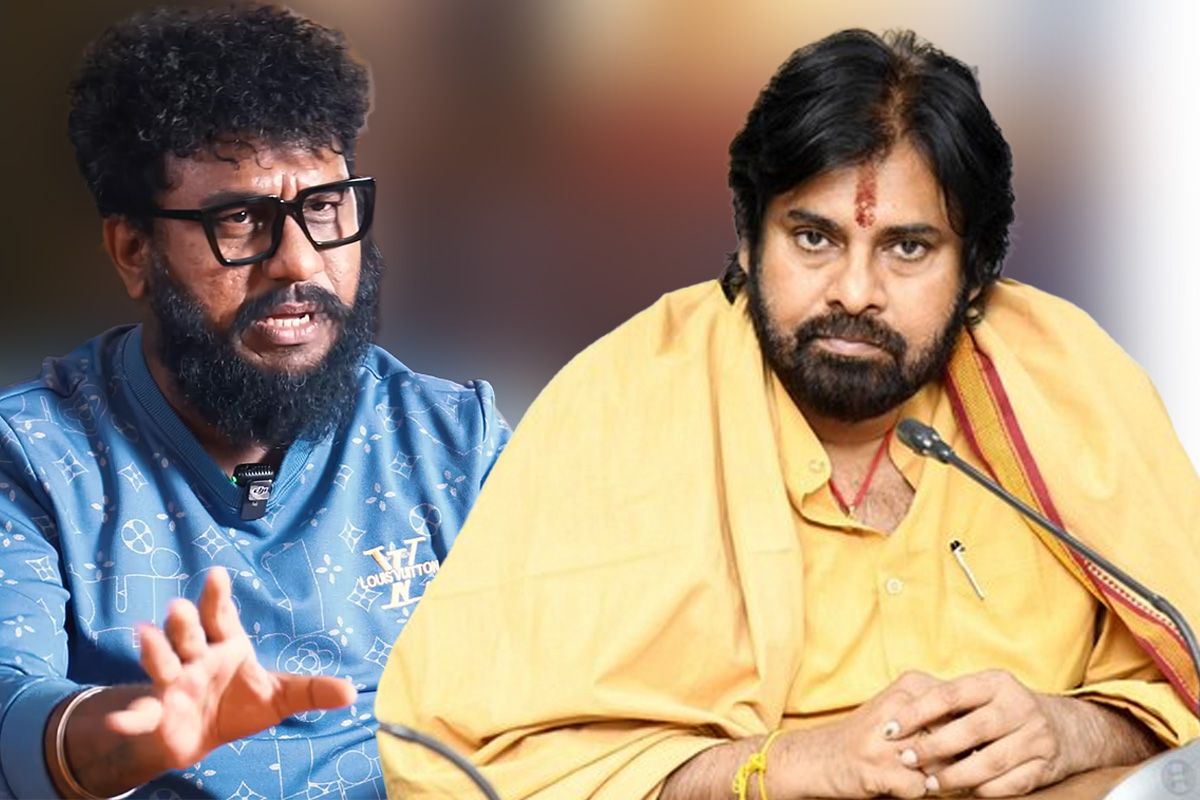
Youtuber and political commentator, Bachalakuri Joseph known as 'Prashna Ravan' and deputy chief minister of Andhra Pradesh, Pawan Kalyan.

Synopsis: Do Raavan’s comments really attract the provisions of UAPA? The law and a retired High Court judge whom South First spoke to don’t believe so. And how is it that Pawan Kalyan has forgotten his own comments and those of his brother Nagababu while blindly pursuing vengeance?
If YouTuber Joseph alias Raavan is guilty of offences under the Unlawful Activities Prevention Act (UAPA) in the eyes of the Andhra Pradesh police, the state’s deputy chief minister Pawan Kalyan is no less so.
By all accounts, the detention of Raavan under UAPA, after four successive arrests followed by grant of bail under other offences, was meant to satisfy the ego of a politician who entered politics promising to “question” the establishment.
Pawan Kalyan was reportedly unrelenting until the police dug deep into the statute books to slap such cases against Raavan as would deny him bail.
The 360-degree turn of Pawan—from one who declared Cuban revolutionary Che Guevera as his inspiration, eulogized the Naxalites, wanted to pick up a gun and join the Maoist movement—to a right-winger baying for the blood of his critics was not surprising given the hollow nature of his politics from the beginning. It is just that his true colours have emerged once he gained power.
Let us get into the specifics with a rider that the language employed by the YouTuber against his political opponents is not acceptable by any standards. His words are offensive but there are enough provisions in law to deal with them.
Two cases are made out against Raavan. One, that he offended the Hindu religion and its Gods; second, that he eulogised Naxalites in the context of the alleged encounter killing of top Maoist Hidma a few months ago.
As is the wont with the police and those defending the government, selective clips from rather long speeches/observations made by Raavan are cited as evidence to justify the cases against him, without any reference to the overall context.
Raavan’s remarks against Hinduism should be viewed in the context of a Hindu protagonist describing Christianity as a “bad religion.” “What if someone says the same about Hinduism,” Raavan countered.
While Pawan declared himself as an atheist before becoming a “Sanatani,” let’s rewind to what his brother, Nagababu, said about Hinduism. “I wanted to meet God and tell him that he is fuc**ing arrogant, a top-notch sadist, a crooked egoist, a psychopathic stupid and a mean masochistic being. His deeds are so evil that make him liable to be hanged till death! To my disappointment, he never existed.”
That was Nagababu in a post on X in 2021. Today, he is a member of the Andhra Pradesh Legislative Council. Is he as much liable for hurting religious sentiments as is Raavan?
Hinduism itself has evolved over centuries. Thanks to social reformers through centuries, such abominable practices as Sati and child marriage are no longer held valid or followed. Any religion must be open for criticism and Hinduism is no exception if the arguments are not offensive.
Social media influencers, aided and abetted by the powers that be, are coming out with the argument that Joseph assuming the name of Raavan itself proves he is anti-Hindu. Back in the 1960s, the late NT Rama Rao, founder of the Telugu Desam Party that is now in power, came out with a movie Bhukailaas hailing the virtues of Raavan and the punishing penance he underwent to please Lord Shiva. The movie was a blockbuster at that time when the society was far more civilised than now.
Even if Raavan’s comments are viewed in isolation, do they really attract the provisions of UAPA is the question. As retired IPS officer AB Venkateswara Rao, who served as Intelligence head during the previous tenure of Nara Chandrababu Naidu (2014-19), pointed out, assuming Raavan hurt the religious sentiments of Hindus, he is at best guilty of offences under Section 299 of BNS.
If he made disparaging remarks against Pawan Kalyan and his family, a defamation case is in order. Branding Raavan as an anti-national is not, he pointed out.
Move to the Maoist angle. What exactly did Raavan say? In the context of Hidma’s encounter, Raavan said that if injustice prevailed in society, such resistance movements will keep surfacing and cited what happened from the time of Spartacus to Hidma.
Was it any different from what Pawan Kalyan said before assuming the high office? Not long ago, referring to the plight of Adivasis and the Maoist movement, he wondered: “What will they do when girls are raped, when kids can’t go to school, and tribal areas are starved of funds for development? When governments fail, what is wrong if they look up to Maoists who are risking their lives and coming to their rescue?”
This is besides his admission, in open interviews, of having been an admirer of Naxalites before his brother, actor Chiranjeevi, stepped in.
That was at a time when the Maoist movement was at its peak. On the other hand, Raavan’s comments come when the Union Government has declared that the movement has been wiped out.
What is the legal position? In the case involving alleged Maoist sympathiser GN Saibaba (who passed away recently), a division bench of the Bombay High Court laid down clearly that “merely because a citizen downloads Maoist material or even sympathises with the philosophy it would in itself not be an offence, unless there is specific evidence to connect an active role with particular incidents of terrorist activity.”
A retired HC judge, whom South First spoke to, pointed out that no case has been made out against Raavan, in the remand report, and that there is no proof that any of his comments have led to an incident that could be even remotely construed as a terrorist act. Merely eulogising Naxalites does not attract the provisions of UAPA, he insisted.
Insiders in Andhra Pradesh government suggest that the stringent action against Raavan was meant to “send a message” to critics of the establishment and silence others into submission.
Those in power often fail to realise that allowing people to vent diverse views/opinions, however unpalatable they could be, is safer than stifling the voices.
A diverse society, with diverse views, is the way to build a modern state. Cracking down on people, using the might of the State, will only push the already caste-ridden Andhra Pradesh society into a deeper abyss. It is unlikely to grow into the “modern Andhra Pradesh” that Chief Minister N Chandrababu Naidu envisions it to be.
(Edited by R Rajesh Kumar.)



