

Published Jul 29, 2026 | 3:04 PM ⚊ Updated Jul 29, 2026 | 3:06 PM

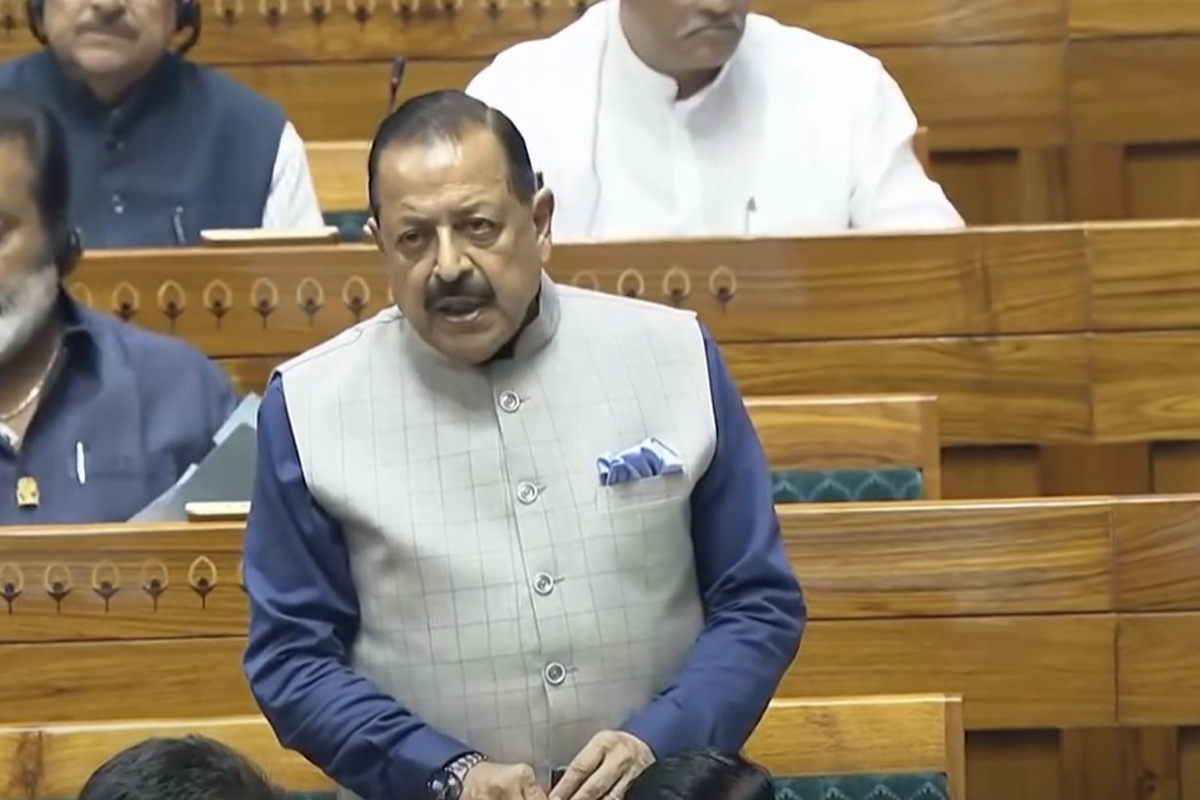
Dr Jitendra Singh, MoS, Prime Minister's Office, initiated the discussion on the bill in Parliament. (Screengrab)

Synopsis: The Public Examinations (Prevention of Unfair Means) Amendment Bill has been unveiled with much fanfare. But its measures are confined to increased punishment, speed of investigations and little else…
India’s public examination system stands exposed as structurally compromised. Rahul Gandhi quoted 152 paper leaks in the last 10 years, a figure the government hasn’t contested.
The Public Examinations (Prevention of Unfair Means) Act, 2024 was sold as a decisive break with the past to address such leaks. It failed. Paper leaks resumed, NEET-UG 2026 collapsed, and over 22 lakh students had to resit their exams. Organised networks still move question papers with disturbing efficiency while official responses recycle the same legislative pattern: higher jail terms, larger fines, faster courts.
The Public Examinations (Prevention of Unfair Means) Amendment Bill tabled on July 27, 2026, is the newest iteration of this approach. It is more aggressive on paper, yet it remains a blunt instrument aimed at symptoms rather than the institutional rot that allows these scandals to repeat.
The Bill hardens every major provision of the 2024 Act. Individuals now face five-to-ten years’ imprisonment and fines up to ₹50 lakh. Service providers risk ₹5 crore penalties and an eight-year ban. Their directors and senior management face the same punishment and ₹5 crore fines. Organised syndicates attract a minimum of seven years and fines up to ₹10 crore.
Investigations must close within two months. States must create Special Fast Track Courts that finish trials within three months of the chargesheet, with day-to-day proceedings. High Court appeals are to be resolved by a Division Bench inside three months.
These changes answer genuine public rage. Paper leaks are not random cheating; they are organised predation that strips equal opportunity from students who have prepared for years. Escalating the cost of detection and compressing the path to conviction can, in principle, raise risks for the networks involved. The government frames the measure as a defence of merit and a restoration of trust.
A harder look shows the limits of this strategy.
The Bill is almost purely punitive. It does not rebuild the weak points that make leaks possible. It doesn’t contain measures to either strengthen the printing chains, where some of the recent paper leaks occurred, or the logistics chains (packing, transportation, strong room, exam centres…). Nor does it suggest changes needed in the digital architecture of the National Testing Agency and parallel bodies. Interestingly, V Kamakoti, the IIT Madras Director who has been named in Nandan Nilekani’s six-man high-powered taskforce, told India Today, while discussing the NEET 2026 leak, that “no encryption can stop a question paper setter from leaking the paper.”
Deterrence works only when the chance of being caught is high. Longer sentences and heavier fines mean little if the same operational gaps remain open. Technological and administrative reforms, including the panel under Nilekani, will decide real outcomes. Without them, the familiar sequence of leak, cancellation and protest is likely to continue.
Implementation dangers are equally stark.
A rigid two-month investigation window creates pressure that can produce thin probes and hurried chargesheets. Failure to meet the deadline invites legal challenge and deeper distrust. Special Fast Track Courts require judicial capacity that has often been missing in earlier experiments. Proportionality remains unresolved: organised mafias deserve severe treatment, yet applying the same elevated penalties to peripheral actors risks overreach and selective enforcement.
The political setting sharpens the problem. The Bill arrived amid Opposition protests and demands for referral to a parliamentary committee. The government has signalled it may force the measure through even without sustained debate. A statute that governs the credibility of national examinations deserves rigorous scrutiny. Advancing it without that process risks producing legislation that looks resolute yet proves fragile once tested against the next crisis.
In the end, the 2026 Amendment Bill intensifies an existing tool. It raises legal and financial stakes and tries to accelerate justice. These steps respond to justified anger. Yet their contribution to a trustworthy examination system will depend far less on the severity of the statute and far more on enforcement capacity, genuine preventive reform, and the preservation of fair process under compressed timelines. Without those foundations, the Bill risks joining a growing list of legislative responses that promise deterrence and deliver only temporary reassurance—stronger wording, same underlying vulnerabilities.
Also Read:
Withdrawing consent: Gene Sharp and the Cockroach uprising
‘It’s the economy, stupid’: The making of India’s Gen Z discontent
Beyond Pradhan’s resignation: CJP and the unfinished struggle for educational justice in India
(Edited by R Rajesh Kumar.)



