

Published Aug 28, 2026 | 8:00 AM ⚊ Updated Aug 28, 2026 | 8:00 AM

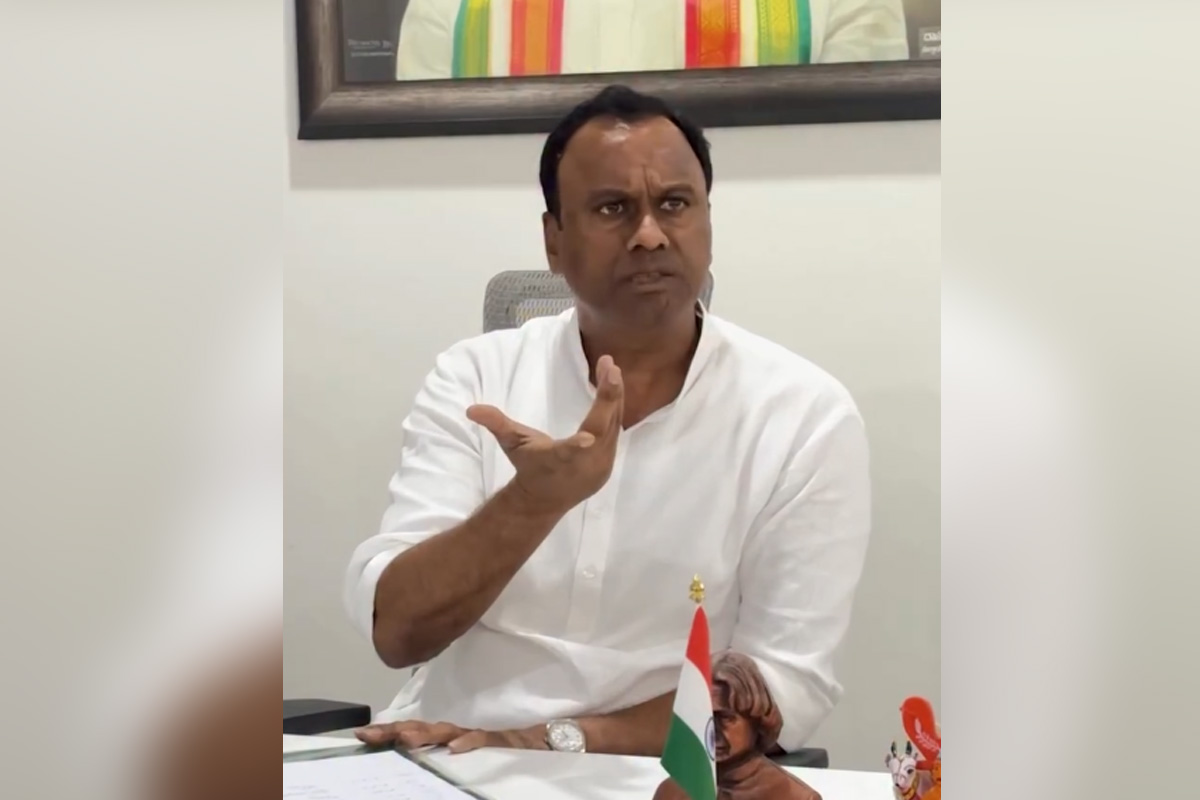
Telangana MLA Komatireddy Rajagopal Reddy.

Synopsis: When unverified allegations, personal insinuations and political gossip get presented repeatedly as news, the boundary between journalism and propaganda begins to be erased. If journalism becomes gossip, advocacy becomes news and propaganda masquerades as investigation, the real casualty is public trust.
When politicians publicly question the conduct of sections of the media, it is tempting to dismiss their criticism as an attempt to silence an inconvenient press. But the issue becomes more serious when gossip, insinuation and partisan propaganda are packaged as journalism.
Telangana Congress legislator and senior politician Komatireddy Rajagopal Reddy’s recent criticism of a news channel owner brings a larger question into focus: what happens to democracy when journalism becomes difficult to distinguish from political advocacy?
Reddy accused the owner of a news channel of carrying gossip-like stories and malicious propaganda in the name of journalism. He argued that freedom of expression and freedom of the press, which carry a responsibility to remain objective, credible and reliable, were being misused to serve vested interests. His allegations may be contested, but the underlying concern deserves examination beyond the personalities involved. The issue is the erosion of public trust in the media.
The press occupies a privileged position in a democracy because it performs a public function. Its freedom is not merely a licence to publish. It provides the institutional space to question governments, expose wrongdoing and inform citizens. But freedom without responsibility can become an instrument of manipulation. When unverified allegations, personal insinuations and political gossip are repeatedly presented as news, the boundary between journalism and propaganda begins to disappear.
The problem has been intensified by the economics of television and digital journalism. Competition for ratings, clicks and engagement rewards what is provocative rather than what is consequential. A carefully verified report rarely generates the instant attention produced by a sensational allegation, a personal confrontation or an inflammatory headline. The result is a public sphere increasingly driven by outrage, speculation and personality rather than evidence.
Yet political parties and politicians cannot distance themselves from this transformation.
Across the political spectrum, leaders have cultivated friendly media outlets, encouraged favourable coverage and used sympathetic platforms to attack opponents. The relationship between political power and media power has consequently become increasingly transactional. When politicians criticise partisan journalism, the public is entitled to ask whether the objection is principled or simply a reaction to unfavourable coverage.
That is why editorial independence is indispensable. A newspaper or television channel cannot become the publicity arm of a political party, nor should it function as an instrument for settling personal, corporate or political scores. Journalism loses its credibility when facts are selected according to political convenience. At the same time, criticism of the media should not automatically be portrayed as an assault on press freedom. A free press must also be accountable to facts and professional ethics.
The rise of social media and YouTube has further complicated the landscape. Traditional gatekeepers have weakened, while information can now be produced and distributed by virtually anyone. This democratisation has expanded participation, but it has also allowed rumours to travel faster than verification. Repetition can create the illusion of truth, while partisan commentary can acquire the appearance of reporting.
This places established newspapers at a critical crossroads. They are expected to maintain higher standards precisely when the digital ecosystem rewards sensationalism. If newspapers and television channels imitate social media in pursuit of attention, they risk destroying the very credibility that distinguishes professional journalism from gossip and political propaganda.
The answer, however, is not censorship. Nor should governments or politicians determine what constitutes acceptable journalism. The remedy lies in stronger professional standards and greater transparency. Media organisations must verify allegations, distinguish news from opinion, correct errors promptly and resist pressures that compromise editorial independence. Politicians, in turn, must learn to tolerate legitimate scrutiny without dismissing every uncomfortable report as conspiracy or propaganda.
There is also a responsibility on the audience. Citizens must become more discerning consumers of information. A headline is not evidence; an allegation is not a fact; and a television debate is not necessarily journalism. In an environment saturated with information, credibility depends increasingly on the ability to distinguish reporting from commentary and investigation from insinuation.
The controversy surrounding Rajagopal Reddy’s remarks should therefore not be reduced to another confrontation between a politician and a media proprietor. It raises a larger question about the health of democratic discourse. If journalism becomes gossip, advocacy becomes news and propaganda masquerades as investigation, the damage extends far beyond individual media houses.
The real casualty is public trust. And once that trust is lost, restoring it is far harder than losing it.
Also Read:
The outrage economy: Why media prefers mudslinging over hard-nosed political journalism
Clicks, reels and political pressure: Senior journalists discuss the future of Indian media
Why traditional media is at the receiving end at the Jantar Mantar protests
Gen Z’s ‘Cockroach Revolt’: Sparking a Norwegian-style free press revival in India



