
Published Aug 25, 2026 | 7:00 AM ⚊ Updated Aug 25, 2026 | 7:00 AM

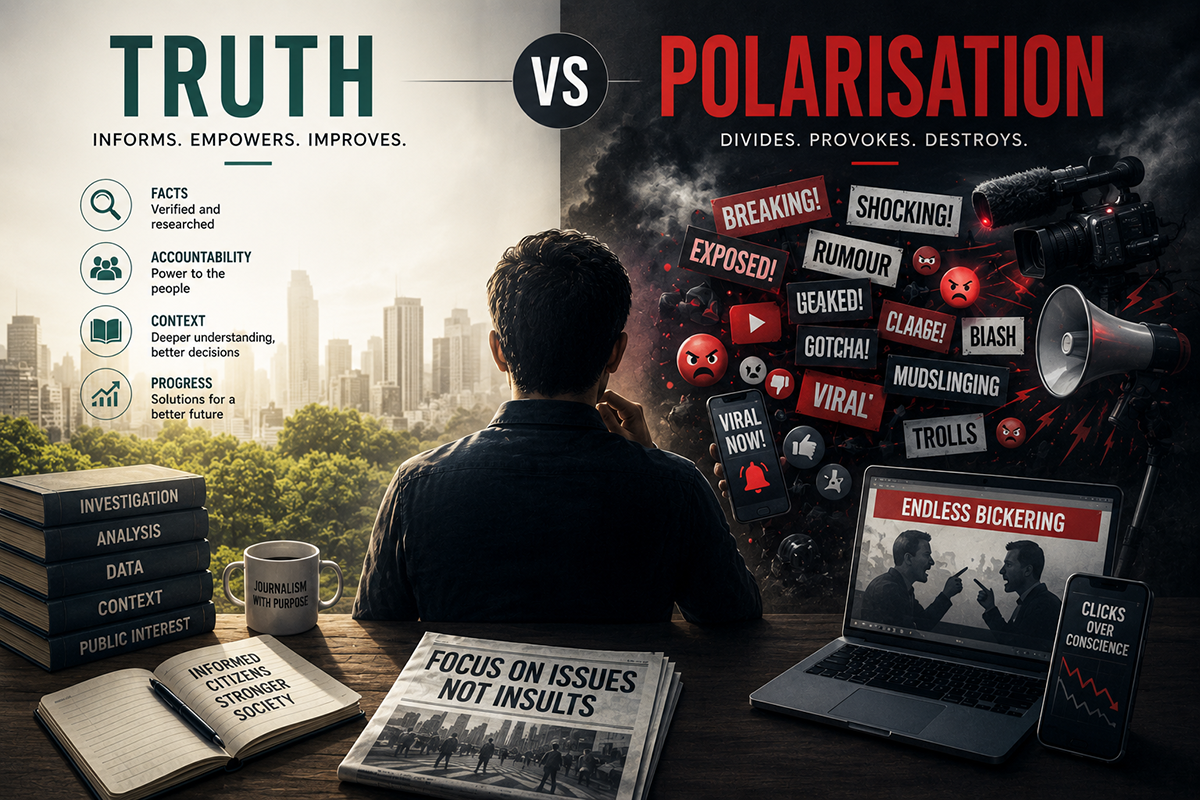
Image used for representational purpose. (AI generated)

Synopsis: With clicks and algorithms rewarding ‘gotcha’ moments, political journalism and politicians are focusing more on performance and less on governance. Media, platforms, and audiences must end this zero-sum tribal warfare and instead reward problem solvers.
Journalists once aimed to guide society by informing citizens, holding power accountable, and elevating public discourse toward progress. Today, large segments of the media, amplified by YouTubers and digital creators, have pivoted to fueling bickering among politicians and provoking leaders into endless mudslinging.
This shift is not merely unhelpful; it actively undermines the constructive dialogue any society needs to improve.
The traditional ideal was clear. Serious journalism illuminated policy, investigated systemic failures, and fostered informed debate. Editors and reporters saw their role as stewards of the public interest, filtering noise so that voters could weigh ideas rather than personalities.
That compact has frayed under the pressures of the attention economy. Ratings, clicks, and algorithmic rewards now prioritise conflict, outrage, and personal spectacle over substance. The result is a feedback loop in which media outlets and content creators chase the most inflammatory moments, and politicians, sensing the incentives, oblige with sharper attacks.
This dynamic has turned much of political journalism into a form of paparazzi journalism. Traditional tabloid practices—ambushing subjects, trailing private movements, elevating unscripted or embarrassing moments—have migrated from celebrity culture into the political arena.
TMZ, long known for the relentless pursuit of Hollywood figures, has widened its lens to elected officials.
During US government shutdowns, the outlet has published surreptitious photos of lawmakers on vacation: Senator Lindsey Graham at Disney World with a children’s bubble wand, other members of Congress boarding flights or touring castles while federal workers went unpaid. Hallway ambushes and vacation “gotchas” treat public servants as characters in an ongoing soap opera rather than stewards of policy.
YouTubers and digital influencers have accelerated the trend, often with fewer institutional restraints.
In South India, the pattern is particularly visible. In Telangana, creators have adopted paparazzi-style tactics—tracking leaders’ movements, filming private or unscripted outings, and ambushing them for reactive clips. Coverage of Chief Minister A Revanth Reddy and BRS Working President KT Rama Rao has included intrusive surveillance framed as public interest.
In March 2025, Hyderabad police arrested two YouTubers associated with Pulse News for circulating derogatory and abusive content targeting Revanth Reddy, including provocative interviews deemed defamatory. Multiple Telugu “troll channels” have faced cases for objectionable, morphed, or insulting material directed at public personalities.
In Andhra Pradesh, the cycle continues. In mid-2026, police arrested Hyderabad-based YouTubers K Venkatrami Reddy (Myra Media) and B Joseph, known as Raavan (Prashna channel), over remarks against Chief Minister N Chandrababu Naidu and Deputy Chief Minister Pawan Kalyan.
The cases involved critical public speeches, alleged derogatory commentary, and content that authorities said crossed into public mischief and related offences. Party workers have repeatedly sought action against other influencers for vulgar or personal attacks, illustrating how quickly political criticism slides into personalised, view-maximising confrontation.
From our archives: If Raavan is UAPA accused, what about Pawan Kalyan’s own words?
The consequences are corrosive. Media framing that emphasises conflict and personal attacks can encourage audiences to view politics as zero-sum tribal warfare rather than collective problem-solving.
Substantive issues—economic reform, institutional capacity, long-term governance—are crowded out by the latest viral insult or ambush clip. Public trust erodes as citizens grow cynical, perceiving politics as theatre rather than a mechanism for addressing shared challenges. With the political class increasingly skilled at performance over governance, society pays the price.
This is not an inevitable byproduct of technology or free speech. It is a commercial and cultural choice. Algorithms reward engagement, and engagement spikes with outrage. Outlets and creators who prioritise volume of conflict over quality of information are responding to market signals.
Yet markets do not automatically serve the public good. When the media abandons its guiding function in favour of the role of provocateur, it ceases to improve society and instead entrenches its divisions.
From our archives | TJS George: The ‘untold’ story of a Newswallah who served as conscience of the nation
A constructive alternative remains available.
Rigorous, proportional scrutiny of power is essential; the exposure of genuine misconduct is a public service. What is not essential is the relentless elevation of personal drama, the trailing of leaders as if they were celebrities, or the algorithmic amplification of every petty exchange. Audiences, too, hold leverage: they can reward depth over heat.
Until such incentives realign—through professional norms, platform design, or consumer preference—the media’s current trajectory will continue to trade the hard work of societal improvement for the easy currency of bickering. The guardians have become merchants of mayhem. Society cannot afford the transaction.
Also Read:
Doordarshan to digital: Maya Sharma on the rise of TV channels, star anchors and a reverse swing
(Edited by R Rajesh Kumar.)



