

Published Aug 23, 2026 | 12:00 PM ⚊ Updated Aug 23, 2026 | 12:00 PM

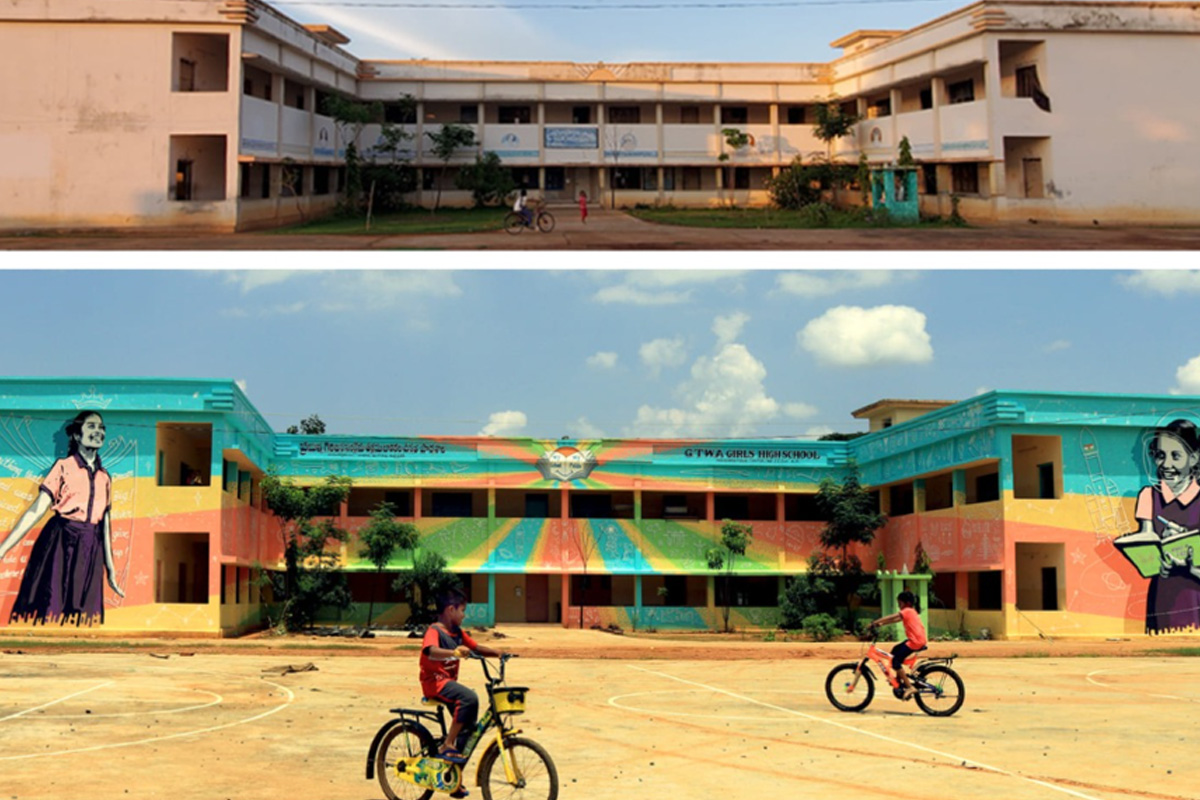
ITDA Chintoor, East Godavari.

The Cockroach Janata Party’s (CJP) ‘School Thik Karo‘ (Let’s fix schools) campaign brings renewed focus to ‘Mana Badi Nadu-Nedu‘ (Our School — Then and Now), highlighting both the progress achieved and the work that remains unfinished.
The CJP is taking its activism beyond examination irregularities with the new campaign—a three-step audit aimed at fixing the broken government school system across Indian villages. The campaign has shifted the spotlight onto the physical infrastructure of government schools, forcing governments to rethink their fiscal priorities.
Even after nearly 80 years of independence, 1.05 lakh schools still lack proper toilets for girls. Thousands of civil society organisations across the country, including groups like myzerogravity, continue to fill the gaps left by the state governments.
According to UNESCO’s 2026 Sustainable Development Goal 4 (SDG 4) scorecard, India spends only 4.1% of its GDP and 14.2% of total government expenditure on education, still below the recommended minimum benchmark of 15%.
Earlier Gen Z protests demanded accountability in NEET examination irregularities, and recent Gen Alpha protests about the lack of basic infrastructure in government schools emphasise youth priorities left unattended by our policymakers.
A few state governments have shown what determined commitment can achieve. The AAP government in Delhi and the previous YSRCP government in Andhra Pradesh embarked on their own missions in upgrading the school infrastructure at scale.
In Andhra Pradesh, the YS Jagan Mohan Reddy government launched its own version of Thik Karo campaign, the flagship programme “Mana Badi – Nadu Nedu“. It was a three-phase overhaul of physical infrastructure across 52,869 government schools, fixing broken classrooms, toilets, electricity, drinking water, and internet access.
Between 2019 and 2024, under Phase-I and Phase-II:
• 38,024 schools were taken up
• 14,675 schools were completed
• ₹8,524 crore was spent
• ₹4,789.14 crore is still required to finish the remaining works
The results were measurable.
Between 2014-15 and 2025-26, schools with functioning toilets for girls rose from 84.30% to 98.80%; likewise, schools with toilets for boys increased from 56% to 88.80%.
Schools with internet access rose from 28.10% to 79.60% by 2025-26. Along with physical infrastructure upgrades, the schools underwent digital transformation through Smart TVs and interactive flat panels in classrooms. These necessary improvements, long overdue, have helped check dropout rates, increase literacy rates, and improve Gross Enrollment Ratios and offer a model for other governments.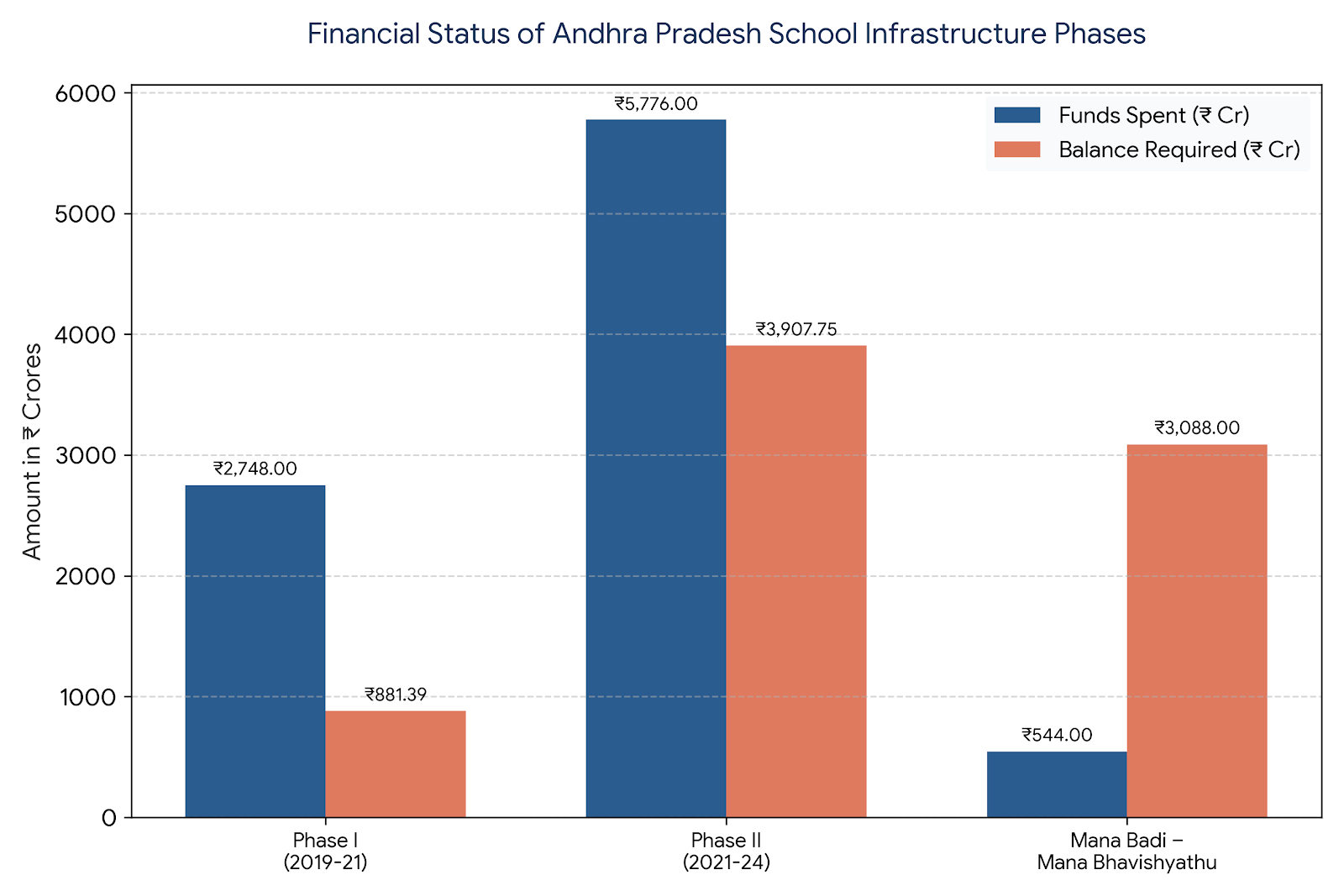
Planned Phase-III of Nadu-Nedu, covering 14,845 schools with a budget of ₹3,088 crore, is yet to begin in any meaningful way. In response to Starred Question LCN 14271 in the Andhra Pradesh Legislative Assembly regarding the progress of Nadu-Nedu works, the current government replied that under the renamed “Mana Badi – Mana Bhavishyathu” (Our School – Our Future) programme, only ₹544 crore was spent between 2024 and 2026. This underscores the need for a continued commitment towards education, both in budgets and administrative capacity, to complete the pending works related to the infrastructure upgrades in government schools across Andhra Pradesh.
Government schools where millions of children study have been neglected for years. Leaders do not need to be from Gen Z to understand the language of their anger, because education is not a privilege but a constitutional right that demands the government’s full commitment.
The moment has arrived for political parties to introspect and reorder their priorities—placing education and employment first. Real national progress begins in classrooms where the country’s brightest minds are shaped.
Also Read:
In cold numbers: What brought the youth to Jantar Mantar and the streets of India
No country for the young: The grim numbers fuelling the angst among India’s youth
The timeless satire of C Northcote Parkinson and what it teaches about our work life today
What AI can’t teach: The power of serendipity in learning
(Views are personal. Edited by R Rajesh Kumar.)



