

Published Jul 24, 2026 | 5:55 PM ⚊ Updated Jul 27, 2026 | 3:14 PM

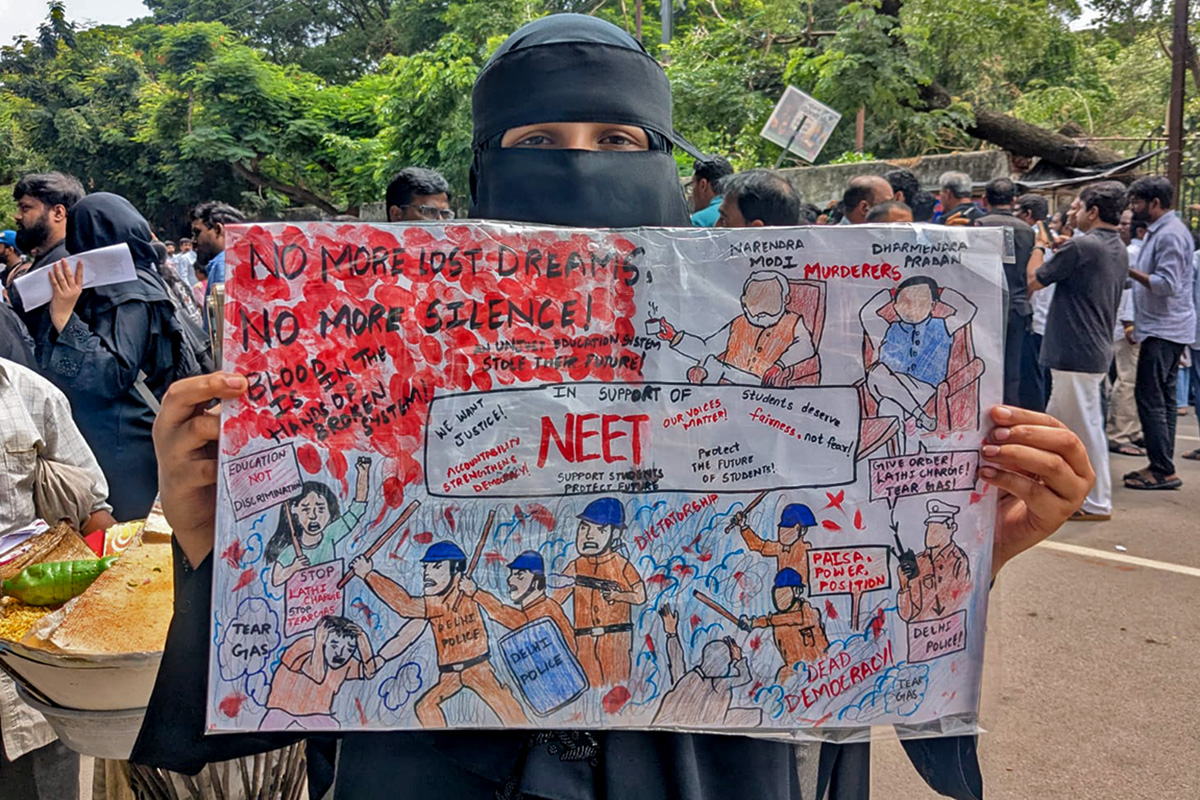
A woman holds a placard during a student protest in solidarity with the Jantar Mantar protest in Delhi.

Synopsis: With a broken education system, a broken exam system and 40% of graduates reporting open unemployment, the simmering discontent among India’s youth was bound to boil over. Now that it has, will we get the answers that the grim numbers below are demanding?
The student protests in Delhi that have shaken the government and the nation and garnered international attention have erupted at a time when 367 million Indians are between the ages of 15 and 29.
Around 104 million of them are students, grappling with an education system that harps on rote learning. Then there are the exams and paper leaks that they have to deal with. Opposition leader Rahul Gandhi had highlighted how 152 exams in the last 10 years had been hit by these leaks.
The remaining 263 million young Indians are seeking work, according to the State of Working India 2026 report by the Azim Premji University. But here too the reality is bleak. When it comes to employment, there are no opportunities for a huge number of job seekers.
The numbers tell the tale. While graduates earn double the salary that non-graduates do when they get selected, India has been creating only 2.8 million jobs for college pass-outs every year since 2004-05, the report finds. These are way below the numbers needed in our country, as the graphic below underlines. 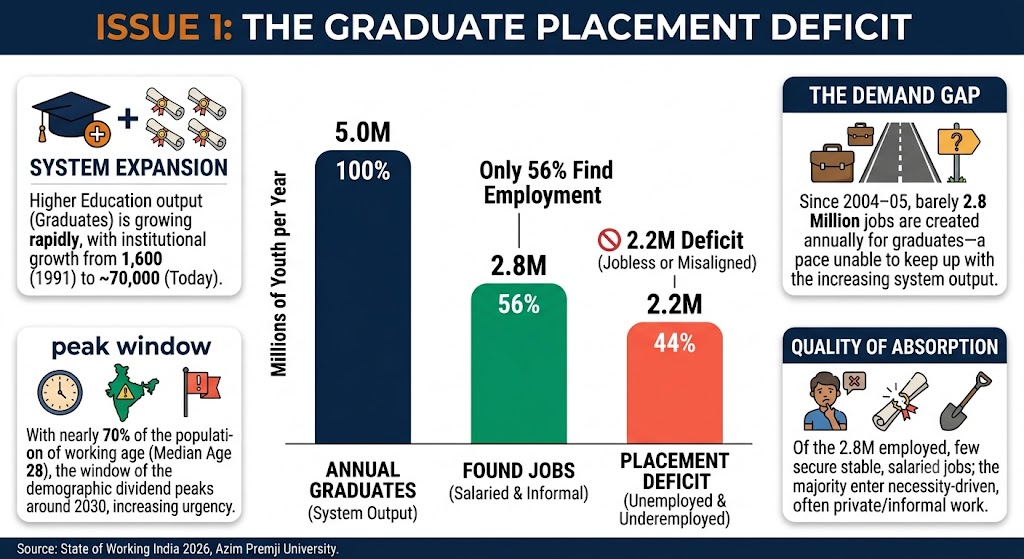
These grim numbers come at a time when the poor pay fees that exceed their annual incomes in the hope of seeing their children become engineers or doctors.
The report highlighted that youth unemployment, at four times that among the non-youth, was significantly higher in India than in the rest of the world.
“40 per cent of graduates in the labour force report open unemployment,” the report notes. “This is not a new phenomenon – between 1983 and 2023, graduate unemployment rates have remained more or less unchanged between 35 and 40 per cent.”
In other words, the system has remained broken for well over 40 years, and no fixes have been found.
A deeper dive captures the extent of the problem that is now finding its voice in the streets of Delhi and across India.
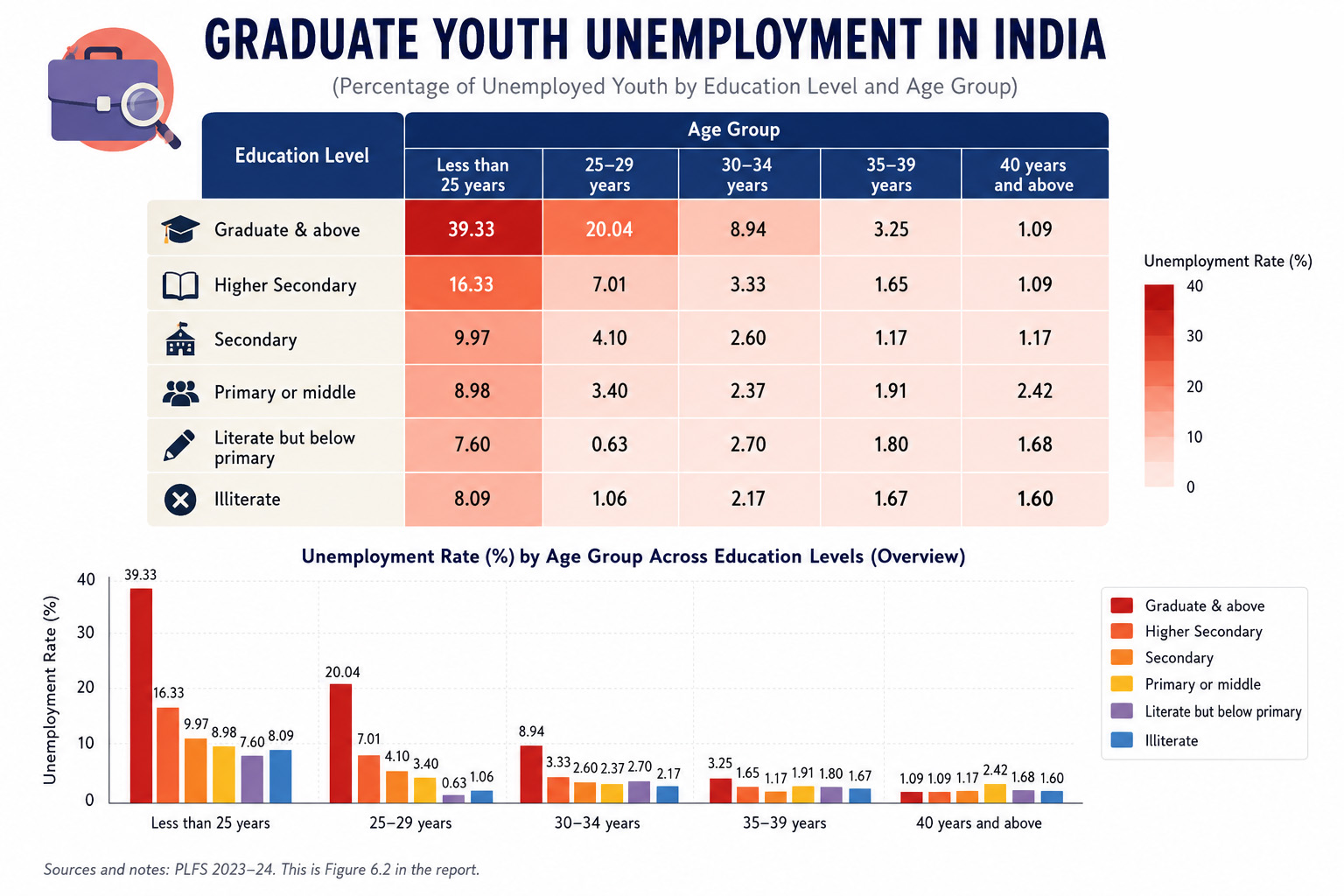
How does this translate in terms of real numbers?
According to the report, “11 million out of 63 million graduates between the ages of 20 to 29 were unemployed as of 2023”.
Only seven per cent of graduates find salaried jobs within a year of embarking on their search. The report also highlights how India’s advantage of having a larger share of its population in the working-age bracket—its demographic dividend—is set to fall after four years.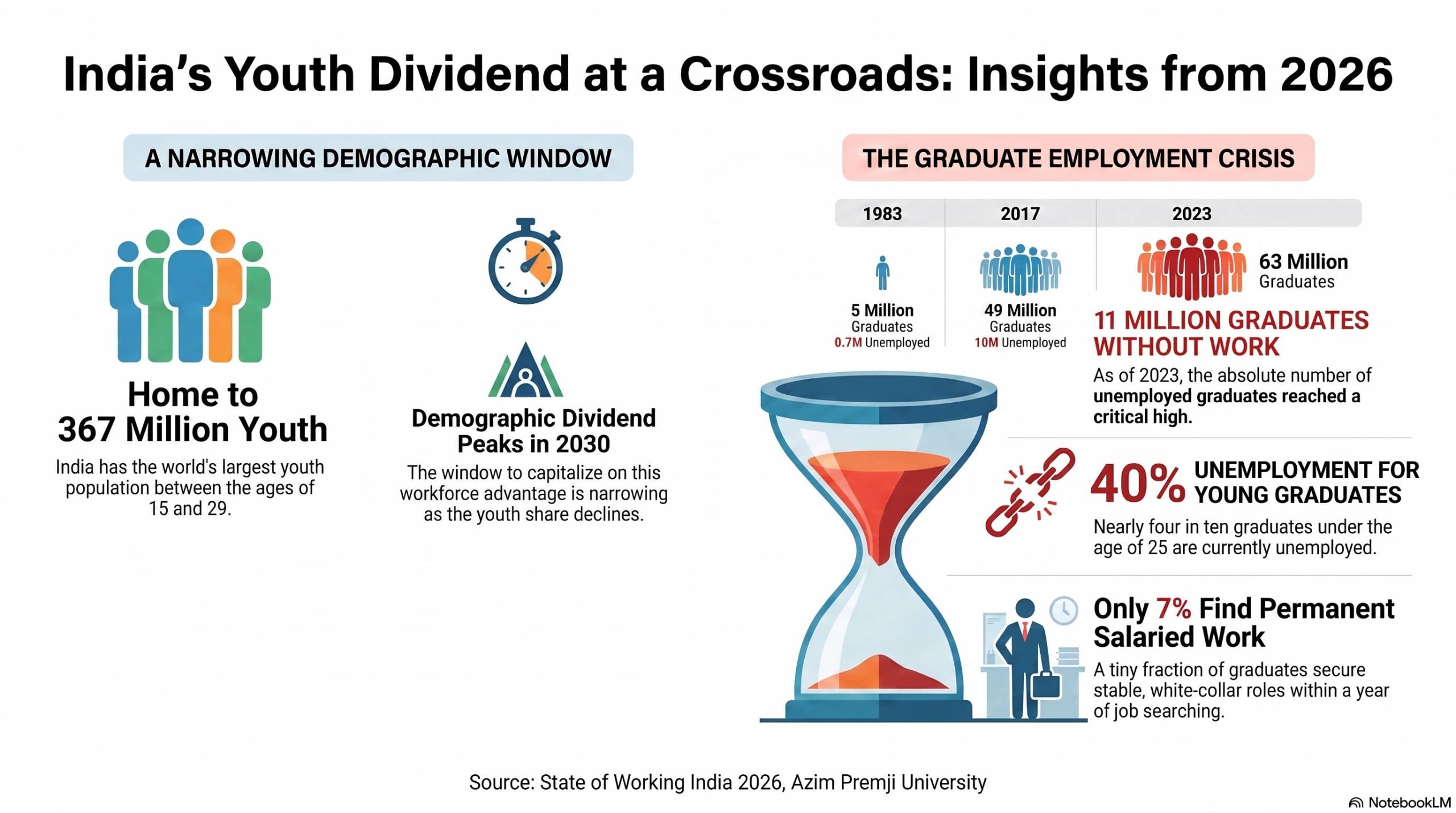
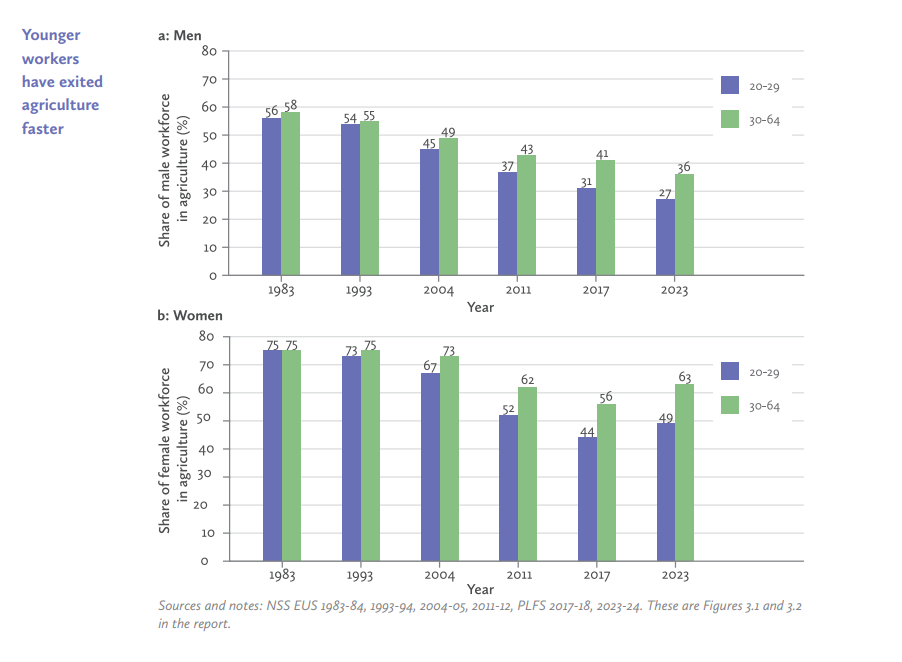
Then there is the question of the sectors where the jobs are being created. At a time when the young are increasingly walking away from agriculture, because the government has done little to address the agrarian crisis, the sector still generates 50 per cent of the jobs, almost all of which are low-paying and unstable.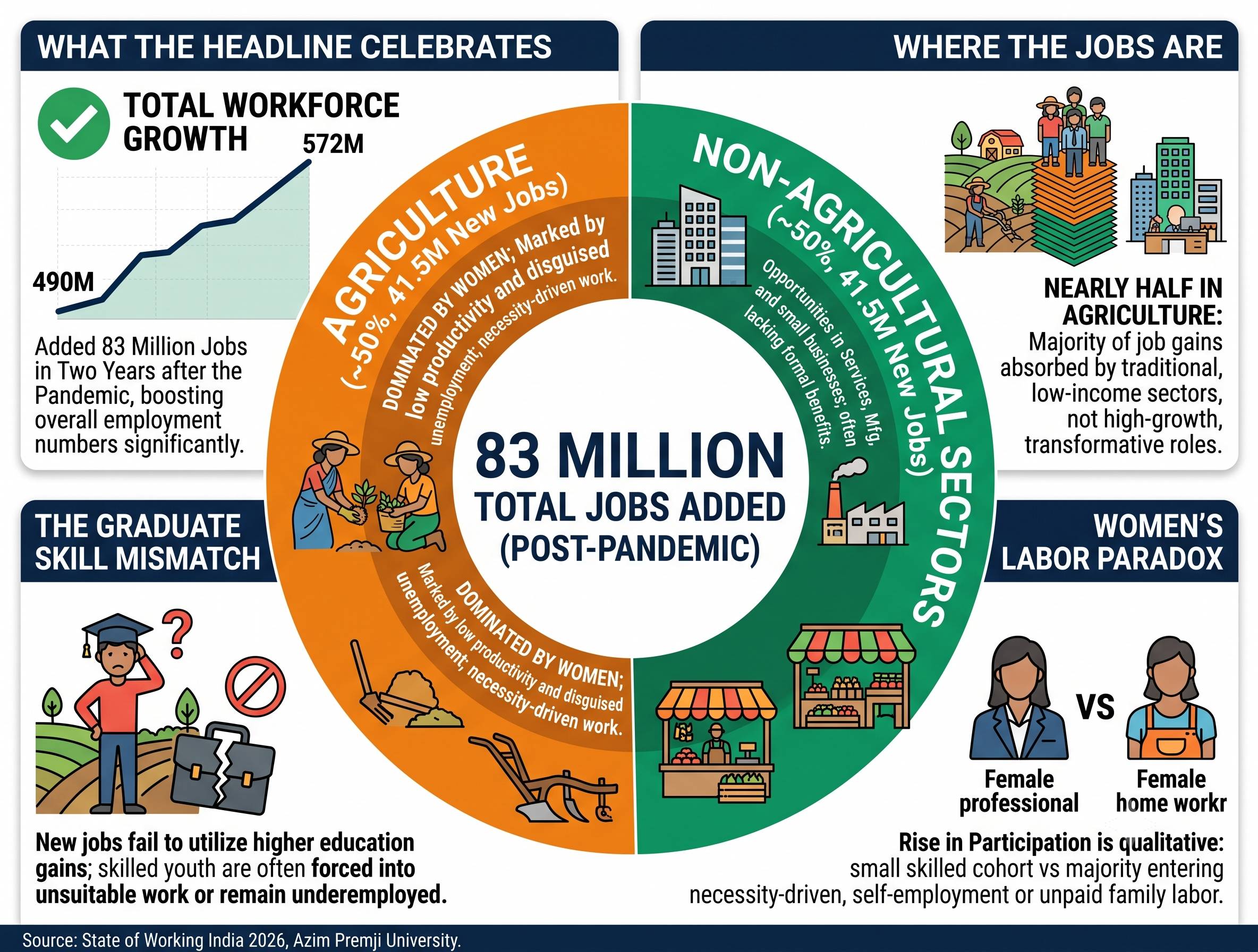
Either there must be efforts to strengthen the agriculture sector that go beyond concentrating on zero-budget farming and other myths, or there must be an effort to generate quality jobs in the manufacturing and allied sectors.
Another reality is that graduates, despite earning almost twice the income of non-graduates, have seen their salaries fall after 2011. With the crisis facing the world economy and with Artificial Intelligence gaining increasing importance, what awaits our young in the coming years is a question that the government needs to look at addressing. 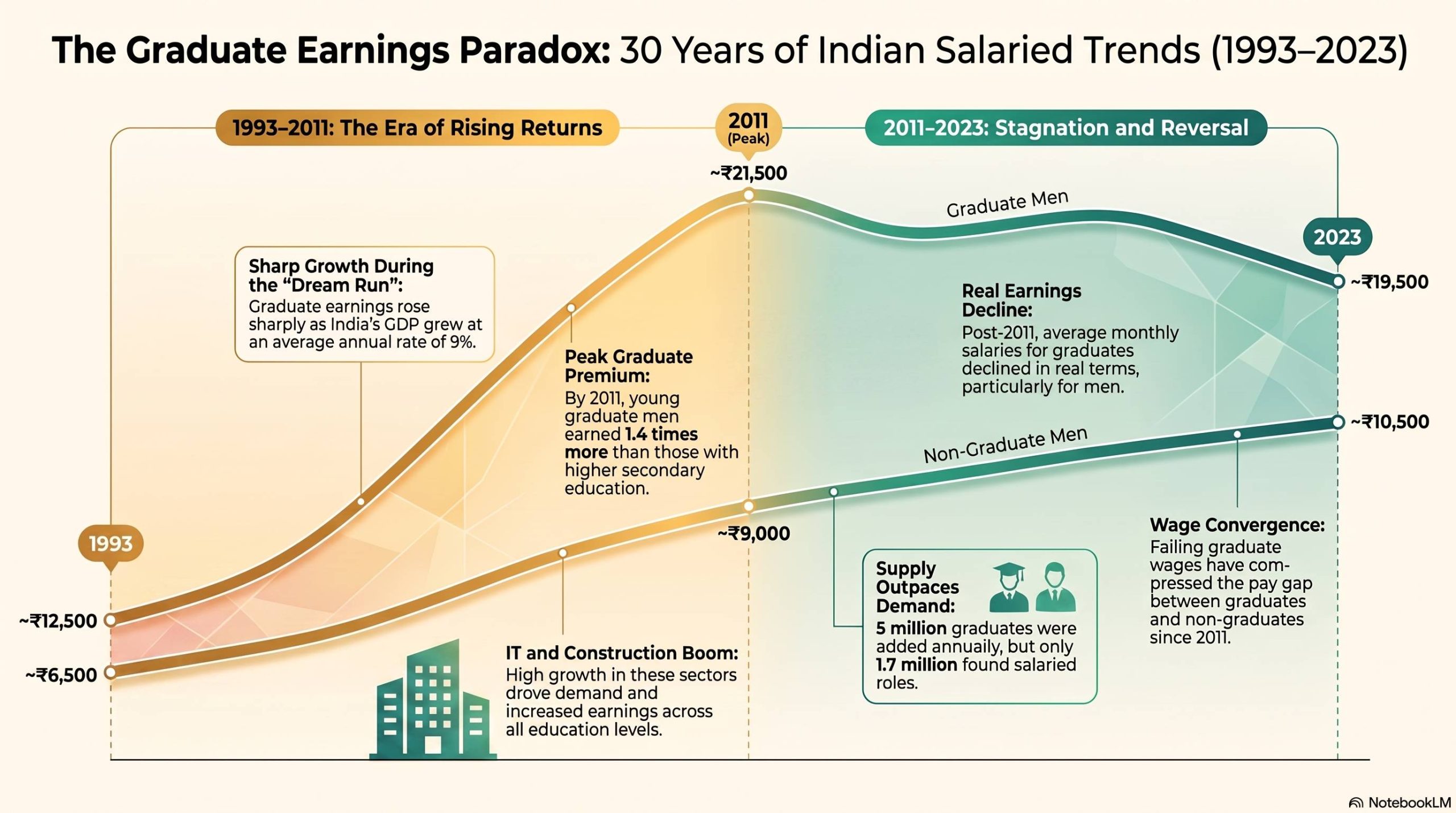
A major reason behind the drop in incomes has been the cooling down of the construction and informal services sector post-2011.
As Yamini Aiyar, now a Senior Visiting Fellow at Brown University, noted on Al Jazeera, “Most economies, particularly if you look at the East Asian experience, have grown out of agriculture into modern services through the process of building a strong manufacturing base. We failed to do this. So, jobless growth has always been a challenge.”
But neither the Union Budget nor policy meetings have till now shown any indications that efforts are being made to ensure a course correction. The death of fear among the youth of India after the Jantar Mantar protests may now force the government to finally seek the answers they have been running away from.
Also Read:
India’s students’ revolt has exposed BJP’s biggest political blind spot
To resign or not? Inside story of how Dharmendra Pradhan is holding on
Gen Z protest is not ‘unserious’, it is civil disobedience dismantling Modi’s crafted image
Why traditional media is at the receiving end at the Jantar Mantar protests
(Edited by R Rajesh Kumar.)



