

Published May 21, 2026 | 2:11 PM ⚊ Updated May 21, 2026 | 2:11 PM

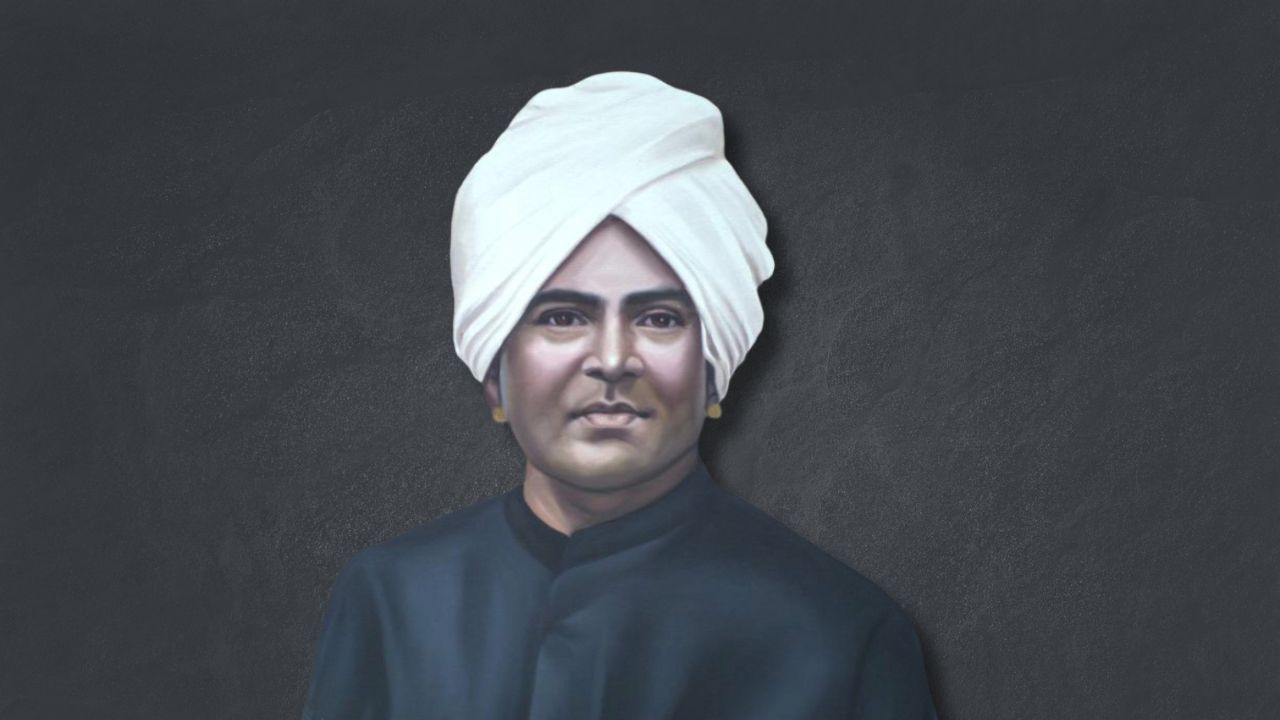
Iyothee Thass understood that the liberation of oppressed communities could not be achieved merely through moral appeals. | Anna Centenary Library.

Synopsis: Rather than merely demanding reform within the Hindu social framework, Iyothee Thass questioned the very foundations of caste hierarchy and sought to create an alternative historical imagination for oppressed communities. In doing so, he shifted the discourse from social accommodation to historical reclamation and self-respect. He argued that the oppressed castes were not “untouchables” by origin, nor were they naturally part of Hindu society; they were the original Tamils and Buddhists whose dignity, culture and social status had been systematically destroyed under Brahminical domination.
One of the earliest anti-caste intellectuals and pioneers of Dalit assertion in Tamil Nadu, C Iyothee Thass was born in 1845 in Royapettah in present-day Chennai. 20 May 2026 marked his 181st birth anniversary.
Long before anti-caste politics became part of mainstream public discourse, Thass was questioning Brahminical domination, reclaiming the histories of oppressed communities and building intellectual spaces for social equality and dignity.
Thass emerged from a community subjected to untouchability and systematic exclusion under caste society. Yet he transformed the experience of humiliation into a powerful political and intellectual movement. Through organisations, journalism, Buddhism and historical reinterpretation, he laid the foundation for an autonomous Dalit consciousness in Tamil Nadu.
Today, when Dalit assertion in Tamil Nadu is visible through literature, cinema, music, student movements and political organisations such as Viduthalai Chiruthaigal Katchi (VCK), the relevance of Thass continues to grow. His life remains central to understanding the history of anti-caste movements in South India.
Also Read: A party of “firsts”? How pro-TVK social media is cooking up political myths
One of Thass’s most important interventions was his articulation of the identity of the oppressed castes as Adi-Dravidas, the original inhabitants of Tamil society.
This distinction is politically and intellectually significant. Unlike later Dravidian politics, which broadly mobilised a non-Brahmin identity, Thass centred the lived realities of untouchability and caste degradation experienced by Dalit communities. His politics emerged directly from the experiences of those placed outside the social order.
At a historical moment when dominant nationalist politics largely ignored untouchability and caste violence, Thass was already foregrounding caste as a structural system of oppression rather than merely a social evil. His interventions demonstrated an early understanding that political freedom without social equality would only reproduce existing hierarchies.
Rather than merely demanding reform within the Hindu social framework, he questioned the very foundations of caste hierarchy and sought to create an alternative historical imagination for oppressed communities. In doing so, he shifted the discourse from social accommodation to historical reclamation and self-respect.
He argued that the oppressed castes were not “untouchables” by origin, nor were they naturally part of Hindu society; they were the original Tamils and Buddhists whose dignity, culture and social status had been systematically destroyed under Brahminical domination. According to him, caste oppression was not a natural or divine arrangement but a historical process through which communities were dispossessed of their identity and humanity.
By using terms such as “Adi-Dravida”, “Original Tamils” and “Casteless Tamils”, he attempted to reconstruct a new historical consciousness for marginalised communities. These terms were not merely symbolic labels, but powerful political categories intended to restore pride, memory and collective identity among oppressed people who had long been denied history and dignity.
For Thass, reclaiming identity was itself an act of resistance. It was a means of rejecting the degrading identities imposed through caste society and asserting an autonomous past rooted in equality and dignity. His reinterpretation of history enabled marginalised communities to view themselves not as degraded sections of Hindu society, but as people with an independent cultural and intellectual heritage.
Through this intellectual intervention, Thass transformed questions of identity into questions of power, history and social justice. His ideas continue to remain significant in contemporary anti-caste thought because they challenge dominant narratives of Indian history and foreground the experiences, memories and struggles of Dalit communities in the making of modern political consciousness.
Also Read: DMK leader Dr P Thiaga Rajan announces break from public life, reflects on his works
Thass understood very early that the liberation of oppressed communities could not be achieved merely through moral appeals or isolated reform efforts; it required collective organisation, intellectual awakening and political consciousness among the marginalised themselves.
At a time when caste hierarchy was deeply entrenched in society and oppressed communities were denied access to education, public spaces and social dignity, Thass emphasised the need for oppressed people to organise independently and articulate their own political demands.
In 1876, he established the Advaidananda Sabha in the Nilgiris, one of his earliest organised initiatives aimed at creating social and intellectual awareness among oppressed communities. The Sabha sought to challenge caste-based exclusion and encouraged critical engagement with questions of religion, social inequality and self-respect.
Through such initiatives, Thass attempted to cultivate a sense of collective identity among communities that had long been fragmented and oppressed under the caste order.
His organisational efforts became more politically articulated with the establishment of the Dravida Mahajana Sabha in 1891, one of the earliest political organisations representing oppressed castes in South India. The Sabha marked a significant moment in the history of Dalit political assertion because it sought to transform the grievances of marginalised communities into concrete political demands.
It called for access to education, representation in government employment, social equality, protection from caste discrimination and the restoration of dignity and civil rights for communities subjected to untouchability. The conference organised by the Sabha in Ooty emerged as an important milestone in early Dalit political mobilisation in South India. It provided a public platform through which oppressed communities could collectively articulate their experiences of exclusion and demand institutional reforms.
At a historical moment when dominant nationalist politics largely ignored untouchability and caste violence, Thass was already foregrounding caste as a structural system of oppression rather than merely a social evil. His interventions demonstrated an early understanding that political freedom without social equality would only reproduce existing hierarchies.
Thass’s politics differed fundamentally from elite nationalist discourse because he rejected the idea that questions of caste oppression should be postponed in the name of national unity. For him, the struggle against Brahminical domination and caste humiliation was central to any meaningful vision of freedom and democracy.
He believed that oppressed communities needed independent political organisation, access to knowledge and historical self-respect in order to challenge the structures that kept them subordinated. In this sense, his organisations laid the groundwork for later Dalit political movements and anticipated many of the themes that would later become central to anti-caste politics in India.
Also Read: Education, wealth and criminal cases: Everything you need to know about the Tamil Nadu cabinet
Thass’s turn towards Buddhism marked one of the most important phases of his intellectual and political journey. Critical of the Brahminical system and its caste hierarchy, he sought an alternative ethical tradition rooted in equality and human dignity.
After engaging with Buddhist traditions, he embraced Buddhism in 1898 and founded the South Indian Sakya Buddhist Association in Royapettah, Madras. The organisation became an important centre for anti-caste activism and the revival of Buddhism among oppressed communities in South India.
For Thass, Buddhism was not merely a religion but a political and ethical alternative to caste society. He argued that the oppressed castes of Tamil society, particularly the so-called “untouchables”, were originally Buddhists who had been subordinated through the rise of Brahminism.
Through this interpretation, he attempted to restore historical agency, dignity and cultural identity to marginalised communities. Thass also recognised the political importance of colonial enumeration. During the British Indian census, particularly from 1881 onwards, he urged oppressed castes not to identify themselves as Hindus. Instead, he encouraged them to register as “Adi Tamizhar” (Original Tamils) or “Casteless Dravidians”.
He believed that identifying as Hindu only reinforced Brahminical domination and erased the distinct history of oppressed communities. His intervention in the census reflected an early understanding of how state classification could shape social and political identity.
Through his writings, speeches and journals such as Tamilan, Thass sought to reinterpret Tamil history outside Brahminical frameworks. He argued that Buddhism had once been central to Tamil civilisation and that Brahminical traditions had marginalised both Buddhism and the communities associated with it.
In this sense, he challenged dominant narratives of Indian civilisation and offered an alternative vision grounded in equality, rationality and social justice. His ideas remain foundational to anti-caste thought and the history of Dalit-Buddhist movements in South Asia.
Also Read: Duopoly fatigue, cult worship and anti-incumbency shape Tamil Nadu 2026 verdict
One of Thass’s greatest contributions was his use of print media as a tool of anti-caste resistance. He recognised that oppressed communities needed their own intellectual spaces and their own language of politics. Along with Rev John Rathinam, he was associated with the Tamil publication Dravida Pandian, an important anti-caste journal that critiqued caste hierarchy and Brahminical dominance.
However, his most influential intervention came through the newspaper Oru Paisa Tamizhan, launched in 1907 and later renamed Tamilan. This publication became one of the earliest Dalit print public spheres in South Asia.
Through Oru Paisa Tamizhan, Thass:
At a time when newspapers were dominated by caste elites, Thass used journalism to democratise knowledge and political participation. His writings transformed print culture into a weapon against caste society.
Thass was deeply critical of caste Hindu society and sceptical of nationalist politics that ignored caste oppression. He argued that political freedom without social equality would merely preserve Brahminical domination in another form.
For him, the everyday humiliation faced by Dalits was more urgent than abstract nationalist rhetoric. He openly challenged the idea that oppressed castes should identify themselves as Hindus and urged marginalised communities to reject caste identities imposed upon them.
Also Read: Rediscovering Ambedkar’s pragmatism for contemporary India
The intellectual tradition initiated by Thass influenced later anti-caste and Dalit movements in Tamil Nadu, even though there was no simple organisational continuity. Figures such as Rettamalai Srinivasan carried forward struggles for Dalit representation during the colonial period. Later, Dalit literature in Tamil became an important space of resistance.
Writers exposed the everyday realities of caste oppression and challenged dominant narratives within Tamil society. These literary interventions echoed Thass’s insistence that marginalised communities must speak for themselves rather than be spoken for by caste-privileged elites.
One of the most significant contemporary expressions of Dalit political assertion in Tamil Nadu is the rise of the VCK under the leadership of Thol Thirumavalavan.
Emerging from the Dalit Panthers tradition and inspired by Ambedkarite politics, VCK brought caste atrocities, honour killings, untouchability and Dalit rights into mainstream Tamil political discourse. The movement has used electoral politics, public protest, literature, speeches, cinema and media activism to assert Dalit identity and challenge caste oppression.
While VCK is more directly shaped by Ambedkarite and Dalit Panthers traditions, the rediscovery of Thass in recent decades has profoundly influenced contemporary Dalit intellectual discourse in Tamil Nadu. His writings and political imagination continue to inspire anti-caste scholars, activists and cultural movements.
Today, Dalit assertion in Tamil Nadu extends far beyond formal politics. Cinema, music, theatre and digital media have become powerful spaces of resistance. Filmmakers like Pa Ranjith have foregrounded caste realities and Dalit identity in Tamil cinema.
Music collectives such as The Casteless Collective use art and performance to challenge caste oppression and celebrate marginalised identities. Social media has also enabled a new generation of Ambedkarite and Dalit youth to document caste violence, discuss history and create independent intellectual spaces outside dominant institutions.
This contemporary cultural assertion reflects the same struggle initiated by Thass more than a century ago: “the struggle to reclaim dignity, history and voice.”



