

Published May 19, 2026 | 5:07 PM ⚊ Updated May 20, 2026 | 1:59 PM

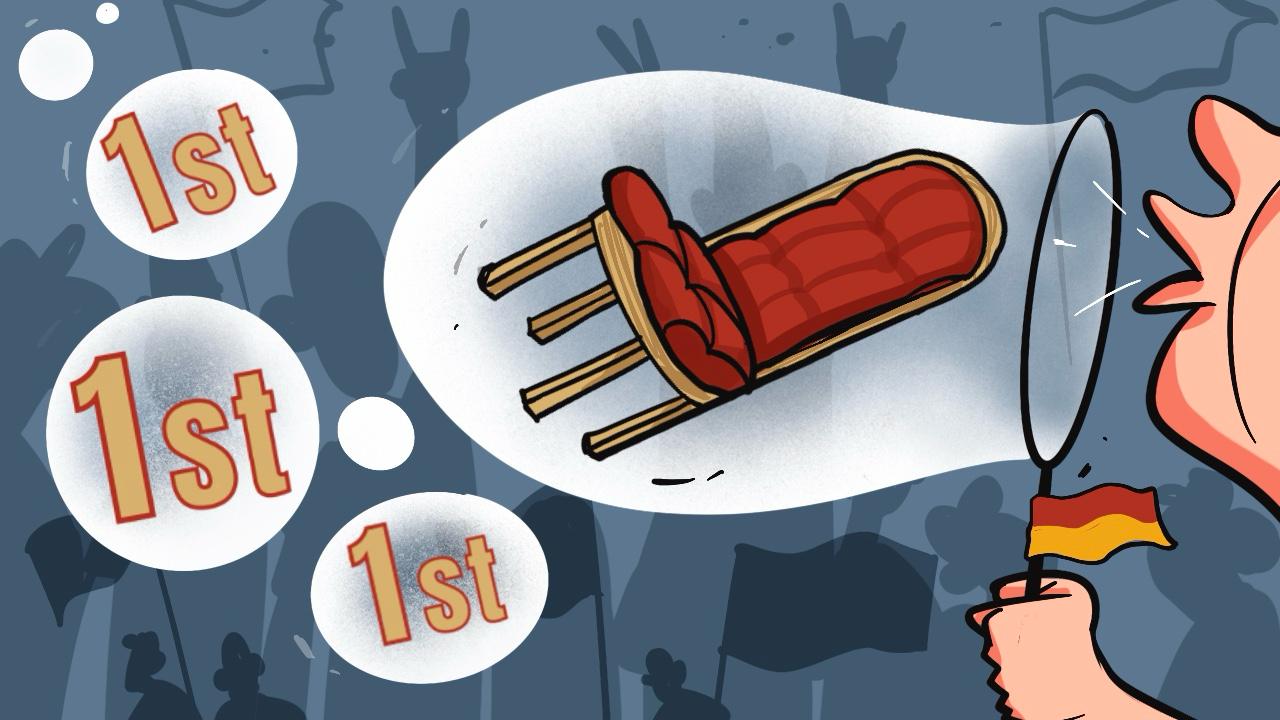
The narratives spreading on social media appear aimed at building a larger image of TVK itself as a party of ordinary, humble people.

Synopsis: Since the formation of the Tamilaga Vettri Kazhagam government in Tamil Nadu, social media has been saturated with a deluge of posts parroting misinformation and outright falsehoods while attempting to portray Chief Minister Vijay, his cabinet colleagues and TVK itself as having achieved many “firsts” in the state’s history, as well as being humble and down-to-earth.
On 10 May, the day Tamil Nadu Chief Minister C Joseph Vijay’s cabinet was sworn in, an Instagram page named TVK Voice Official, which has over 200,000 followers, shared a post featuring Sivakasi MLA and Industries Minister S Keerthana. The post claimed she was “Tamil Nadu’s first woman minister”.
It was false. Kali, a 26-year-old resident of the Sivakasi constituency, was among those who voted for Keerthana.
Until he came across the post, he knew little about the history of women ministers in Tamil Nadu politics. So he had little reason to doubt it.
He was not alone.
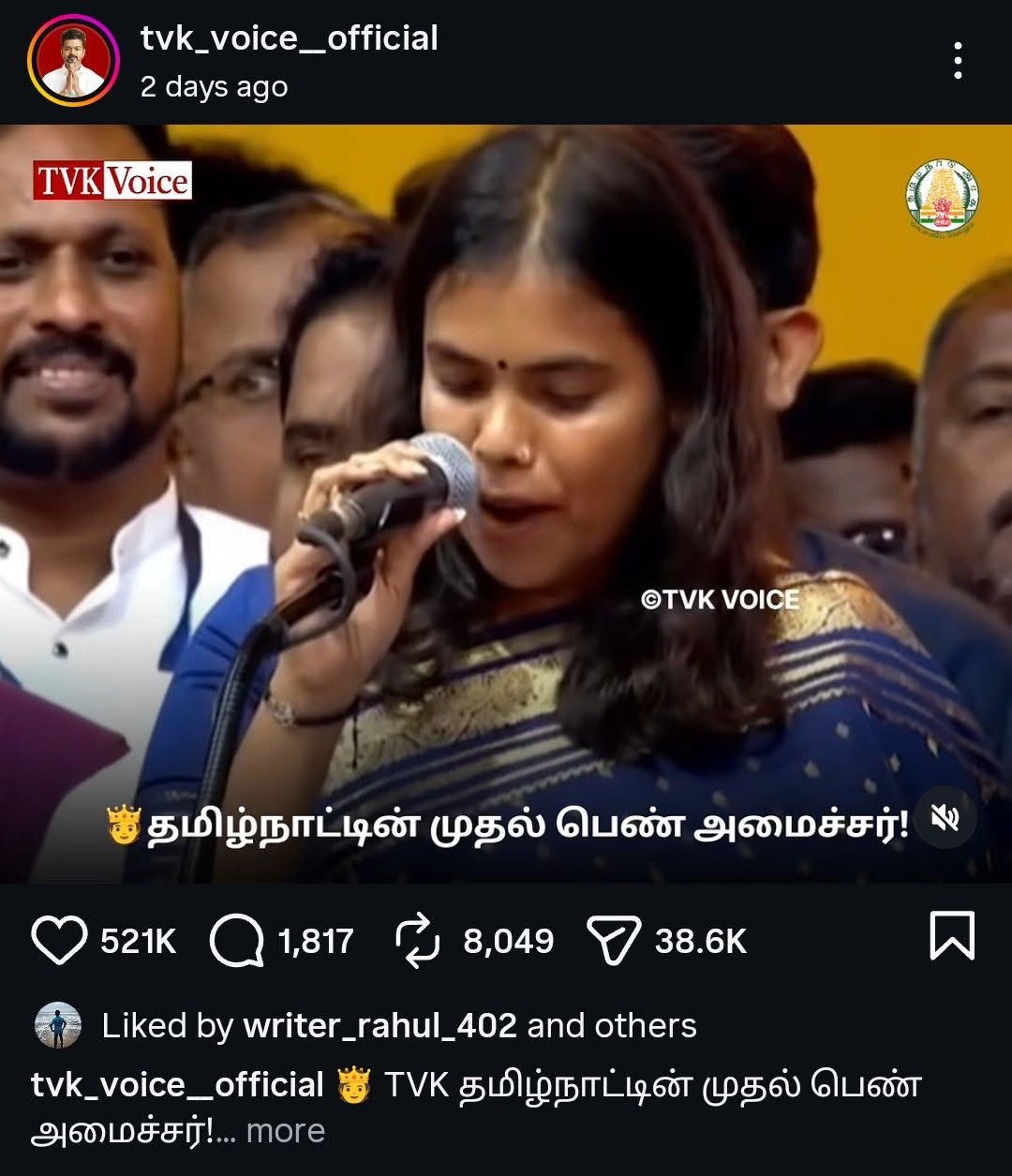
The post was deleted, but not before more than five lakh users had liked it.
Following criticism from several quarters, the page deleted the post, but not before more than five lakh users had liked it. Nearly 8,000 users reshared it, while it was shared outside the platform more than 38,000 times.
The euphoria around Tamilaga Vettri Kazhagam’s surprise upset of the Dravidian parties’ nearly 60-year duopoly has, since the Assembly election results in early May, given way to a flood of misinformation and exaggerated claims about the party, its founder Vijay, and his cabinet colleagues on social media.
In the 10 days since Vijay assumed office, social media posts have claimed everything from the chief minister being the first leader to appoint a Dalit minister to welfare schemes and administrative measures introduced years ago by previous governments being brand-new initiatives of the incumbent government.
Curiously, these posts rarely originate from official TVK handles or party leaders. Instead, they come from thousands of fan accounts and supporters of the party.
Yet, neither TVK nor its leaders have publicly asked supporters to stop spreading false information.
Also Read: DMK leader Dr P Thiaga Rajan announces break from public life, reflects on his works
The spread of misinformation is not limited to individual users or fan pages.
Even some media-affiliated social media accounts have amplified misleading narratives.
On 18 May, the Instagram page of a national media outlet publishing Tamil news posted a news card claiming that the Chennai Corporation had introduced a scheme to provide birth certificates through WhatsApp.
It featured a photograph of Chief Minister Vijay alongside a WhatsApp number.
Though the post did not explicitly state that Vijay launched the scheme, the visual presentation strongly suggested it was a new initiative introduced only after TVK came to power.
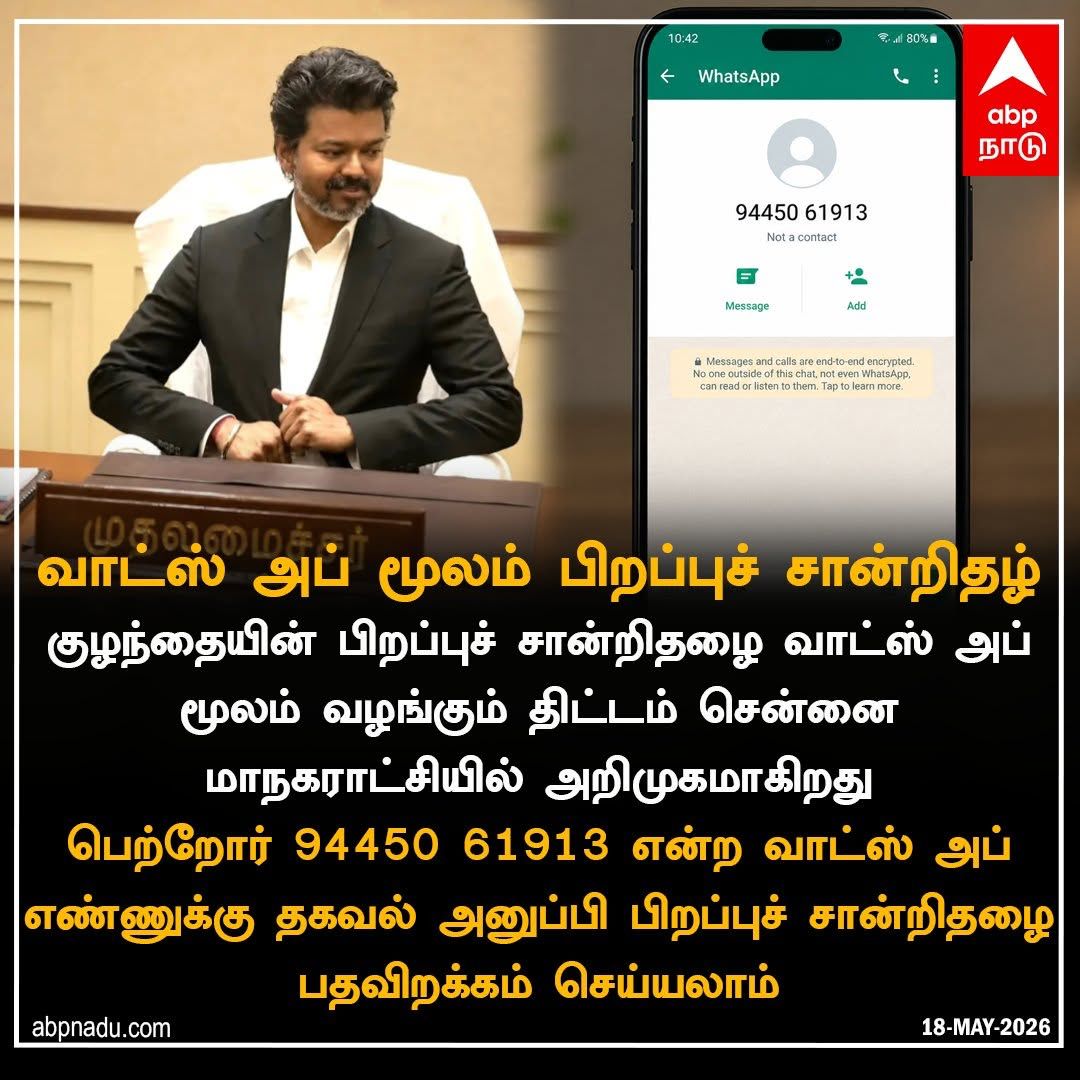
The “Namma Arasu WhatsApp” initiative was launched by the previous DMK government in January 2026, during the final months of its tenure.
The comments section was predictably split. Some, apparently unaware the scheme already existed, praised the “new” initiative. Others pointed out that it was old.
In fact, the “Namma Arasu WhatsApp” initiative was launched by the previous DMK government in January 2026, during the final months of its tenure.
The scheme allows citizens to obtain birth certificates and correct government documents through WhatsApp services.
Recently, the Chennai Corporation simplified the process further. Birth certificates are now automatically sent to the mobile numbers registered by parents at hospitals, while citizens can also retrieve them through the Corporation’s existing chatbot WhatsApp number.
In another instance, a widely shared post claimed that free coaching centres for TNPSC, UPSC and other competitive examinations had been introduced for the first time under Chief Minister Vijay’s orders.
This too appropriated an existing scheme. Free coaching classes with financial assistance had already been functioning through programmes such as Naan Mudhalvan, which trained students preparing for competitive examinations.
Another viral claim centred on Vijay’s daily commute between his Neelankarai residence and the Tamil Nadu Legislative Assembly, a distance of over 20 kilometres.
Following criticism that his convoy was causing regular traffic congestion along the route, several accounts began claiming that Vijay had introduced Tamil Nadu’s first “No Traffic Halt Policy”.
The posts claimed that the Chief Minister’s convoy moved on one side of the road while public traffic continued uninterrupted on the other, supposedly for the first time in Tamil Nadu.
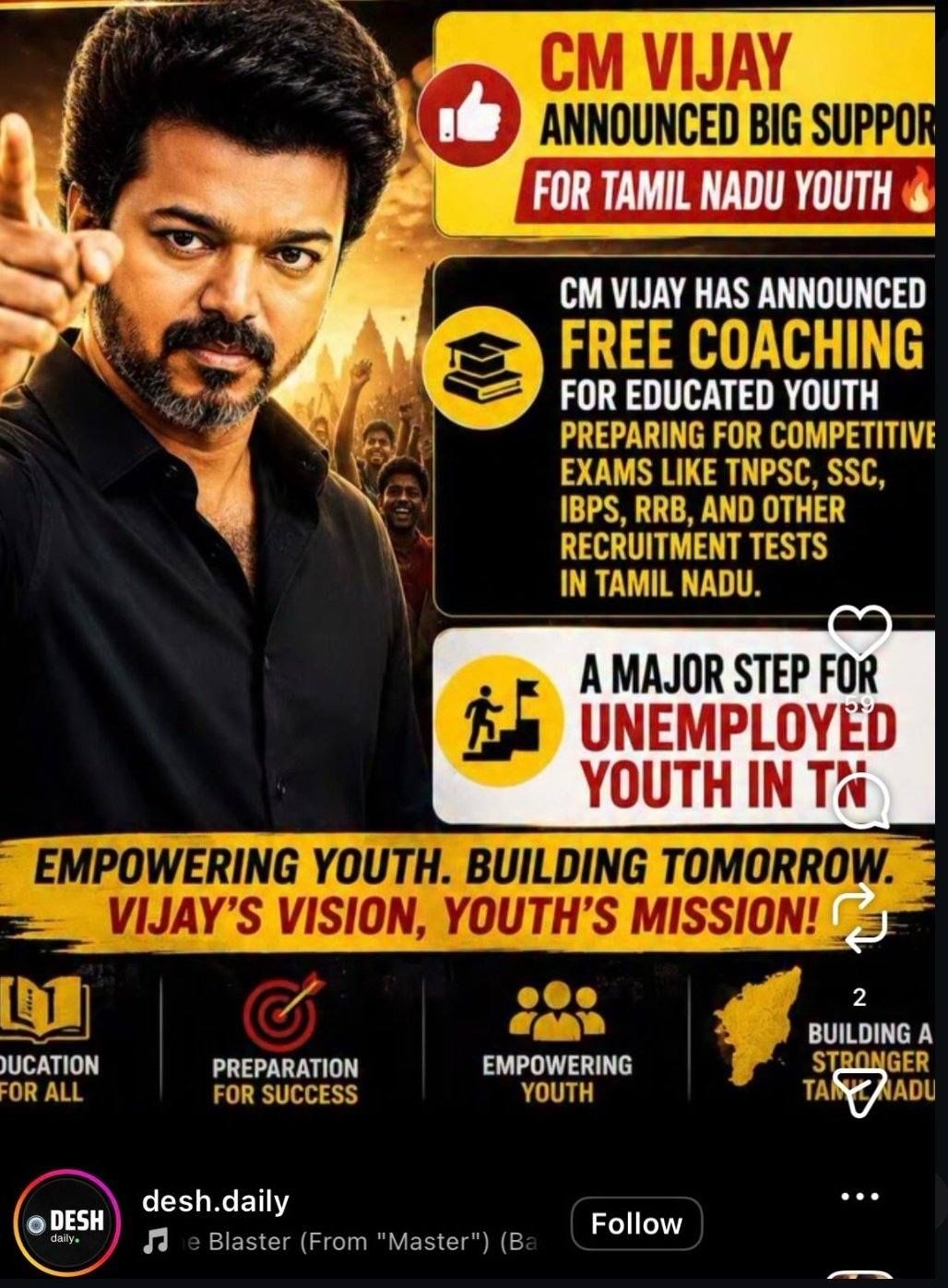
This post claimed that free coaching centres for TNPSC, UPSC and other competitive examinations had been introduced for the first time under TVK.
In actuality, the practice was first introduced in 2021 under former Chief Minister MK Stalin.
The posts appeared to be part of an attempt to portray Vijay as an unusually simple and humble politician.
One viral image showed Vijay seated casually while eating a homemade lunch packed from home. A national daily published from Madurai even shared the image on its social media accounts.
The image was AI-generated.
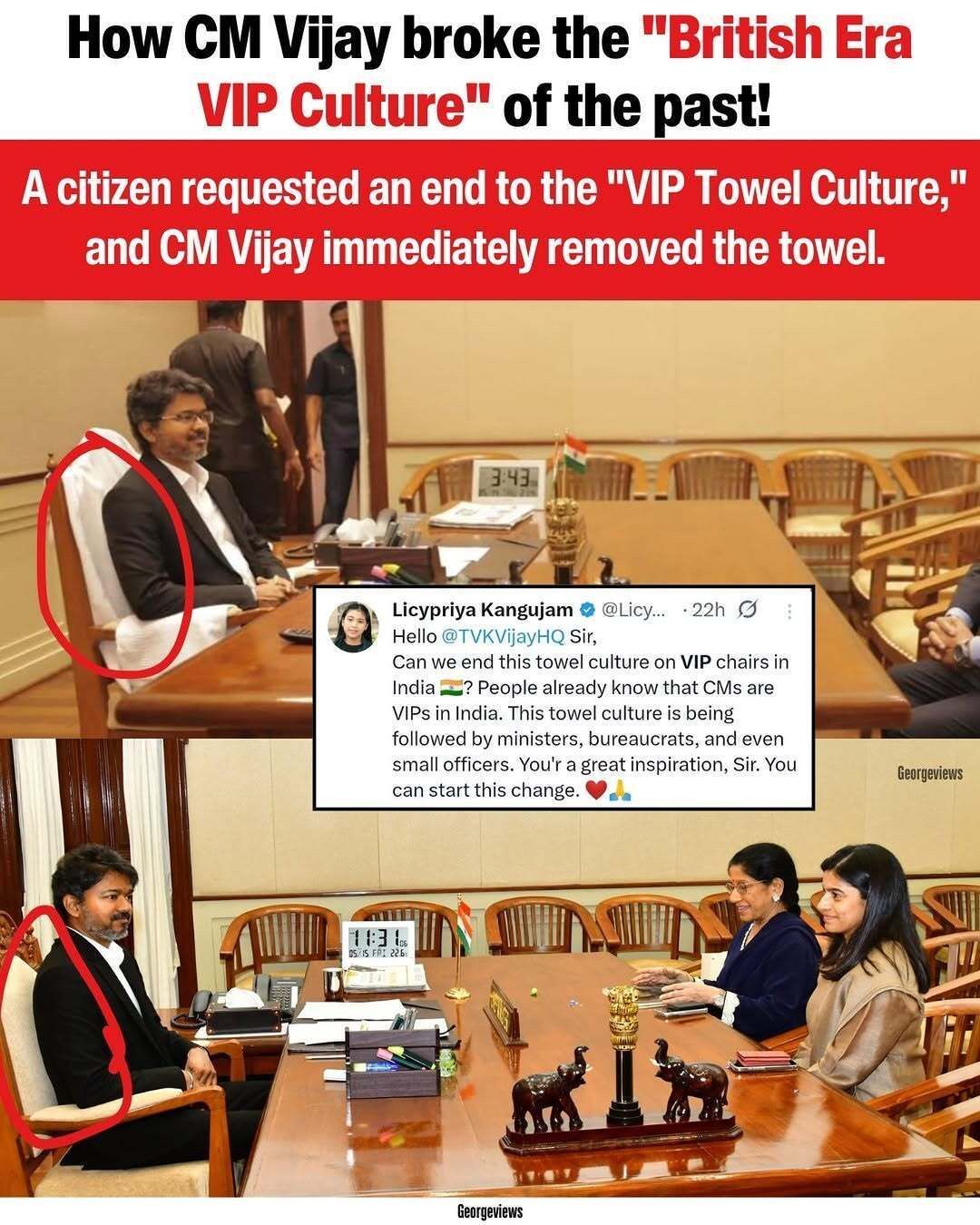
Several social media posts claimed Vijay was the first chief minister to sit on an ordinary chair without the white cloth covering.
Similarly, several social media posts claimed Vijay was the first chief minister to instruct officials not to place the traditional white or green cloth covers on chairs used by ministers and bureaucrats—seen as the most visible symbol of VIP culture—and that he alone preferred sitting on bare chairs.
In reality, former chief ministers including M Karunanidhi, J Jayalalithaa and MK Stalin had all frequently sat on ordinary chairs without such coverings.
Also Read: MK Stalin tells DMK field study committee to be ‘his ears’ across 234 constituencies
The narratives spreading on social media since Vijay took oath of office have not been limited to him personally. They also appear aimed at building a larger image of TVK itself as a party of ordinary, humble people.
For instance, posts portraying TVK’s Royapuram MLA KV Vijay Damu as an auto driver who rose from poverty to become an MLA have gained enormous traction.
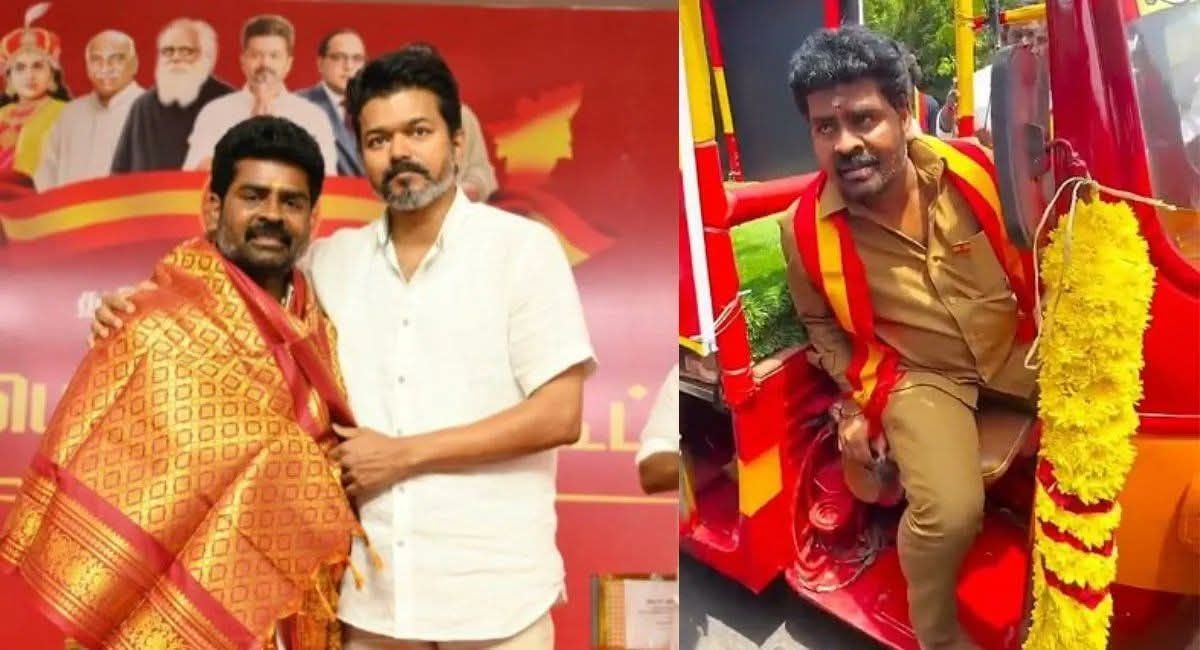
Royapuram MLA KV Vijay Damu.
Yet Damu’s election affidavit makes no mention of an autorickshaw among his assets. Instead, he declared a Toyota Innova Crysta worth at least ₹20 lakh and two Honda scooters.
Responding to South First’s questions, Damu’s assistant said the MLA drove an auto for two decades between 1996 and 2017.
“During a delay in Vijay’s film releases in 2017, he stopped driving for around three months, after which the auto became unusable due to rusting,” he said.
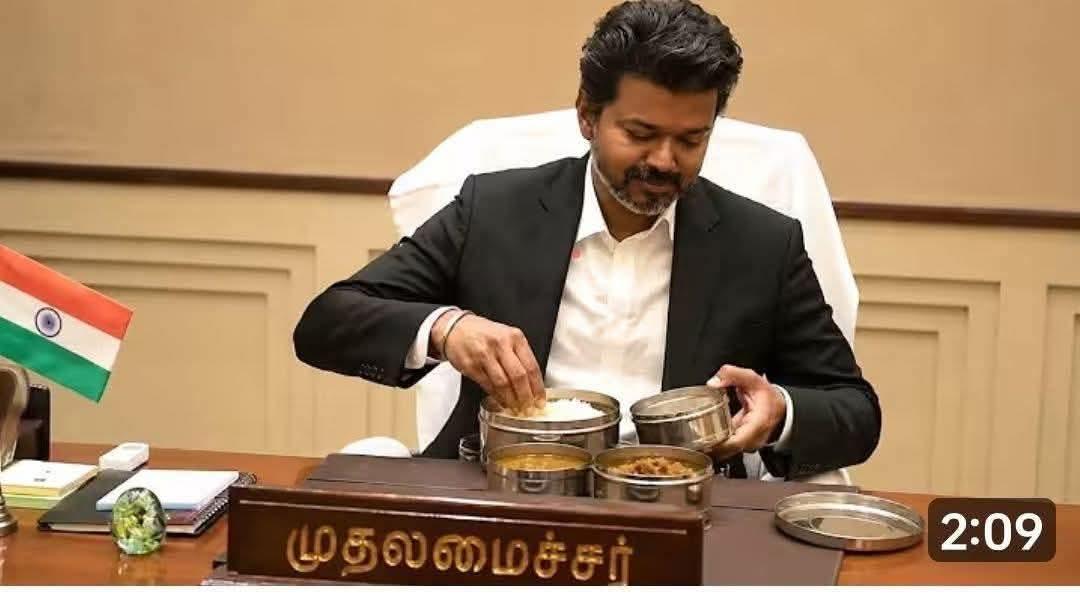
This viral image showed Vijay seated casually while eating a “homemade lunch”. It was AI-generated.
“Since then, he has not been actively driving it. The current car was purchased only after TVK was launched and Vijay Damu became district secretary.”
He added that the auto was not declared in the affidavit because it was registered in the name of Damu’s wife, Indirani. Legal advice, he said, suggested it need not be declared since it was an old vehicle.
Damu’s team said they would share further details about the vehicle. Their response is awaited.
Another TVK MLA, Thendral Kumar from the reserved Keezhvaithinankuppam constituency, also drew widespread attention after travelling by government bus and attending the Assembly barefoot.
In an interview with a private television channel, Kumar said he did not own a car and therefore used public transport.
He also said he remained barefoot because he had been entering several homes in his constituency to thank voters after the election.
But several social media users accused him of performing poverty despite allegedly possessing assets worth ₹2 crore.
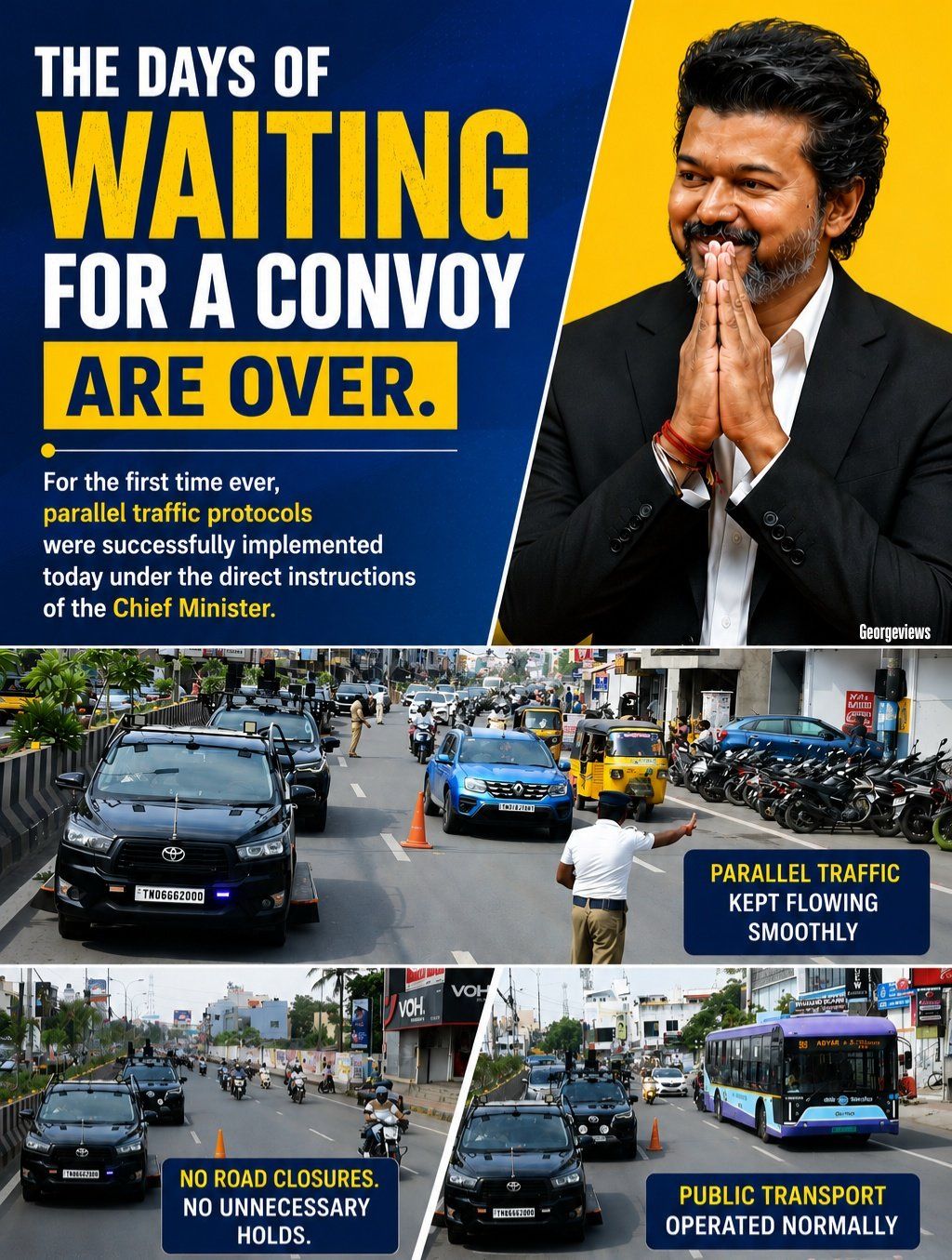
This post claimed Vijay had introduced Tamil Nadu’s first “No Traffic Halt Policy”.
Kumar told South First that he had never claimed to be poor and pointed to his election affidavit to show that he did not own a car. He added that he chose not to wear footwear because he was visiting numerous homes in his constituency to thank people personally.
“My election affidavit itself clearly states that I do not own a car. So there is no lie here. I never claimed to be poor. I only said I live simply. There is a difference between poverty and simplicity,” he said.
“Leaders like Muthuramalinga Thevar and VO Chidambaranar were wealthy people who still dedicated themselves to public service. Did we reject their service because they were rich? Those spreading false information will continue to do so. The people will judge them.”
Responding to allegations that his family’s assets exceeded ₹2 crore, Kumar said those assets belonged to his wife and had been gifted to her by her parents.
Also Read: AIADMK déjà vu: Party faces another existential crisis as factions mar unity
Tamil Nadu has a long history of women ministers dating back to the pre-Independence era.
In the previous DMK government, Geetha Jeevan served as Social Welfare Minister, while N Kayalvizhi Selvaraj served as Adi Dravidar Welfare Minister.
AIADMK governments had women ministers including Valarmathi and Gokula Indira.
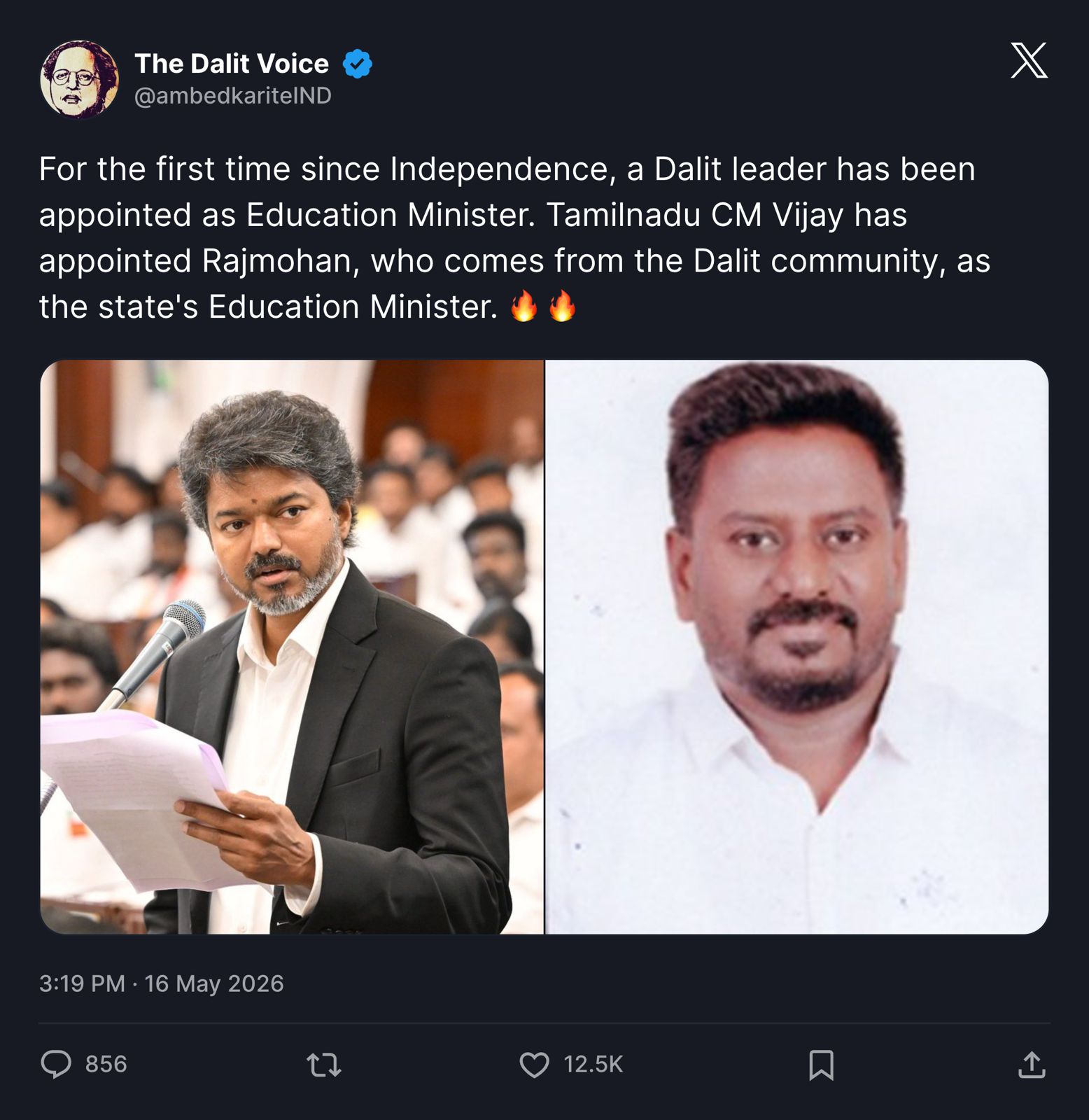
This post claimed that TVK’s School Education Minister Rajmohan was the first Dalit Education Minister in Tamil Nadu.
Even before and after Independence, Tamil Nadu had women ministers and political leaders such as Rukmini Lakshmipathi, Sathyavani Muthu, Jyothi Venkatachalam and Lourdhammal Simon.
Tamil Nadu has also had women chief ministers including Janaki Ramachandran and J Jayalalithaa.
Similarly, on 16 May, an X account called The Dalit Voice, which has around 150,000 followers, claimed that TVK’s School Education Minister Rajmohan was the first Dalit Education Minister in Tamil Nadu.
“For the first time since Independence, a Dalit leader has been appointed as Education Minister. Tamil Nadu CM Vijay has appointed Rajmohan, who comes from the Dalit community, as the state’s Education Minister,” the post read.
But this claim too was false.
As recently as the 2021 DMK government, Higher Education Minister Kovi Chezhiyan belonged to the Dalit community.
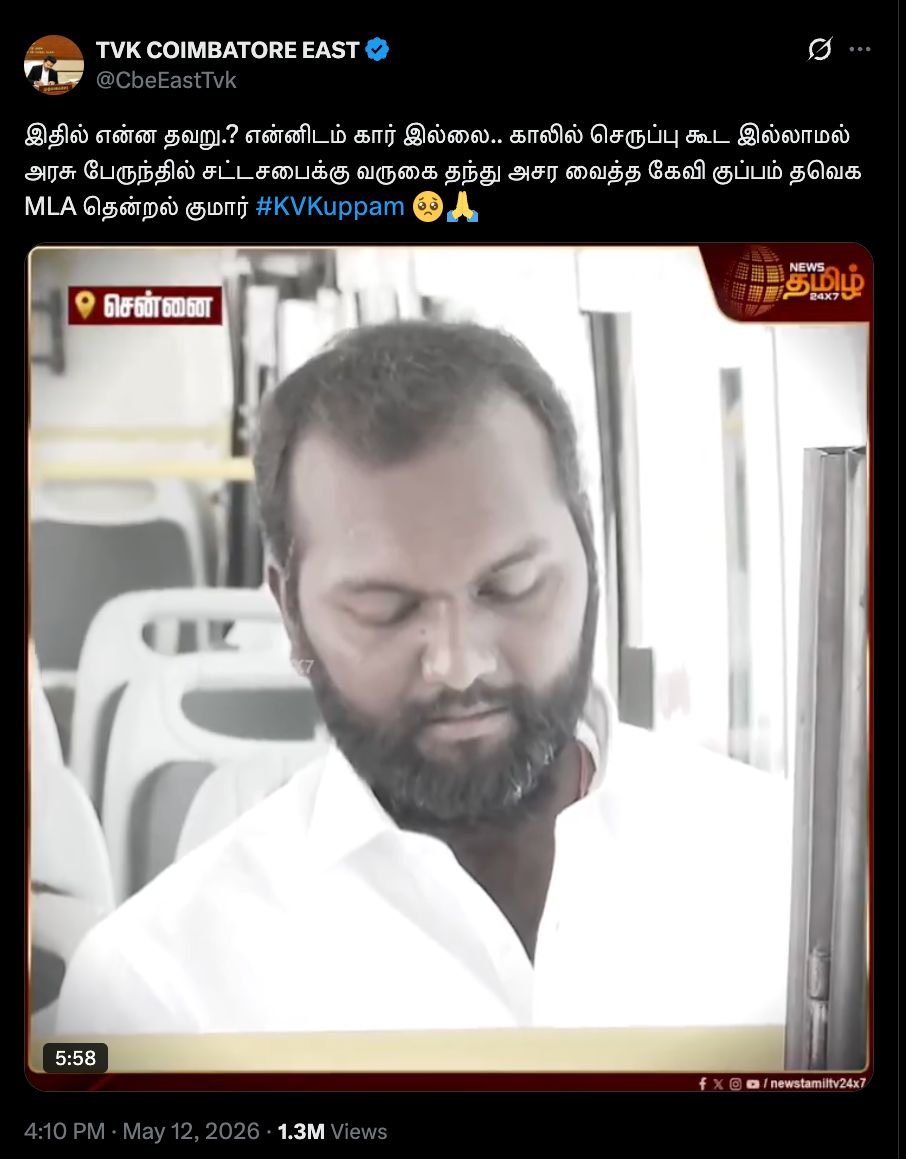
Thendral Kumar from the reserved Keezhvaithinankuppam constituency, also drew widespread attention after travelling by government bus.
Going further back, Tamil Nadu has had several Dalit ministers, from Kakkan during Kamaraj’s tenure to CV Ganesan in the previous government.
Despite users repeatedly pointing out the inaccuracies, the post remains online and has been viewed more than 4.5 lakh times.
Also Read: TN government revokes order appointing astrologer as OSD to CM Vijay
Hari Raman, a TVK supporter from Jawadhu Hills, told South First that he found it difficult to tell whether claims circulating on social media were true or false.
“I don’t know. I genuinely cannot tell whether they are true or false,” he said.
Murali Krishnan Chinnadurai, founder of Chinnadurai Media Corp OPC Private Limited, warned that sustained misinformation can eventually erode people’s ability to recognise the truth itself.
“We have been witnessing misinformation since 2013. But for the first time, we are seeing it at this magnitude in Tamil Nadu. Usually, such propaganda lasts only until elections are over. But now, even after the elections, existing schemes are being falsely projected as if they were introduced for the first time. That is a serious problem,” he said.
He added that politically unaware first-time voters and young people entering political discussions for the first time were especially vulnerable.
“Young voters usually believe the first piece of information they receive. When these false claims enter the WhatsApp groups and social media spaces they regularly use, the misinformation spreads very easily,” he explained.
Such misinformation campaigns, he said, are ultimately being used to manufacture a larger “brand image”.
“At this stage, the only way to fight this is through a collective effort to expose these false narratives one by one. Even then, we may only manage to change the minds of one or two people at a time. It is going to be a slow process,” he added.
(Edited by Dese Gowda)



