
Published Sep 28, 2026 | 10:05 AM ⚊ Updated Sep 28, 2026 | 10:05 AM

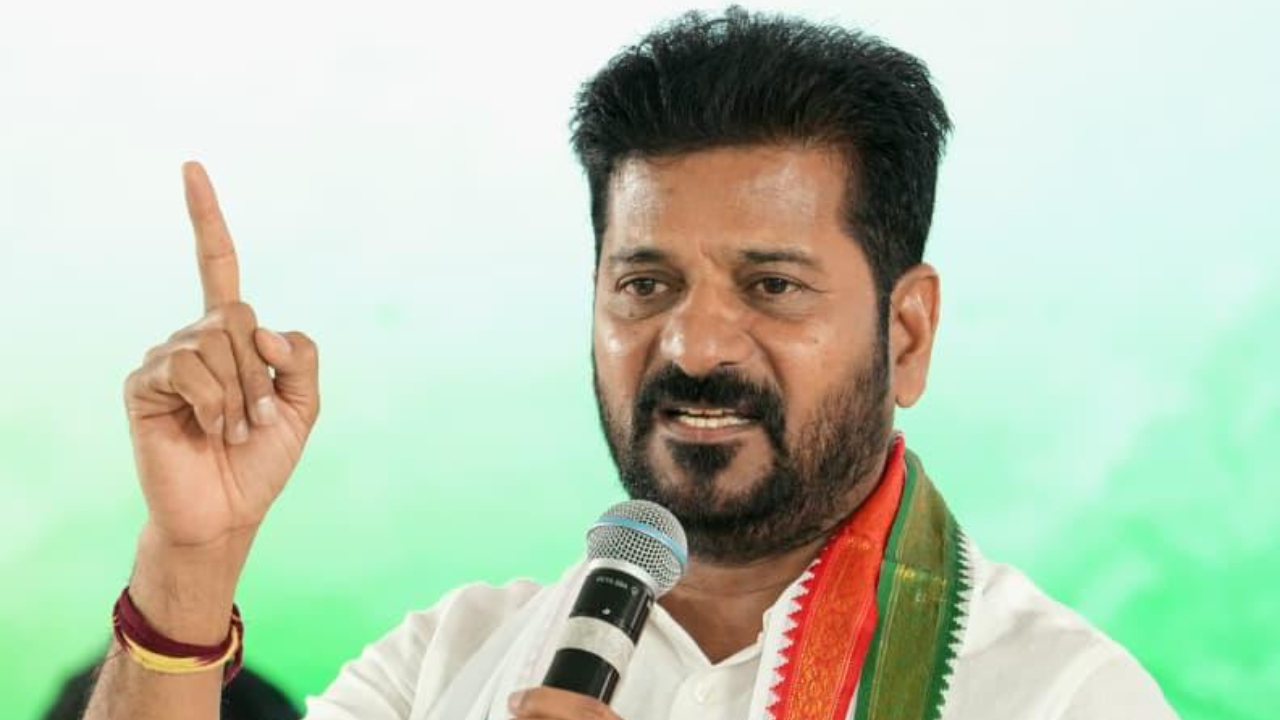
Chief Minister A Revanth Reddy.

Synopsis: The Revanth Reddy government is shifting its focus towards “visible impact” as it seeks to overcome criticism over welfare delivery. With the KCR years leaving behind a portfolio of completed, high-profile assets that reshaped the state’s infrastructure map, the next two years will test how the Congress government’s new wave of projects compares.
After facing persistent criticism over the incomplete rollout of its six guarantees and other welfare schemes, the Congress government led by Chief Minister A Revanth Reddy is recalibrating its political and administrative strategy after completing its first 1,000 days in office.
The emphasis is now on “visible impact” — tangible infrastructure and developmental projects that citizens can see and experience — planned for delivery over the next two years. This shift invites a clear comparison with the infrastructure legacy left by the previous BRS government under K Chandrashekar Rao (KCR).
During nearly a decade in power, the KCR regime built a strong reputation for large-scale, highly visible public works that transformed Telangana’s physical landscape.
The new Dr BR Ambedkar State Secretariat, spanning about 8.5 lakh square feet and constructed at a cost of around ₹617 crore, became a modern administrative landmark. Integrated district collectorate complexes were raised across multiple districts, covering roughly 32 lakh square feet at an estimated ₹1,600 crore. These complexes consolidated government offices and projected a strong state presence at the local level.
Healthcare infrastructure also received major attention. The Warangal multi-super speciality hospital, a 24-storey facility estimated at ₹1,200 crore, stood out as a landmark medical asset.
Foundations for the Telangana Institute of Medical Sciences (TIMS) hospitals at Sanathnagar, Alwal and LB Nagar were laid in 2022, with substantial funds sanctioned and construction commenced under the BRS government. Parallel investments in medical colleges at district headquarters further expanded public health capacity.
Religious and cultural infrastructure was equally prominent.
The reconstruction of the Yadadri Sri Lakshmi Narasimha Swamy Temple transformed a modest shrine into a sprawling complex with multiple gopurams and modern amenities. Inaugurated in 2022, it emerged as a major pilgrimage and tourism destination.
Water projects formed the backbone of the previous regime’s visible achievements.
Mission Bhagiratha laid an extensive network of pipelines — estimated between 1.5 and over 2 lakh kilometres — and linked storage tanks to supply safe, treated drinking water to every household at a cost of tens of thousands of crores. The Kaleshwaram Lift Irrigation Project, often described as the world’s largest multi-stage lift irrigation scheme, was completed in record time at a cost approaching ₹1 lakh crore. Featuring barrages, massive pump houses, tunnels, canals and a chain of reservoirs, it expanded irrigation potential across large tracts of land and became a symbol of agricultural transformation.
These projects — the new secretariat, collectorate complexes, Yadadri temple, multi-storeyed hospitals, TIMS campuses, Mission Bhagiratha pipelines and the Kaleshwaram system — gave the KCR government a powerful visual vocabulary of development. They created substantial public assets, generated construction employment and altered daily life in both urban and rural areas.
Economic Survey data later credited major irrigation initiatives, including Kaleshwaram and Mission Kakatiya, with helping double the state’s cultivated area over a decade, supporting higher foodgrain production and rural incomes.
The Revanth Reddy administration is now responding by both completing inherited projects and launching its own ambitious works under the banner of visible impact.
TIMS facilities, particularly the Sanathnagar campus, have been inaugurated under the current government. Targets have been set to finish the Warangal multi-super speciality hospital, the new Osmania General Hospital (estimated at ₹2,700 crore) and additional TIMS units within defined timelines, aiming to add thousands of tertiary-care beds. The new High Court complex at Rajendranagar (₹2,583 crore) and district court complexes form part of the administrative push.
Government reports claim construction activity covering over one crore square feet has already been executed in the first two years.
Road and connectivity infrastructure has emerged as a central pillar of the new strategy. The Hybrid Annuity Model programme targets thousands of kilometres of roads, with an initial phase covering over 6,000 km at around ₹13,000 crore. Flyovers, elevated corridors, the proposed 360-kilometre Regional Ring Road, Metro Phase-II expansion and revival of airports at Warangal, Adilabad and other locations are intended to improve mobility and support regional growth.
Urban growth corridors, temple and tourism corridors, Musi River rejuvenation and the planned Bharat Future City — a large net-zero greenfield smart city — represent longer-term but highly visible commitments.
The Congress government frames this dual approach as essential: welfare schemes will continue, but citizens must also see roads widened, hospitals opened, courts modernised and new urban centres rising. The next two years are positioned as the period in which these visible outcomes must materialise.
Telangana thus presents two complementary yet competing visions of developmental impact.
The KCR years left a portfolio of completed, high-profile assets that reshaped the state’s infrastructure map and delivered measurable gains in irrigation, drinking water and administrative capacity.
The Revanth Reddy government, responding to criticism of its welfare delivery, is staking its claim on completing ongoing works while launching a fresh wave of roads, hospitals, connectivity projects and future-oriented urban initiatives.
Whether the next two years produce outcomes that match the scale and visibility of the earlier decade will be closely watched by the people of Telangana.
Also Read:
Telangana tangle: When thieves fall out, the truth comes out!
From Erravelli to Dharani: Telangana’s property wars
Telangana’s quiet double-engine Sarkar — Part 3: What the Congress and BJP protect
(Edited by R Rajesh Kumar.)



