

Published Sep 25, 2026 | 7:00 AM ⚊ Updated Sep 25, 2026 | 7:00 AM

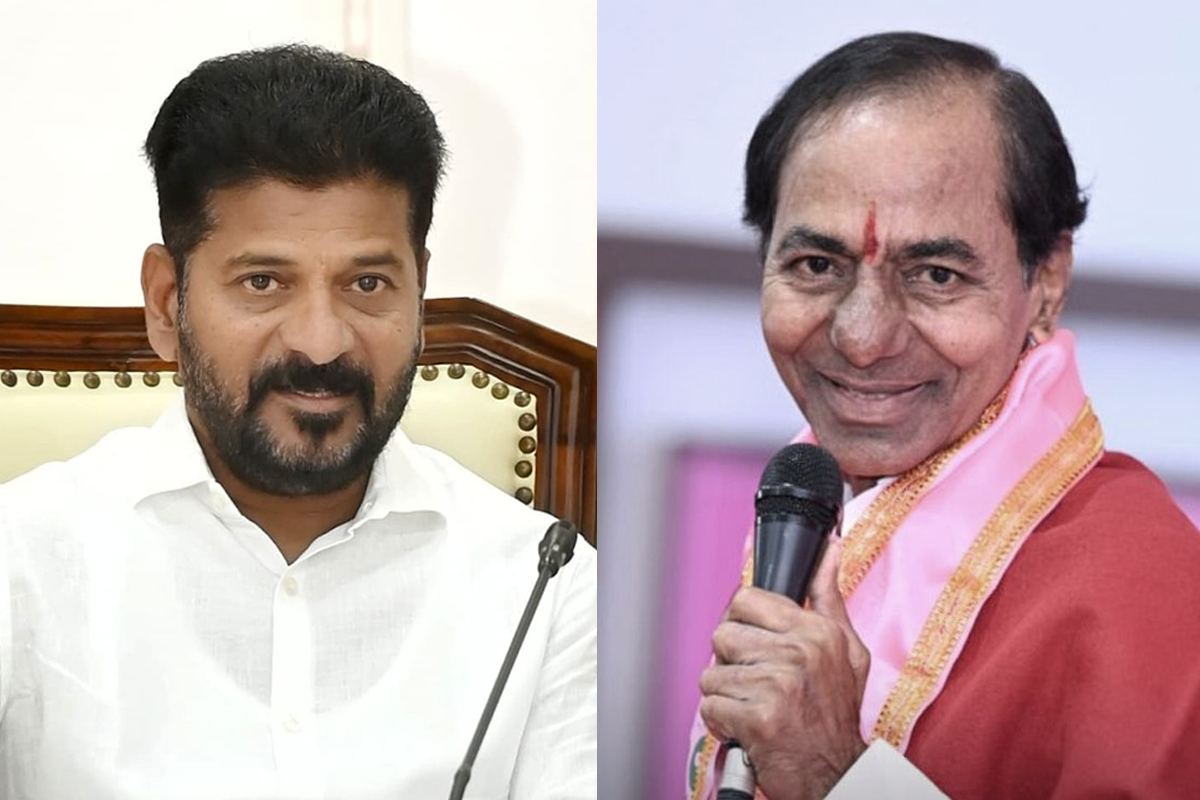
Chief Minister Revanth Reddy's allegation that the KCR family owns 440 acres of land.

Synopsis: The quarrel between Revanth Reddy and the BRS has brought competing allegations about the landholdings of political leaders and their families into the public domain. Beneath these allegations lies a larger conflict between land as a means of subsistence and land as a means of exercising power.
When two people who engage in the same kind of wrongdoing fall out with each other, things can get quite interesting. When the first one asks, “Didn’t you do this?”, the other retorts, “Didn’t you do that?”, and they begin exposing each other’s deeds. If both happen to be politicians, their quarrel can bring to light a great deal of information that the public ought to know, including many secrets that have remained hidden all these years.
As an old film song puts it, “The truth gushes out of a drunkard’s mouth.” A political controversy, too, is a kind of intoxication, and many truths tend to emerge in the process. Some people might get angry if I describe politicians in those terms, so I shall refrain from doing so. But whenever thieves, plunderers, criminals, murderers and conspirators quarrel among themselves, even if only occasionally, it is of considerable benefit to the public.
Chief Minister Revanth Reddy’s allegation that the KCR family owns 440 acres of land, and the counter-allegation by former minister and BRS leader Harish Rao that members of Revanth Reddy’s family own 308 acres, made headlines in our newspapers on the same day.
The issue under discussion was why the government had declared thousands of acres of land in the state prohibited under Section 22-A. Responding to this debate on the floor of the Legislative Assembly, the Chief Minister sidestepped that question and instead presented figures relating to the landholdings of his political opponents.
He stated that the KCR family owned 67.13 acres, the KTR family 123.19 acres, the Kavitha family 37.26 acres, the Harish Rao family 30.16 acres, the Jogenpally family 79.20 acres, and the Naveen Kumar and Kondal Rao family 101.14 acres. Altogether, he said, these six families owned 439.30 acres spread across nine districts, 24 mandals and 31 villages.
To be precise, even going by the Chief Minister’s own statement, all these holdings cannot be described as belonging to the “KCR family”. His son and daughter are married adults with families of their own. The other three are separate families, though they are close relatives.
Under the land-ceiling law, the maximum permissible holding for a family unit is 54 acres of dry land or 27 acres of wet land. If any family unit owns more than the prescribed ceiling, that would constitute a violation of the law. Alternatively, if any portion of these holdings was not disclosed in their election affidavits, or if the land was acquired subsequently and its value exceeds the income they declared while in office, those matters would certainly warrant scrutiny.
Revanth Reddy also alleged that KCR had grabbed hundreds of acres of land in the names of benamis. He said BRS leaders had appropriated government land, assigned land, Inam land, Waqf land, Bhoodan land and land falling within the limits of GO 111, presenting them as their own. According to him, during the 2017 land-records purification exercise, these lands were transferred into their names or those of their benamis with the help of the Dharani system.
Revanth Reddy repeated what has been common talk for the past ten to twelve years: that My Home Rameswar Rao is a benami of KCR. He alleged that Rameswar Rao had purchased nearly 3,000 acres in the names of companies in Muchintal, Palamakula, Madanapalli, Toopran, Venkannaguda, Gollur, Nagaram and Kapra, adjoining the airport.
Along with members of the KCR family, he also mentioned the names of BRS leaders Jagadish Reddy, Gangula Kamalakar, Errabelli Dayakar Rao and Sudheer Reddy, as well as BJP leaders such as Kishan Reddy and Komaraiah.
He further alleged that the land on which KTR’s Janwada farmhouse stands actually belonged to a company owned by Satyam Ramalinga Raju. Following the Satyam scandal and the company’s collapse, the Income Tax Department had attached the land. Revanth Reddy alleged that the land, which was under attachment, was subsequently released and handed over to KTR’s benamis, and that KTR now claimed it belonged to them and that he had taken it on lease to construct his farmhouse.
Following these allegations, Congress leaders went to the Janwada farmhouse and to the farmhouses of other BRS leaders.
In response, Harish Rao challenged: “Are you prepared for an inquiry by a sitting Supreme Court judge into the assets Revanth Reddy has acquired in the three years since the Congress came to power in the state, along with our assets and the transactions that took place under Dharani and Bhu Bharati?”
He said that Revanth Reddy, his daughter and his brothers owned 308 acres of land. He also claimed that they had evidence of Revanth Reddy’s land-grabbing activities in several villages, including Kotra, Kondareddypally and Nadargul.
While insisting that Revanth Reddy’s allegations were intended to divert attention from the genuine public issues being raised by the BRS, and that they would not fall into this trap, BRS leader Krishank warned that they, too, could take delegations to private properties just as the Congress had done. He then released a list of allegedly illegal properties belonging to Congress leaders that they had identified.
The list included Revanth Reddy’s farmhouse in Vattinagulapally, within the GO 111 limits; the farmhouses of Ponguleti Srinivasa Reddy and Dr Vivek at Himayatsagar; Gutta Sukhender Reddy’s farmhouse within the GO 111 limits; Patnam Mahender Reddy’s farmhouse on assigned land at Kotwalguda; Prakash Goud’s residential building on forest land at Kotwalguda; assigned land allegedly encroached upon by Vem Narender Reddy; and Komatireddy Rajagopal Reddy’s farmhouse at Reddypally.
It would be good if this quarrel continued for a few more days and brought still more information to light. What has emerged so far is only the tip of the iceberg. The public ought to know the full extent of the illegal assets held by political leaders belonging to all parties in the state.
The public must know where the leaders of every party that came to power claiming to serve the people, represent them and protect democracy have accumulated their wealth from. Amassing property appears to have become their sole objective, judging by these narratives.
Nobody needs to be under the illusion that everything being exposed in this manner is entirely true. There may be exaggerations, half-truths and outright lies among these allegations. At the same time, nobody needs to suspect that they are all completely false. Anyone who has observed these political leaders knows that perhaps half, or even three-quarters, of these allegations are true.
Everyone knows how politics has become a lucrative business, and political office serves as an instrument for appropriating public money and grabbing the collective assets and resources of the people.
Visit any neighbourhood, locality or village, and people will narrate story after story about how someone who was once regarded as a wastrel, good for nothing, became a political leader and acquired many bungalows, expensive vehicles, and properties in his own name and through benamis, all within a short period.
Of all these assets, land is the most consequential. Its supply is limited, and competition for it is therefore intense. This drives its price up enormously. The difference between the price at which land is purchased by the acre and the price at which it is sold by the square yard makes it an extraordinarily powerful resource for enabling people to climb the ladder of wealth with astonishing ease.
But land is a golden-egg-laying goose only for a handful of politicians, real-estate businessmen, middlemen, investors and the rich and powerful.
For small and marginal farmers and agricultural labourers, who knead the soil, eat from the soil, become one with the soil and coax crops of precious gems from it, land is not merely an asset. It is their livelihood, dignity, self-respect, inheritance, continuity—in a word, their life and identity.
The landed, wealthy and dominant classes have always sought to deprive them of it, evict them and occupy their land, rolling it up like Hiranyaksha, sitting on it and exercising power over them.
Because they alone were educated in a society where education was inaccessible to most people—or because they hired educated people to work for them—they managed to get hundreds, thousands and even lakhs of acres registered in their names. They recorded on paper their ownership and authority over villages they had never visited and lands they had never even touched.
In this way, society became divided into two broad groups: a handful of landlords owning thousands of acres on one side, and crores of landless poor tenants and agricultural labourers on the other.
The struggle to abolish this inequality in landownership is the history of this soil: the struggles of Komaram Bheem, Bandagi, Chityala Ailamma, Doddi Komaraiah, the Gutpala Sangham, the Andhra Mahasabha and the Telangana Peasant Armed Struggle.
Even afterwards, thousands of heroic fighters sacrificed their lives for land. The leaders may have failed, been defeated, grown weary or stopped fighting, but the people’s aspirations for land have not been fulfilled. The rulers’ hunger for land and thirst for power remain unchanged. The conflict between land as a means of subsistence and land as a means of exercising power has not ended either.
This, ultimately, is the land question. We are now seeing how different people have been usurping land and how they have accumulated hundreds of acres despite the existence of land-ceiling limits.
Just as there are naïve people who ask, “Where is caste today?”, there are intellectuals who challenge us with questions such as, “Where are the landlords? Who is asking for land?”
Look at the politicians. Look at their families and their benamis. We may no longer have a Mir Osman Ali Khan with 50 lakh acres, a Jannareddy Pratap Reddy with 1.5 lakh acres, or a Visunuru Ramachandra Reddy with 40,000 acres. But now, there are people who can compete with them!
Also Read:
From Erravelli to Dharani: Telangana’s property wars
Telangana government sets up committee to inquire into alleged land irregularities of BRS leaders
(Edited by R Rajesh Kumar.)



