

Published Sep 05, 2026 | 2:10 PM ⚊ Updated Sep 06, 2026 | 3:12 PM

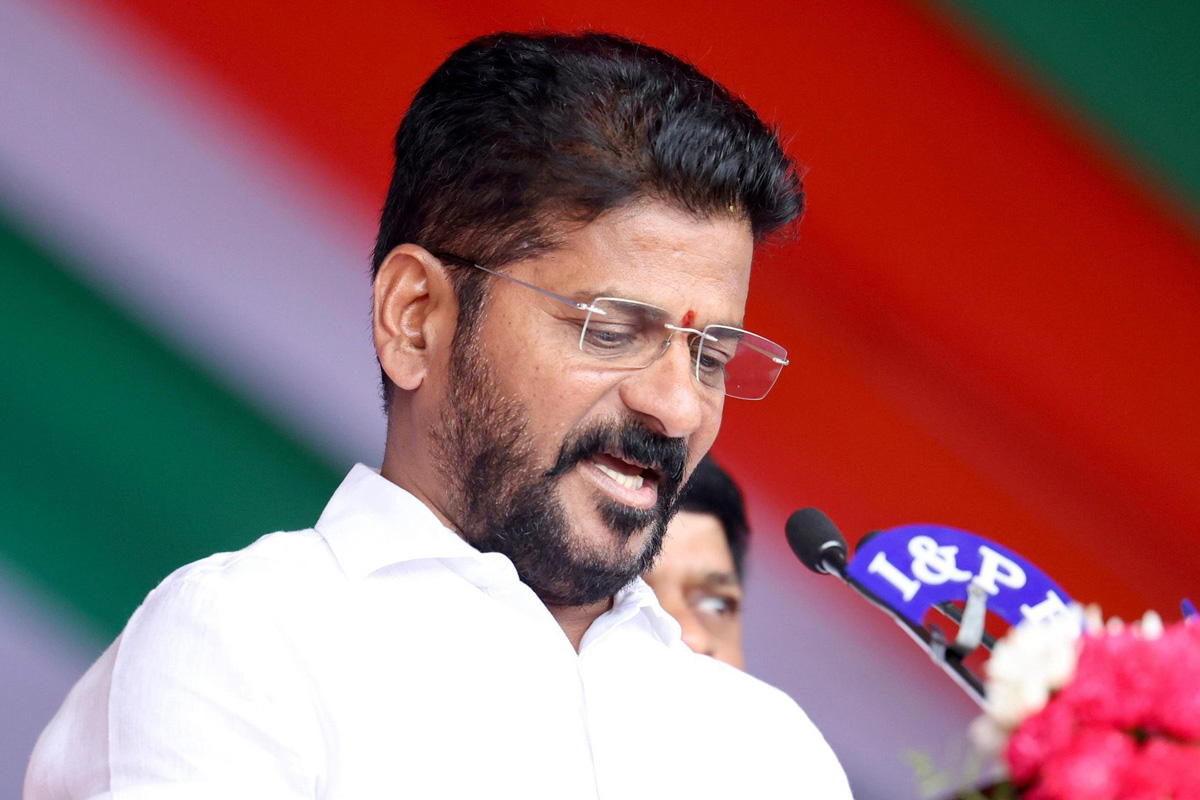
Telangana Chief Minister Revanth Reddy.

Synopsis: The six guarantees that helped bring the Congress to power have not been fully implemented: of the three promises under Mahalakshmi, one is being implemented, one is moving at a snail’s pace, and the third has not even begun. Across Rythu Bharosa, Gruha Jyothi, Indiramma Indlu, Yuva Vikasam and Cheyutha, too, major promises remain only partially implemented or unfulfilled. The Chief Minister’s seventh promise has also not materialised…
The Revanth Reddy government has celebrated 1,000 days in office. It has crossed the halfway mark of the 1,825 days for which it was elected and has now reached another milestone.
Whatever the government’s boasts about its performance may be, there is intense dissatisfaction among the people. The promises made by the Congress during the elections, and the illusions those promises created among at least some sections of the people, have disappeared or are rapidly disappearing.
The Congress government seems to be creating history by losing popular support so quickly after winning an election. Ground-level leaders, intelligence reports and the Raag Darbari media may be telling the leadership pleasing lies or half-truths and winning its approval. But the reality is entirely different.
The very reasons that generated public dissatisfaction with the previous BRS government have returned: distancing itself from the people, refusing to listen to them, ignoring popular aspirations, arrogance and corruption. Not one of these has disappeared during the past 1,000 days.
These are not reasons that apply only to one political party and not another. They are the general public perception that develops about governments and rulers. They reflect popular opposition to a particular style of governance. The temperature rises degree by degree. And just when courtiers and sycophants are singing pleasing songs of praise, insisting that there is no temperature at all, the thermometers suddenly shatter.
What was expressed in the 2023 election was this opposition, not popular support for the party now in power. If the same thing happens in 2028, it will not necessarily mean support for those who come to power either; it may simply mean opposition to those who are there now. The voter has no other choice.
Along with opposition to those in power at the time, the promises made by the Congress also helped bring the party to power. There were numerous promises in its election manifesto and in election meetings across the state, made by Congress leaders ranging from its national leadership to the present Chief Minister and ministers. The six guarantees were the most important of them. Then PCC president and now Chief Minister Revanth Reddy also said that he was adding a seventh guarantee of his own to those six. The six guarantees were to be fulfilled within 100 days. “Every guarantee will be fulfilled in 100 days,” declared Congress election posters.
A thousand days have passed, yet there is no basis for claiming that the six guarantees have been fully implemented.
The first of the six guarantees was Mahalakshmi. The promises were ₹2,500 every month for every woman, cooking-gas cylinders for ₹500, and free travel for women in Telangana State Road Transport Corporation buses. Only the free bus travel scheme is being implemented more or less completely. Yet there continues to be strong opposition to women’s free travel in society, and even among the bus staff who operate the service.
The government may not have taken responsibility for challenging the patriarchal attitudes that lie behind this opposition. But it could at least have made an effort to create public awareness about why free travel for women is necessary and how much it benefits society as a whole. There has hardly been even the slightest effort in that direction.
As for the subsidy on cooking-gas cylinders, it is not an assistance meant exclusively for women and there was no need to make it part of Mahalakshmi. Presenting the gas subsidy as a women’s scheme itself reflects the patriarchal idea that cooking and responsibility for the kitchen belong only to women.
Leaving that aside, numerous conditions were imposed for implementing the scheme. After 1,000 days, government statistics themselves say that it reaches only 43 lakh families out of roughly one crore households in the state and 90 lakh families possessing white ration cards.
The promised monthly cash assistance of ₹2,500 to eligible women has not even been launched.
In other words, of the three promises under Mahalakshmi, one is being implemented, one is moving at a snail’s pace, and the third has not even begun!
The second is Rythu Bharosa. Under this scheme, the government promised ₹15,000 a year to farmers and tenant farmers, ₹12,000 to agricultural labourers, and a ₹500 bonus on paddy.
The government claims that it has so far spent ₹36,000 crore under this scheme and ₹1.75 lakh crore altogether on the agricultural sector. But farmers have received no more than ₹6,000 per crop, or ₹12,000 a year. And even that has reached only some of them. There are many who have not received it at all or have received it late.
The promise of ₹12,000 to agricultural labourers has not been launched even now. A Cabinet sub-committee appointed on July 2, 2024, to work out procedures for identifying agricultural labourers and determining how the cash assistance should be provided submitted its report in January 2025. Twenty months have passed since then, but the matter has not moved an inch.
The ₹500 paddy bonus, meanwhile, has been restricted to certain varieties of paddy.
Thus, of the three promises under this scheme, two have been only partially implemented and one has not been implemented at all.
The third is Gruha Jyothi. The promise was to provide free electricity up to 200 units to 53 lakh eligible families. Apart from the stringent conditions attached to the scheme, consumers are being hit with exorbitant bills if their consumption exceeds the limit even by a single unit.
Although the scheme appears to be functioning to some extent, complaints continue to come from the ground level. Even after 1,000 days, there is no effective mechanism either to prevent such complaints or to resolve those that do arise promptly.
The fourth is Indiramma Indlu. The promises under this scheme include a house site and ₹5 lakh for those without a house, ₹5 lakh for those who already have a site, and 250 square yards of house-site land for Telangana activists.
The government says that in the first phase it has sanctioned 4.16 lakh houses, at 3,500 houses per constituency, and allocated ₹22,500 crore.
But although the houses may have been sanctioned on paper, complaints are coming from the ground that even the bills for the first phase have not been paid; that Congress workers are being given priority in the selection of beneficiaries; and that lakhs of eligible poor people applying through Praja Palana are being discriminated against.
The government promised ₹5 lakh to those who already had a house site, but it has stopped talking about those who have no site at all. And since Telangana activists have not even been identified, that promise too has not been implemented.
The fifth is Yuva Vikasam. The government promised students an education-assurance card worth ₹5 lakh and an international-standard Telangana school in every mandal.
It is said that the Education Department is holding discussions with officials from the banking sector to prepare guidelines for implementing the Education Assurance Card. Even after 1,000 days, those discussions have not been completed and the procedures have not been finalised. Consequently, the scheme has not begun.
Those who promised an international-standard school in every mandal have spent 1,000 days without even laying a foundation stone, let alone constructing the schools.
Leaving aside the promise of ₹5 lakh, the government has also made a mess of the fee reimbursement that students have been receiving for years. Accumulated arrears of old reimbursements have not been cleared. Even now, reimbursements due for the last two academic years remain unpaid.
When college managements harass students and their parents, the government remains a silent spectator.
The sixth is Cheyutha. The government promised to increase the existing pension of ₹2,016 to ₹4,000 for the elderly, widows, single women, toddy-tappers, handloom workers and people living with AIDS, and to increase the pension for persons with disabilities from ₹4,016 to ₹6,000.
But for nearly 44 lakh beneficiaries across the state, the old pension paid by the previous government is still what is being paid even after 1,000 days. There has been no increase.
The government also promised a ₹10 lakh Rajiv health-insurance scheme for these neglected sections. That too is moving at a snail’s pace.
Fighting unemployment was not among these six guarantees, but it is one of the state’s major problems. The government has done nothing during these 1,000 days to solve or even substantially reduce it.
In addition to the six guarantees announced by the Congress, Revanth Reddy personally made a seventh promise: that he would bring democratic governance and restore the rights of the people that had been lost under the previous government. He made this promise both during the election campaign and in his speech immediately after assuming office.
But if Telangana had become a police state during the previous ten years, that condition has continued, and perhaps even intensified, during these two-and-a-half years. There has been no restoration of civil and democratic rights.
The old restrictions on holding public meetings and gatherings continue. Local police officials are threatening hall owners and telling them that even meetings inside halls require police permission.
At Indira Park’s Dharna Chowk, too, authorities are imposing restrictions that did not exist earlier: how many people may participate in a protest, how long they may protest, and within what physical limits they may conduct the demonstration.
This is a city that has acquired international fame as one of the most heavily surveilled cities in the world. Yet all that surveillance appears to be directed at people, public demonstrations and activists rather than at actual crime. All kinds of crimes continue to take place in the city as usual.
If there is anything this government has achieved in these 1,000 days, it is that pointing a finger at the previous government for every failure continues unabated, whether the accusation has merit or not.
That excuse may work for a month or two, perhaps even for a year. But after assuming office and completing half its term, and especially after 1,000 days, the same excuse no longer holds.
The other achievement of these 1,000 days has been to drag political language down to a level lower than ever before.
That, too, is an achievement worthy of 1,000 days!
Also Read:
Telangana’s Section 22A controversy: Whose land? Who prohibits? Who encroaches?
Can any committee fairly identify Telangana movement’s real activists?
Telangana: A state rich in corruption



