

Published Oct 17, 2026 | 2:25 PM ⚊ Updated Oct 17, 2026 | 2:25 PM

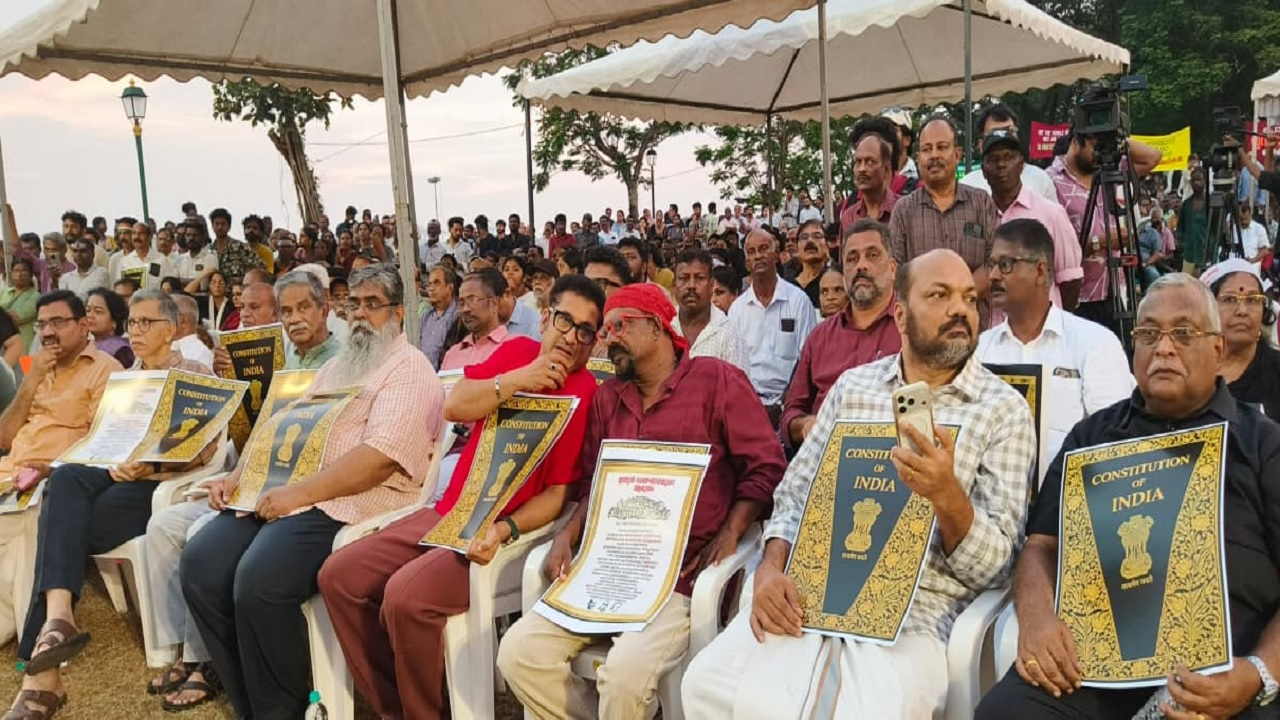
R. Rajagopal, Murukan Kattakkada and P. Rajeev, along with other prominent personalities

Synopsis: People from different walks of life gathered under the banner of ‘Chalo Jantar Mantar’ to protest against alleged violations of democratic rights and the Election Commission’s Special Intensive Revision (SIR) of electoral rolls at Kochi’s Rajendra Maidan. This was in sharp contrast to the olden days, when Jewish Gandhi AB Salem delivered speeches to an empty maidan. NS Madhavan, P Rajeev, R Rajagopal and KR Meera were among the famous names as another Jantar Mantar came alive in Kochi.
The breeze from the Arabian Sea carries the distant horns of international vessels sailing into Kochi port. A short distance away, at Rajendra Maidan, the past seems to linger in the air. If you pause amid the noise of the city, you might almost hear the clip-clop of a horse’s hooves echoing through history.
Before it was named after India’s first President, Rajendra Prasad, the ground was known as Mount Salem, after Abraham Barak Salem, a freedom fighter and member of the pre-Independence legislative assembly.
A Jew by birth, Salem would ride his horse to the ground and deliver speeches. Often, there would be no audience. Yet, he continued to speak.
The maidan has since witnessed several public gatherings of historical significance. A few days ago, it became the setting for another such gathering, this time under the banner of ‘Chalo Jantar Mantar‘.
But unlike Salem’s lonely speeches, there was no dearth of listeners on Thursday evening. Thousands gathered, united not by allegiance to any particular political party, but by their faith in democracy and the Constitution.
The rally, expressing solidarity with protesters who marched to Jantar Mantar in New Delhi demanding the resignation of Chief Election Commissioner Gyanesh Kumar, began at Marine Drive and concluded at Rajendra Maidan, echoing the slogans raised in the capital.
Organised under the leadership of the TK Ramakrishnan Cultural Centre, Prof MK Sanu Cultural Centre and EMS Study and Research Centre, the gathering brought the national agitation to the heart of Kochi.
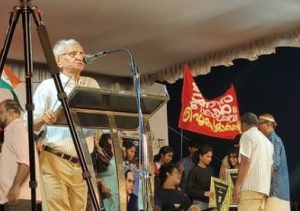
NS Madhavan
Writer NS Madhavan, former ministers P Rajeev and S Sharma, writer and orator Sunil P Elayidom, poet Murukan Kattakkada, writer KR Meera, retired Justice VK Mohanan, senior journalists R Rajagopal and KJ Jacob and filmmakers Kamal and Aashiq Abu were among the prominent figures who participated in the gathering.
Around 70 artists joined the movement, creating artworks on the spot.
At the entrance to Rajendra Maidan, illustrations of Prime Minister Narendra Modi, Chief Election Commissioner Gyanesh Kumar and Union Home Minister Amit Shah crying out Vote Chor! drew attention.
Participants carried copies of the Indian Constitution as a symbol of solidarity.
But what stood out was the unusual arrangement of the gathering: several prominent figures sat on the ground, while the stage was occupied by young people holding copies of the Constitution.
The event began with a speech by writer NS Madhavan, who opened by referring to the ‘Lehra Do Tiranga‘ protest in Delhi and the arrest of CJP founder Abhijeet Dipke.
Madhavan then drew a parallel with Serbia’s student-led youth movement against former president Slobodan Milosevic. He recalled how the Otpor! movement used creative, non-violent methods to challenge public fear and unite the political opposition.
The movement played a crucial role in the protests that culminated in the Bulldozer Revolution in October 2000, eventually forcing Milosevic to step down after he refused to accept defeat in the presidential election.
Madhavan said similar strategies were now being adopted by young people in India.
He also recalled the historical significance of Rajendra Maidan and paid tribute to AB Salem — the ‘Jewish Gandhi’.
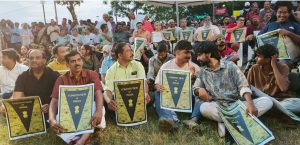
People holding symbolic copies of the Constitution
Addressing the gathering, former minister P Rajeev recalled the alleged police brutality against communist leaders, including opposition leader Pinarayi Vijayan, during the protests in Delhi.
”Delhi Police turned a police van into a jail and took Pinarayi Vijayan away despite his serious health issues. Brittas was also brutally attacked. Each of us faced severe brutality, and we were detained.” Rajeev said.
He also highlighted what is known as the ‘golden triangle’ of the Indian Constitution — Articles 14, 19 and 21, which guarantee equality before the law, fundamental freedoms and the protection of life and personal liberty.
Rajeev warned that these constitutional safeguards were under threat, particularly Article 19, which guarantees six fundamental freedoms to Indian citizens.
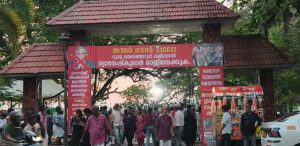
Entrance to Rajendra Maidan bearing ‘Chalo Jantar Mantar’ protest banners
”Earlier, they said Aadhaar was a citizenship document. Now, it is not. Even an Indian passport is not being considered a citizenship document. We can imagine how the Special Intensive Revision (SIR) will affect citizens’ rights.” he said.
Recalling a young woman who was detained alongside the leaders during the Delhi protests, Rajeev said she continued raising slogans despite being confined in a cramped police vehicle with only a small window for ventilation.
”And the young girl’s name is Comrade Brinda Karat,” he said, drawing sustained applause from the crowd.
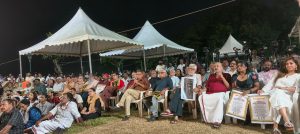
Bony Thomas, Kamal and others at the venue
Former Telegraph editor R Rajagopal spoke about the difficulties he had faced over his passport and his exclusion from the SIR process.
Calling for political unity on common issues, Rajagopal said he was happy to see political parties come together to defend the Constitution.
”This is the epitome of political maturity. Please don’t spoil it through social media wars.” he urged the gathering.
Director Kamal said that those who raised their voices in opposition had been victims of stigma, adding that he, too, had faced it. However, he said he was happy to see youngsters expressing their dissent in creative ways.
”When Delhi Police brutally beat them, they remained mature and did not resort to violence. They stood up and sang the national anthem in response to the police brutality. Their courage is the biggest fear of the authorities.” he said.
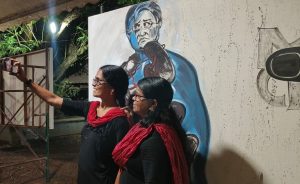
Women taking selfies with the paintings
Kamal also raised questions about Seema Khanna, the Election Commission’s IT chief, who has come under scrutiny over allegations concerning its digital systems.
Khanna joined the poll body in 2025 on deputation from the National Informatics Centre (NIC). The controversy centres on ECINet and ERONet, platforms used for electoral roll-related work.
”We have been speaking only about Gyanesh Kumar, but he is merely a tool. The bigger player is hiding in the background, a loyalist of Prime Minister Narendra Modi.” Kamal said, hinting at Khanna.
Journalist KJ Jacob recited a poem by Kadammanitta Ramakrishnan at the event.
”എല്ലാ കോട്ട കൊത്തളങ്ങളും പുരാവസ്തുക്കളാകും.
എല്ലാ പീരങ്കികളും
നിശബ്ദമായി തുരുമ്പിക്കും.
എല്ലാ സുൽത്താൻമാരും
വെളിച്ചം കടക്കാത്ത
ഇരുളറകളിലൂടെ
ഒളിച്ചോടും.
ഉറക്കച്ചടവില്ലാത്ത
നമ്മുടെ കുട്ടികൾ
ഇതെല്ലാം
കൗതുകപൂർവ്വം
നോക്കിക്കാണും.”
This translates to, ”All forts and citadels will become relics of the past. All cannons will rust away in silence. All sultans will flee through chambers untouched by light. And our wide-awake children will watch it all with curious eyes.”
Jacob also referred to Neha Bora’s detention and spoke about how the younger generation was fearless. ”The only thing we have to do is support youngsters. They will lead us,” he said.
South First also spoke to students and members of the public gathered at the venue.
Adheena, a law student at Ernakulam Law College, said, ”The biggest violation of democracy is taking place in our country right now, with people’s right to vote being curtailed. Students are fighting against this in Delhi and are being subjected to severe police brutality. We witnessed this through social media, and I am here to stand in solidarity with them.”
Sreeja, a homemaker with MA and B.Ed degrees, said, ”Despite my qualifications, the system has failed to make use of us and has denied us opportunities. I was denied the opportunity to pursue my passion for teaching. Now, witnessing the students’ protests, I feel both motivated and sad. I feel that if I had protested like this in my younger days, I might have received the opportunities I deserved.”
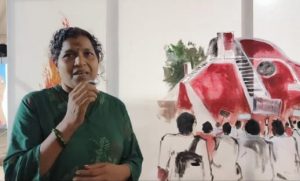
Sreeja
Abhiram and Sreehari, students of Maharaja’s College in Ernakulam, said they had arrived at the venue by chance but decided to join the gathering after witnessing the crowd.
”We happened to come across this gathering and felt that we should be here to extend our solidarity. As students, we cannot confine ourselves to our homes or classrooms. We have to step out; otherwise, we will become nothing but slaves. Anyone who believes in democracy should step out and extend their solidarity, and that is what we are doing,” they said.
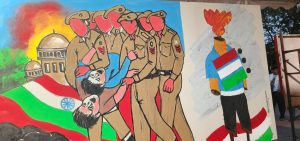
Paintings at the venue
As loud speeches filled the main venue, parents who had brought their children pointed to paintings depicting alleged Delhi Police brutality, the SIR exercise and vote chori, explaining the images to them in a language they could understand.
The little ones listened intently, taking in the stories of protest, resistance and democracy — perhaps their first lessons in questioning power.
Also Read:
The road to Jantar Mantar: A day inside India’s sealed capital
Police step aside as INDIA bloc marches to Supreme Court; CJP left on the sidelines
‘A hammer to kill a fly’: Why the Delhi crackdown is a crisis of democracy
(Edited by R Rajesh Kumar.)



