
Published Jun 27, 2026 | 7:58 PM ⚊ Updated Jun 27, 2026 | 8:20 PM

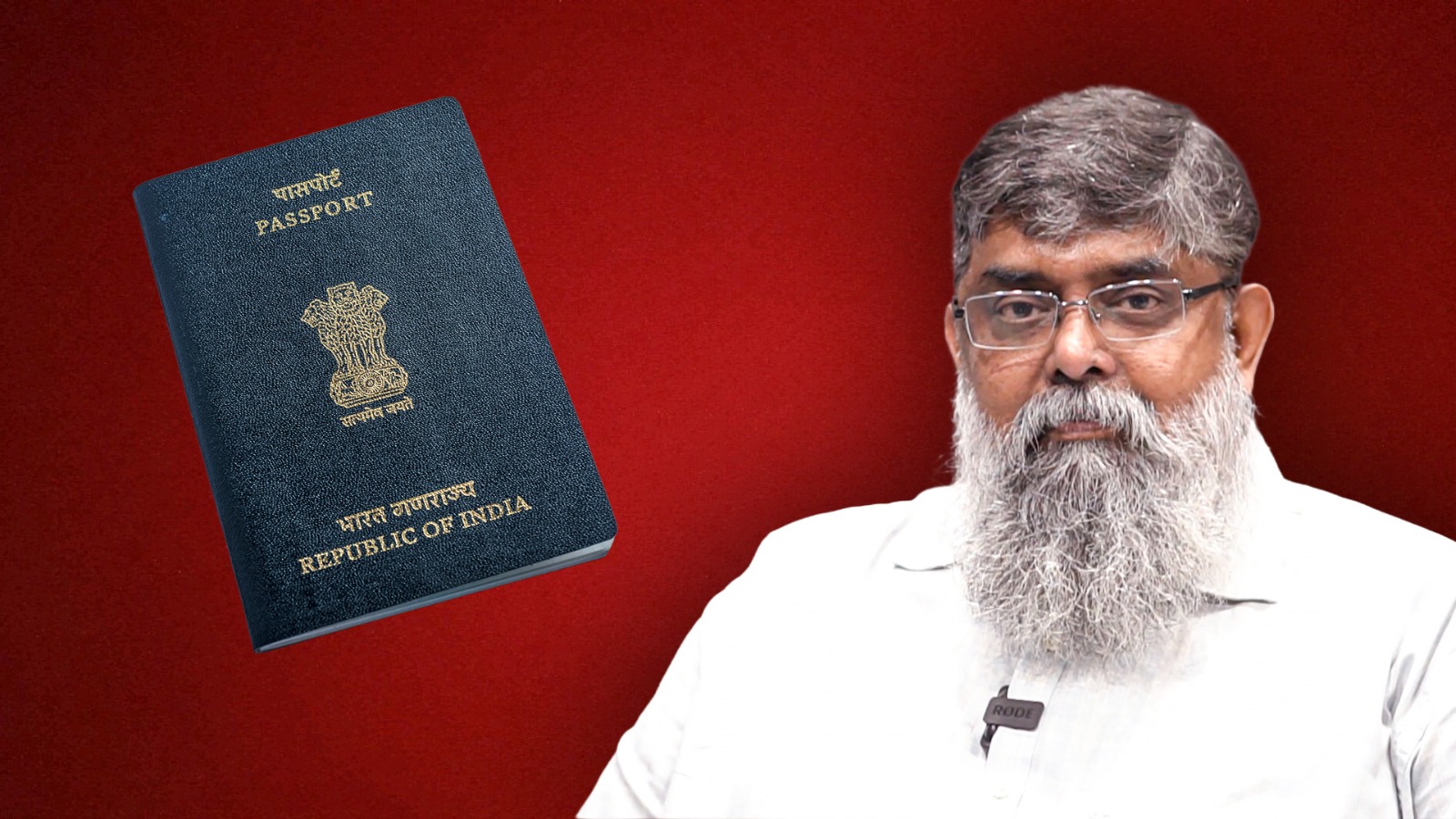
Former Editor of The Telegraph, R Rajagopal, has received an SMS, saying his renewed passport has been despatched.

Synopsis: The ex-Editor of The Telegraph writes of how he was dispossessed of his voter’s ID and subsequently found himself unable to get his passport renewed. He underlines the larger point, the fate of the marginalised caught in the clutches of an uncaring system…
In March this year, my name was deleted from the Ballygunge constituency electoral roll in Kolkata, apparently because the Special Intensive Revision process could not trace either my name or that of my late father in the 2002 voters’ list. My father, a Gandhian, retired professor and former State Secretary of the Gandhi Smarak Nidhi in Kerala, passed away in 2016. I remain unable to understand how a conscientious voter like him could have been absent from the rolls.
Like nearly 27 lakh other residents of West Bengal, I was excluded on account of what were described as “logical discrepancies”. No reason was furnished even after I submitted my matriculation certificate, and my appeal is now pending before one of the tribunals constituted pursuant to the Supreme Court’s directions. As a consequence, I was unable to vote in the recent election.
More distressing has been the fate of my passport renewal application. Although I completed the biometric formalities on March 19, 2026, police verification has not been cleared because my name no longer appears on the electoral roll.
Despite submitting several alternative documents, I have been informed that they are insufficient. In fact, today (June 27, 2026) is the 100th day since my biometrics for passport renewal were taken. I was formally informed last week by the passport-issuing authority that Kolkata Police sent an adverse report, citing the deletion of my name from the voters’ list. I have been asked to appear before the Regional Passport Office in Kolkata “immediately” but when I sought an appointment, without which it is difficult to gain entry, the date granted is July 17, 2026.
In between, our daughter, a journalist in California, got married in San Francisco on April 17. Needless to say, it would have been impossible for me to attend the wedding in the absence of an active passport, notwithstanding my possession of a valid ten-year US visa.
For all practical purposes, I find myself in a state of civic uncertainty although recently the government iterated that a passport is no proof of citizenship. Much of my time is now consumed by efforts to reconstruct family records and secure documents dating back several decades…
My days begin with checking my voting right appeal status and then the passport tracker. Then I write to the college where my mother taught in 1965 and to her school from where she passed out in 1959, asking for any document that proves she existed. The school has been very helpful but not the college. Similarly, I speak to prohibition campaign activists in Kerala, running down a list I collected after coming across an activist’s name in a group by chance, asking for any news clippings or photographs that show my father campaigning against illegal liquor vends and communalism.
Some close friends and public figures have helped me in all these efforts. However, I am unaware if any media outlet or journalists’ association or guild (of which I am not a member) has shown any interest in my situation. A senior journalist reminded me that this situation is by no means unique as “rejection” has been the daily certainty confronting millions of Indians for centuries. I accept that point.
My intention has never been to project myself as a victim. Rather, I have wanted to underline a larger point: if someone who spent his professional life in journalism and edited a relatively known newspaper can encounter such difficulties, one can only imagine what the truly marginalised must endure. Did I approach any newspaper? No, because I do not want it to become an issue concerning me. Do editors and journalists know about my issue? Of course, several do. If they don’t, they should not be in the profession, don’t you think?
Yet, the complete silence of newspapers on this issue has confirmed my suspicion, now reinforced with personal experience, that so-called mainstream journalism has little to do with my life. I do not “read” any newspaper now. I glance at some but hardly find anything that piques my interest.
(This post was originally published on social media and has been sourced from there.)
Also Read:
Are thirty-seven per cent of voters in Telangana suspect? Seriously!
Data shows SIR helped BJP win West Bengal



