

Published Nov 22, 2026 | 9:30 AM ⚊ Updated Nov 22, 2026 | 9:30 AM

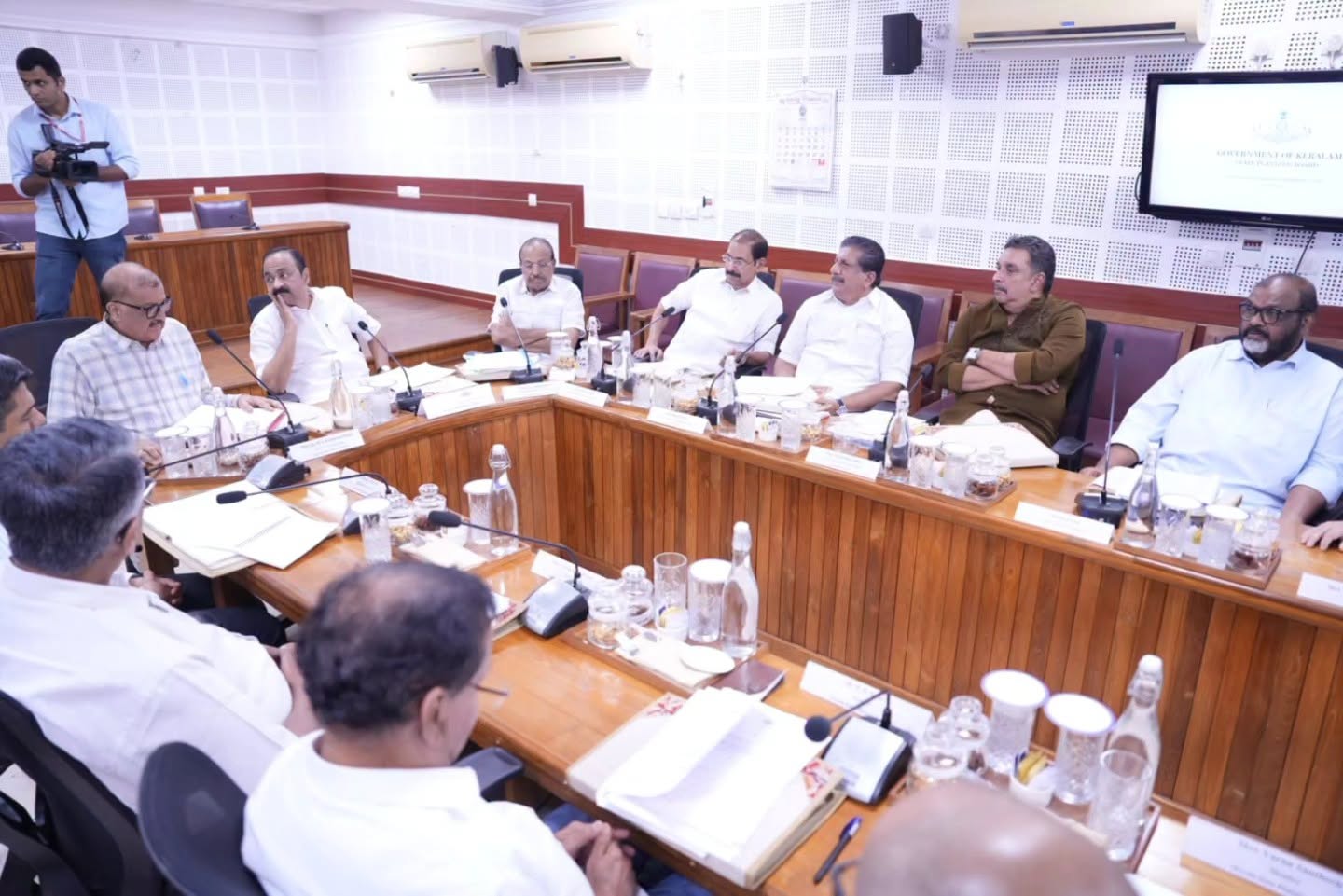
The Kerala State Planning Board meeting on 5 November

Synopsis: Keralam’s proposed 15th Five-Year Plan (2027-32) seeks to reshape the state’s development model, targeting a ₹28-lakh-crore economy by 2032 through private investment, diaspora participation, manufacturing, port-led growth and job creation. Moving away from an economy heavily dependent on government spending and remittances, the plan envisages a partnership-driven growth model and the emerging care economy. But ambitious investment targets, mounting fiscal pressures, unemployment, land constraints and environmental concerns pose formidable challenges.
Keralam wants to shift decisively from an economy sustained largely by remittances, consumption and government spending to one driven by production, investment and employment within the state.
This is the central ambition of the proposed 15th Five-Year Plan for 2027-32, which sets an ambitious target of expanding the state’s economy from around ₹16 lakh crore in 2026-27 to ₹28 lakh crore by 2031-32. To achieve this, the Plan marks a departure from the traditional approach of five-year planning.
Rather than concentrating primarily on how the government should distribute its available funds among departments and schemes, it seeks to use the Plan to attract investment, mobilise resources outside the government and build new sources of economic activity.
The ambition is considerable. The draft approach paper, titled Puthuyuga Keralam (New-Age Keralam), prepared by the Kerala State Planning Board, envisages annual real economic growth of around 7% and an investment rate of approximately 28% of the Gross State Domestic Product (GSDP).
It also seeks to halve youth unemployment among women, increase government capital expenditure, strengthen the state’s tax revenue and create more opportunities for educated young people who currently leave Keralam in search of work.
But the paper is equally candid about the difficulties.
Sluggish economic growth, limited industrial activity, a shortage of readily available land, inadequate investment conversion, mounting fiscal commitments and an ageing population have left the state with little room for conventional development strategies.
The proposed Plan attempts to address these constraints by changing the economic model itself.
Also Read: Kerala white paper pegs state’s liabilities at Rs 5.07 lakh crore
Perhaps the most significant departure is the proposed partnership economy.
The front cover of the approach paper
The government acknowledges that public finances alone cannot support the investment required to achieve its growth target.
The paper estimates that Keralam needs investments of approximately ₹4.5 lakh crore annually to sustain 7% real growth. Against this, the state’s budgeted capital expenditure for 2026-27 is ₹22,566 crore.
In effect, nearly 95% of the investment requirement will have to come from outside the state budget.
Proposed sources include private businesses, cooperative institutions, bank credit, the Union government, multilateral agencies, public asset monetisation, and the Malayali diaspora.
The approach goes beyond conventional public-private partnerships.
Cooperatives, local governments, Kudumbashree, social enterprises, universities, professional organisations and community groups are also expected to participate in development projects.
A particularly interesting proposal is to turn Non-Resident Keralites and Malayalis working in other Indian cities into investors and business partners rather than treating them merely as sources of remittances.
The state wants to move from a remittance-dependent relationship to one built around investment, entrepreneurship and professional networks.
Pravasi Grama Sabhas, local investment meetings and city-level investment meets are proposed to connect people living outside the state with development projects in their home districts and towns.
Equally striking is the plan’s willingness to look inward at red tape. It argues bluntly that rules and administrative habits that helped at one stage of development can later turn into roadblocks.
Licensing procedures, land-use norms, estate laws, excise rules, building codes, and inspection regimes are all flagged for review.
On land—always a sensitive flashpoint in a crowded state—the draft leans toward pooling rather than heavy-handed acquisition, leasing public land instead of selling it outright, finishing digital resurveys, and capturing part of the land-value gains created by public projects.
It also insists that essential services such as public health, education, drinking water, food security and social protection remain government responsibilities.
Also Read: Ministers question CM Satheesan’s style of functioning
The proposed Plan places considerable faith in Vizhinjam International Seaport, treating it as the starting point of a much larger economic transformation.
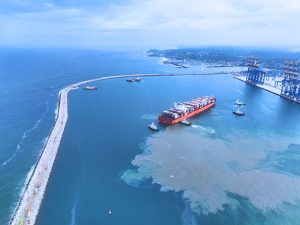
he Plan proposed transforming Vizhinjam port’s role as a transhipment terminal into a gateway for Keralam’s exports and imports.
The objective is to move beyond the port’s role as a transhipment terminal and turn it into a gateway for Keralam’s exports and imports. This requires freight stations, warehousing, road and rail connectivity, cold-chain facilities, logistics services and manufacturing clusters around the port.
Mission Samudra, with a proposed allocation of ₹400 crore, seeks to turn the coastline, two international seaports, the transhipment terminal, and 17 non-major ports into an integrated maritime economy.
The plan also identifies the four international airports as another major economic advantage.
Aeroparks, aerocities, aircraft maintenance and repair facilities, aviation training, pharmaceutical cargo and logistics parks are among the proposed areas of development.
Manufacturing is another major priority. The document acknowledges that the sector accounts for only 13% of Kerala’s Gross State Value Added, compared with 17.5% nationally.
Instead of pursuing indiscriminate industrial expansion, it proposes clusters built around sectors where the state already has a presence.
These include medical devices, gold jewellery, furniture, mineral processing, rare earths, traditional industries and micro, small and medium enterprises.
Also Read: How Sri Lanka revived tourism amid crisis while Keralam lost momentum
Tourism is to shift from a volume-driven model to higher-value visitors, longer stays, and greater local economic benefits. The approach includes medical tourism, wellness, Ayurveda, cruise tourism, river cruises, convention tourism, plantation tourism and heritage destinations.

Keralam’s Elderly Budget for 2026-27 projected the elderly to comprise 22.8% of the total population by 2036.
The Plan also seeks to spread tourism beyond the familiar destinations in southern and central Kerala, giving Malabar a larger share of the sector.
Local governments will play a central role in managing tourist destinations, including carrying-capacity assessments, public utilities, waste management and visitor safety.
Agriculture and plantations are expected to undergo institutional and regulatory changes. With average operational landholdings of just 0.18 hectares, the state wants to encourage collective cultivation, stronger farmer-producer organisations, better market access and modern farming practices.
Another distinctive feature is the emphasis on the care and silver economy.
With people aged 60 and above accounting for an estimated 21.8% of the resident population, the state sees ageing not merely as a welfare challenge but also as an area capable of generating employment.
The proposed Silver Economy Policy and the new Department of Elderly Welfare are intended to anchor this initiative. The document, however, acknowledges that the care system will create a substantial recurring financial commitment and calls for a 20-year cost projection before statewide expansion.
Also Read: Kerala needs disaster audits, not just disaster relief
The document repeatedly stresses that economic expansion cannot come at the expense of Keralam’s fragile geography.
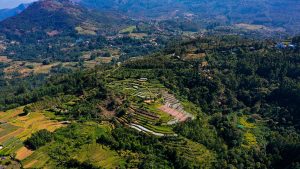
Economic expansion cannot come at the expense of Keralam’s fragile geography.
The 2018 floods, the 2024 Wayanad landslides, coastal erosion, recurring droughts and human-wildlife conflict are cited as reminders of the cost of ignoring environmental limits.
Every major project is proposed to undergo screening for flood, landslide, erosion and heat risks before approval. Wetlands, paddy fields, riverbanks, mangroves, dunes and forests are to be treated as essential infrastructure rather than vacant land available for development.
The paper also calls for stronger monitoring of river and groundwater quality, extraction activities, quarrying and air pollution. It recognises that quarrying is necessary to supply construction materials but says it must be managed to protect slope stability.
This environmental approach is important because the Plan simultaneously seeks to expand tourism, mineral processing, plantation activities and port-led development, all of which could place additional pressure on land and natural resources.
Also Read: Kerala seeks one vision: A comprehensive land use policy
A difficult financial reality matches the Plan’s ambitions.
Salaries, pensions, and interest payments consumed ₹96,927 crore, or 77.6% of the state’s revenue receipts, in 2024-25.
The document notes that salaries, pensions, and interest payments consumed ₹96,927 crore, or 77.6% of the state’s revenue receipts, in 2024-25. Its own tax revenue has also failed to keep pace with the economy. The state’s own tax revenue stood at 6.41% of GSDP in 2025-26, against a major-state average of around 7%.
The discontinuation of revenue deficit grants under the 16th Finance Commission, despite an increase in Keralam’s share of central taxes, adds another complication.
The government is therefore looking at better tax compliance, a review of public expenditure, restructuring of public sector enterprises and more productive use of government-owned land and other assets.
The paper proposes classifying all 132 public sector enterprises according to their financial viability and future role. It also calls for greater transparency on KIIFB (Kerala Infrastructure Investment Fund Board) liabilities and other off-budget borrowing.
Land availability is another major obstacle. With an average operational holding of just 0.18 hectares, assembling large contiguous plots for industrial projects is difficult. The Plan proposes completing the digital land survey, correcting land records, pooling land instead of relying on acquisition and leasing public land rather than selling it.
It also proposes reviewing outdated laws governing land use, plantations, building regulations, licensing and inspections. A move towards self-certification and deemed approvals is envisaged wherever risks permit, while environmental and safety-related clearances would retain their safeguards.
But these proposals are likely to require careful handling. Changes to plantation laws, land classification and labour practices could affect farmers, workers and communities whose rights are protected under existing legislation.
There is also the question of whether the state can convert investment announcements into actual projects. The 2025 investment summit generated investment intentions worth ₹1.53 lakh crore, but the paper acknowledges that only a small fraction has translated into investment on the ground.
“That gap between announcements and execution is precisely what the new approach wants to address. Perhaps the most important administrative change is the proposed introduction of the SMART framework — Specific, Measurable, Achievable, Result-oriented and Time-bound — for every project,” says a Finance Department official.
The official adds that departments will have to specify what a project is expected to deliver, how its performance will be measured, where the money will come from and when it will be completed.
Planning Board officials indicate that the 15th Plan is therefore not simply about spending more over the next five years. It is an attempt to change the way Keralam finances, plans and delivers development — and whether the state can make that transition will determine how much of its ₹28-lakh-crore ambition becomes reality.
(Edited by Majnu Babu).



