

Published Nov 05, 2026 | 8:16 PM ⚊ Updated Nov 05, 2026 | 8:16 PM

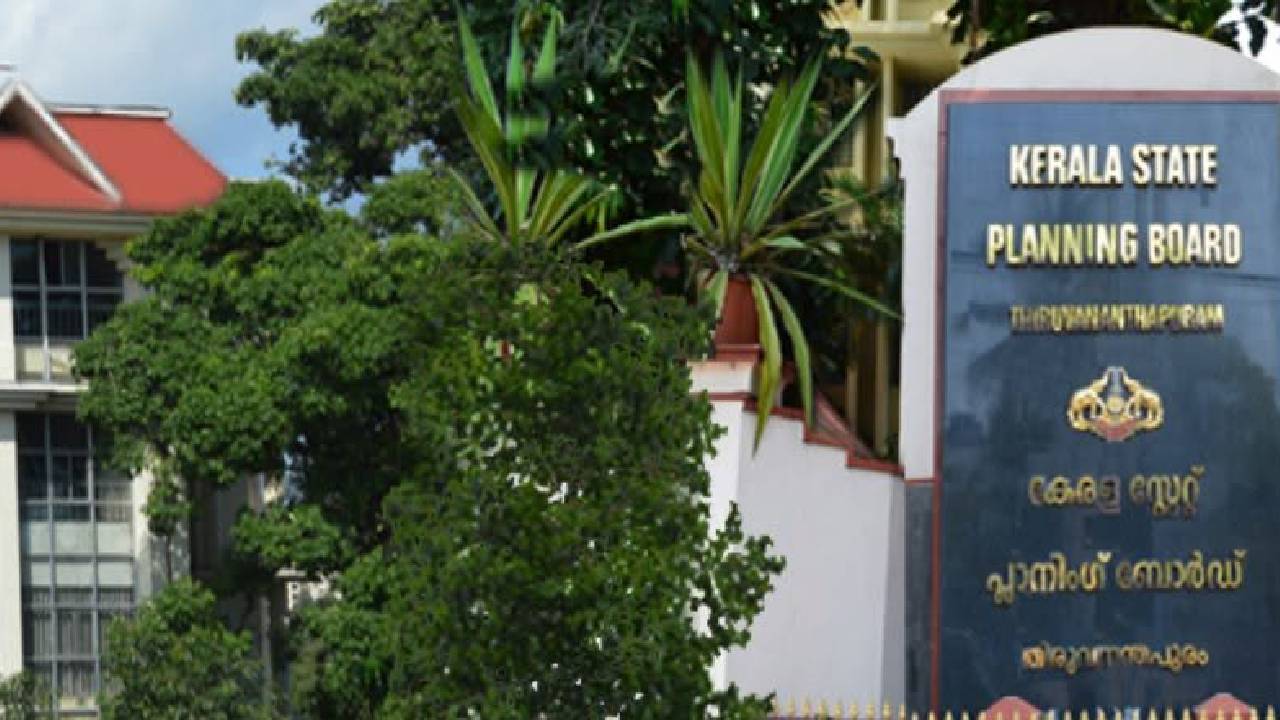
The Planning Board has decided to establish a Partnership Cell to identify and develop projects involving investments of more than ₹10 crore.

Synopsis: The State Planning Board has decided to establish a Partnership Cell to identify and develop projects involving investments of more than ₹10 crore under the partnership model. The cell will prepare the required guidelines and implementation framework. The state has approved a revolving fund of ₹100 crore for project preparation and feasibility studies.
The 15th Five-Year Plan aims to raise Keralam’s annual economic growth rate to 7 per cent and expand its Gross State Domestic Product (GSDP) from the present ₹16 lakh crore to ₹28 lakh crore, with the State Planning Board adopting a project-based approach to achieve the ambitious targets.
The Board approved the approach paper for the 15th Plan at the first meeting of its reconstituted body, held at its headquarters in Thiruvananthapuram.
Chief Minister VD Satheesan chaired the meeting, attended by ministers PK Kunhalikutty, Sunny Joseph, Mons Joseph, Shibu Baby John and CP John, as well as Vice-Chairman KM Chandrasekhar and other members.
Moving away from the conventional approach to plan implementation, the new Plan envisages a ‘project mode’ strategy, with greater participation by private institutions, cooperative societies and non-resident Keralites.
The proposed ‘participatory economy’ model seeks to reduce the state’s dependence on remittances and make investment a major driver of economic growth.
As part of this shift, the Board has decided to establish a Partnership Cell to identify and develop projects involving investments of more than ₹10 crore under the partnership model.
The cell will also prepare the required guidelines and implementation framework.
The state has approved a revolving fund of ₹100 crore for project preparation and feasibility studies. It will also explore viability gap funding through the India Infrastructure Project Development Fund managed by the Finance Department.
Also Read: In a land of many claims, Kerala seeks one vision
The chief minister called for faster implementation of development projects, removal of procedural delays and better utilisation of available resources, including funds under central government schemes.
Chandrasekhar said Keralam would pursue its development targets by mobilising resources from local self-government institutions, cooperative societies, banks, private investors and other agencies.
The Planning Board is holding district-level consultations to ensure participation from local bodies and sectoral experts, with seven such meetings already completed.
The Board will also strengthen coordination with central ministries to mobilise additional resources.
The Board has further decided to seek annual financial assistance of up to ₹2.44 crore from NITI Aayog to strengthen its functioning, particularly its evaluation and data analysis divisions.
The assistance will also help enhance the Board’s institutional capacity.
According to the Board, other states have already availed the scheme.
Also Read: Kerala youth to take forward revolution in local governance
The Board has also decided to extend financial assistance to all districts for development projects, on the lines of the special packages currently available for Kasaragod, Wayanad, Idukki and Kuttanad.
A new funding scheme will support civil society organisations undertaking development initiatives in each district.
The District Collectors will identify eligible organisations and projects, subject to the Planning Board’s approval. The assistance will cover up to 50 per cent of the total project cost.
Two new missions focusing on employment and youth development are also on the agenda.
The Keralam Employment and Economic Opportunities Mission, to be chaired by the chief minister, will initially be incubated by the Planning Board before being handed over to the government within two years.
The proposed Yuva Keralam Mission, modelled on the Kudumbashree initiative, will focus on youth development.
A detailed blueprint will be prepared in consultation with the departments of Local Self-Government, Higher Education, Youth Affairs and SC/ST Development, along with Planning Board members.
To attract grassroots investments, local investment and development meets will be organised under the leadership of MLAs, bringing together local investors and the expatriate community.
The Kerala Institute of Local Administration (KILA) will coordinate the initiative with the support of NoRKA.
The Board has also entrusted its vice-chairman with forming an expert committee to finalise the selection of consultants and professional media agencies and prepare a panel based on the Expressions of Interest received.
In another significant decision, the SC/ST Development Department will prepare a five-year action plan for implementing the Forest Rights Act.
The initiative will be carried out in mission mode in coordination with the departments concerned.
(Edited by Majnu Babu).



