

Published Aug 14, 2026 | 7:00 AM ⚊ Updated Aug 14, 2026 | 7:00 AM

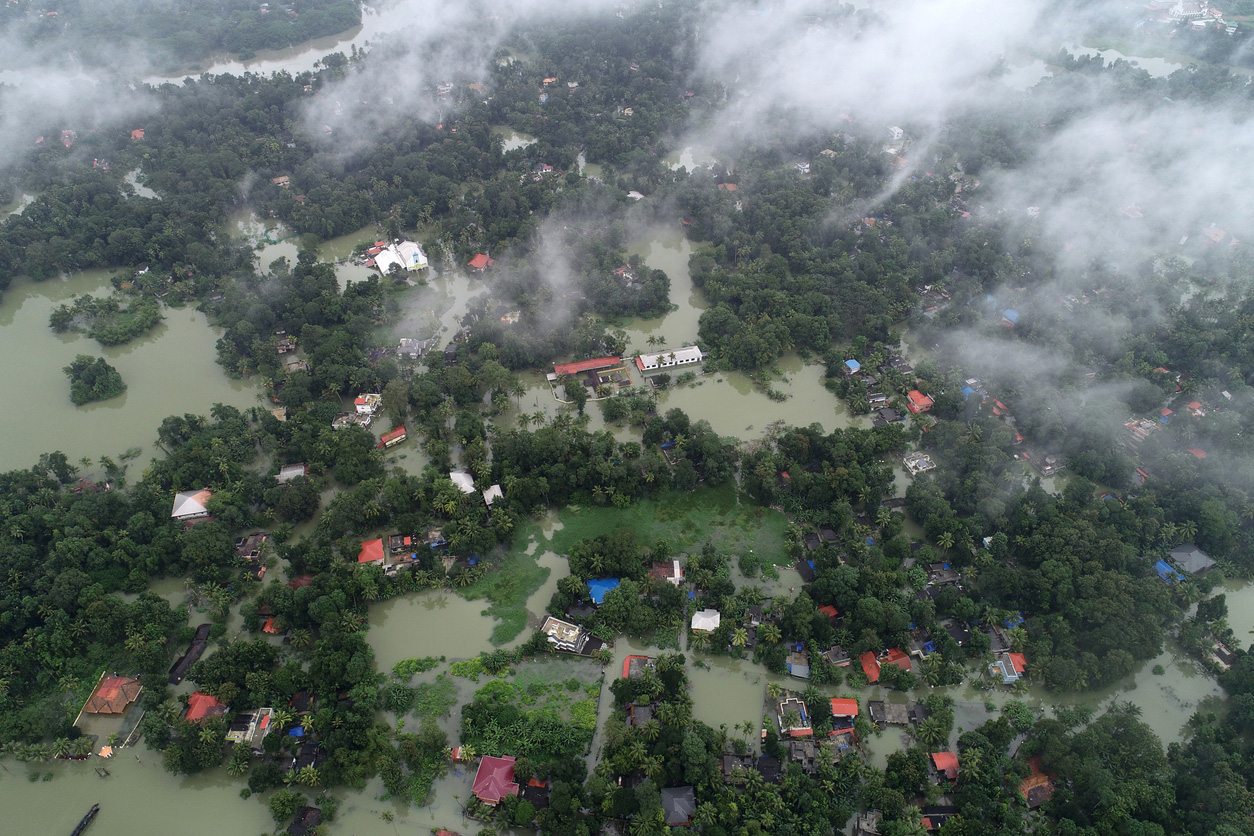
An aerial view of Kottayam in Kerala during 2018 floods. (Photo | istockphoto.com)

Synopsis: Kerala’s disaster response has been commendable during emergencies, but relief cannot substitute for preparedness. As Japan shows, disaster audits can be game-changers .
Every monsoon, Kerala braces for heavy rainfall, overflowing rivers, flooded roads and the threat of landslides. As a parliamentary standing committee observed recently, the state is particularly vulnerable, with 14.5 per cent of its land flood-prone and another 14.4 per cent of land landslide-prone.
Though the intensity of rainfall varies, the consequences remain familiar – loss of lives, damage to homes, damage to infrastructure, livelihood disruption and a rise in financial burdens. Once the rains subside, rescue operations conclude and relief camps get dismantled. Then follows the disbursement of compensation and the beginning of reconstruction. Yet a critical question remains unanswered: had Kerala made adequate preparations before disaster struck?
Over the past decade, the state has witnessed numerous climate-related disasters, namely the catastrophic floods of 2018, followed by severe flooding and waterlogging in the subsequent years, together with devastating landslides in vulnerable districts such as Wayanad.
The increasing frequency of such calamities, in addition to other climatic events such as coastal erosion and heatwaves, demonstrates that disaster management in the state can no longer be viewed merely as an emergency response. Instead, it has to become a continuous process of preparedness, evaluation and institutional learning.
Kerala’s geography alone does not explain the increasing severity of the disasters it has been battling. Rapid urbanisation, encroachment of floodplains, deforestation, quarrying in ecologically sensitive areas and poor drainage systems have amplified disaster risks. Climate change has further strengthened this vulnerability by increasing the frequency of extreme rainfall events.
Successive Governments have responded to such events commendably during emergencies by mobilising rescue teams, establishing relief camps and providing financial benefits to the affected communities. These efforts aim to save human lives and reduce human suffering.
However, disaster management should not end here. The real measure of an effective disaster management policy lies in how well it prepares for disasters before they occur. This is where Kerala needs a policy shift.
The state should institutionalise Disaster Preparedness Audit mechanisms. These would help the state to evaluate whether the Government departments, local governments, public agencies and infrastructure facilities are adequately prepared to face a calamity.
What a disaster preparedness audit must examine
The disaster preparedness audit should examine several critical dimensions.
First, it should look at risk identification and planning. Disaster-prone areas should be systematically mapped and updated, and disaster management plans formulated, with vulnerable communities being informed in advance.
Second, the audit should examine infrastructure preparedness. It should include inspection of drainage systems, structural resilience of public buildings, hospitals, evacuation shelters and strengthening of transportation routes to ensure uninterrupted rescue operations during a calamity.
Third, the audit should examine environmental management. Encroachment of wetlands, degradation of forests, quarrying in ecologically sensitive zones and unscientific use of land significantly increase disaster risks. A periodic environmental assessment could help to locate these vulnerabilities and support preventive action rather than reactive reconstruction.
Fourth, the effectiveness of the early warning system should be evaluated comprehensively. Accurate weather forecasting alone is insufficient unless warnings are communicated promptly to the affected communities. The audit should assess the timeliness of warning dissemination, the efficiency of evacuation procedures, and the extent to which vulnerable populations, including the elderly, persons with disabilities, children and residents in high-risk areas, are adequately supported during emergency response and evacuation.
Evaluating these aspects is essential for ensuring that warning systems not only provide timely information but also facilitate effective protective actions that minimise the loss of life and property.
Furthermore, it is equally important to audit administrative coordination. Disaster management calls for the coordination and cooperation of multiple agencies, namely, the revenue department, health department, home department, fire and rescue services, local self-government institutions, electricity board, water authority and disaster-management authorities. The audit should ascertain whether these agencies communicate effectively, share information efficiently and coordinate their responsibilities before and during emergencies.
Community preparedness should also become a prime component of disaster auditing. Schools, resident associations, volunteer groups and self-help organisations play a vital role in reducing disaster impacts. Regular mock drills, public awareness programmes, first-aid training and emergency preparedness campaigns can significantly improve resilience at the community level. Auditing these activities would help determine whether preparedness extends beyond government offices into local communities.
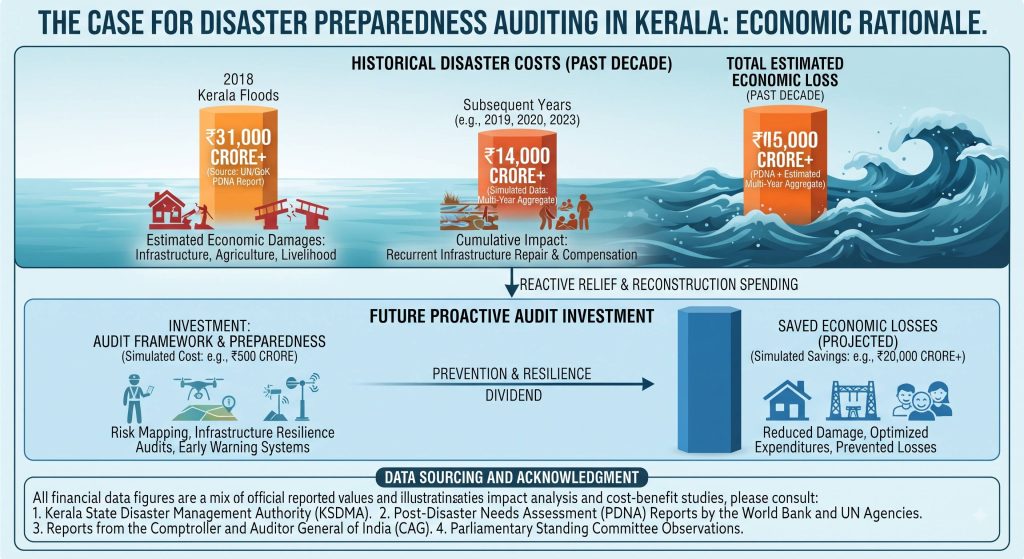
Note: This is an AI-generated graphic.
Numerous countries around the world have developed disaster preparedness systems to enhance their resilience against natural hazards. Among them, Japan stands out as one of the most notable examples. Having experienced numerous natural disasters, including earthquakes, tsunamis, floods and volcanic eruptions, Japan has developed one of the world’s most comprehensive and effective disaster preparedness systems through continuous planning, preparedness assessments, technological innovations and community participation.
The country’s disaster preparedness system is established under the Basic Act on Disaster Management (1961), which provides a comprehensive legal framework for disaster risk reduction and emergency management. A unique feature of Japan’s disaster preparedness system is its emphasis on continuous assessment and public participation. Government agencies, local authorities, schools, hospitals, businesses and community organisations conduct regular disaster drills and evacuation exercises, including the nationwide Disaster Prevention Day held annually on September 1.
The lessons learned from major disasters such as the 1995 Great Hanshin-Awaji Earthquake and the 2011 Great East Japan Earthquake and Tsunami have strengthened Japan’s preparedness framework. To strengthen preparedness, the government introduced stricter building regulations, enhanced evacuation planning, improved community-based disaster risk management and expanded the use of digital technologies for hazard monitoring and emergency communication.
The benefits of such audits are substantial.
They strengthen transparency and accountability, improve the efficiency of public expenditure, reduce disaster-related losses, enhance coordination among departments and encourage evidence-based policymaking. More importantly, they shift the focus of disaster governance from reacting to crises to preventing avoidable losses. In an era of increasing climate uncertainty, preparedness is often the most cost-effective investment a government can make.
Since Kerala continues to experience floods, landslides and other climate-related hazards, the question is no longer whether another disaster will occur but whether we will be better prepared when it does.
The occurrence of various disasters provides valuable lessons, yet those lessons are meaningful only if they lead to institutional improvements. Kerala cannot prevent heavy rainfall, nor can it eliminate every natural hazard. However, it can significantly reduce the human and economic costs of disasters through better planning, strengthened institutions, environmental stewardship and continuous evaluation.
Relief and reconstruction will always remain essential components of disaster management, but preparedness saves more lives than compensation ever can. The time has come for Kerala to move beyond disaster relief and embrace disaster preparedness auditing as a cornerstone of resilient governance.
Also Read:
Hidden cost of Kerala’s disaster vulnerability: Undernourished children pay the price
Denial and disaster: How development priorities failed Wayanad again
Kerala finally has an answer to natural disaster-created waste mountains
(Edited by R Rajesh Kumar.)



