

Published Sep 03, 2026 | 12:01 PM ⚊ Updated Sep 03, 2026 | 12:35 PM

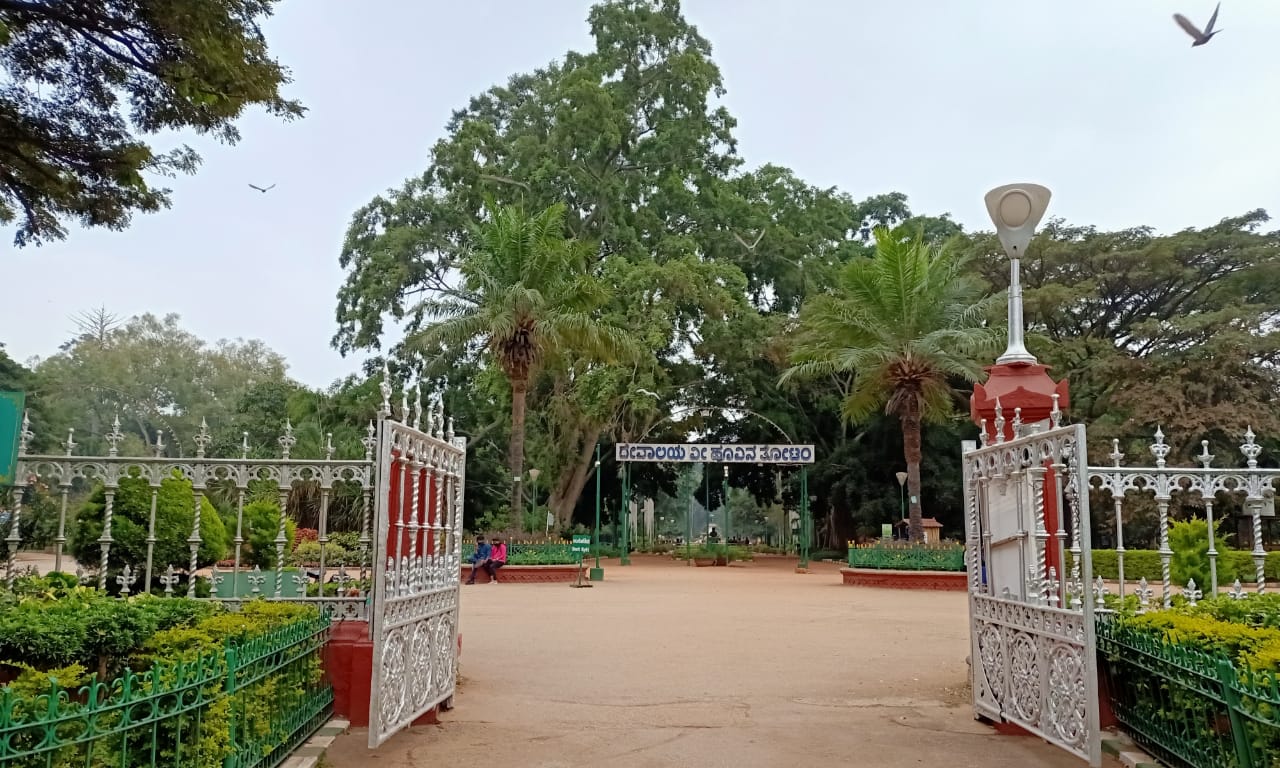
Shivakumar said the tunnel would not damage the historic botanical gardens and said the project was necessary to ease traffic.

Synopsis: Karnataka Chief Minister DK Shivakumar has defended the proposed 16.5-km Bengaluru tunnel road, saying it will not damage Lalbagh, despite growing opposition to the project. The project’s geotechnical report, however, identifies groundwater seepage, fractured rock and unstable ground along the Lalbagh stretch. Experts say the construction could affect Lalbagh’s trees, lake and ancient rock formations.
Karnataka Chief Minister DK Shivakumar on Wednesday, 2 September, defended the contentious 16.5-km Bengaluru tunnel road project even as opposition to the project continues to grow.
The project, proposed to connect Hebbal in north Bengaluru with Silk Board in the southeast, is planned to pass beneath Lalbagh, one of the city’s last remaining green spaces. Shivakumar said the tunnel would not damage the historic botanical gardens and that the project was necessary to ease Bengaluru’s infamous traffic.
But the project’s Geotechnical Interpretative Report (GIR) raises serious questions about the Chief Minister’s assertion.
The GIR, prepared for the BBMP by Rodic Consultants and published in September 2024, identifies the Lalbagh stretch as a bedrock transition zone and records a prominent lineament—a linear geological feature that can indicate a fault or fissure—crossing the proposed tunnel alignment near Lalbagh Lake.
It also notes risks of groundwater seepage, seasonal water-table fluctuations and highly permeable fracture zones, and says the geotechnical investigation must establish groundwater levels and ground permeability.
The Detailed Project Report (DPR) proposes twin three-lane tunnels. Each tunnel will have a 10.5-metre-wide carriageway, comprising three 3.5-metre lanes, and a finished tunnel diameter of 13.5 metres.
At Lalbagh, the DPR proposes a 320-metre cut-and-cover section on the entry ramp and a 60-metre cut-and-cover section on the exit ramp. Both will be two-lane structures.
The GIR cites India-WRIS and CGWB data and places Bengaluru Urban’s average groundwater level at about 2–5 metres below ground level.
The report also notes the possibility of groundwater levels fluctuating seasonally. A sudden rise in groundwater, it says, must be considered along with the possibility of flooding inside the tunnel.
The report also says waterbodies and drainage trends may be associated with fractures and lineaments in the bedrock and that these features can have high permeability.
During excavation, they could allow increased seepage and washout of fine material. In extreme cases, the report says, engineers may need to grout the ground to maintain stability and control heavy groundwater ingress.
At the Lalbagh section, the report warns that the ground conditions could change unexpectedly at points where engineers have drilled boreholes. Some areas may have deep loose soil, while sandy soil and broken-up rock could allow groundwater to flow more easily.
It also notes that large cracks in the rock could bring significant amounts of water into the tunnel. These weak and fractured areas could make the rock unstable and, in places where there is less rock above the tunnel, could even cause the tunnel boring machine to get struck.
The tunnel corridor is divided into four connected stretches. The Lalbagh Botanical Garden–Silk Board KSRP Junction section has drawn the most concern from environmentalists and opposition parties.
The government plans to use the cut-and-cover method in parts of this stretch, which could involve the loss of trees, disturbance to Lalbagh lake and damage to its ancient gneiss rock formations.
“Groundwater and surface-water drainage follow different paths,” said Iniyatullah B, appellate director at the Interdisciplinary Centre For Water Research (ICWaR).
He said the earth beneath Lalbagh is not empty space. “It contains groundwater, fractures, weathered rock and drainage pathways that can extend beyond the point where a tunnel physically passes.”
“Engineers must understand those underground systems before they finalise the tunnel’s alignment and depth,” he said.
Iniyatullah said the government’s geotechnical report on the project should bring together borewell logs, water-table levels, aquifer maps, groundwater-flow directions and seasonal fluctuations, instead of relying on India Water Resources Information System (India-WRIS) and Central Ground Water Board (CGWB) data alone.
“A borewell can show where groundwater is being extracted, but not where that water is recharged,” Iniyatullah said, adding that it is risky to assume that the underground movement of water follows the same routes as the visible drains and streams above the surface.
Civil engineering expert and IISc professor Jayant Kumar said the impact on the surface will depend on how the tunnel is built.
A deep tunnel boring machine (TBM) can limit disturbance above ground, he said. But the cut-and-cover method requires digging from the surface, which could mean removing trees along the construction area.
“But the project cannot avoid surface construction altogether,” he said.
Prof Kumar said existing borewells that directly intersect the tunnel path could be obstructed. Replacement borewells would have to remain outside the tunnel’s structural zone, he said.
Before engineers finalise the alignment, he said, boreholes or non-destructive surveys should establish the depth of the rock and the position of the water table.
“The question (for Bengaluru) is not simply whether a TBM can pass beneath Lalbagh without cutting down every tree overhead. It is whether the city understands the ecosystem of the garden well enough to build through them without damaging the landscape above,” Kumar said.
Also Read: No internet? No problem: Karnataka’s rural libraries are getting an AI computing upgrade
On Wednesday, Chief Minister DK Shivakumar announced that the Karnataka Government Parks (Preservation) (Amendment) Bill will be reconsidered and reintroduced for open debate during the winter legislative session in November-December 2026.
It was passed by the Legislature on 24 August alongside the BMLTA (Amendment) Bill, without substantive debate. The amendments allow up to 5 per cent of protected parkland to be used for public utilities and provide retrospective clearances for certain mobility projects begun since 2023.
Both bills were seen by critics as attempts to ease legal hurdles for the tunnel road project and triggered massive public outcry, particularly between 27 and 30 August, when thousands of citizens and environmentalists protested against the project and the proposed diversion of about six acres of Lalbagh.
Bengaluru South MP Tejasvi Surya also moved the Karnataka High Court against the project.
Meanwhile, the government is yet to make a final decision on the ₹22,267-crore bid from Adani Enterprises, which is almost ₹4,600 crore higher than the original estimate.
(Edited by Dese Gowda)



