

Published Aug 27, 2026 | 3:02 PM ⚊ Updated Aug 27, 2026 | 3:02 PM

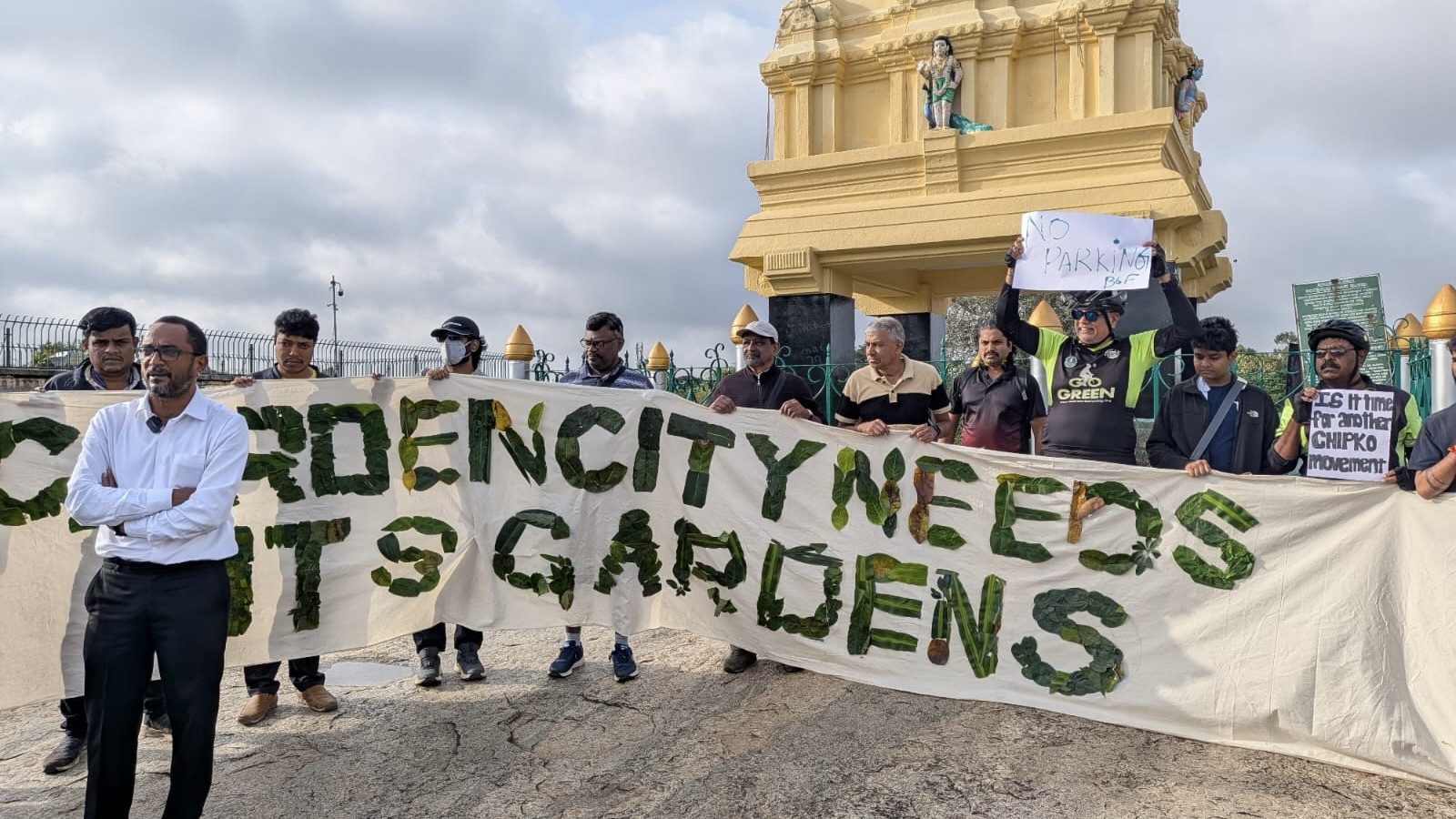
The protest was organised by Greenpeace India and the Bengaluru Sustainability Forum.

Synopsis: More than 100 citizens and environmental groups gathered at Lalbagh in Bengaluru, demanding the withdrawal of the Karnataka Government Parks (Preservation) Amendment Bill, 2026, which allows up to 5 percent of a park or garden to be used for specified public projects. Protesters have demanded the protection of parks and greater public consultation on projects affecting green spaces.
More than 100 citizens, environmental organisations and civil society groups gathered at Lalbagh’s 3.4-billion-year-old Peninsular Gneiss hill on the morning of Thursday, 27 August, demanding that the Karnataka government withdraw its recent amendment to the Karnataka Government Parks (Preservation) Act, 1975.
Organised by Greenpeace India and the Bengaluru Sustainability Forum, protesters carried banners reading, “Not 5%. Not 1 inch. Leave our parks alone”, and “Garden City needs its gardens”, and joined hands to form a human chain.
They raised slogans including, “Don’t wait for change, be the change” and “Namma Bengaluru, Namma Hakku.”
The Karnataka Government Parks (Preservation) Amendment Bill, 2026, passed by the State legislature on 24 August, is being seen as a way to effectively clear legal hurdles for the contentious Bengaluru tunnel road project.
The amendment allows up to 5 percent of the total area of a park or garden to be alienated for specified public infrastructure and utility projects undertaken by government departments, statutory authorities, government companies or local bodies.
Protesters are also sending a joint letter opposing the amendment to Chief Minister DK Shivakumar on Thursday. Organisers said more than 200 citizens and 40 groups had endorsed the letter.
The letter calls on the government to withdraw the amendment; protect existing parks from diversion, fragmentation or non-park construction; require infrastructure projects to first examine alternatives that avoid green spaces; conduct transparent public consultations; mandate environmental, social, health and wellbeing assessments; and recognise parks and urban green spaces as essential urban infrastructure.
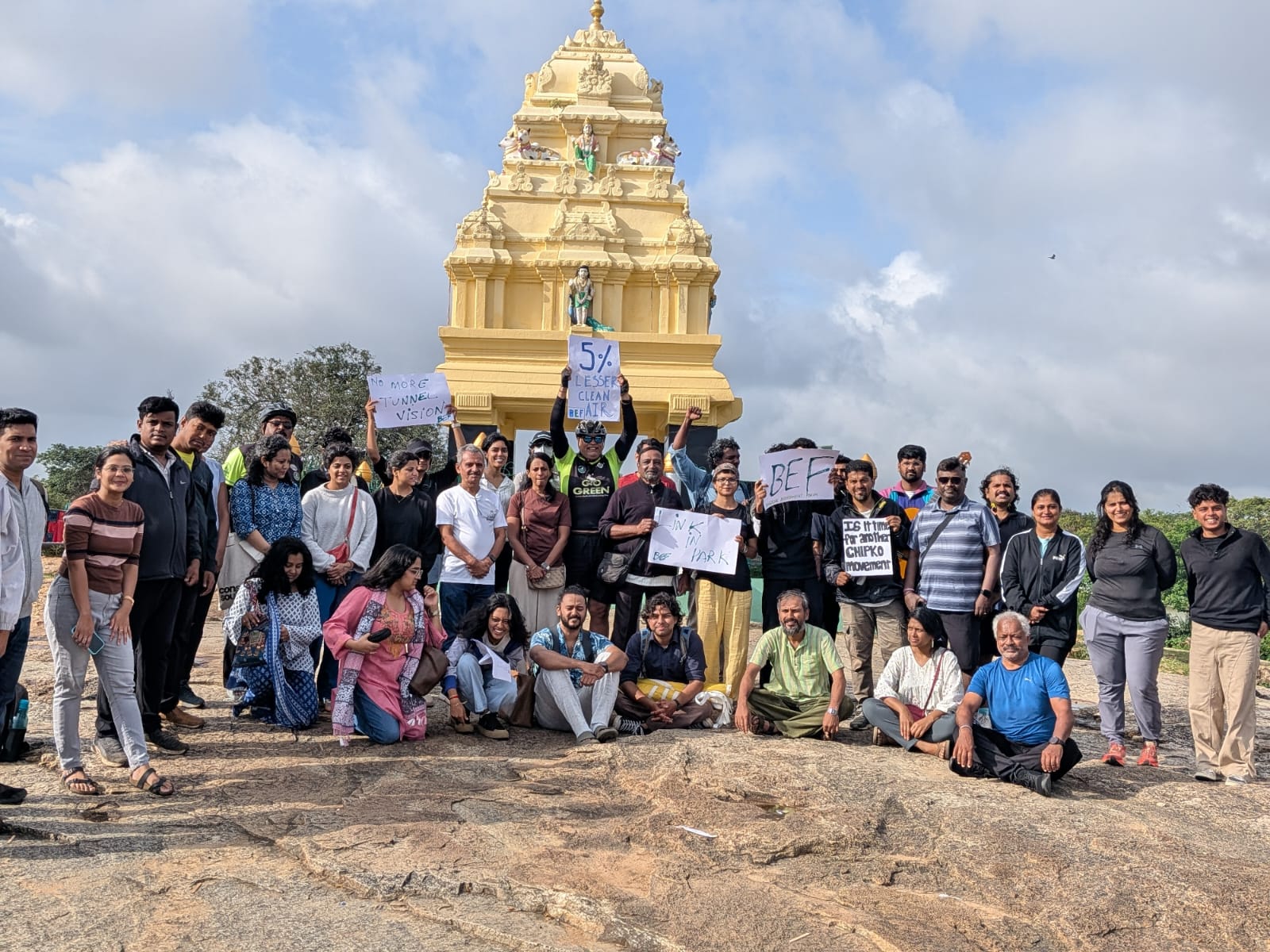
Protesters have demanded the protection of parks and greater public consultation on projects affecting green spaces.
Agasthya, who described himself as a liberation activist, said protecting the city’s remaining green spaces was important for safeguarding ecosystems and biodiversity, and that parks were also habitats for birds and animals.
“This is their land too. How can the government simply decide to take it away?” he said. “We cannot let Bengaluru, the Garden City, lose its parks and green spaces under the guise of development and infrastructure. A park should remain a park. Today it is 5%; tomorrow it could become 10%,” he added.
He noted that even 5 percent of Lalbagh would represent a substantial area. “Preservation means protecting what is already there, not taking away a part of it,” he added.
Alexander James, an environmental activist, said Bengaluru’s trees, lakes and historic spaces should be protected even as the city develops. He said activists had submitted a petition to the Governor a day earlier.
“We are not against development, but it should not happen at the cost of the environment. Leave Lalbagh alone and protect the historic Lalbagh rock. Let them realign the project, but not take it under the rock,” he said.
“We have spoken to the geological authorities about getting a heritage tag for this rock. We believe it deserves that protection,” he said, speaking about the historical importance of the rock.
He called for greater consultation with citizens on decisions involving public parks. “We need to change the social contract and have a proper conversation with the government,” James said.
Anupama, a protester, said another protest was being planned near Hebbal Veterinary College against the proposed felling of around 900 trees for the Silk Board–Hebbal tunnel road project.
She said the project could also affect around three acres near Hebbal Lake and the adjoining tree park, and raised concerns that the loss of green and water-buffer areas could worsen flooding in nearby Nagawara.



