

Published Aug 28, 2026 | 5:18 PM ⚊ Updated Aug 28, 2026 | 5:18 PM

KEO can run models such as MobileNet and ResNet, commonly used for image classification and object detection.

Synopsis: Students across rural Karnataka will soon have access to AI-capable computing through Arivu Kendras, with the State rolling out indigenously developed KEO computers at select centres. Capable of running smaller AI models locally, KEO comes with BUDDH, an educational AI agent built around material for Classes 6 to 10, enabling students to ask questions and retrieve relevant information without an internet connection.
In the last few years, Arivu Kendras across rural Karnataka have become a key source of learning for students. Equipped with computers, high-speed internet, smart TVs and audio-visual tools, they also offer thousands of books, learning resources, and material for competitive examinations.
Now, students will also get access to artificial intelligence (AI) tools. The State is deploying the recently launched, indigenously developed, AI-capable KEO (Knowledge-driven, Economical and Open-Source) computers at select Arivu Kendras and Social Welfare residential schools across Karnataka.
It is designed to allow students in low-connectivity regions to access digital learning resources without dependence on continuous internet access.
In the first phase, 2,222 KEO computers, priced at ₹18,999 each, will be installed in 478 Arivu Kendras and 31 model Social Welfare residential schools.
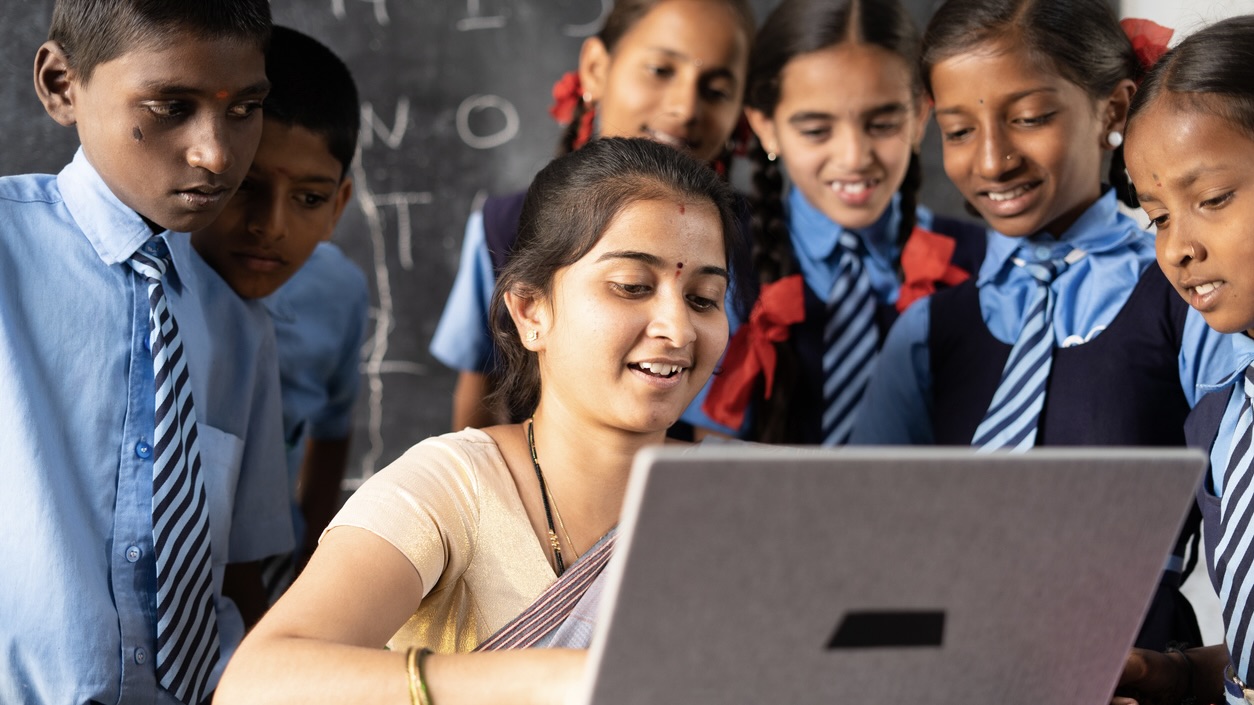
The deployment will give students access to basic computing and AI tools on the device itself, including BUDDH, an educational AI agent built around material for Classes 6 to 10.
Crucially, KEO’s neural-processing capability of around 4–5 TOPS allows it to run smaller AI models locally, enabling students to ask questions and retrieve relevant information from material stored on the computer without an internet connection.
“Students can ask questions and retrieve relevant information from material stored on the device even without an internet connection, which will be especially useful in rural areas,” Karnataka State Electronics Development Corporation Limited (KEONICS) chairman Sharath Kumar Bache Gowda said.
It can run models such as MobileNet and ResNet, commonly used for image classification and object detection. For students, this could involve writing a simple Python programme, feeding an image into the system and using the processor to classify it.
“The aim was to build a low-cost, AI-capable computer that would give students access to computing and AI tools without adding to their expenses,” Bache Gowda said.
Also Read: National Law School cancels convocation for 2026 grads due to unspecified circumstances
BUDDH is designed around the DSERT curriculum for Classes 8 to 10 and is currently available in English. Students can ask questions related to their syllabus and textbooks and receive explanations, summaries and other responses. The system will also direct them to the relevant chapter and page in their textbook.
For example, if a student asks, “What is a cell?”, BUDDH can explain the concept and point the student to where the topic appears in the biology syllabus.
Students can ask follow-up questions, solve problems and take quizzes. The system is intended for textbook and syllabus-based learning and is not designed to function as a general-purpose chatbot.
For students in Classes 8 to 12, Shikshanapedia will provide educational material that can be accessed without an internet connection. Students can select their class and subject and access subject-wise PDFs and videos stored on the system. The material will be available in English and Kannada.
The shortage of computers in rural schools is another issue the programme is intended to address. Where only a limited number of systems are available, students get little individual time on a computer.
Training material on using the KEO computers is also being prepared with partner organisations. Schools and teachers will receive supporting online material, including documents and PDFs, to help them understand and operate the system.
Also Read: Two govt teachers suspended 9 months after taking part in RSS procession
Developed by the IT/BT Department in collaboration with KEONICS as a low-cost computing platform, KEO was first unveiled at the Bengaluru Tech Summit in November 2025 and launched by Chief Minister DK Shivakumar on Saturday, 22 August.
IT/BT Minister Priyank Kharge described KEO as the “world’s most affordable AI PC.”
“Our Government remains fully committed to supporting such homegrown initiatives that channel local talent, strengthen national capability and shape the future of AI – for India and the world. KEO Made in Karnataka Made for India Made for everyone,” he wrote in a post on X.
The world’s most affordable AI PC is here, and it’s made in Karnataka.
Introducing KEO, a fully indigenous machine designed to make personal computing accessible to everyone.
KEO is built on RISC-V processor and is integrated with AI learning assistant.
Congratulations to the… pic.twitter.com/ENX6mwjsxz
— Priyank Kharge / ಪ್ರಿಯಾಂಕ್ ಖರ್ಗೆ (@PriyankKharge) August 21, 2026
KEO is built around RISC-V, an open-standard chip architecture, rather than proprietary computing platforms such as ARM or x86.
Bache Gowda said the idea was to reduce dependence on proprietary systems and software licensing costs by building the computer around open technologies.
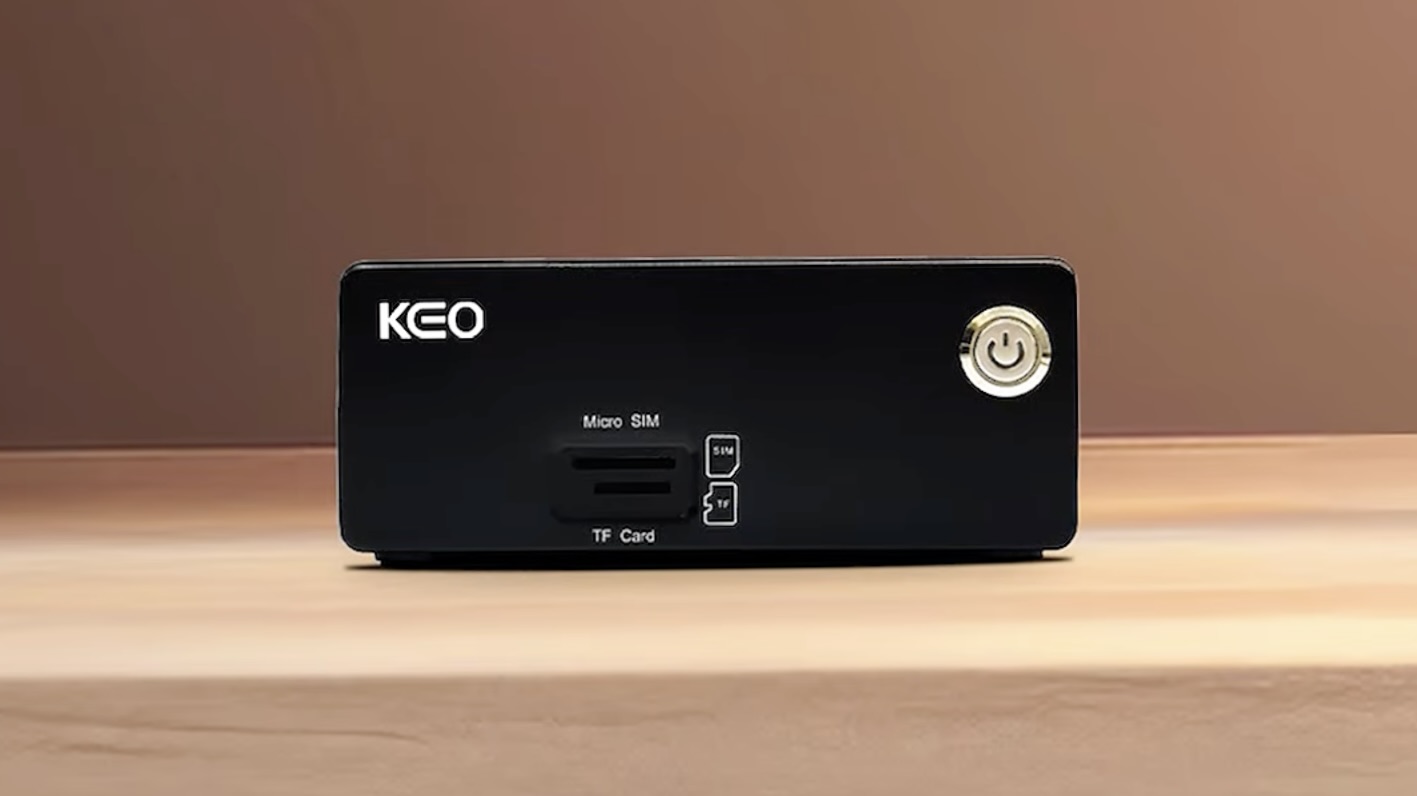
The machine comes with a 64-bit quad-core processor, 8 GB of RAM and 32 GB of internal storage. It runs Ubuntu and includes open-source applications such as LibreOffice.
The system-on-chip used in KEO was developed by ExaLeap. A source at the company, who requested anonymity, said the chip functions as an AI “application processor” with on-device AI capabilities.
ExaLeap teams in Bengaluru and Pune engineered the processor. The chip is built on a 12-nanometre process and fabricated in Taiwan, as India currently lacks manufacturing capability for chips using the 12-nm process. Final assembly of the compute units is carried out at KEONICS’ facility in Peenya, Bengaluru.
Ahead of deployment, the computers underwent chip-level testing to check whether the processor and communication protocols were functioning properly. They also underwent BIS-mandated testing against prescribed Indian standards at a BIS-recognised laboratory before certification.
“The other was BIS-mandated testing, with tests carried out against prescribed Indian standards by a BIS-recognised laboratory before certification,” the ExaLeap source said.
Bache Gowda said the computer was developed over roughly a year and reviewed by a Technical Advisory Committee before deployment. The project was funded through CSR support and partnerships with private and ecosystem players.
The first phase of deployment will cover 478 Arivu Kendras across Karnataka’s 239 taluks, with two centres in each taluk receiving four computers each.
Another 310 devices will be installed across 31 model Social Welfare residential schools, with 10 computers at every school. Bache Gowda said the libraries were selected because they cater to a wider section of the public.
“Libraries are not just used by students. Women, farmers and other residents also come there for information and digital services, so we wanted them to be accessible to a broader group of people,” Bache Gowda said.
Arivu Kendras were created by upgrading gram panchayat libraries and information centres. The complete management of gram panchayat libraries was transferred from the Department of Public Libraries to the RDPR on 1 March 2019, placing them under panchayat supervision.
The upgraded centres provide digital learning material, career guidance systems, inclusive educational support, assistive technology for differently-abled individuals and knowledge-sharing sessions by experts.
At present, 5,888 gram panchayat Arivu Kendras are operational in rural Karnataka, of which 5,767 have been digitised.
The KEO rollout will be the first large-scale public deployment of the computer and a test of how the low-cost, open-architecture system performs in public institutions and whether it can meet everyday computing and educational needs.
Bache Gowda said there has also been interest in KEO from within Karnataka and from other State governments. “Once this deployment is completed, we will look at the next stage, including commercial manufacturing,” he said.
(Edited by Dese Gowda)



