

Published Sep 25, 2026 | 7:00 AM ⚊ Updated Sep 25, 2026 | 7:00 AM

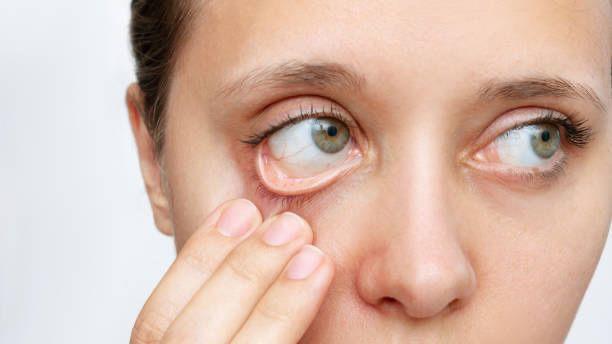
NFHS-5, conducted in 2019-21, found that 57% of women aged 15-49 years were anaemic.

Synopsis: An RTI response from ICMR-NIN reveals that fieldwork for India’s replacement anaemia survey, DABS-I, is complete, but laboratory and statistical analysis remain underway. The institute has provided no timeline for releasing findings and declined to explain the delay. The government has said the survey will provide updated anaemia estimates.
India is still waiting for new national anaemia figures after the survey identified by the government as the replacement source for the data dropped from NFHS-6 remains under analysis, an RTI response from the Indian Council of Medical Research’s National Institute of Nutrition (ICMR-NIN) has revealed.
The response, dated 1 September 2026, confirms that field data collection for the Diet and Biomarkers Survey of India (DABS-I) has been completed. However, laboratory analysis of blood and urine biomarkers is still underway, while statistical analysis remains in progress.
The institute has provided no date for completion of the analysis, submission of the final report or public release of the findings.
The RTI response also declines to explain why the survey findings have not yet been released.
The application, filed by this reporter, asked ICMR-NIN to provide the reasons for the delay and copies of file notings or correspondence relating to any revised publication schedule. The institute replied: “The reason for delay does not come under ‘Information’ under section 2(f) of RTI Act, 2005.”
Also Read: Western Ghats’ deforestation, climate change may have taken monkey fever beyond Karnataka
ICMR-NIN confirmed that field data collection for DABS-I has been completed, but the work has not yet reached the stage of final analysis.
“Laboratory analysis of biological samples is under progress,” the institute said in response to the RTI.
It further said that data cleaning and validation had been undertaken, while statistical analysis was still in progress.
The RTI application specifically sought the expected timeline for completion of data analysis, submission of the final report and public release of the survey findings. ICMR-NIN did not provide dates.
Instead, it said: “The final report and public dissemination of findings will be undertaken after completion of the ongoing analysis and requisite internal review and approval processes.”
The institute also did not provide a draft report, interim report, executive summary or preliminary findings. Such reports and summaries were described as being “under preparation”.
The response therefore leaves unanswered when the survey will move from analysis to publication.
The RTI also sought details of the geographical coverage and sample sizes. ICMR-NIN said DABS-I was conducted across all States and Union Territories except Manipur, “as per the approved study protocol”.
However, it did not provide state-wise or district-wise proposed and achieved sample sizes, saying these details were “maintained in the survey records”. The response also notes that data cleaning is still in progress.
Also Read: Final 5 minutes before smoke killed the newborn: The fiery night Adilabad RIMS lost three babies
The delay matters because the government has identified an ICMR survey as the source from which updated anaemia prevalence figures will be obtained after haemoglobin testing was not included in NFHS-6.
The sixth round of the National Family Health Survey, covering 2023-24, was released in May 2026. Unlike previous rounds, its fact sheets did not include the seven anaemia indicators that had been reported earlier.
The government subsequently explained the decision in Parliament.
In a Rajya Sabha reply on 28 July 2026, the Ministry of Health and Family Welfare said haemoglobin estimation was not included in NFHS-6 because of concerns about the reliability and comparability of estimates produced using capillary blood samples.
“Haemoglobin estimation was not included in NFHS-6 due to concerns regarding the reliability and comparability of anaemia estimates generated using capillary blood samples,” the ministry said.
The government then pointed to the ICMR survey as the source of the replacement data.
“Updated information on anaemia prevalence is expected to be available from the ICMR Survey of Diet and Biomarkers in India,” the ministry said, adding that the survey uses “venous blood collection and gold standard autoanalyzer for estimation of hemoglobin”.
The government identified the survey as SAMPADA, the Survey for Assessment of Markers of Population Health Activity, Diet and Anthropometry.
The Health Ministry reiterated the decision in a Lok Sabha reply three days later.
“Additionally, the Ministry of Health & Family Welfare, after due deliberations, decided to adopt the prevalence figures of anaemia to be arrived from an independent survey conducted by Indian Council of Medical Research utilizing the gold standard intravenous method for haemoglobin testing,” the ministry said on 31 July.
The Lok Sabha reply also said the list of NFHS-6 fact-sheet indicators had been finalised on the recommendations of a Technical Advisory Committee.
The committee recommended that the fact sheets be aligned with the government’s data-harmonisation initiatives “so as to avoid inconsistencies arising from fragmented and unharmonized data available across different official data sources”, the ministry said.
It added that the fact sheets were intended to contain only key indicators to better highlight the survey’s main findings.
Also Read: Syphilis is curable, but why does Telangana record one of India’s highest death counts?
The government itself continues to describe anaemia as a major public health concern and is implementing the Anaemia Mukt Bharat programme across different age and beneficiary groups.
In a separate Rajya Sabha reply, the Health Ministry listed interventions under the programme including iron and folic acid supplementation, anaemia testing, therapeutic management, deworming, dietary interventions and measures addressing non-nutritional causes.
The Women and Child Development Ministry also said Anaemia Mukt Bharat is being implemented for seven beneficiary groups, including low birth weight babies, children, adolescents, pregnant women, lactating mothers and women of reproductive age.
That makes the absence of a new population-level prevalence estimate consequential for assessing the trajectory of the problem.
Also Read: While India watched its borders for virus, mpox left a quiet trail in Kerala and Telangana
The government’s explanation for moving away from the NFHS approach centres on the method used to measure haemoglobin.
NFHS surveys previously relied on capillary blood collected through a finger prick. The government has said concerns were raised about the reliability and comparability of estimates produced through this method.
The replacement ICMR survey uses venous blood collection and a laboratory autoanalyzer, according to the Health Ministry’s parliamentary reply.
The methodological change is significant because estimates generated using different blood-sampling methods may not be directly comparable.
NFHS-5’s anaemia findings had already triggered debate over the scale of the burden and the methods used to measure it. The survey reported anaemia in 57% of women aged 15-49 and 67.1% of children aged 6-59 months, making anaemia one of the major nutrition concerns identified in the survey.
But with NFHS-6 not measuring haemoglobin and the replacement ICMR survey yet to release its findings, there is currently no new figure from that replacement exercise against which the NFHS-5 numbers can be assessed.
Anaemia is not the only health indicator absent from the NFHS-6 fact sheets.
The sixth-round fact sheets also omitted indicators relating to cervical, breast and oral cancer screening, as well as HIV/AIDS knowledge.
The Health Ministry has said the selection of indicators followed recommendations of the NFHS-6 Technical Advisory Committee and the government’s broader data-harmonisation initiative.
But anaemia presents a distinct situation because the government has explicitly identified another survey as the source for the missing prevalence estimates.
That replacement data is not yet publicly available.
The RTI response provides no date for when DABS-I’s analysis will be completed or when its findings will be released.
For now, the government says updated anaemia prevalence will come from the ICMR survey using venous blood and gold-standard haemoglobin testing.
But ICMR-NIN’s own response shows that laboratory analysis is still underway, statistical analysis is still in progress and the final report is yet to be completed.
Until the survey is completed and its findings made public, the latest NFHS-based national anaemia figures remain those from 2019-21.
(Edited by Fayisa CA)



