

Published Sep 22, 2026 | 7:00 AM ⚊ Updated Sep 22, 2026 | 7:00 AM

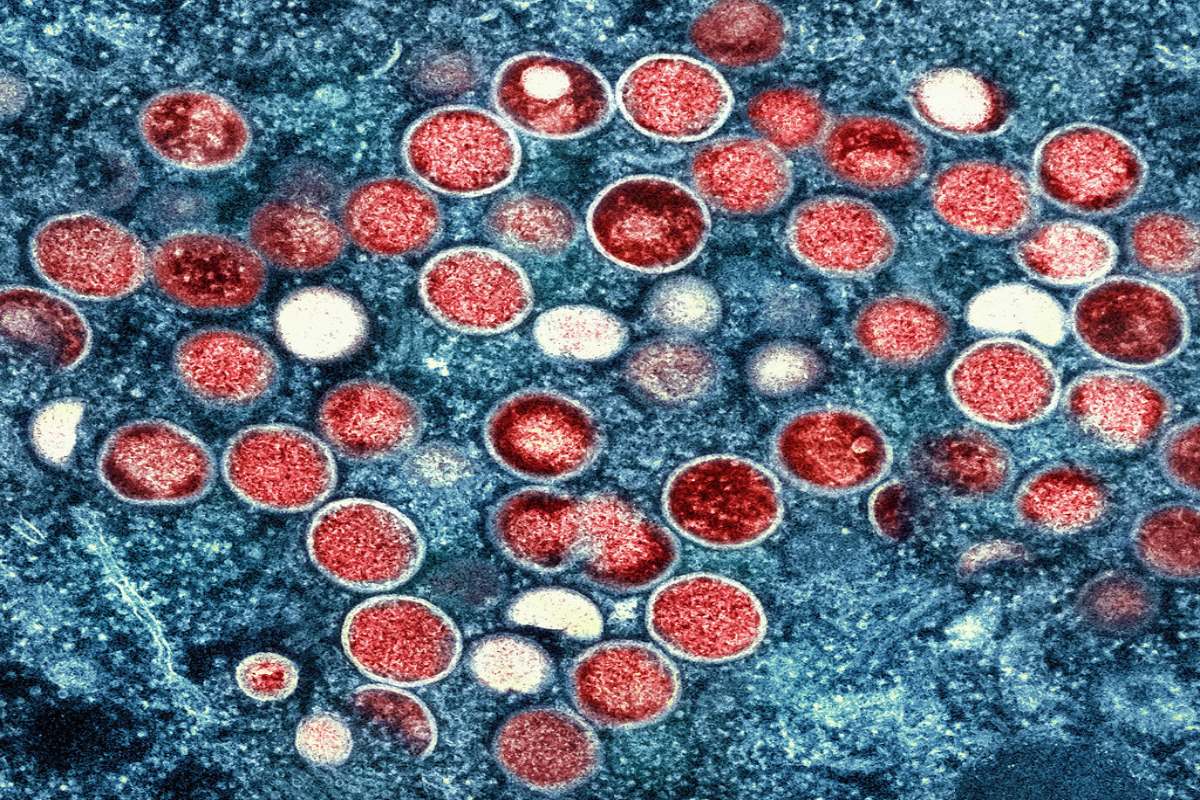
Representative image of the mpox virus (Creative Commons)

Synopsis: An ICMR-led study has found evidence of previous mpox exposure among 14 of 1,790 participants from key populations across India, including Keralam and Telangana. While the study found no ongoing community transmission, the findings suggested conventional travel- and symptom-based surveillance may miss mild or asymptomatic infections, highlighting the need for targeted sentinel surveillance.
Fourteen people gave blood samples for an Indian Council of Medical Research (ICMR)-led study. None of them had travelled overseas or had contact with a suspected mpox patient. None reported recent animal exposure.
Yet their blood carried antibodies suggesting previous exposure to mpox (previously known as monkeypox) or a closely related virus.
The finding was from a multicentric study that detected anti-mpox immunoglobulin G (IgG) antibodies in 14 of 1,790 people, or 0.78%, from key populations across India.
The sample size was small, and the study found no evidence of ongoing community transmission. Still, the finding raised a larger question about whether India’s existing surveillance system could detect infections that occur outside the travel-linked and symptomatic cases.
Researchers sought to “assess the prevalence of anti-MPXV (monkeypox virus) IgG and Immunoglobulin M (IgM) antibodies and identify socio-demographic and behavioural determinants of seropositivity among key populations in India”.
Also Read: Mpox manifests like chickenpox: How to tell the difference
Mpox, a viral disease that spreads between animals and humans and between people, first emerged in India’s surveillance system on 14 July 2022, when the country detected its first case in a United Arab Emirates-returnee in Keralam. He survived.
Keralam subsequently accounted for a substantial share of India’s reported cases, with its international travel links, particularly to the Middle East, playing a role in detecting imported infections. The state also reported India’s first mpox casualty on 30 July 2022.
Most infections identified during the 2022 global outbreak belonged to the Clade IIb strain. India later augmented airport screening, contact tracing, isolation facilities and laboratory preparedness, particularly after the World Health Organisation declared the mpox outbreak in Africa a public health emergency again in 2024.
The ICMR study took a different angle. Instead of asking who had arrived from an affected country or who turned up at a hospital with symptoms, researchers looked for evidence of previous exposure in people from key populations who the healthcare system may not have seen.
The study was conducted between September 2023 and March 2024 through seven community-based organisations. It included 1,790 participants aged 18 to 40 years.
The researchers selected this age group because they were born after India discontinued routine smallpox vaccination. “This specific age range was selected because it represents the cohort born after the cessation of routine smallpox vaccination in India,” the researchers said.
The researchers excluded participants with a visible smallpox vaccination scar.
“Participants were examined for the presence of a smallpox vaccination scar, and individuals bearing such a scar were excluded from the study,” the authors said. It was done to reduce the possibility that the detected antibodies were related to smallpox vaccination.
Also Read: UAE reported first ‘official’ mpox case in February 2025
Of the 1,790 participants, 14 tested positive for IgG antibodies against mpox. IgG antibodies can remain in the blood after a previous exposure to an infection.
But none of the participants had IgM antibodies, which indicated a more recent infection.
The absence of IgM “indicates that infections were not recent and provides no evidence of ongoing community transmission during the study period”, the researchers said.
It meant the findings did not indicate that an mpox outbreak was actively spreading among the surveyed population during the study period. Instead, it pointed to a smaller and more difficult question: whether some people had encountered the virus earlier without being diagnosed.
The researchers described the finding as “sporadic prior exposure rather than sustained community transmission”.
Also Read: India’s first mpox clade 1b strain detected in Kerala
Keralam recorded five IgG-positive samples among 242 participants, tying with Punjab for the highest number of positives. Telangana recorded two positives among 241 participants. The National Capital Region of Delhi recorded one among 292, while Mizoram recorded one among 198.
None of the samples from Maharashtra, West Bengal or Nagaland returned IgG-positive.
The two Telangana participants were men aged 26 and 34. Both tested positive for mpox IgG antibodies. When tested for whether their antibodies could block mpox, neither sample showed that activity. Instead, both showed antibodies capable of neutralising the closely related Vaccinia virus.
The finding was significant because viruses from the same orthopoxvirus family could trigger similar antibody responses. The researchers explained that “due to the conserved antigenic structure among orthopoxviruses, particularly shared surface proteins and epitopes, there will be serological cross-reactivity to some extent”.
In simple terms, a positive antibody test does not automatically ascertain that a person had mpox.
The researchers also cautioned against interpreting an antibody-positive result as proof of immunity, saying, “Detection of IgG antibodies does not necessarily indicate protective immunity”.
Also Read: Should India be concerned about mpox?
Among the 14 people who tested positive, 12 were aged 31-40 years, and two were in the 18-30 age group. Eleven were men or transgender participants.
Eleven of the 14 participants had been sexually active within 21 days before their samples were collected. Among those who answered questions about their recent sexual activity, “70% (7/10) reported having 2-5 sexual partners in the preceding month”, the researchers said.
But researchers found no further obvious exposure routes.
“None reported recent contact with suspected mpox cases, international travel, or animal exposure within the prior 21 days”, the researchers said.
The study could not establish when these people were exposed or how they contracted the virus, if it were mpox.
But the absence of a reported travel or known-contact history was significant because India’s mpox surveillance had historically detected many cases through travel-related screening and asymptomatic people.
Also Read: Experts seek local-transmission proof
The ICMR paper noted that India reported 66 confirmed mpox cases at the time of the study’s analysis, with most linked to international travel. It also stated that sustained community transmission had not been confirmed.
The study, however, looked at a different part of the larger picture.
“In India, most available mpox data are derived from laboratory-confirmed symptomatic cases detected through point-of-entry screening or clinical referrals”, the authors said.
Such an approach could miss people who never developed obvious symptoms or never sought medical care.
The researchers noted that many mpox infections during recent outbreaks have been mild, atypical or asymptomatic, meaning clinical surveillance alone may underestimate previous exposure.
The study therefore described its findings as “sporadic prior exposure rather than sustained community transmission”.
The distinction was important. The researchers were not reporting a hidden mpox outbreak. They were identifying a small number of antibody signals that conventional surveillance might have missed.
Also Read: What is monkeypox? What are its symptoms?
The survey was conducted through community organisations that run sexual health clinics and counselling services for key populations, including gay and transgender people.
The researchers identified “interconnected social networks, higher prevalence of sexually transmitted infections, and barriers to healthcare access” among the factors that made these populations important for mpox surveillance.
It mattered because an infection causing mild symptoms, or no obvious symptoms, may never reach a healthcare facility and therefore may not enter conventional disease surveillance.
The researchers said some infections “could have been asymptomatic or mild and therefore missed by conventional surveillance systems”.
At the same time, the study did not suggest widespread transmission among these communities. The authors said, “the absence of IgM positivity and the very low overall seroprevalence provide no evidence of widespread ongoing community circulation during the study period”.
Also Read: Virus had half a century journey to global health emergency
The researchers subjected all 14 antibody-positive samples to another laboratory test called Plaque Reduction Neutralisation Test (PRNT) 50.
PRNT50 checks whether antibodies in a person’s blood can block a virus from infecting cells in a laboratory. It therefore provides additional information beyond a basic antibody test.
Nine of the 14 samples showed this virus-blocking activity against mpox. Five did not. Thirteen of the 14 showed similar activity against Vaccinia virus.
The researchers explained the importance of both tests, saying “these results indicate that while IgG ELISA detected binding antibodies in all cases, PRNT50 identified functional neutralising antibodies in a subset, highlighting the added value of combining serological and neutralisation assays to assess true protective immunity”.
The five samples that had mpox IgG, but did not block the disease in laboratory conditions, could represent weakening immunity or antibodies that recognise the virus without being able to neutralise it.
The researchers said this “suggests possible waning immunity or low-level non-neutralising binding antibodies”.
The authors cautioned that PRNT50 “may not completely distinguish virus-specific neutralisation from cross-neutralising responses among closely related Orthopoxviruses”. They added that “some degree of overestimation of true MPXV exposure cannot be excluded despite the use of confirmatory neutralisation assays”.
Also Read: Experts warn against stigma as WHO declares monkeypox a public health emergency
The researchers argued that antibody surveys should complement existing mpox surveillance rather than replace it. They said periodic sentinel surveys “could complement existing surveillance systems and help identify changes in mpox exposure patterns”. The researchers also pointed to India’s existing disease surveillance and laboratory infrastructure.
The paper recommended “integrating mpox surveillance with systems such as the Integrated Disease Surveillance Programme and the Virus Research and Diagnostic Laboratory network to strengthen early detection and outbreak preparedness”.
The study also demonstrated the value of reaching communities through organisations already working with them rather than relying entirely on people to present at hospitals.
The authors noted that “use of community-based organisations enabled access to key populations that are often underserved and difficult to reach through conventional surveillance mechanisms”.
The researchers concluded that “Periodic sentinel serosurveys and strengthened laboratory capacity will remain important for monitoring changes in exposure patterns and informing future vaccination and preparedness strategies in the context of evolving global mpox epidemiology.”
(Edited by Majnu Babu).



