

Published Sep 22, 2026 | 9:46 AM ⚊ Updated Sep 22, 2026 | 9:46 AM

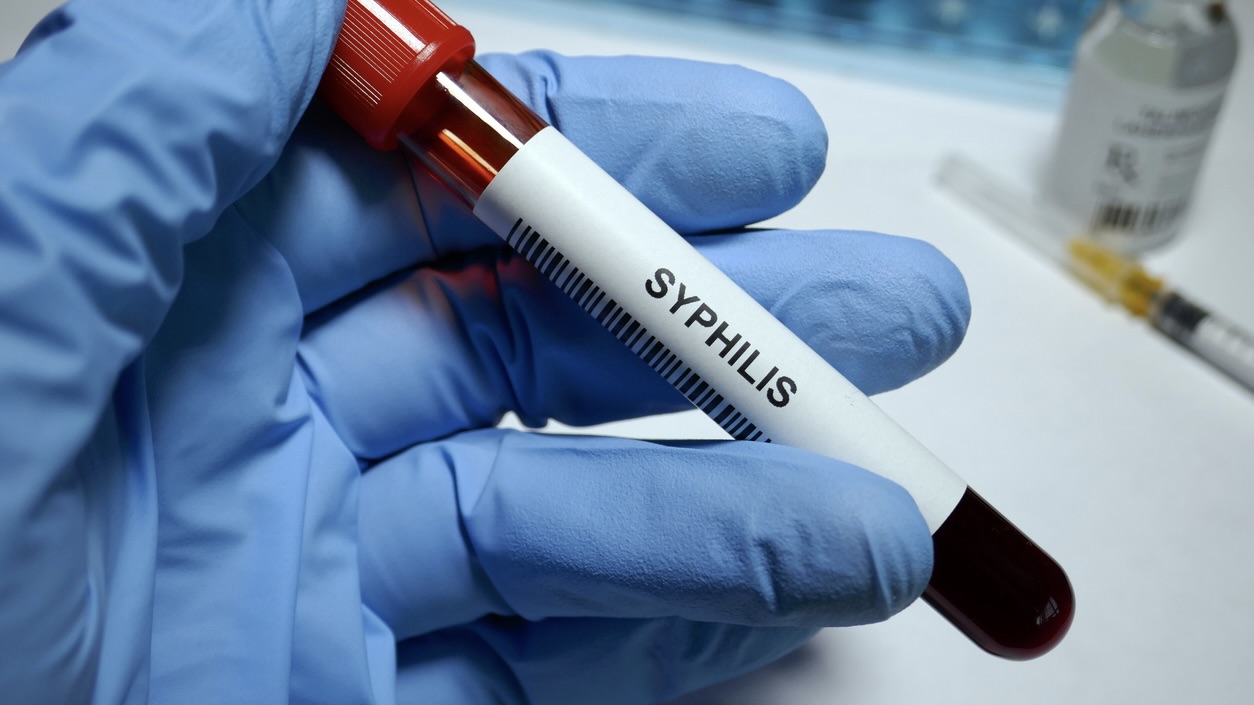
Syphilis is a sexually transmitted disease caused by the bacterium Treponema pallidum. (iStock)

Synopsis: Telangana recorded 54 medically certified deaths from sexually transmitted syphilis in 2024, nearly double the 2022 figure, despite the infection being curable with antibiotics. The rise comes amid stark differences across states and possible gaps in diagnosis and treatment, with doctors pointing to stigma, migration, HIV co-infection and incomplete treatment.
A single dose of penicillin can cure early syphilis. Government hospitals in Telangana treat syphilis free of cost. Yet the state recorded 54 medically certified syphilis deaths in 2024, up from 44 in 2023 and 28 in 2022, according to the Registrar General of India’s Annual Reports on Medical Certification of Cause of Death (MCCD).
Telangana recorded the highest number of medically certified syphilis deaths in the country in both 2022 and 2023. But in 2024, West Bengal’s figures surged to 102, pushing Telangana to second place nationally even as its own deaths continued to rise.
The numbers do not, however, reflect all syphilis deaths. MCCD data captures only deaths for which a registered medical practitioner certifies the cause. A rise can reflect more deaths, changes in certification, greater reporting or a combination of factors.
A bacterium, Treponema pallidum, causes syphilis, and it spreads mainly through sexual contact. It can also pass from mother to child during pregnancy. The infection progresses through primary, secondary and tertiary stages, with tertiary syphilis classified as late-stage disease.
Left untreated, the infection could remain dormant for years before causing serious complications affecting the heart, brain and nervous system.
Despite the availability of effective treatment, stigma could keep patients from seeking early care.
Dr Bhumesh Kumar Katakam, Professor and Head of the Department of Dermatology, Venereology and Leprology at Osmania General Hospital, said delayed treatment was a major problem.
Also Read: Syphilis surged in Telugu states in 2021 and ‘22, but was deadlier for Andhra men
“The reasons would be many. One is that people should seek treatment early. Because of the stigma, people come late, and that can give rise to complications,” Dr Katakam told South First.
Primary syphilis commonly causes a painless sore that may disappear without treatment. Secondary syphilis produces rashes and other symptoms that may resemble several other conditions. If untreated, the infection eventually progresses to tertiary disease, sometimes years after the initial infection.
This potential progression makes early diagnosis important. A symptom disappearing does not necessarily mean that an individual is free of the infection.
For patients reluctant to disclose a sexually transmitted infection or seek specialist care, the opportunity for early treatment can therefore be missed.
Also Read: Kerala AIDS control society fears rise in paediatric HIV cases
Telangana’s certified deaths showed a different trajectory by gender. Male deaths increased from 18 in 2022 to 31 in 2023 and remained at 31 in 2024. Female deaths increased from 10 to 13 and then to 23 over the same period.
The female count more than doubled in two years, while the male count plateaued after 2023.
At the national level, certified syphilis deaths increased from 132 in 2022 to 147 in 2023 and 343 in 2024.
Telangana’s rise therefore sits within a broader national increase, but its position among states makes the numbers particularly notable.
Also Read: How Telangana’s HIV strategy led to a three-fold drop in positivity rate
The state-level comparison showed that the rise was not uniform across India.
Andhra Pradesh recorded zero medically certified syphilis deaths in each of the three years. Telangana and Andhra Pradesh share a border, language and several aspects of their health infrastructure, yet their MCCD figures moved in completely different directions.
Chhattisgarh showed a dip in syphilis-related deaths. Its certified syphilis deaths fell from 25 in 2022 to 21 in 2023 and then to four in 2024.
West Bengal presented the sharpest outlier. It recorded one certified syphilis death in 2023 and 102 in 2024, comprising 55 male and 47 female deaths, MCCD data revealed.
A leap of that magnitude needs to be interpreted cautiously. The published reports do not explain the change, and the figures could reflect changes in certification, reporting or coding rather than a sudden epidemiological surge. Confirmation from the state would be needed before treating the increase as evidence of a genuine outbreak or mortality spike.
Also Read: How Andhra Pradesh curbed HIV/AIDS cases
The MCCD reports provided age-wise syphilis mortality data nationally, but not at the state level. The age profile therefore could not be used to pinpoint the dying age groups in Telangana.
Across India, the largest number of certified syphilis deaths in 2024 occurred among people aged 70 years and above, with 105 deaths. Another 57 deaths were recorded among those aged 45 to 54.
Very young children also appeared in the national figures. Seventeen deaths occurred among infants below one year of age in 2024.
Those infant deaths were significant because congenital syphilis could occur when infection passes from mother to child during pregnancy. They represented a different route of transmission from the sexual transmission that accounted for most adult infections.
By comparison, the 25-34 age group recorded 13 deaths and the 35-44 group recorded 32.
The age distribution suggested that the deaths recorded in the MCCD data did not merely mirror the age at which people acquired syphilis. Some complications can emerge years after the initial infection, particularly with delayed treatment.
Also Read: Matchmaker who united over 400 HIV-positive couples
Dr Katakam also pointed to migration and movement between states as one factor that could complicate prevention and treatment.
“I also know why the incidence is increasing. It is a lifestyle issue. People are travelling from one state to another, and this also contributes,” he said.
Frequent movement could make continuity of care more difficult. People moving between locations may not have regular access to the same healthcare provider, may interrupt treatment or may not return for follow-up.
Dr Katakam also linked syphilis to HIV because the two infections shared routes of transmission and some risk groups.
“Not only that, when there is an increase in HIV infection, the incidence of syphilis would also increase,” he said.
The relationship matters clinically as well. Dr Katakam said HIV co-infection can affect the response to treatment and alter the natural history of syphilis.
Also Read: How Karnataka brought down mother-to-child HIV transmissions
For a curable disease, treatment failure does not always mean that the medicine has failed. Patients have to reach qualified care, receive the correct treatment and complete it.
“Once syphilis is diagnosed, people should adhere to the treatment. Many people do not consult qualified doctors. Actually, they should consult qualified specialists, but rather than that, they go to non-qualified doctors,” Dr Katakam said.
He said it could result in incomplete or inappropriate treatment.
“So, the treatment would be incomplete, improper, inadequate, or no treatment may be taken. Sometimes, wrong treatment may also be taken,” he said.
For early syphilis, the standard treatment is benzathine penicillin, with a 2.4-million-unit dose administered intramuscularly.
Patients with HIV-associated syphilis would require three doses at one-week intervals, Dr Katakam said.
“We need to give three doses of benzathine penicillin, with a gap of one week between each dose. The dose is 2.4 million units, with 1.2 million units given in each buttock as a deep intramuscular injection. This is the standard treatment,” he said.
He said government health facilities have been providing the treatment.
“The only thing is that people should come early and get diagnosed,” Katakam said.
He also stressed the need to test for HIV after a syphilis diagnosis.
“Once diagnosed, they should also be tested for immunosuppression, especially HIV, because the modes of transmission of syphilis and HIV are the same,” he said.
Dr Katakam further stated that people without HIV generally responded well to treatment, while those with HIV might have an inadequate or poorer response.
“Generally, people respond well if they are immunocompetent and do not have HIV, but if HIV is present, the response can be inadequate or poor. That can also lead to complications,” he said.
Also Read: Why unmarried women dread a visit to the gynaecologist
The MCCD figures recorded syphilis as the certified underlying cause of death. But Dr Katakam cautioned against interpreting every such death as a case in which syphilis alone directly caused death.
“Purely, syphilis will not lead to mortality; that means death. Death might be associated with other secondary infections,” he said.
He said people with syphilis could also have several other health conditions.
“Syphilis patients may also be associated with some diabetes, hypertension, cardiovascular disease, renal disease, liver disease and alcoholism,” Dr Katakam said. “Most of these factors can contribute to mortality.”
He also cited HIV, psychological distress, alcoholism and obesity as factors that may add to the overall risk.
“These are all multiple factors which will contribute to mortality,” he said.
Syphilis can cause cardiovascular and neurological complications in its later stages, but Katakam said these are rare complications.
“In fact, syphilis itself will not cause immediate death,” he said.
This distinction is important when interpreting the MCCD numbers. The data identified the certified cause of death, but does not provide enough clinical detail to establish how untreated syphilis interacted with HIV, other infections or existing medical conditions in each case.
Also Read: Supreme Court calls for sex education: Are Indian schools ready?
Dr Katakam said syphilis could occur across a wide age range, but most cases occurred among sexually active people.
“Syphilis can occur at any age, but we mostly see cases from the teenage years up to around 60 years of age. We have even seen some cases, though rare, in adolescents. But mostly, it occurs in the sexually active age group,” he said.
He identified men who have sex with men, travellers and people who inject drugs among groups with higher exposure risk.
“Men who have sex with men, or MSM, are among the high-risk groups. Travellers are also a high-risk group, particularly people who move from one place to another,” Dr Katakam said.
He also pointed to inconsistent condom use and unprotected sexual contact as factors contributing to transmission.
People who pay for sexual services and people who inject drugs also featured among the risk groups. “These are multiple factors which will come into the picture,” he said.
Dr Katakam said men account for a higher number of infections and transmissions in his clinical experience.
The MCCD figures established one clear pattern in Telangana: certified syphilis deaths increased from 28 in 2022 to 44 in 2023 and 54 in 2024.
They did not, however, establish the reason.
MCCD captures deaths certified by registered medical practitioners, not every death in the country. The data cannot distinguish between an actual rise in syphilis mortality and changes in how deaths are diagnosed, certified, coded or reported.
Nor does it show how many patients delayed treatment, received treatment from unqualified providers, had HIV co-infection or developed cardiovascular or neurological complications.
The differences between states underline that uncertainty. Telangana’s certified deaths climbed steadily. Andhra Pradesh reported none in all three years. Chhattisgarh’s count fell sharply. West Bengal went from one death to 102 in a single year.
Those patterns cannot be explained by the MCCD tables alone.
But they raise a question that goes beyond the death certificates. Syphilis has an established cure; the treatment is available in the public health system, and early disease can often be treated with a single dose.
The harder part may be everything that happens before that injection.
Stigma can delay testing. Migration can disrupt continuity of care. HIV can complicate the disease. Treatment from unqualified providers can be incomplete or inappropriate. Other illnesses can add to the risk of severe complications.
(Edited by Majnu Babu).



