
Published Oct 03, 2026 | 7:00 AM ⚊ Updated Oct 03, 2026 | 7:00 AM

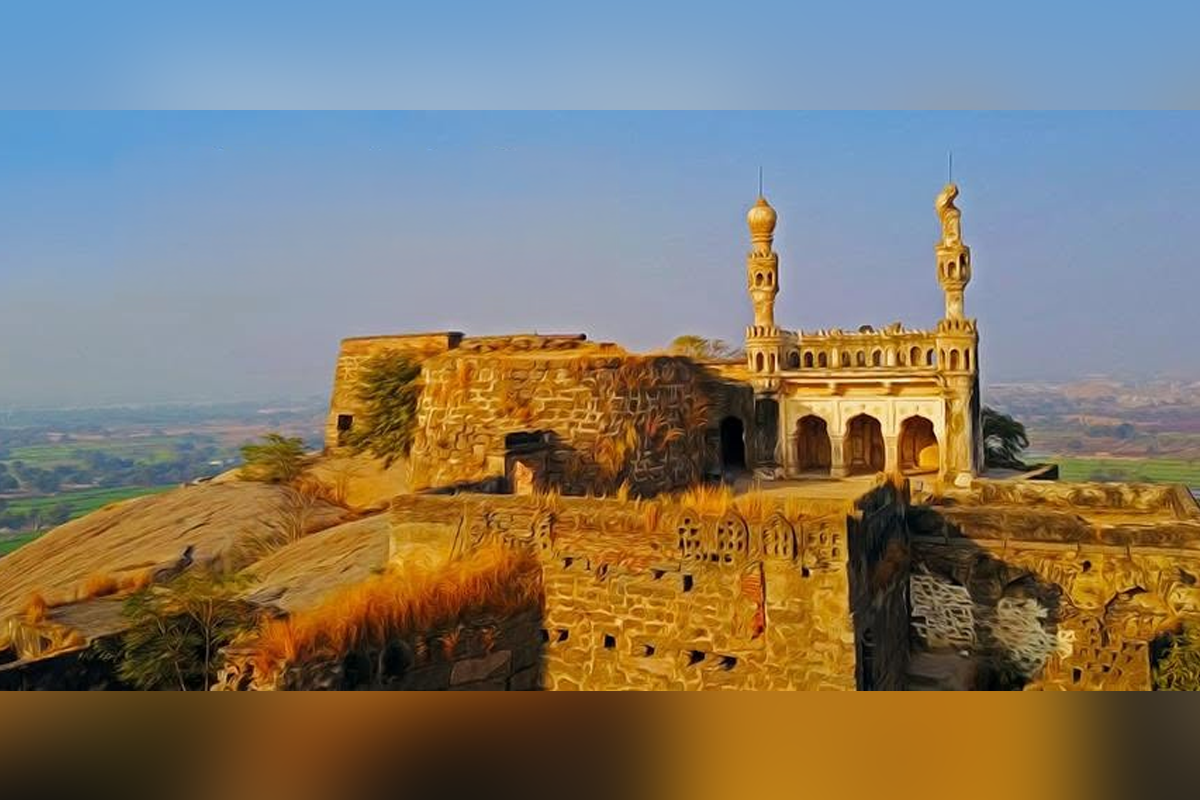
The famed Elgandal fort in Karimnagar.

Synopsis: In the weathered stones of Elgandula lies the opening chapter of Karimnagar’s story — a living archive of the centuries that preceded the modern city.
Before Karimnagar rose as a modern city, Elgandula stood on a hill beside the Maneru, watching over a landscape where kingdoms changed, armies marched, and centuries slowly turned. Today, the traffic, markets and expanding skyline of Karimnagar can make that older world seem distant. Yet the city’s origins are inseparable from it.
The story of Karimnagar begins not with its present-day avenues, but with the stone walls of an ancient fort and the riverine landscape that sustained it. Every growing city has a visible present and a buried past. In Karimnagar, that past remains remarkably tangible.
Elgandula was once a strategic centre of power in northern Telangana, its elevated fort commanding the plains while the Maneru connected the settlement to a wider landscape of agriculture, movement and commerce. Long before the modern city acquired its administrative and urban character, this was the landscape in which its historical foundations were laid.
To understand Karimnagar, therefore, is to follow the trail from the city back to the fort—from the expanding urban centre of today to the older political world that shaped the region. What emerges is not simply the history of an ancient monument, but the story of how one landscape gradually changed from a fortified centre into an emerging city.
The wider region itself has a history that reaches much further back. Archaeological sites such as Kotilingala, Dhulikatta and Peddabankur testify to the antiquity of organised habitation, trade and political activity in this part of the Deccan. The Godavari and its tributaries created fertile tracts while also providing natural routes through which people, goods and ideas travelled. The landscape was consequently not an isolated frontier but part of a wider network of settlements and political centres.
Elgandula emerged from this geography and acquired importance as successive powers sought to control the region. Its elevated position gave the fort a natural defensive advantage, while the plains below supported agriculture and habitation. The fort was thus connected to the life of the surrounding countryside rather than standing apart from it. Its history reflects the old logic of the Deccan, where control of a hill, a river crossing or a fortified settlement could carry considerable political significance.
The Kakatiya period added another important layer to this history. The area was known as Sabbinadu then. The Kakatiyas developed an extensive system of forts, irrigation works and administrative centres across Telangana, and Elgandula formed part of this strategic landscape. Fortifications in that period were not simply military structures. They were centres from which territory could be administered, revenue collected, movement monitored and political authority projected.
The decline of Kakatiya power did not bring an end to Elgandula’s importance. The region subsequently experienced the influence of the Musunuri Nayakas, the Bahmani Sultanate and the Qutb Shahi rulers, each representing a different phase in the political history of the Deccan. Through these transitions, Elgandula remained embedded in the changing political geography of the region.
The fort that survives today is, in many ways, a stone chronicle of those centuries. Its walls, bastions and other surviving structures reveal the defensive priorities of a period when warfare and territorial control shaped the architecture of power. At the same time, remnants of religious and civic structures, water arrangements and other features point towards a settlement that supported a community of soldiers, officials, artisans, traders and farmers.
Such forts were never merely walls around a military establishment. They were living centres whose existence depended upon the countryside around them. Agricultural production sustained the garrison; artisans supplied its needs; traders connected it to distant markets; and religious and cultural institutions gave social life to the settlement. Elgandula therefore represents not only a chapter in military history but also a fragment of the everyday life of medieval and early modern Telangana.
The Mughal conquest of Golconda in 1687 brought another political transformation. The region subsequently became part of the expanding administrative world that eventually evolved under the Asaf Jahi Nizams. With each change of power, the fort’s political role was reshaped, but its geographical importance ensured that Elgandula remained woven into the region’s administrative history.
It was in this later period that the name Karimnagar became associated with the region. Local historical tradition connects the name with Syed Karimuddin, who is associated with the administration of Elgandula as a khiledar. The transition from Elgandula to Karimnagar was gradual, however, and the eventual emergence of the latter as the principal administrative centre reflected a much larger transformation in the way the region was governed.
The movement of the district headquarters from Elgandula to Karimnagar in the early twentieth century became a significant turning point. The shift represented the movement of administration away from a medieval fortified centre towards a more accessible town suited to the requirements of modern governance. Roads, markets, public institutions and expanding civic activity increasingly mattered as much as defensive walls and elevated positions.
In that transition lies the beginning of modern Karimnagar.
The new town gradually developed its own rhythm. Administration brought institutions; institutions encouraged commerce; commerce attracted people; and the growing population created new demands for education, transport and public services. What had once been a regional landscape dominated by a fort slowly acquired the characteristics of an urban centre.
Yet the emergence of Karimnagar did not erase Elgandula. Instead, the older settlement became the historical foundation beneath the newer city. The relationship between the two illustrates how urban history often works: the new does not completely replace the old but grows around its memories, sometimes preserving them in monuments and sometimes carrying them forward through names, traditions and cultural practices.
Karimnagar’s identity today is consequently broader than its modern urban form. Its history is reflected in the crafts and traditions of the region as much as in its political and administrative development. The city’s celebrated silver filigree tradition, for example, represents the continuity of skilled craftsmanship across generations and serves as a reminder that cultural heritage survives through people as much as through monuments.
This makes the preservation of Elgandula particularly important. The fort should not be viewed simply as an isolated archaeological structure to be visited and photographed. Its real value lies in the historical landscape around it and in the story it enables us to reconstruct. The fort, the Maneru, the surrounding settlements and the routes that connected the region form a larger historical canvas.
For an emerging city, such a past is an asset rather than a burden. Rapid urbanisation can give a city economic momentum, but history gives it character. As Karimnagar expands and modernises, the preservation and interpretation of Elgandula can provide a tangible link between the city’s contemporary aspirations and the centuries that preceded them.
There is also a certain poetry in the geography itself. The Maneru continues to move through a landscape where dynasties have disappeared, administrative capitals have shifted, and generations have come and gone. Above it, the weathered fort remains, its stones carrying the quiet imprint of political ambitions that once seemed permanent.
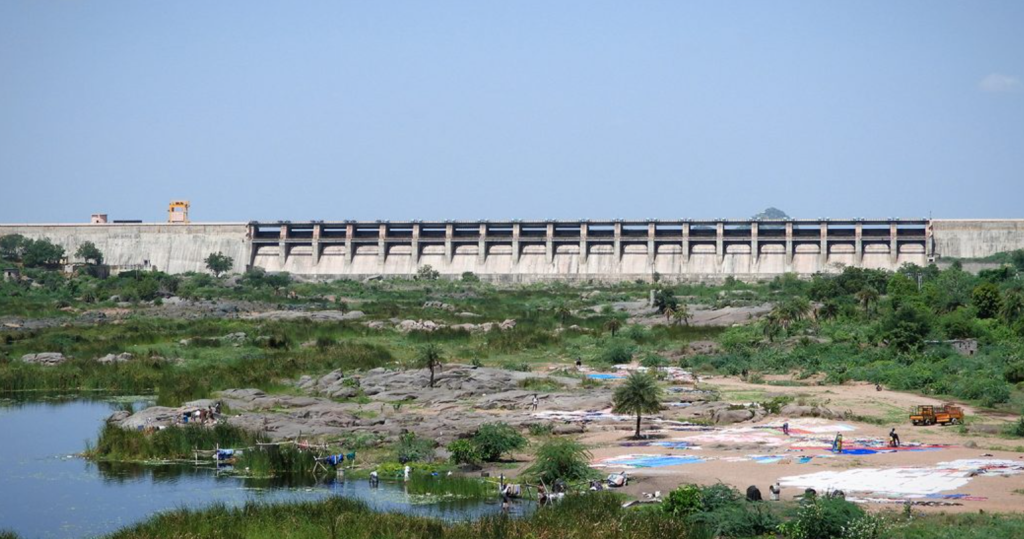
Maneru dam
Karimnagar’s story is ultimately a story of transition—from a fortified centre shaped by medieval politics to a modern city shaped by administration, commerce, education and mobility. Elgandula marks the beginning of that transition, preserving the memory of the landscape from which the present city emerged.
As Karimnagar expands, its future need not come at the expense of its past. Elgandula can serve not merely as a monument but as the historical gateway through which the city understands its own origins. The fort, the Maneru and the surrounding landscape together form a living archive of the centuries that preceded modern Karimnagar.
The city has moved beyond the fort, but it has never truly left it behind. In the weathered stones of Elgandula lies the opening chapter of Karimnagar’s story — a reminder that an emerging city gains greater meaning when it knows the history beneath its foundations.
Also Read:
The Sea speaks Malayalam: The 122 words that sailed back with Vasco da Gama from Calicut
Hyderabad: From a city of cycles to a city of cars and metro trains
Khichdi, khatta and kheema: The quiet trinity that once defined Hyderabadi mornings
Warangal: Centre of dissent and citadel of defiance
(Edited by R Rajesh Kumar.)



