
Published Sep 20, 2026 | 7:00 AM ⚊ Updated Sep 20, 2026 | 7:00 AM

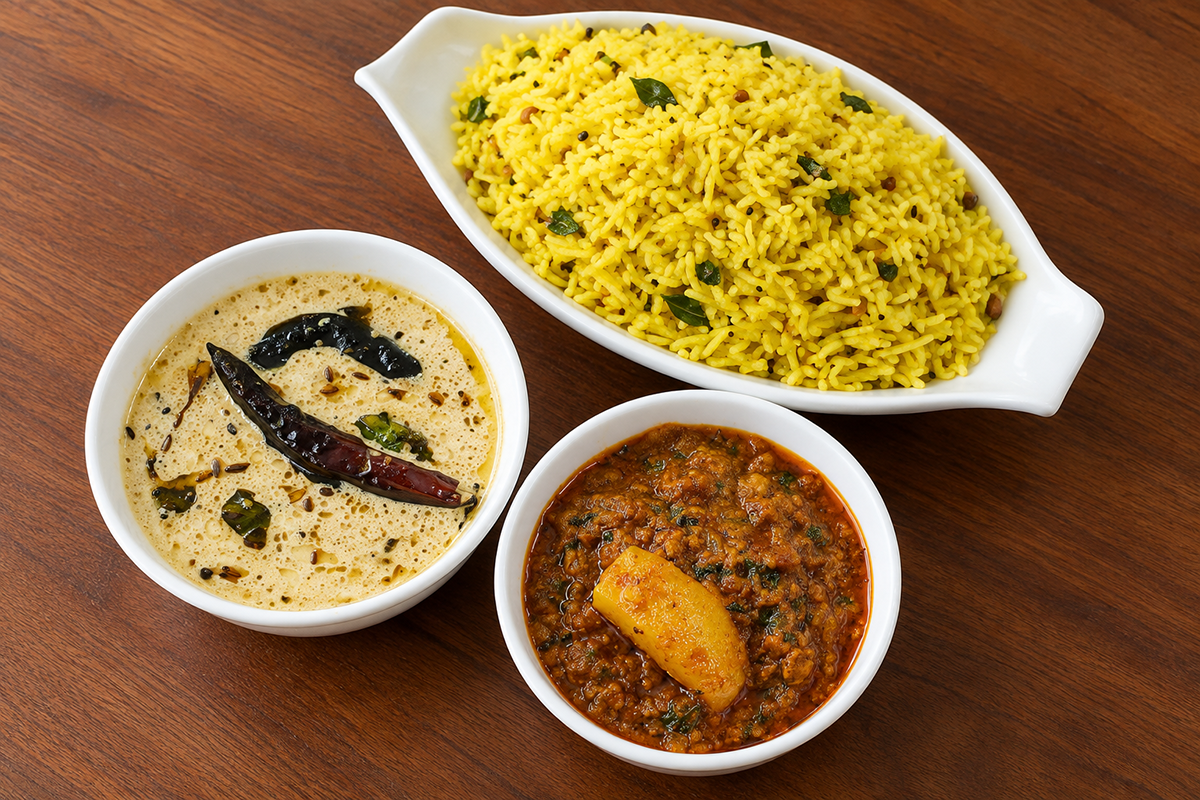
Khichdi, khatta and kheema, three-word mantra once defined mornings in countless Hyderabadi homes.

Synopsis: It was the taste of early mornings, of family tables, of a city that once measured hospitality by how well it fed its people before sunrise. Leaving them off the menu is not progress. It is forgetfulness.
The charm of khichdi, khatta and kheema is fading fast. What was once the soul of a Hyderabadi morning — soft spiced rice, sharp sesame-tamarind bite and rich minced meat — has quietly slipped off restaurant menus and out of everyday conversation, leaving only the grander dishes to claim the city’s spotlight.
Walk into most restaurants in Hyderabad today and the menu dazzles with dum biryani, haleem, pathar ka gosht, and endless kebab variations. The dishes that once fed Nizams and nawabs still make for its grandest stories. Yet somewhere between the glossy Instagram plates and the air-conditioned dining rooms, this quieter, more intimate trinity has almost vanished.
That three-word mantra once defined mornings in countless Hyderabadi homes. Soft, aromatic rice and masoor dal cooked with whole spices and caramelised onions. A sharp, earthy khatta made from roasted sesame seeds, peanuts, tamarind, and fresh herbs. And a richly spiced kheema of minced mutton that clung to every grain. Together they formed a complete, balanced, deeply satisfying meal. Not fancy. Not photogenic in the way contemporary plating demands. But profoundly Hyderabadi.
Unlike the soupy, pale khichdi of the North, the Hyderabadi version is drier, more assertive. Each grain of rice stands distinct, flavoured by shahjeera, cloves, cinnamon, and the slow-cooked sweetness of onions. It is often called the breakfast equivalent of biryani — a claim that sounds exaggerated until you taste it. The khatta cuts through the richness with its tangy, nutty punch. The kheema supplies protein and depth. A dollop of ghee, a crisp papad, maybe a green chilli or a wedge of lime, and the plate is complete. Simple ingredients, layered technique, and a flavour memory that outlasts any single dish.
This combination carries history. Fourteenth-century traveller Ibn Battuta noted locals eating rice boiled with lentils and butter for breakfast. Over centuries, the dish absorbed Deccani influences — sesame, tamarind, the preference for masoor over moong or toor.
In the old city, it was both everyday fuel and Ramzan sehri staple, filling enough to last through the long fast yet gentle on the stomach. Families woke before dawn to prepare it. Hotels near Charminar, Madina, and Tolichowki still serve it in the early hours of the holy month, when the air fills with the scent of frying onions and simmering mince. Outside those weeks, however, the dish largely retreats into private kitchens.
That retreat is the real loss. Modern menus chase spectacle. Biryani can be marketed as royal. Haleem has seasonal drama. Kheema on its own appears as a side or a filling. But the full trio — khichdi-khatta-kheema — resists easy packaging. It looks modest. It demands fresh preparation of three distinct components. It does not travel well under plastic lids. So, restaurants quietly drop it, or reduce it to a once-a-week special that few notice. Younger diners, raised on global fast food and algorithm-driven recommendations, may never encounter it unless an elder cooks it at home.
Yet the dish contains everything that makes Hyderabadi cuisine distinctive: the balance of richness and acidity, the use of everyday ingredients elevated by technique, the quiet confidence that does not need gold leaf or dry fruit to declare itself. Nawab Mehboob Alam Khan once described it as requiring “a lot of energy and good health to digest” — a luxurious comfort food rather than invalid fare. That contradiction is pure Hyderabad: opulence wrapped in simplicity.
Reviving it on menus is not nostalgia for its own sake. It is recognition that a city’s food identity cannot rest solely on its most famous exports. When every restaurant serves the same handful of “must-try” dishes, the palate shrinks. Diners lose the chance to experience the everyday genius of the cuisine — the way a sour sesame-tamarind sauce transforms plain rice and lentils into something memorable, the way minced meat cooked slowly with green chillies and coriander becomes the perfect companion rather than the star.
Some places still keep the flame. Old-city establishments continue the tradition for sehri crowds. Home cooks pass recipes across generations, adjusting the heat of the khatta or the fat content of the kheema according to family preference. Online videos and regional food writers keep the method alive. But commercial visibility matters. When a dish disappears from restaurant boards, it risks becoming folklore rather than living practice.
Imagine a weekend breakfast menu that confidently lists “Hyderabadi Khichdi with Til ka Khatta and Kheema” alongside the usual suspects. No elaborate description required. Those who know will order it at once. Those who do not will discover a new dimension of the city’s taste. The dish needs no reinvention — only presence. Serve it hot, with the khatta sharp enough to wake the senses and the kheema generous enough to satisfy. Add the traditional extras if you wish: papad, achar, extra ghee. Let the flavours speak.
Hyderabad’s culinary reputation was never built only on the spectacular. It was also built on the reliable, the daily, the quietly perfect. Khichdi, khattaa, kheema belong in that lineage. It is the taste of early mornings, of family tables, of a city that once measured hospitality by how well it fed its people before sunrise. Leaving it off the menu is not progress. It is forgetfulness. Bring it back. Let the next generation of diners experience the full Hyderabadi zaika — not just the dishes that photograph well, but the ones that linger in memory long after the plate is cleared.
Also Read:
Hyderabad: From a city of cycles to a city of cars and metro trains
Warangal: Centre of dissent and citadel of defiance
Bonalu: Where Telangana comes alive for the mother goddess
(Edited by R Rajesh Kumar.)



