
Published Aug 26, 2026 | 9:00 AM ⚊ Updated Aug 26, 2026 | 10:42 AM

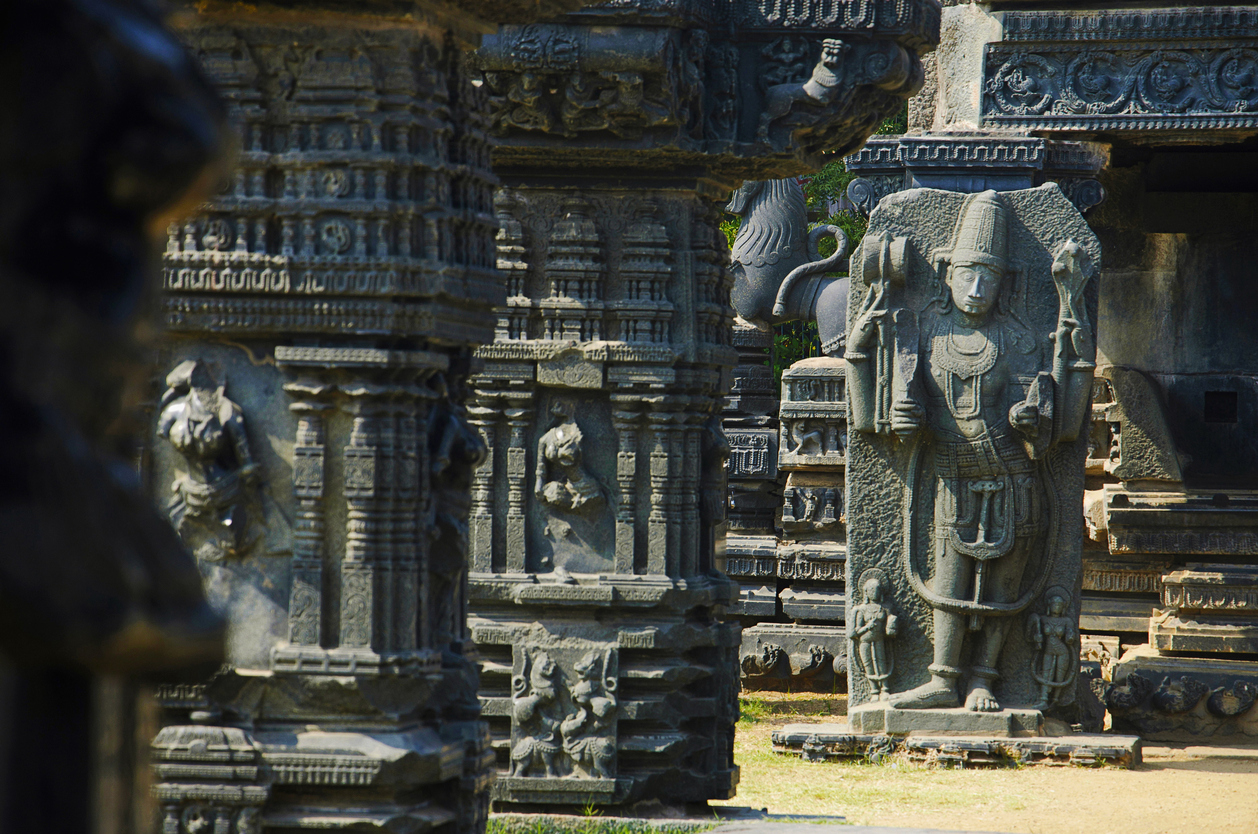
Linga shrine, Temple complex, Warangal Fort, Warangal, Telangana, India

“Warangal, a centre of dissent and citadel of defiance.”
These were the words of former Prime Minister PV Narasimha Rao, spoken at a Kakatiya University convocation when he was the Union Minister for Human Resource Development. The phrase captures the spirit of a city that has repeatedly stood firm against overwhelming power.
Nestled in the heart of Telangana, Warangal’s story is one of geography shaping character, history forging resilience, and politics keeping the flame of resistance alive.
The city sits on the eastern edge of the Deccan Plateau at about 18°N latitude and 79°E longitude, roughly 266 metres above sea level. The land is made of hard granite rocks and low hills.
Rainfall is seasonal and often scarce, so people have always depended on tanks, lakes and careful water management. Famous water bodies like Bhadrakali Lake and Waddepally Lake are living reminders of this practical wisdom.
The surrounding countryside is dry yet fertile in patches, drained by tributaries linked to the great Godavari system. This harsh but rewarding landscape taught its people self-reliance.
Isolated fortresses could be built on rocky outcrops, and communities learned to hold out during sieges. Warangal’s very name, “Orugallu” (one stone), reflects the solid, unyielding character of the place. Geography did not make Warangal rich in easy wealth; it made its people tough, organised and ready to defend what they built.
Warangal rose to greatness under the Kakatiya dynasty between the 12th and 14th centuries.
What began as a small principality under the Western Chalukyas grew into a powerful Telugu kingdom with Orugallu (Warangal) as its capital.
Kings such as Rudradeva, Ganapati Deva, the remarkable queen Rudrama Devi and the last great ruler Prataparudra expanded the realm, built magnificent temples, and created a strong administration that blended royal authority with local participation.
The city’s fame as a citadel of defiance was sealed during the invasions of the Delhi Sultanate. In 1303, the first major attack failed. In 1309–10, Malik Kafur laid a long siege; the massive triple walls and deep moats held firm until Prataparudra agreed to pay tribute rather than surrender the city completely. He later asserted independence again.
Even when Ulugh Khan (later Muhammad bin Tughluq) finally captured Warangal in 1323 after fierce resistance, the spirit of the Kakatiyas did not die. Local nayakas under the Musunuri chiefs soon rose, recovered the fort, and kept Telugu power alive for decades more.
Warangal’s culture of defiance cannot be understood only through kings and battles. Its most enduring symbols of resistance emerged from tribal communities.
The legend of the valiant Sammakka and her daughter Saralamma (Sarakka) stands as one of the most moving chapters of this land. During a severe famine, when the Kakatiya rulers demanded taxes that the starving Koya people could not pay, Sammakka, her husband Pagididda Raju, their children, and son-in-law rose in armed defiance.
In the fierce battle near present-day Medaram, most of the family fell. Sammakka herself fought with extraordinary courage until she was mortally wounded and disappeared into the forest, cursing the unjust kingdom.
Whether viewed through folklore, collective memory or social history, the significance of the story is unmistakable. It represents a community refusing to accept humiliation and injustice as inevitable.
Today, the biennial Sammakka-Saralamma Jatara at Medaram draws millions of devotees and stands as Asia’s largest tribal gathering—a living celebration of motherly valour, tribal pride and the refusal to submit to oppression. Millions gather to honour the mother and daughter. What survives is not simply a legend of martyrdom but a powerful assertion of tribal identity, dignity and autonomy.
The modern intellectual engagement with such questions also has an important connection to Warangal. Professor B Janardhan Rao, whose scholarship and public engagement contributed to the articulation of tribal and marginalised communities’ concerns, represented a later generation of intellectual intervention in these social questions.
His anchorship in the tribal movement helped bring the concerns of communities historically pushed to the margins into the larger discourse on social justice, identity and political rights. The tribal resistance associated with Sammakka and Saralamma was thus not merely a relic of medieval memory. In modern Telangana, it became part of a continuing conversation about dignity, representation and the right of communities to determine their own social and political destiny.
The tradition of resistance assumed a new political form in the 20th century. During the Telangana Armed Struggle (1946–1951), Warangal district became a major centre of the peasant uprising against the oppressive feudal landlords (doras) and the Nizam’s rule. The killing of peasant leader Doddi Komarayya in Kadavendi village in July 1946 sparked widespread resistance.
Villages organised themselves, abolished forced labour (vetti), and for a time ran their own parallel administrations. Ordinary farmers, agricultural labourers and women like Chakali Ilamma showed extraordinary courage. Even before India’s independence, local heroes in Warangal boldly unfurled the Indian Tricolour in defiance of the Razakars and Nizam’s police.
The architectural splendour of Warangal matches its defiant history.
The great Warangal Fort, with its three concentric circular walls, deep moats and 45 massive bastions, stands as a masterpiece of medieval military engineering.
Built largely of huge granite blocks fitted without mortar, it was designed to withstand long sieges. At its heart once rose a grand Shiva temple, of which only the four magnificent free-standing gateways remain. These Kakatiya Kala Thoranams (or Keerthi Thoranas)—tall, intricately carved stone arches decorated with lotus buds, mythical animals, birds and garlands—have become the official emblem of Telangana.
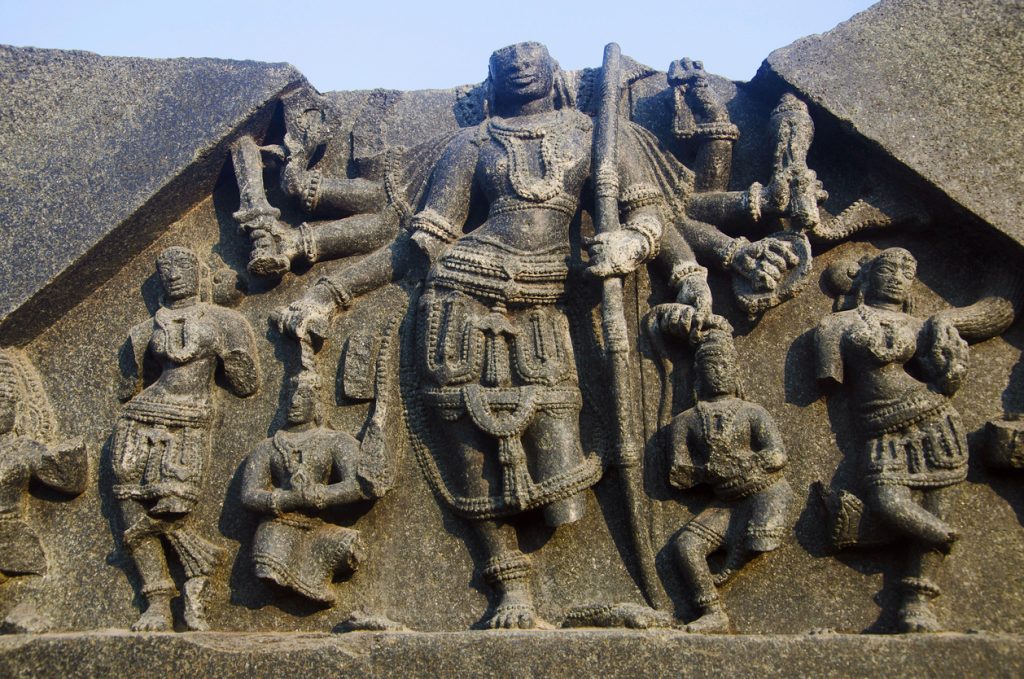
Carved figure, Temple complex, Warangal fort, Warangal, Telangana, India
Nearby, the Thousand Pillar Temple at Hanamkonda displays star-shaped platforms, finely sculpted pillars and a harmonious blend of architectural styles. A short distance away stands the Ramappa Temple, a UNESCO World Heritage Site celebrated for its delicate carvings, floating bricks and graceful sculptures that seem almost alive.
These monuments are often viewed primarily as heritage attractions. But they can also be read as political and cultural statements. They testify to a civilisation that possessed the organisational capacity, artistic imagination and technological skill to create enduring institutions in a difficult landscape.
The stones have survived the kingdoms that built them. They now stand as witnesses to the succession of political orders that followed.
Also Read: Pendyala Raghava Rao, a remarkable public life
This same land has been a cradle of Telugu poetry and thought for centuries.
In the Kakatiya age, Palkuriki Somanatha (also known as Palkuriki Somanna) wrote powerful works such as the Basava Purana and Panditaradhya Charitra in pure, vigorous Telugu, giving voice to social and spiritual reform.
Later, Bammera Pothana, born in a village near Warangal, composed the immortal Andhra Maha Bhagavatam, dedicating his great poetic gift not to kings but to God.
In modern times, the region produced fiery people’s poets.
Kaloji Narayana Rao, the beloved “Praja Kavi” of Warangal, wrote in free verse about justice, freedom and the dignity of ordinary people, and actively joined the freedom and Telangana movements. Revolutionary poet Varavara Rao and many others continued this tradition of using the pen as a weapon of conscience. From classical courts to modern protest stages, Warangal’s poets have always stood with the people.
Politically, Warangal has remained restless.
After Hyderabad’s integration into India in 1948, the region became part of Andhra Pradesh in 1956. Many felt that Telangana’s distinct identity, language and economic needs were neglected. The demand for a separate state grew steadily.
Students, teachers, farmers and political workers in Warangal played active roles in the long Telangana movement that finally succeeded in 2014. Its significance today, however, cannot be reduced to its role in the movement.
Education has been a powerful vehicle of this political awakening.
Kakatiya University, established in 1976 on the historic soil of the Kakatiyas, became a centre of learning and debate. PV Narasimha Rao himself had deep ties to Warangal; he studied there and later helped nurture higher education in the region. The university continues to shape young minds who carry forward the city’s questioning spirit.
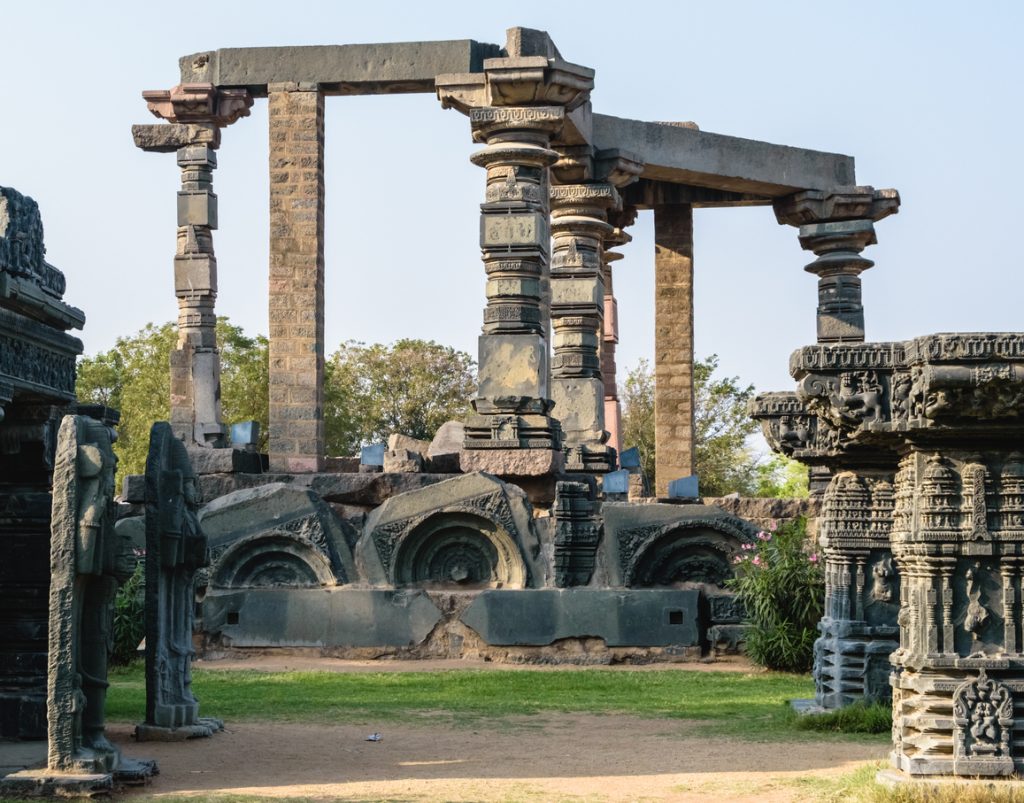
Warangal, Telangana, India – March 2019: The remnants of an ancient temple in the ruins of the archaeological site of the Warangal Fort.
Today, Warangal is a growing urban centre, the second-largest city in Telangana, with a rich heritage circuit that attracts visitors from across India.
Its politics remains lively, reflecting the concerns of farmers, students, workers and the rising middle class. The old fort still dominates the skyline, reminding everyone that this land has always valued dignity over submission.
From the granite walls that resisted medieval armies to the tribal resistance embodied by Sammakka and Saralamma; from the peasant mobilisation of the 1940s to the intellectual leadership of Professor B Janardhan Rao and Professor K Jayashankar; from the poetry of Palkuriki Somanatha, Pothana and Kaloji to the student movements that demanded Telangana, Warangal’s history has repeatedly demonstrated that dissent can become a source of collective identity.
Its monuments tell one story. Its literature tells another. Its political movements tell a third. Yet all three converge on a common idea — the insistence on dignity.
Warangal is therefore more than a historic capital or a collection of monuments. It is a place where geography created resilience, history created memory, literature created a language of dissent, and politics converted that dissent into collective action.
PV Narasimha Rao’s description remains relevant because Warangal’s defiance has never been confined to one age or one movement. It has taken the form of a fortified city, a tribal rebellion, a peasant uprising, a poet’s protest, an academic’s argument and a student’s slogan.
The fort may be built of stone, but the real citadel is an idea: that power can be challenged, injustice can be questioned, and self-respect cannot be permanently subdued.
That is the enduring Warangal—a centre of dissent, and indeed, a citadel of defiance.
From our archives:
Arittapatti, village near Madurai with a 2,100-year-old inscription, Pandya cave temple, and more
V Venkayya, the scholar who rediscovered ‘Ponniyin Selvan’ Raja Raja Chola
Annai Meenambal Sivaraj, Dalit leader who played a key role in 1938–39 anti-Hindi agitation



