

Published Oct 20, 2026 | 7:00 AM ⚊ Updated Oct 20, 2026 | 7:00 AM

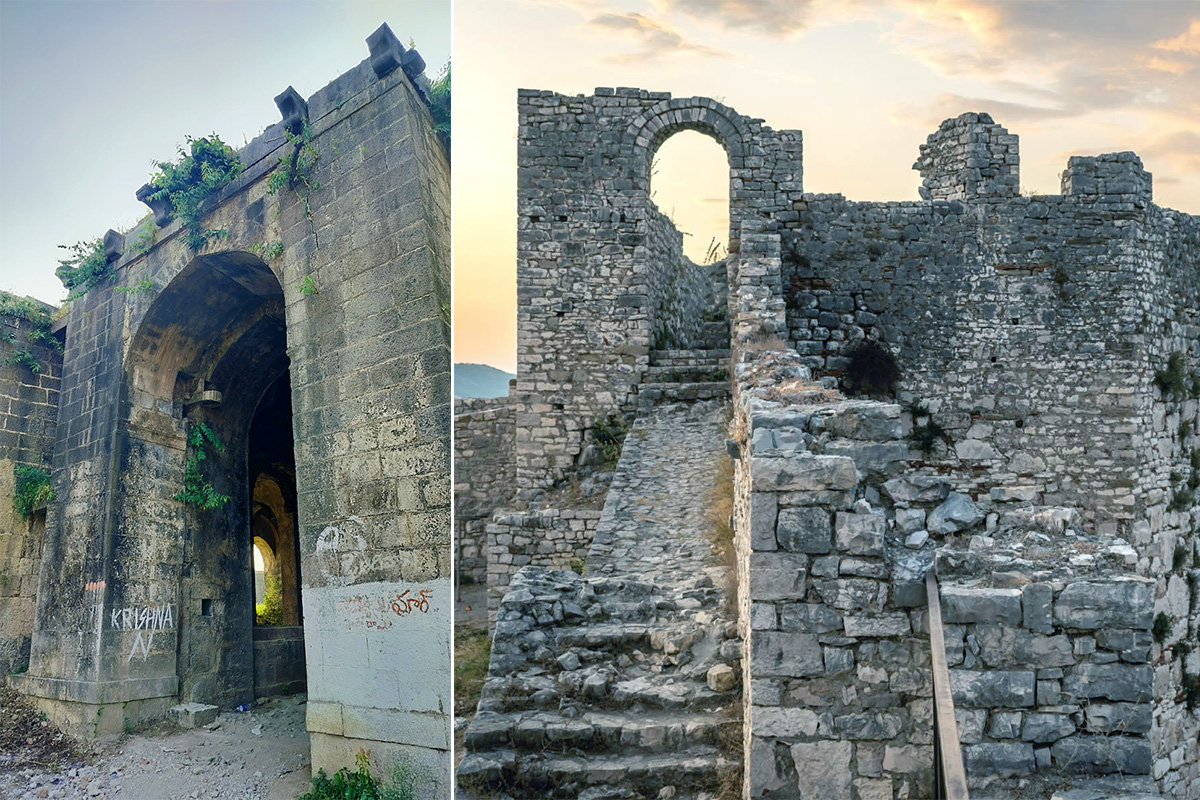
Gond Kings’ Fort, Utnoor.

Synopsis: Before becoming known as the ‘White Gold City’, Adilabad was home to Gond kingdoms whose legacy continues to shape the district’s identity.
In northern Telangana, where the land thickens with forest and rivers mark the state’s edge, Adilabad carries a history that runs deeper than most official records suggest.
Once known as Edlawada or Eddulapuram — the land of Oxen — as the Concise Dictionary of World Place Names notes, it became known as Adilabad after Ali Adil Shah, the ruler of the Bijapur Sultanate. The district is known today for its cotton fields, so much so that it has come to be called the ‘White Gold City’. Its border with Maharashtra and its position on the highway between Hyderabad and Nagpur also lend it importance. But long before those modern markers, the same forests and rivers sustained a different kind of power: the Gond kingdoms that ruled large parts of this territory for centuries.
Adilabad’s geography made that power possible. The district sits on the northern edge of the Deccan Plateau, bordered by Maharashtra’s Yavatmal, Chandrapur and Nanded districts, and by Telangana’s Komaram Bheem Asifabad, Mancherial and Nirmal districts.
The Penganga river forms much of the northern boundary. The Godavari and its tributaries, including the Pranahita and Kadam, cut through the interior, creating valleys and supporting both farmland and woodland. Black cotton soil covers most of the area. Forests still occupy significant stretches of land.
The monsoon brings rain, turning the hills green and filling the streams. This is not open plains country. It is broken, wooded and river-bound terrain that favoured local control over distant administration.
Within this landscape, the Gond kingdoms took root. The Gonds form one of the largest tribal communities of central India. Several of their major polities, known collectively as part of historical Gondwana, rose across the forested belt.
The kingdoms linked to Sirpur and Chanda held particular importance for the Adilabad region. These Raj Gond rulers controlled territory that stretched across what is now northern Telangana and into neighbouring Maharashtra. Their authority lasted, in different forms, from roughly the thirteenth century into the eighteenth. They organised revenue, maintained local irrigation and governed through networks of chiefs and kinship groups familiar with the forests. Forts such as those around Manikgarh served as centres of defence and administration.
Unlike the more urbanised kingdoms of the southern Deccan, Gond rule adapted to the realities of forest life. Oral tradition and customary practice carried much of the weight of governance. This did not mean the kingdoms lacked structure. They negotiated with larger powers when necessary and defended their territories when challenged. The same forests that limited outside armies also provided resources and a measure of security. For generations, the Gond rulers remained the effective authority over large tracts of the northern Deccan.
Among the most famous of them was Ramji Gond, who trained and organised a Gond and Rohilla army along with Haji Rohilla, putting up a brave resistance during the First War of Independence against the British Empire. Ramji Gond and Rohilla were caught by a joint army of the British and the Nizam and hanged from a banyan tree, known as Veyyi Urula Marri (Tree of a Thousand Nooses), in 1860.
Earlier powers had passed through the region. The Satavahanas, Vakatakas, Chalukyas and Rashtrakutas all left traces of influence. The Kakatiyas later extended their reach into northern Telangana and left inscriptions in the area. Yet the Gond kingdoms consolidated in the spaces between and after these larger formations. In later centuries, they faced pressure from the Deccan sultanates, Mughal expansion and the rising Maratha power centred on Nagpur. The Nizams of Hyderabad eventually brought the territory into their state. Political maps changed, but the social and cultural foundations of Gond rule proved harder to erase.
That continuity is still visible.
After the 2016 reorganisation that split the original Adilabad district into four, the residual district retained a high proportion of Scheduled Tribe population. Gonds form a major part of that community, along with Kolams, Pardhans and Thotis. Gondi continues to be spoken across the area. Traditional festivals, social customs and oral histories keep alive a connection to the older kingdoms. The forests that once underpinned Gond power still shape livelihoods and identity, even as cotton cultivation has become the dominant agricultural activity.
The name Adilabad itself belongs to a later layer of history. The present name is conventionally linked to the Adil Shahi rulers of Bijapur, one of the Deccan sultanates that sought to assert control over the northern frontier. Administrative formalisation came under the Nizams.
In 1872, the area was organised as the Sirpur-Tandur sub-district. In 1905, it became a full district with headquarters at Adilabad. These changes organised the land for revenue and modern governance, yet they rested on a population and a landscape whose deeper history belonged to the Gond polities.
The significance of those tribal dynasties is straightforward. They show that political authority in the northern Deccan was not created solely by plains-based empires. Forest societies built durable systems of rule suited to their environment and capable of lasting for centuries. Larger powers could claim the territory, extract revenue or redraw boundaries, but everyday control of the forests and the cultural life of the people often continued along older lines.
Adilabad’s history is therefore not a simple story of successive incorporation. Continuity and adaptation mattered as much as conquest.
Today, the district still functions as a gateway. National Highway 44 and the railway carry traffic between Telangana and Maharashtra. Cotton remains a major crop. The rivers continue to define settlement and resource use. Yet the older geographical logic has not disappeared.
The forests, the black soil and the river systems that once supported the Gond kingdoms remain central to the district’s character. The communities that live there still carry, in language and memory, the imprint of that earlier sovereignty.
Adilabad’s importance lies in this layered past. Its position on the map makes it a northern threshold of Telangana. Its forests and rivers give it a distinct ecology. It is also known for Nagoba Jatara, the second-largest tribal festival in Telangana.
Its history, however, is most clearly understood through the Gond kingdoms that once held the land.
Those dynasties were not a footnote. They formed a central chapter in the story of the northern Deccan, and their legacy continues to shape the district that carries their imprint into the present.
Also Read:
The stones that remember: Elgandula and the birth of modern Karimnagar
Khichdi, khatta and kheema: The quiet trinity that once defined Hyderabadi mornings
The Sea speaks Malayalam: The 122 words that sailed back with Vasco da Gama from Calicut
When a language fights to avoid being eaten: The Tulu lesson for India
(Edited by R Rajesh Kumar.)



