
Published Aug 16, 2026 | 4:00 PM ⚊ Updated Aug 16, 2026 | 4:00 PM

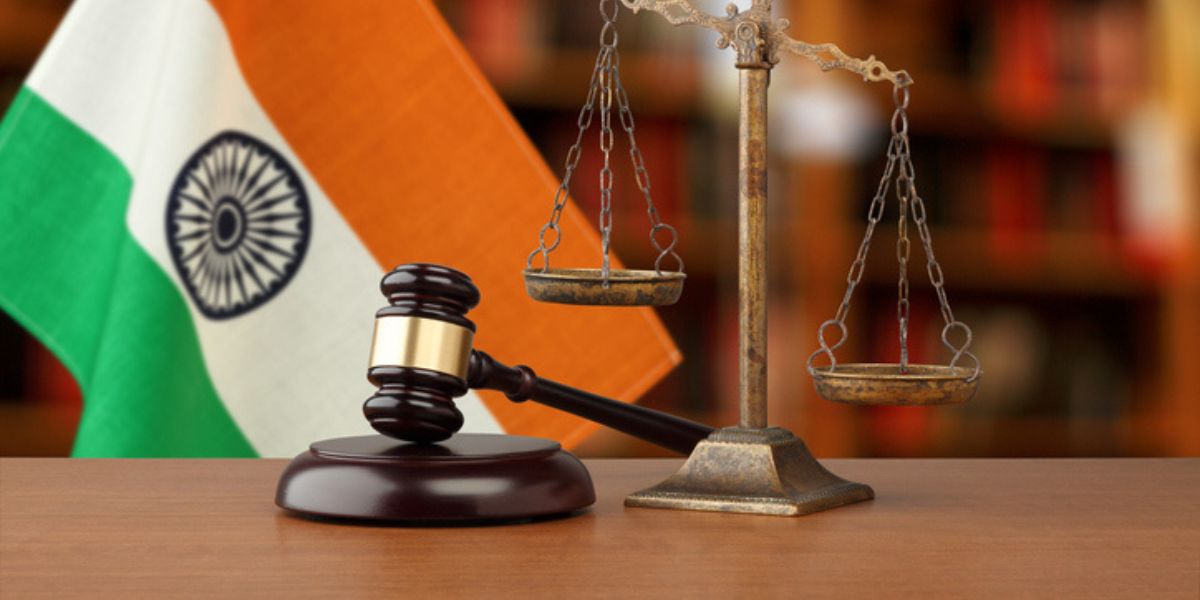
If the right people are elected to the Houses that have the power to make the laws, some of these problems can be corrected.

Synopsis: People seem to have lost hope in their elected representatives in Parliament long ago. Parliament does not function properly. Bills are passed within minutes, without meaningful debate and without the participation of the Opposition. In such circumstances, it is only natural that people turn to another major pillar of democracy, the judiciary. For decades, the judiciary has been treated almost like a “holy cow”, and people have placed enormous faith in it, believing that it would stand by them.
In January 2018, four of the Supreme Court’s most senior judges, Justices Jasti Chelameswar, Ranjan Gogoi, Madan B Lokur and Kurian Joseph, held a historic press conference to warn the people of the country that “democracy is in danger.”
Through the media, the four judges made it clear that they had been forced to take this unprecedented step after their written pleas to the then Chief Justice of India, Justice Dipak Misra, had yielded no result. It appears that no one came forward to set things right after that.
In their public statement at the time, Justice Chelameswar and his colleagues said that an independent and impartial judiciary was essential if democracy was to survive and a healthy democratic system was to be strengthened.
They also made another important appeal to the nation: “Protect the judiciary, and thereby protect the country.” They said that had the four judges not taken that step, there was a possibility that 20 years later, some wise people would have accused them of having “sold their souls.”
Twenty years have not yet passed and we are now witnessing a situation in which the judiciary is facing unprecedented criticism from different quarters. Apart from a change made two years ago, during Justice DY Chandrachud’s tenure as Chief Justice, there has been little of the change that Chelameswar and the others had called for.
At the time, the statue of Lady Justice in the Supreme Court premises was shown without a blindfold, with the sword replaced by a copy of the Constitution. If anything, the situation seems to have deteriorated further.
Also Read: The soft echo of paper and gum: Remembering the world that arrived by post
People seem to have lost hope in their elected representatives in Parliament long ago. Parliament does not function properly. Bills are passed within minutes, without meaningful debate and without the participation of the Opposition.
The Prime Minister and the Union Home Minister who hold key responsibilities can remain away from Parliament for days. When a group reportedly “purified” the stage at Haldwani’s Ramlila Maidan, there was no one to question it. Congress President and Leader of the Opposition in the Rajya Sabha Mallikarjun Kharge, who is a Dalit, had addressed a rally there. Kharge was reduced to speaking about the incident and expressing his anguish in the Upper House.
In such circumstances, it is only natural that people turn to another major pillar of democracy, the judiciary. For decades, the judiciary has been treated almost like a “holy cow”, and people have placed enormous faith in it, believing that it would stand by them.
The possibility of the judiciary losing that standing in the eyes of the people is extremely dangerous. That is why, nearly a decade ago, Justice Chelameswar and his colleagues had warned the people that protecting the judiciary was essential to protecting democracy.
The book A Controversial Judge, co-authored by journalist Paranjoy Guha Thakurta and Ayaskant Das, holds up a mirror to some of the developments within the judiciary.
It is a detailed account of the life of Justice Arun Kumar Mishra, who served as a Supreme Court judge during Prime Minister Narendra Modi’s tenure, and the judgments he delivered. Paranjoy refers to several controversial cases, including the sexual harassment allegations against then Chief Justice Ranjan Gogoi and the Sahara case. Justice Gogoi was later nominated to the Rajya Sabha after his retirement.
The book also examines the medical college recognition scam in which the then Chief Justice of India, Justice Dipak Misra, was alleged to have played a role. Paranjoy also discusses the judgment that sentenced former Bihar Chief Minister Lalu Prasad Yadav to life imprisonment in the fodder scam case. The book provides a comprehensive analysis of Justice Misra’s judgments and their impact on the Indian political landscape.
Another recent incident that has further damaged the judiciary’s image in the eyes of the public is the discovery of unaccounted cash at the residence of a Delhi High Court judge.
Meanwhile, some remarks made by Chief Justice of India Surya Kant about the younger generation snowballed into a controversy that eventually rattled the political establishment, with those in power at the Centre struggling to escape its consequences.
Also Read: ‘His thoughts were faster than his words’: MP Parameswaran and the Fourth World
A few days ago, Supreme Court judge Justice Ujjal Bhuyan triggered a debate by raising questions about the lack of transparency in the decisions of the collegium, the system through which judges are appointed. He openly said that the judiciary’s credibility among the people would suffer if the reasons behind collegium decisions were not disclosed.
He also warned that a lack of transparency could result in competent and honest judges being denied opportunities, while people with little merit could enter the judiciary.
He said that such judges could eventually make comments that run contrary to constitutional values and demean sections of society. His reference to the possibility of people entering the judiciary who describe citizens as “ants” was widely interpreted as an indirect reference to Justice Surya Kant, who had recently described the younger generation as “cockroaches” and “parasites”.
Although Justice Surya Kant subsequently explained his remarks and said that this was not what he had intended, the controversy did not die down. Some students of Hyderabad’s NALSAR University of Law even demanded that he should not be invited to their convocation.
The controversy grew to such an extent that the president of the Bar Council of India also became embroiled in it.
NALSAR, established by legislation in the erstwhile united Andhra Pradesh, is an autonomous national institution devoted to legal education and research. The Chief Justice of the High Court serves as its Chancellor, while a legal academic serves as its Vice-Chancellor.
The decision of some students to oppose the appearance of the Chief Justice of India at their convocation is their constitutional right. Institutions are good in themselves. But when the people leading and overseeing them are not competent, not only do those institutions acquire a bad name, but the consequences can be damaging to society. The high-handed decision taken by Bar Council of India President Manan Kumar Mishra against the NALSAR students has once again demonstrated this reality.
Last Thursday, Mishra wrote to the bar councils across the country directing them not to enrol any student from the 2026 batch of NALSAR until further orders. It is common knowledge that the action followed a letter from some NALSAR students expressing their opposition to the Chief Justice of India attending their convocation.
The unilateral decision meant that all students of the 2026 batch who have completed their legal education at NALSAR could potentially be prevented from entering the legal profession. Students have a constitutional right to oppose a person being invited as a guest to their institution’s convocation. Even if their decision was wrong, why should the entire batch be punished for the actions of a few?
Also Read: NALSAR students’ no to Chief Justice Surya Kant: Not disrespect, but a necessary assertion!
Manan Kumar Mishra is a senior advocate who was elected to the Rajya Sabha from Bihar on a Bharatiya Janata Party ticket. Several Supreme Court lawyers have opposed his continuing as president of the Bar Council of India for 12 years.
The president of the Bar Council of India is supposed to have a two-year term. However, Supreme Court Bar Association President Vikas Singh has alleged that Mishra has managed to remain in the post for so many years by exploiting loopholes in the law and that his decisions have consistently been unilateral.
Bar Council Member and lawyer from Kerala Manoj Kumar, and Saurav Das, spokesperson of the Cockroach Janata Party, both opposed Mishra’s decision. The NALSAR Vice-Chancellor, meanwhile, said the university would have to examine whether the matter fell within the Bar Council’s jurisdiction and that its executive council would meet and take an appropriate decision.
Eventually, Chief Justice of India Surya Kant himself reacted strongly, asking: “This is a matter between the students and me. What does the Bar Council have to do with it?”
Faced with this, BJP Rajya Sabha Member Manan Kumar Mishra, who appeared determined to prove himself more loyal than the king, had no option but to withdraw his decision.
After the “cockroaches” succeeded in securing Dharmendra Pradhan’s resignation, some of them threatened to launch another campaign seeking the resignation of Manan Kumar Mishra.
Whatever the case, let us remember what some elders said in the past, “Sab theek nahin hai”. Everything is not alright in the judiciary.
The foundation has to be sound for a structure to be repaired. If the right people are elected to the Houses that have the power to make the laws, some of these problems can be corrected. For that, perhaps Gen Z will have to launch one more great movement.



